

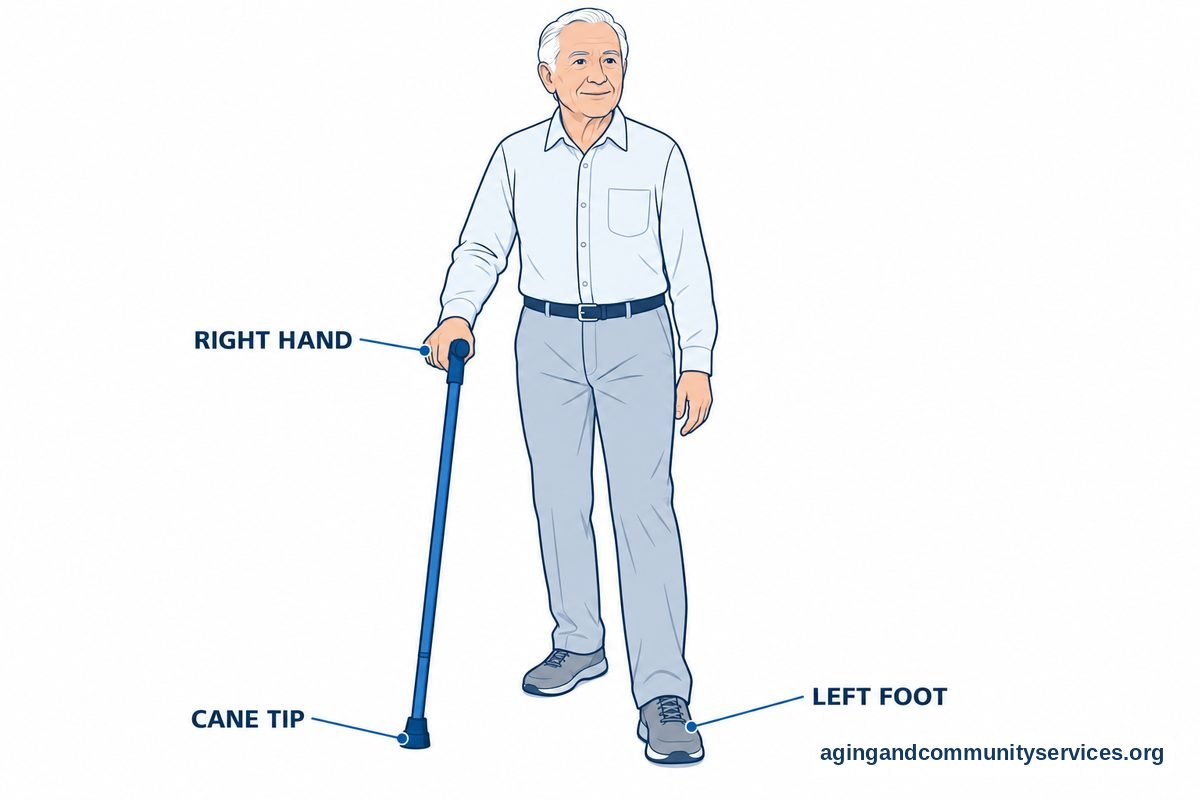
Learning how to use cane with bad right knee pain begins with one simple rule: hold the cane in your left hand. Holding the walking aid on your stronger side allows you to lean your weight off the sore right joint as you step forward. This natural rhythm provides steady support so you can walk with greater comfort and confidence.

Steps for Walking With a Weak Right Knee
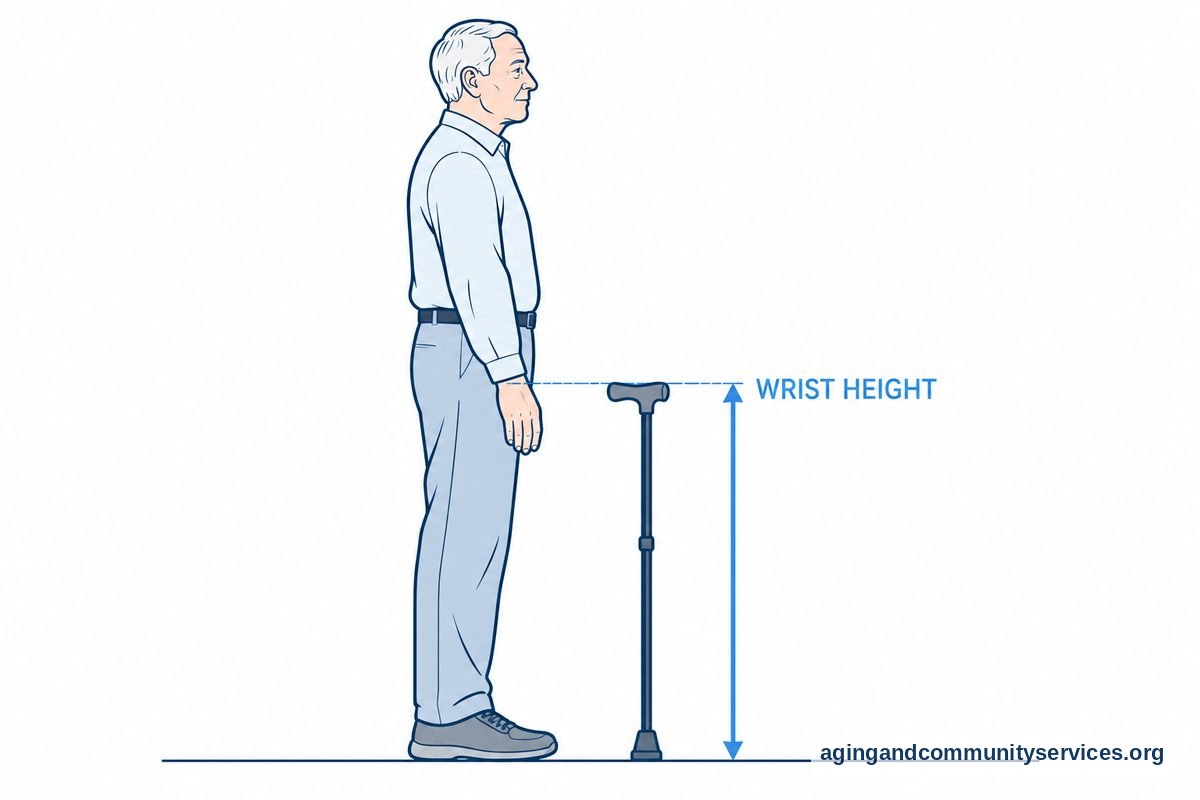
Before you begin walking, make sure your cane fits your body properly. When you stand straight with your shoes on, the top handle should reach the crease of your wrist. If you need help finding the right style, read our guide on how to choose a cane before you get started.
- Hold the cane on your left side: Grasp the handle firmly in your left hand so your stronger side can take pressure off your weak right knee.
- Move the cane and right leg together: Step forward with your right leg while swinging the cane forward the exact same distance.
- Press down through your left hand: Push down into the grip of the cane as your right foot meets the floor to absorb your body weight.
- Step through with your left leg: Bring your strong left foot forward past the cane and place it firmly on the ground.
- Keep your eyes looking forward: Look ahead toward where you want to go rather than looking down at your feet while you walk.
Practicing this pattern smoothly will help you develop a steady, even stride. Taking smaller steps at first can help you feel secure while your body gets used to the movement. For a broader overview of daily balance, you can explore basic tips on how to use cane techniques around the house.
Common Mistakes to Avoid
Many older adults feel unsteady simply because they picked up a few bad habits when they started using a walking stick. Avoiding these frequent missteps will keep you upright and comfortable:
- Holding the cane on the injured side: Placing the cane in your right hand forces you to lean toward the sore knee, which adds extra strain instead of relieving it.
- Setting the cane too far ahead: Reaching the cane out too far disrupts your balance and makes your arm work much harder than necessary.
- Using the wrong handle height: A cane that is too tall makes your shoulder ache, while a cane that is too short causes you to slouch forward.
- Leaning too far sideways: Tilting your torso heavily toward the left side throws off your posture and strains your lower back.
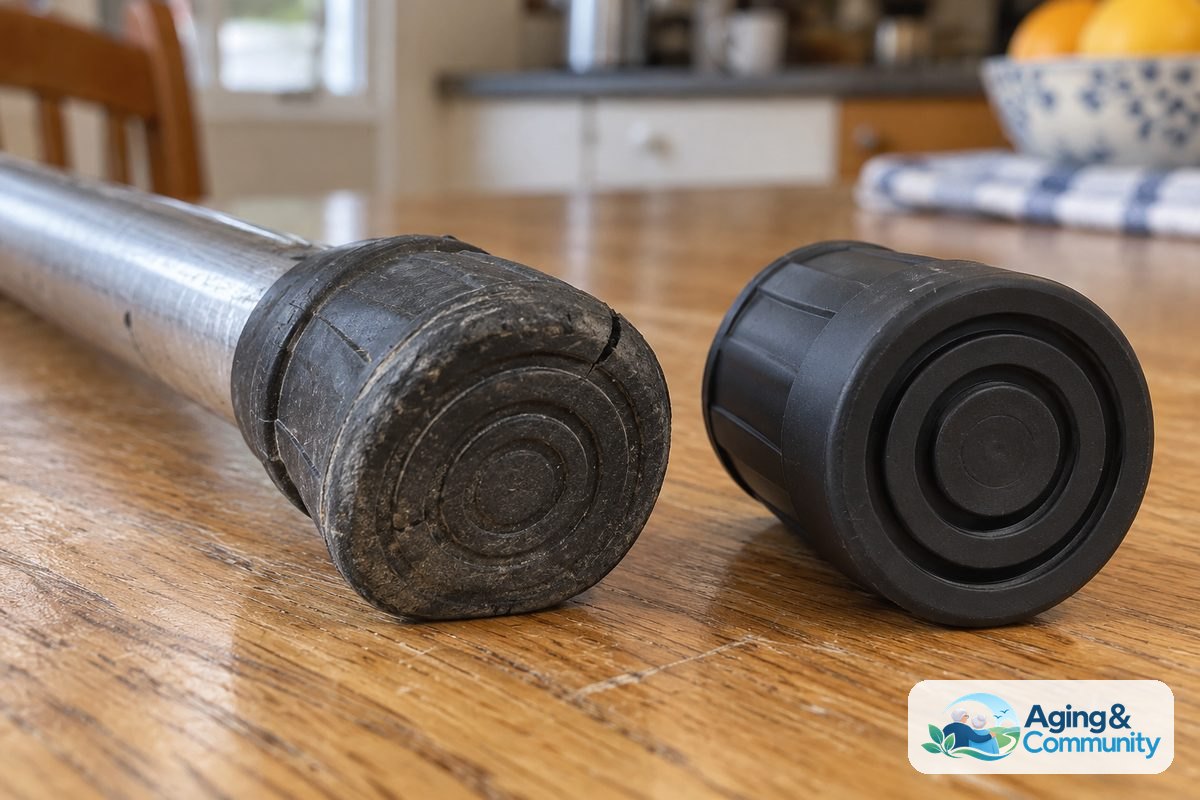
- Ignoring worn rubber tips: A slick or cracked rubber tip cannot grip the floor well, so inspect the bottom regularly and replace worn rubber parts promptly.
When to Seek Professional Guidance
If you experience sudden sharp pains, numbness in your foot, or feel like your knee might buckle, pause your walking right away. A physical therapist, occupational therapist, or family doctor can assess your gait and confirm whether a standard cane offers enough stability or if another walking aid is better. Tell your healthcare provider exactly where you feel pain, how often you feel unsteady, and whether you have had any recent stumbles.
If you need extra help finding local therapy services or home care support, you can reach out to the Eldercare Locator to connect with nearby community resources. Reviewing educational materials from the National Institute on Aging: Falls and Falls Prevention page can also help you identify practical ways to make daily routines safer.
How to Use Cane With Bad Left Knee
The rules for walking reverse completely when your discomfort is on the other side of your body. If you are learning how to use cane with bad left knee weakness, hold your cane in your right hand. Your healthy right arm and right leg will work as a team to protect the left knee from carrying all your weight.
To move forward safely, push the cane and your left foot forward at the same moment. Bear down through your right hand onto the cane handle, then step your healthy right foot past the cane. Maintaining this cross-body support keeps your hips level and protects your joints during each step.
Navigating Stairs and Recovering from Surgery
Stairs require special attention because climbing places extra stress on knee joints. A simple phrase that helps many people remember the pattern is: up with the good, down with the bad. When going upstairs, step up first with your stronger leg, then bring up the cane and the weak leg together onto the same step. When heading downstairs, lower the cane and your weak leg first, then follow with your strong leg. You can review detailed step-by-step guidance on how to use cane on stairs to build your confidence on steps.
If you recently had a surgical procedure, your recovery plan might involve specific movement limitations. Walking safely during this period protects the new joint as tissues heal. Be sure to check our resource on how to use cane after knee replacement and follow all precautions provided by your surgical team.

Frequently Asked Questions
Which hand do I hold the cane in for a bad right knee?
Hold the cane in your left hand. Holding the walking aid in the hand opposite your sore leg allows you to shift weight across your body, taking pressure off the painful knee joint.
Which hand do I hold the cane in for a bad left knee?
Hold the cane in your right hand. Your right hand and right leg will carry your weight together so your left leg can step forward without carrying full impact.
Do I move the cane with my bad leg or my good leg?
Move the cane forward at the same time as your bad leg. When both the cane and your weaker leg strike the ground together, you can lean on the cane to protect the tender knee.
How high should my cane be adjusted?
Stand tall with your typical walking shoes on and let your arms hang loosely at your sides. The top of the cane handle should line up with the small bend or crease on the inside of your wrist.
Can using a cane on the wrong side hurt my joints?
Yes, holding the cane on the same side as your painful knee can cause an awkward limp and increase the physical force passing through that injured joint. It can also cause lower back and shoulder fatigue.