

Learning how to use compression socks for women starts with putting them on first thing in the morning when your legs are least swollen. Gently smooth the fabric up your calf without rolling the top band down, and wear them during your daytime hours. Taking them off before bed allows your skin to rest and recover overnight.
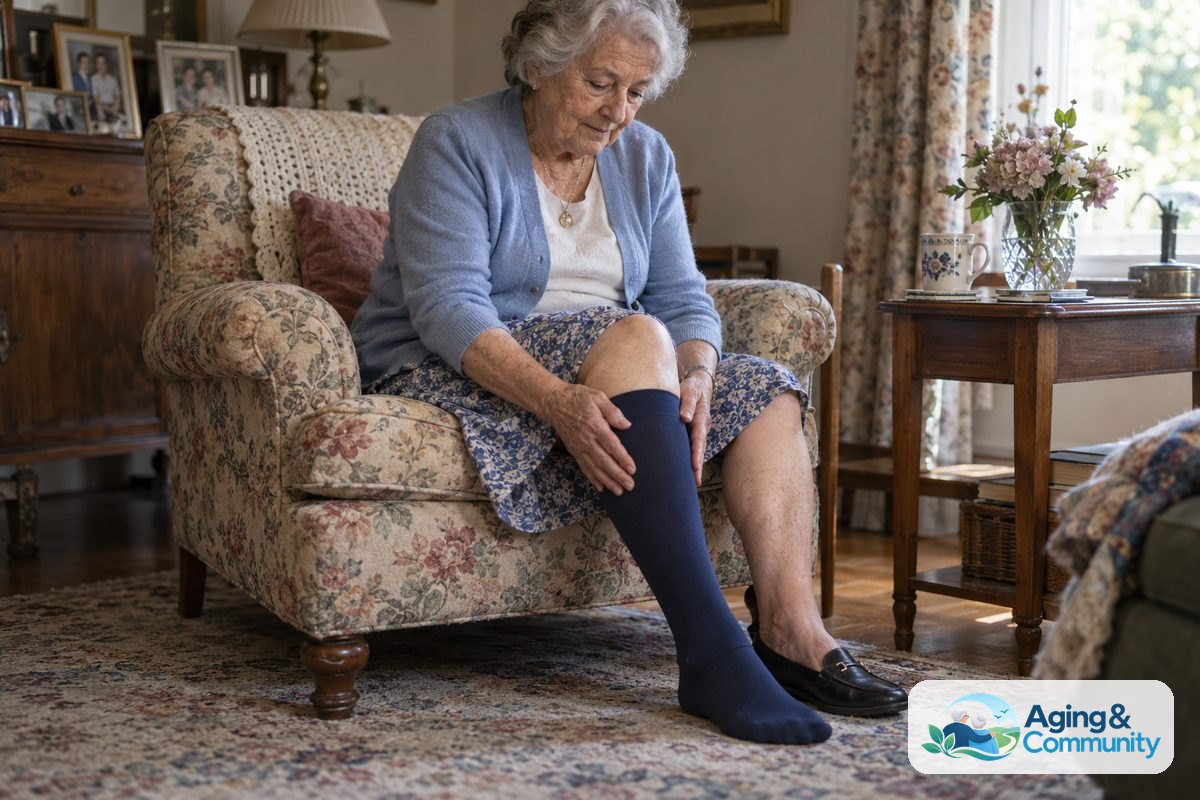
How to Put on and Use Women’s Compression Socks
- Put them on first thing in the morning. Your legs and ankles have the least fluid buildup right after you wake up, which makes the fabric much easier to slide over your skin.
- Turn the sock inside out to the heel. Reach inside the stocking, grab the heel pocket, and pull the leg section inside out while leaving the foot portion tucked inside.
- Slide your toes and foot into the pocket. Center your toes and heel carefully into the reinforced base of the sock before attempting to pull any fabric up your leg.
- Gently roll and smooth the fabric upward. Use your open palms to guide the material up over your ankle and calf, making sure the fabric lies completely flat against your skin.
- Position the top band below the knee. The top edge of knee-high stockings should sit about two finger-widths below the bend of your knee so it never pinches your skin.
- Check for wrinkles and bunches. Stroke your hands along your leg to eliminate any folds, since uneven fabric can press too tightly into your skin during the day.
If bending down or gripping the fabric feels difficult, using a sock aid for compression socks can make this morning routine much easier on your hands and back. Always sit in a sturdy armchair while dressing so you remain secure and comfortable throughout the process.
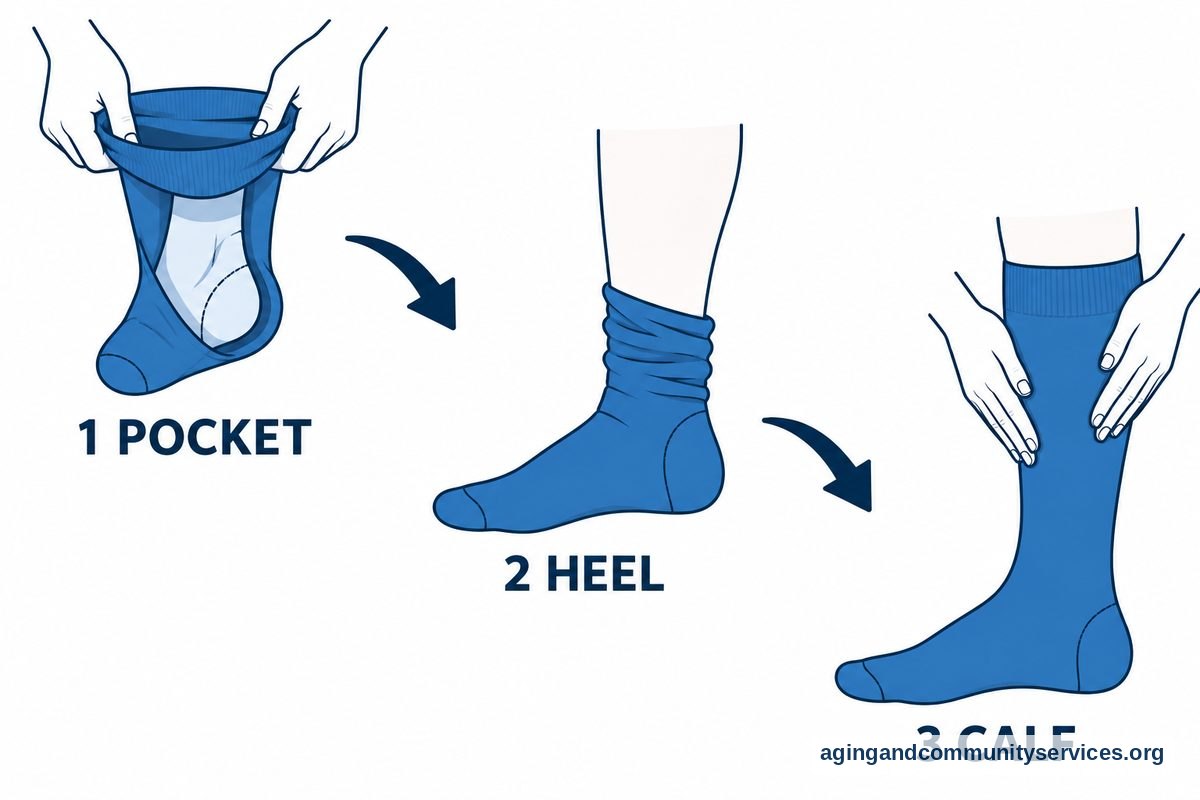
Common Mistakes to Avoid
- Rolling or folding the top band down: Folding the band creates a tight ring around your calf that acts like a rubber band and restricts healthy blood flow.
- Putting socks on over wet skin: Applying stockings right after a shower or before your body lotion completely dries causes the fabric to stick and pull painfully.
- Wearing daytime stockings to sleep: Gravity helps your circulation naturally when you lie flat, so wearing daytime garments to bed is usually unnecessary unless directed by a doctor.
- Yanking the fabric from the top: Pulling hard on the upper band can tear the elastic threads and stretch the garment out of shape quickly.
- Ignoring wrinkles around the ankle: Fabric that gathers in the crease of the ankle can pinch the skin and cause tender spots by the afternoon.
When to Call for Help or Get Professional Advice
Always talk with your primary care doctor, physical therapist, or occupational therapist before starting any new daily routine with support wear. You can also reach out to your local area agency on aging through the Eldercare Locator to find community health resources and mobility support near your home.
Contact your healthcare team right away if you notice any of these signs while wearing your stockings:
- Sudden numbness, coldness, or tingling in your toes or feet.
- Skin that turns pale, blue, or unusually dark beneath the fabric.
- Severe pain, cramping, or aching that gets worse when the socks are on.
- Redness, raw spots, blisters, or skin irritation along the bands.
When you call your doctor’s office, describe exactly what you are feeling, how long the garment has been on, and the compression rating listed on the tag. Letting your clinician know about any changes helps them adjust your fit safely.
Choosing the Right Compression Level and Fit
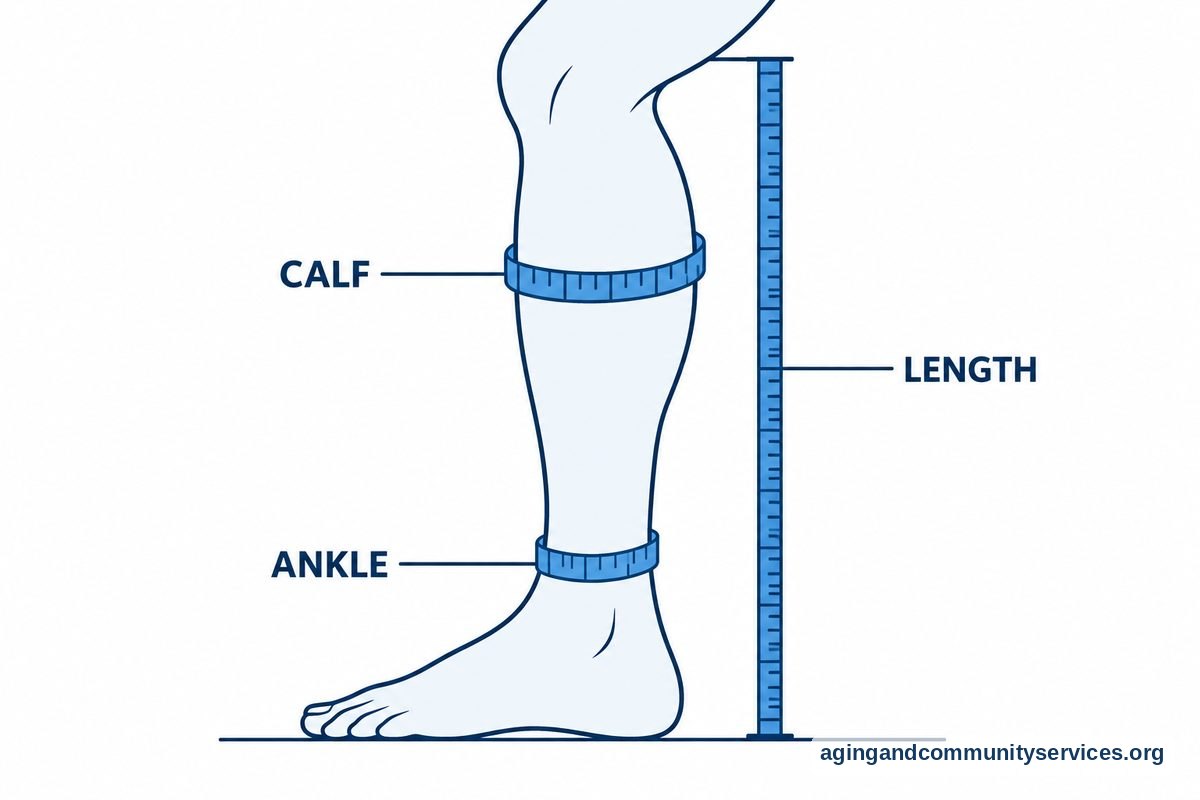
Finding the right fit is essential for both comfort and daily safety. Knowing how to choose compression socks involves taking accurate tape measurements of your narrowest ankle point, widest calf point, and the length from your heel to the bend of your knee. Measuring your legs in the morning gives you the truest fit.
Over-the-counter pairs offer mild pressure, which works well for tired legs or light travel. Firmer pressure levels require guidance from a doctor to make sure your arteries and skin can handle the tightness. If cost is a concern, you might wonder does medicare cover compression socks for your specific health needs; checking your plan rules can clarify your coverage options for doctor-prescribed garments.
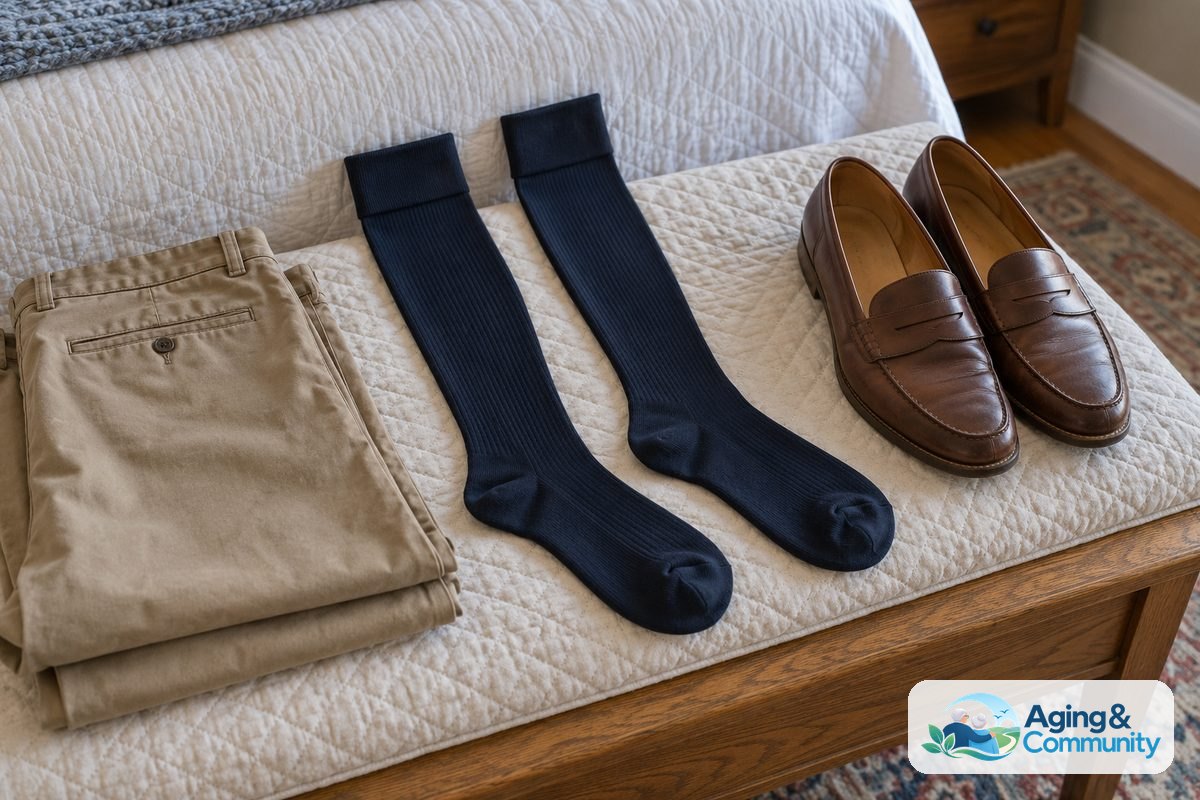
Tips for Wearing Compression Socks with Everyday Outfits
Many women wonder how to pair support hosiery with their personal wardrobe, or what compression socks vs leggings offer for daily wear. Modern stockings come in sheer nudes, solid black, and patterned designs that look just like standard tights or trouser socks. You can comfortably wear them under slacks, long skirts, or jeans without anyone noticing you are wearing special hosiery.
To keep your balance steady while dressing, practice solid balance habits like those described in the National Institute on Aging: Falls and Falls Prevention guidelines. Sitting upright with both feet flat on the floor keeps you stable and allows you to slide your shoes on smoothly over your fresh stockings.
Washing and Caring for Your Garments
Daily washing helps your stockings snap back to their original size and removes skin oils that break down elastic fibers. Hand wash them in a sink of cool or warm water using a mild liquid soap, or run them through a gentle machine cycle inside a mesh laundry bag. Never use bleach or fabric softeners, as these chemicals damage the gentle squeeze of the fabric.
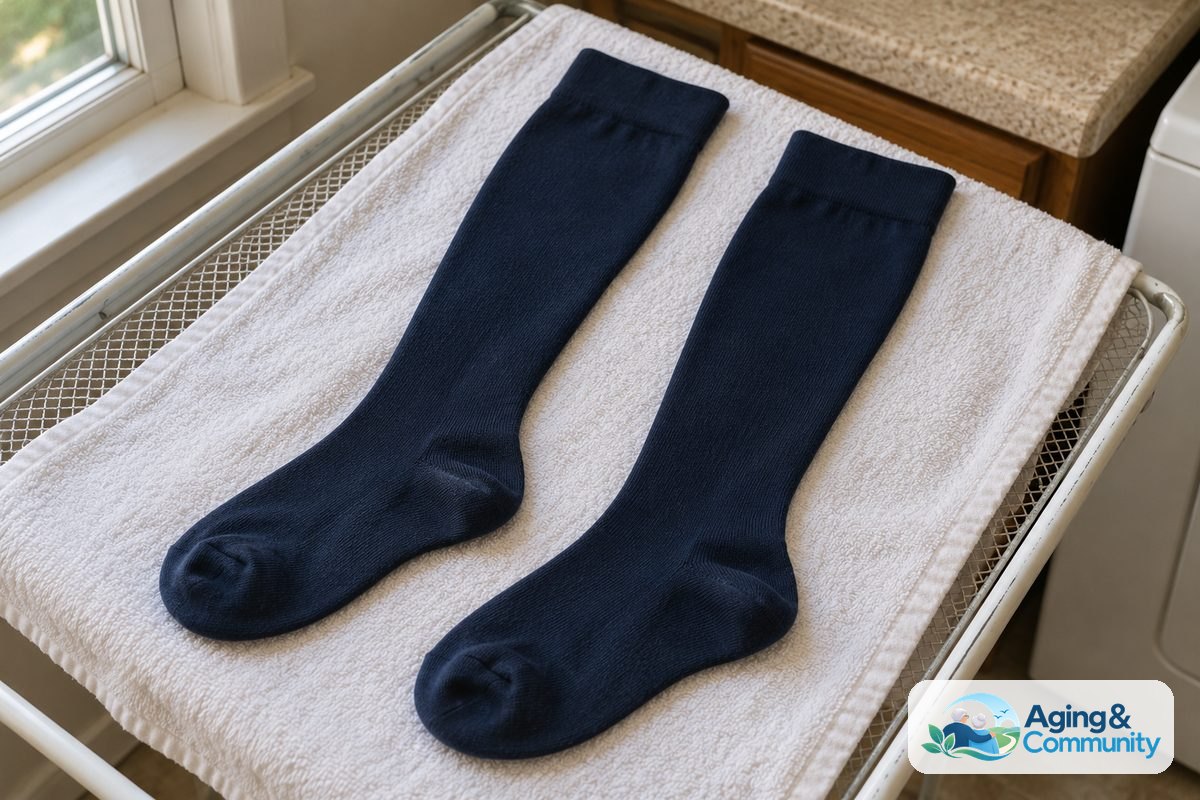
Squeeze out the extra water by gently rolling the socks inside a clean bath towel rather than wringing them out. Hang or lay them flat to dry away from direct heat and sunlight. Having at least two pairs allows one pair to dry completely while you wear the other pair during the day.
Frequently Asked Questions
How many hours a day should a woman wear compression socks?
Most women put their socks on in the morning and take them off right before going to bed, wearing them for roughly eight to sixteen hours. If you are learning how to use compression socks for swelling, your doctor may suggest a specific schedule that fits your daily routine. Never wear them overnight unless your medical provider gives you explicit instructions to do so.
Can I wear compression socks if I have varicose veins?
Many women find that support wear helps keep their legs feeling lighter throughout the day. Reviewing how to use compression socks for varicose veins with your doctor will help you decide on the proper strength. A healthcare provider can examine your circulation to make sure compression wear is appropriate for you.
What is the easiest way for older adults to put them on?
Using special rubber-grip gloves provides extra traction so your fingers do not slide across the slick fabric. You can also sprinkle a tiny dusting of cornstarch or baby powder on your legs to help the material glide over your skin. Keeping your skin well moisturized at night also prevents dry flakes from catching on the weave in the morning.
Can I wear regular lotion under my compression socks?
It is best to apply heavy lotions and body creams at night after you take your stockings off. Putting lotion on right before dressing can make the socks hard to pull up and may slowly degrade the elastic fibers. If your skin is very dry in the morning, use a light, water-based lotion and let it soak in completely before pulling on your socks.
How often do I need to replace my compression socks?
With daily use and regular washing, most compression garments maintain their strength for about four to six months. Over time, the elastic threads stretch out and provide less support to your legs. If the fabric begins to slide down your calf on its own or feels unusually loose to put on, it is time to buy a new pair.