

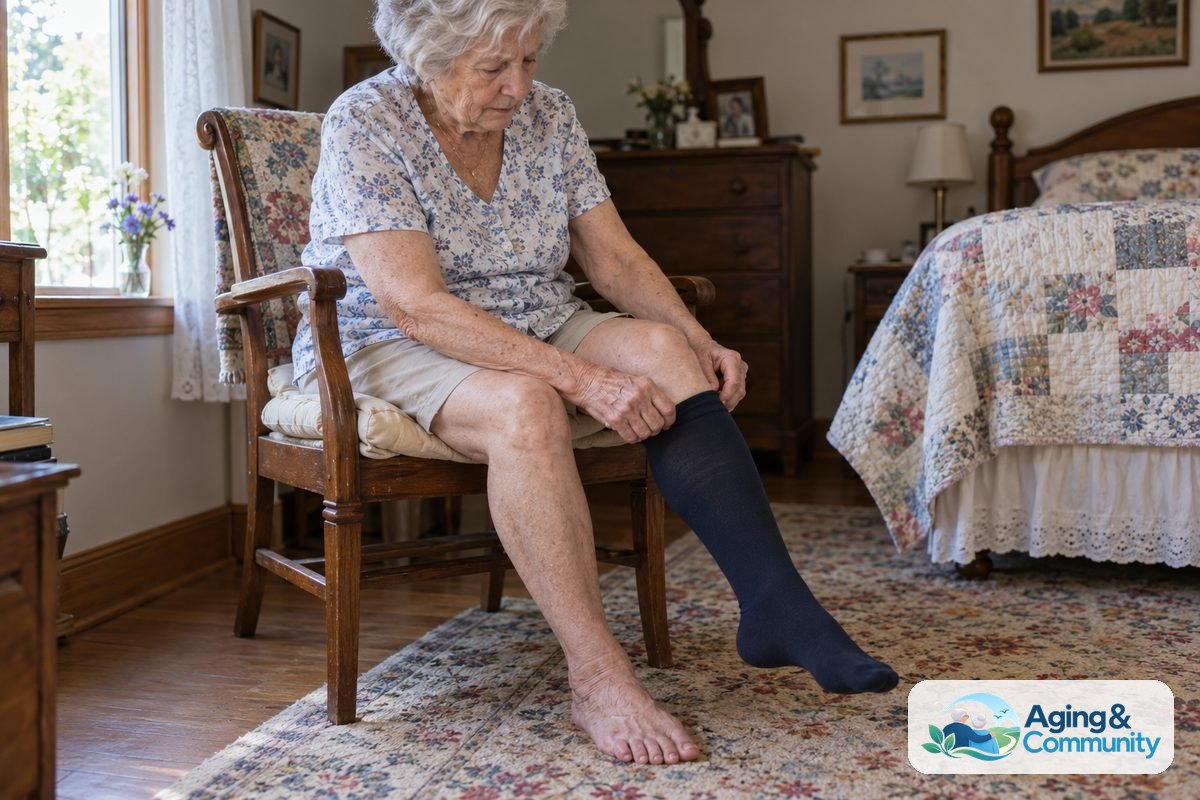
Learning how to use compression socks starts with putting them on first thing in the morning when your legs are least swollen. You gently roll or slide the fabric up your leg so it sits flat against your skin without any bunches or folds. Taking them off before bed allows your skin to rest and breathe overnight.
How to Put on Compression Socks Step by Step
- Start with dry, clean skin. Put your socks on early in the morning right after getting out of bed, making sure your legs are completely dry of any water or lotion.
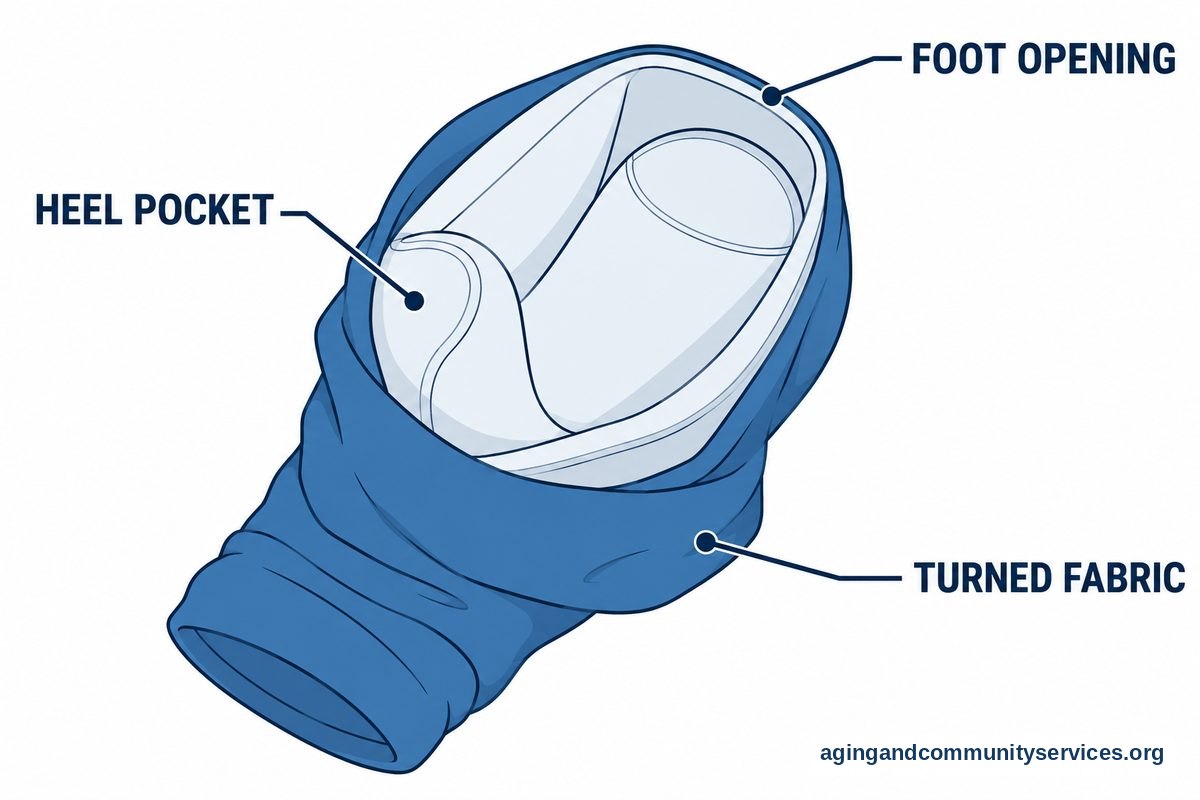
- Turn the sock partially inside out. Reach inside the fabric, hold the heel pocket, and pull the leg section down so only the foot part remains tucked inside.
- Slide your toes into the foot opening. Ease your foot in until your toes reach the front tip and your heel rests squarely inside the heel pocket.
- Gently roll the fabric upward. Slowly smooth the material up over your ankle and calf, taking small sections at a time rather than pulling hard from the top band.
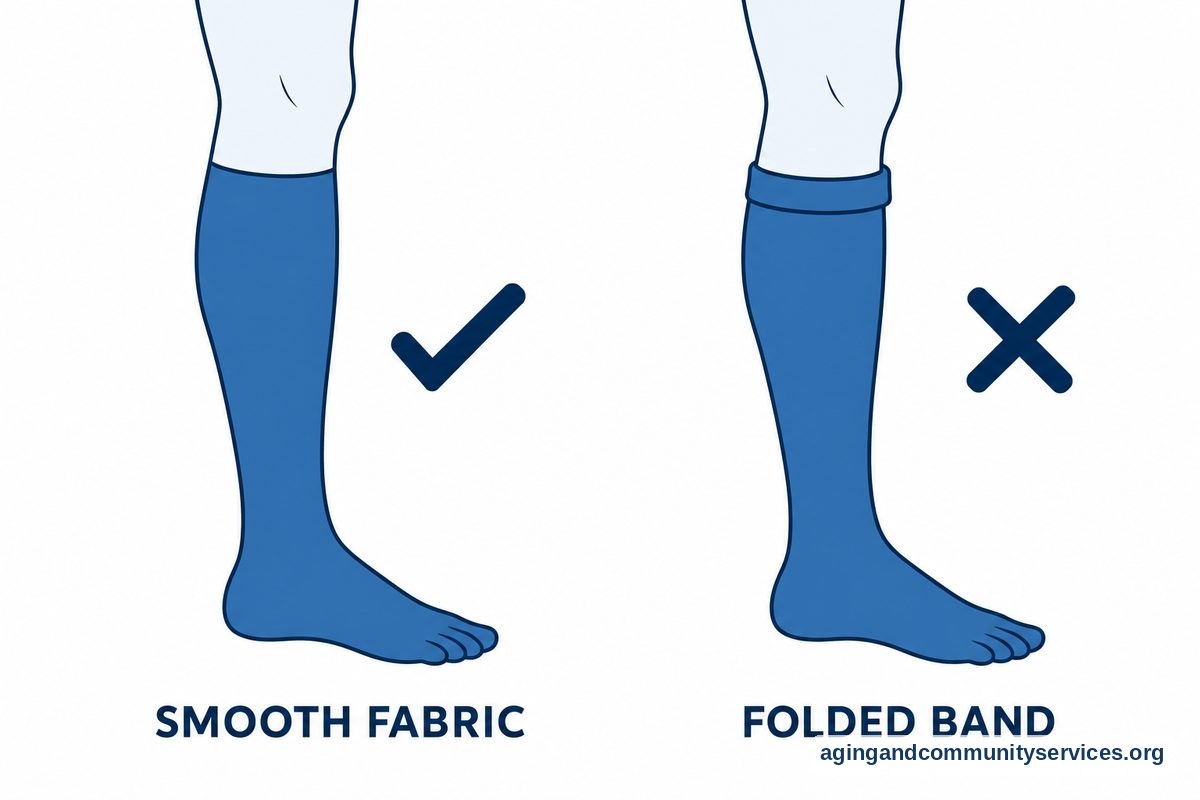
- Smooth out any wrinkles. Check that the fabric lies completely flat without bunching, and leave two fingers of space between the top band and your knee bend.
Common Mistakes to Avoid
- Rolling the top band down: Folding over the top edge creates a tight ring that squeezes your calf too hard and interrupts smooth circulation.
- Yanking from the top edge: Pulling the sock by its top rim can stretch the fabric out of shape, tear threads, or bruise fragile skin.
- Wearing damp fabric: Putting hosiery on right after a shower can make the material stick to your skin, which makes pulling it up much harder.
- Leaving creases or bunches: Letting the garment bunch around the ankles creates uneven pressure spots that can irritate sensitive skin.
- Wearing socks overnight without medical approval: Sleeping in daytime hosiery is usually not recommended because resting flat changes how your body moves blood through your legs.
When to Call for Help or Get Professional Advice
It is important to check in with a doctor, physical therapist, or occupational therapist if you notice any unusual changes in your legs. Call your healthcare provider right away if your toes become pale, cold, or blue, or if you feel sudden numbness, tingling, or skin pain while wearing your hosiery.
When you speak to your medical team, describe exactly where the discomfort happens and how long you had the socks on before the issue started. Let them know if your skin looks unusually red or broken after taking the socks off. If physical stiffness makes dressing difficult, an occupational therapist can demonstrate safe movements that protect your joints.
Daily balance matters when you dress. For extra support with daily stability, the National Institute on Aging: Falls and Falls Prevention guidelines offer practical advice on setting up your space to reduce trip risks while putting on clothing.
How to Use Compression Socks Properly Every Day
Using these garments properly means establishing a steady routine that fits your normal morning schedule. Sit down in a sturdy, stable chair with your feet flat on the floor to keep yourself safe while reaching down. Taking your time prevents sudden strains in your back and hips.
Always check the sizing to make sure the hosiery matches your current leg measurements. As people age or change activity levels, leg circumferences can shift. Reading about how to choose compression socks can help you understand how proper fit affects comfort and daily use.
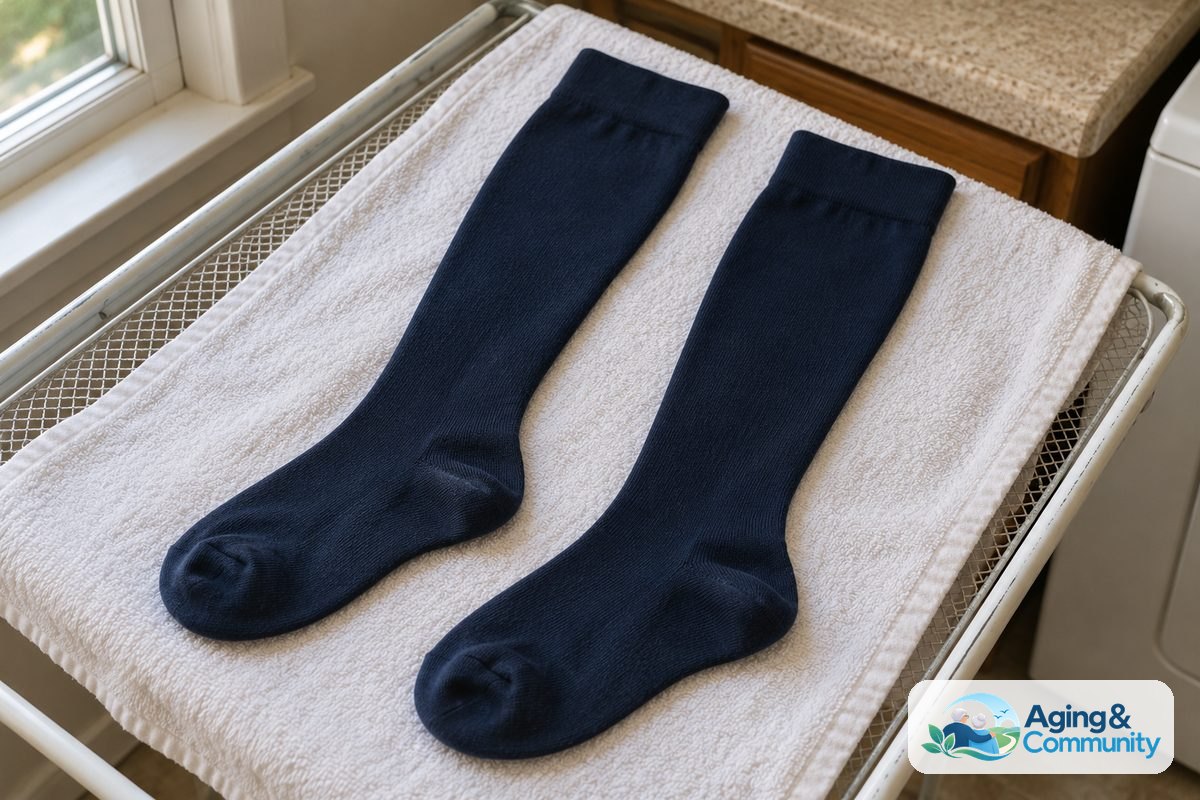
Washing your garments regularly is another key part of proper care. Hand wash or run them on a gentle cycle with mild soap, then lay them flat to dry. This keeps the elastic fibers working well so the garment holds its shape and provides steady support day after day.
How to Use a Compression Socks Aid for Easier Dressing
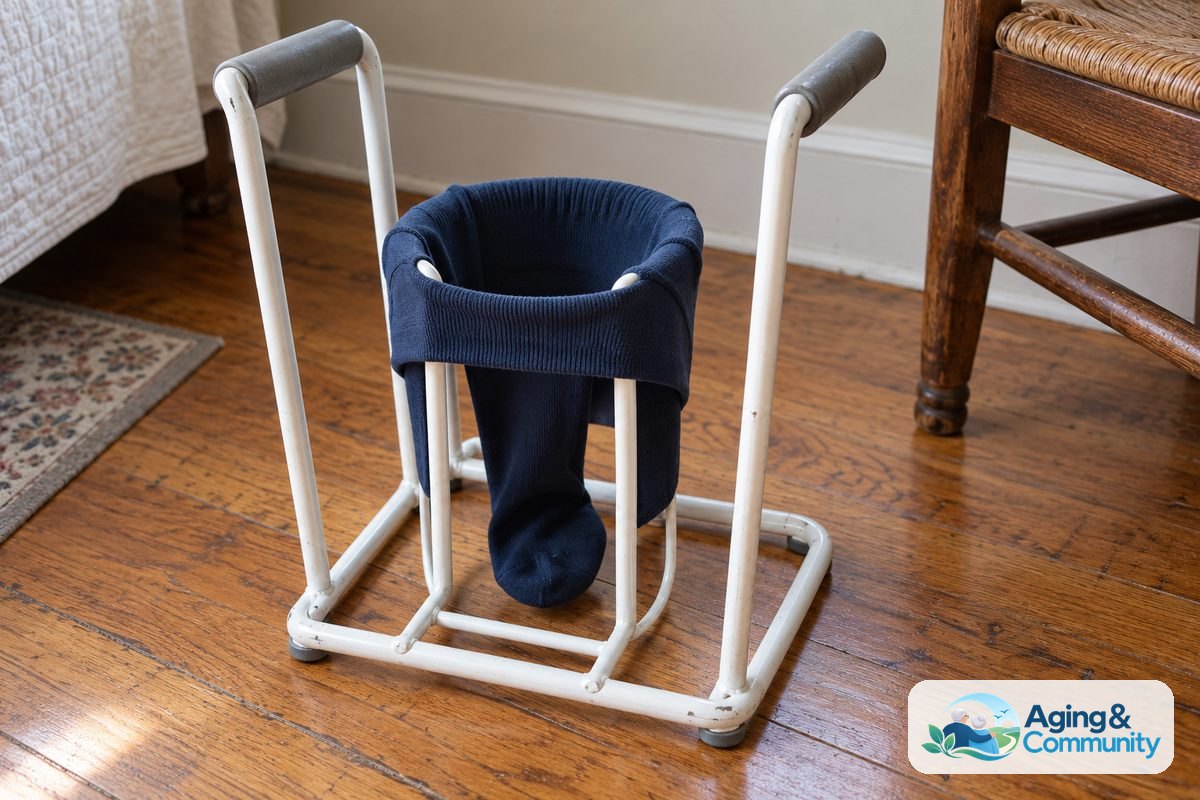
Many older adults find that bending forward to reach their feet can be tiring or painful. A dressing device provides long handles and a metal or plastic frame that holds the sock open for you. This tool reduces the need to bend deeply at the waist or twist your ankles.
Using a specialized frame called a sock aid for compression socks lets you stretch the garment over the base beforehand. Once the fabric is stretched over the frame, you simply slide your toes in and pull the cords upward along your shin. If you are new to these devices, learning how to use sock aid tools can save you time and preserve your daily energy.
If you or a loved one needs help finding community programs or in-home care services that assist with daily routines, the Eldercare Locator connects families to local resources across the country.
How to Use Compression Socks Correctly for Daily Comfort
Wearing your garments correctly means paying close attention to how your skin feels throughout the day. The fabric should feel snug and supportive, similar to a gentle hug around the lower leg, but it should never cause sharp pain or pinch your skin. If you feel pinching, remove the garment and check for twists in the material.
If your hands feel weak or you have trouble gripping the smooth nylon fabric, try wearing a pair of simple rubber kitchen gloves. The textured rubber palms give you a solid grip on the material, allowing you to guide it over your heel with minimal effort. This simple trick protects the fabric from fingernail snags as well.
Remember to inspect your legs each evening after you take the garments off. Look for deep indentations that take a long time to fade, dry patches, or tender red spots. Keeping your skin well moisturized in the evening after removal helps maintain a healthy skin barrier.
How to Use Compression Socks for Edema
When dealing with fluid retention in the lower legs, timing is everything. Edema typically increases as you sit or stand during the day, so putting the hosiery on while your legs are still rested and slender from the night is essential. If you wait until midday, swelling can make sliding the garments over your feet very uncomfortable.
If your legs are already puffy when you wake up, lie flat on your bed or sofa with your legs propped on pillows for fifteen to twenty minutes before trying to dress. This resting period allows gravity to move resting fluid back toward your core. Once your ankles look a bit smaller, slide the hosiery into place.
Never ignore changes in leg swelling. Always follow the specific pressure level suggested by your physician for managing fluid buildup. If you are wondering about medical coverage for these items, researching does medicare cover compression socks can provide valuable information about prescriptions and reimbursement rules.
The following table outlines helpful daily practices when managing fluid buildup with supportive hosiery:
| Time of Day | Recommended Action | Why It Matters |
|---|---|---|
| Morning | Put socks on right after getting out of bed. | Legs have the least fluid buildup early in the day. |
| Midday | Check for creases or rolling at the knee. | Ensures steady, comfortable pressure without pinching. |
| Evening | Remove socks and inspect your skin carefully. | Gives skin time to breathe and lets you check for irritation. |
| Bedtime | Apply a mild skin moisturizer to your legs. | Keeps skin hydrated overnight without affecting elastic fibers. |
Frequently Asked Questions
How long should I wear my compression socks during the day?
Most people put their hosiery on in the morning and wear it throughout their normal waking hours. You should take them off before getting into bed at night unless your doctor gives you different instructions. Giving your legs and skin a break while you sleep is standard practice.
Can I wear compression socks while sleeping?
Generally, you should not wear daytime support socks while sleeping unless directed by a physician. When you lie down flat, your heart does not have to work against gravity to move blood from your feet. Wearing tight garments while horizontal is usually unnecessary and may cause skin irritation.
How do I know if my compression socks are too tight?
Your socks are likely too tight if your toes feel numb, tingle, or turn cold and pale. Deep, painful indentations under the top band or throbbing in your calves also indicate that the size or compression rating is incorrect. Always consult your healthcare provider if you suspect your fit is wrong.
Why do my compression socks keep bunching at the ankle?
Bunching usually occurs when the sock is too long for your lower leg or when it was pulled up too quickly without being smoothed out. It can also mean the elastic has worn out and the garment needs replacing. Smooth the fabric evenly from heel to calf to avoid pressure spots.
How often should I replace my compression socks?
With regular wear and washing, most pairs last between three and six months before the elastic fibers begin to loosen. Once the material feels loose or slides down your leg easily, it is time to replace them with a fresh pair to ensure proper support.