

Many family caregivers look up how to use gait belt YouTube tutorials to see real demonstrations of safe standing and walking assistance. A transfer strap gives you a firm place to hold while helping someone steady their balance. Learning the right handholds and body mechanics helps keep both you and your loved one secure during daily movements.

How to Put on and Use a Transfer Belt
- Explain what you plan to do. Tell your loved one that you are placing the belt around their waist to help them stand and walk safely together.
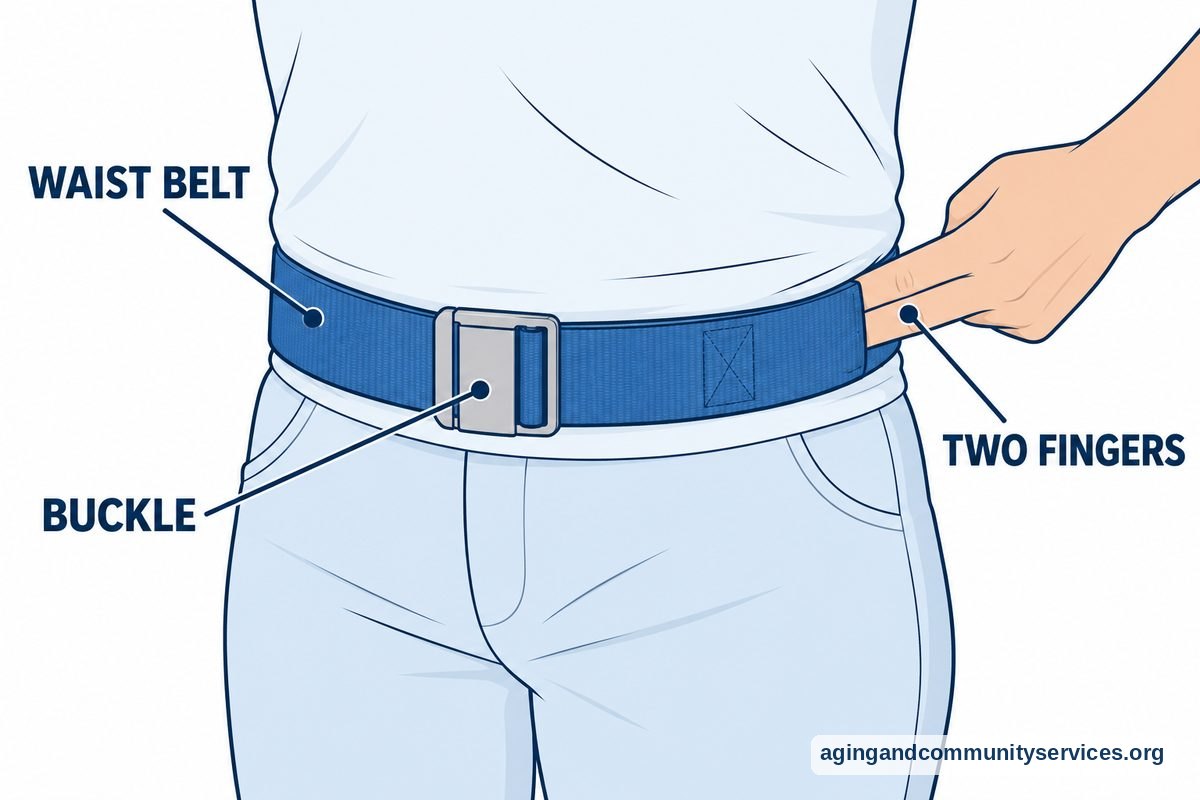
- Place the belt around the natural waistline. Wrap the fabric band snugly over clothing, keeping it flat against the back and smooth against the abdomen.
- Fasten the buckle securely in the front. Thread the strap through the metal teeth or click the plastic latch closed, making sure the buckle rests slightly off center so it does not press directly on the stomach.
- Check the fit with the two-finger rule. Slide two flat fingers between the belt and the person to make sure it is snug enough not to slip upward under the armpits, but loose enough for comfortable breathing.
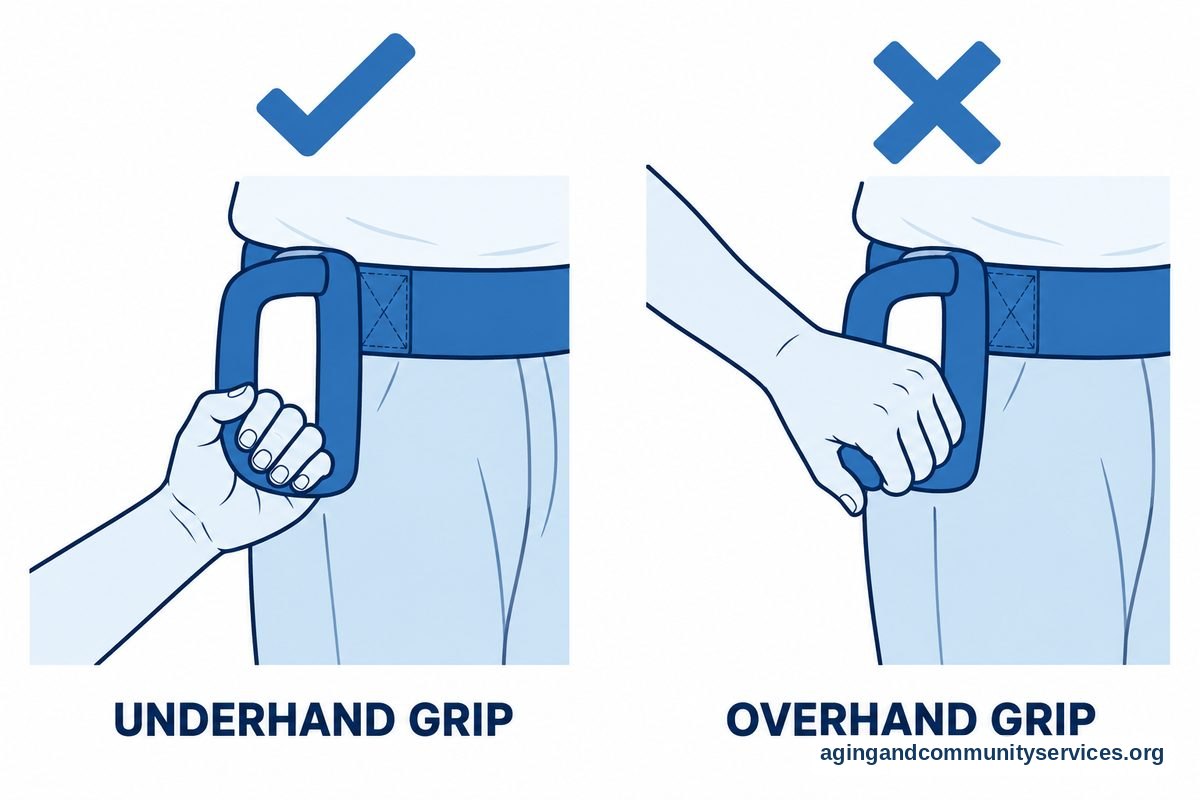
- Use an underhand grip to hold the belt. Turn your palms facing upward so your fingers curl under the fabric, which gives you leverage without pulling on delicate skin.
- Lift with your legs while keeping your back straight. Count together to three, rock slightly for momentum, and push upward through your legs as your loved one presses down through their feet.
- Walk slightly behind and to the weaker side. Keep one hand grasping the strap at the side or back while keeping your other hand ready near the person shoulder for gentle balance support.
If you prefer to see these motions in action, reviewing a clear how to use gait belt video can help you visualize proper foot placement and hand positions before trying them at home.
Common Mistakes to Avoid
- Holding the belt with palms facing down. An overhand grip makes your hands slip easily if a person stumbles, while an upward palm position creates a strong, secure hold.
- Pulling someone up by their arms. Grabbing under the armpits or tugging wrists can strain fragile joints and cause pain.
- Leaving the strap too loose. A loose strap can ride up onto the chest or rib cage during a transfer, causing discomfort and losing its stability.
- Placing the belt directly against bare skin. Always secure the material over a layer of shirt or pants fabric to avoid pinching or friction burns.
- Twisting your back while lifting. Pivot your entire body with your feet rather than twisting your torso while bearing weight.
When to Call for Help or Get Professional Advice
Transferring an adult safely requires good balance and physical strength from both people. If you ever feel that your loved one is too heavy to assist safely, or if they cannot bear weight on their legs, stop and consult a professional. You can ask a primary care doctor, physical therapist, or occupational therapist to evaluate their transfer skills in person. They can demonstrate custom techniques tailored to your home environment and explain how to choose between transfer aids.
When speaking with a physical therapist or nurse, explain specific details about your daily routine. Tell them how many times a day transfers happen, whether dizziness occurs upon standing, and if there have been any near-slips. You can also explore community support programs through the Eldercare Locator to find respite care or local mobility assistance.
How to Use a Gait Belt With a Walker
Many older adults rely on a front-wheeled or four-wheeled frame for daily mobility. Helping someone move from a seated position to a rolling frame requires a steady rhythm and clear communication. Understanding the broader basics of how to use gait belt techniques will make walker transfers much smoother.
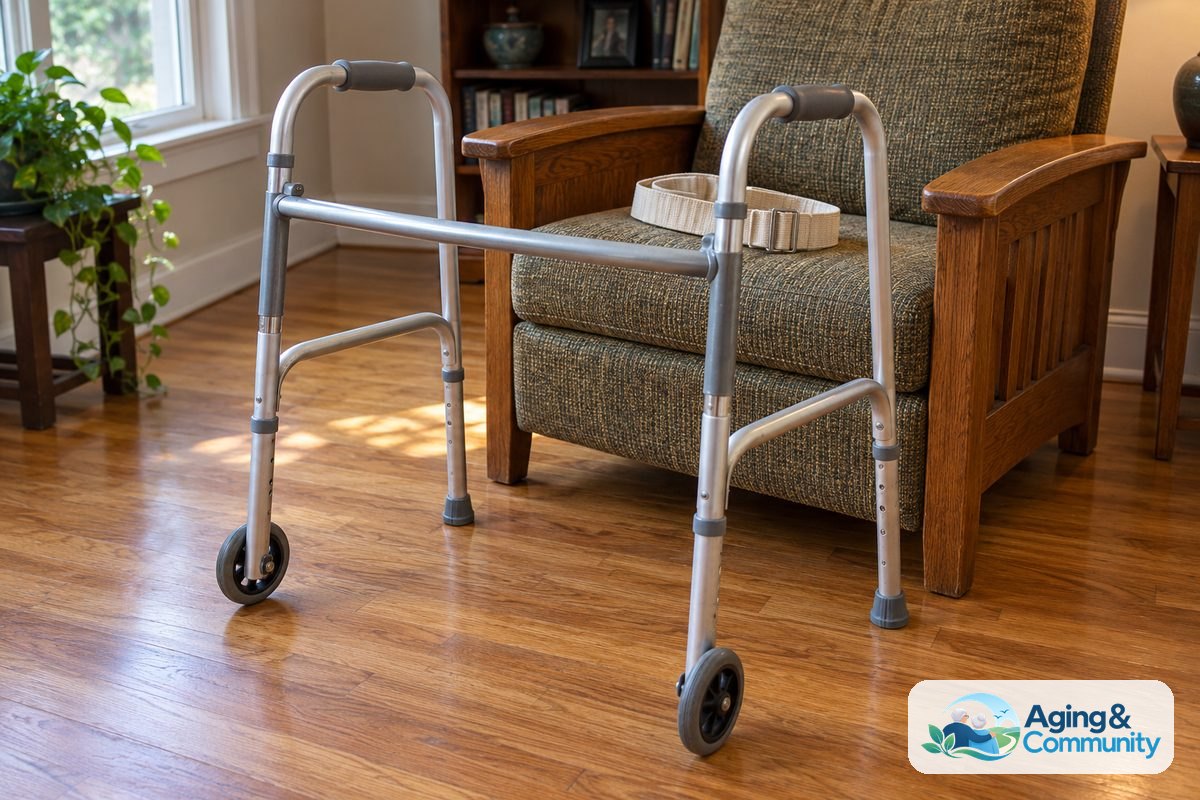
First, position the rolling frame directly in front of the chair, locking any hand brakes if the model has them. Remind your loved one to keep their hands resting on the armrests of the chair, not on the rolling frame, while pushing up to stand. Gripping a rolling frame too early can cause it to tip or slide away. Grasp the transfer strap with an underhand grip, count aloud together, and encourage them to rise to a standing position. Once fully upright and steady, they can shift their hands from the chair to the grips of the frame. Stay close to their weaker side, keeping one hand gently holding the strap as they take slow, even paces.
According to the National Institute on Aging guidelines on falls and falls prevention, simple home safety habits and mobility reviews can lower the risk of balance troubles during daily walking routines.
Choosing the Right Strap Style
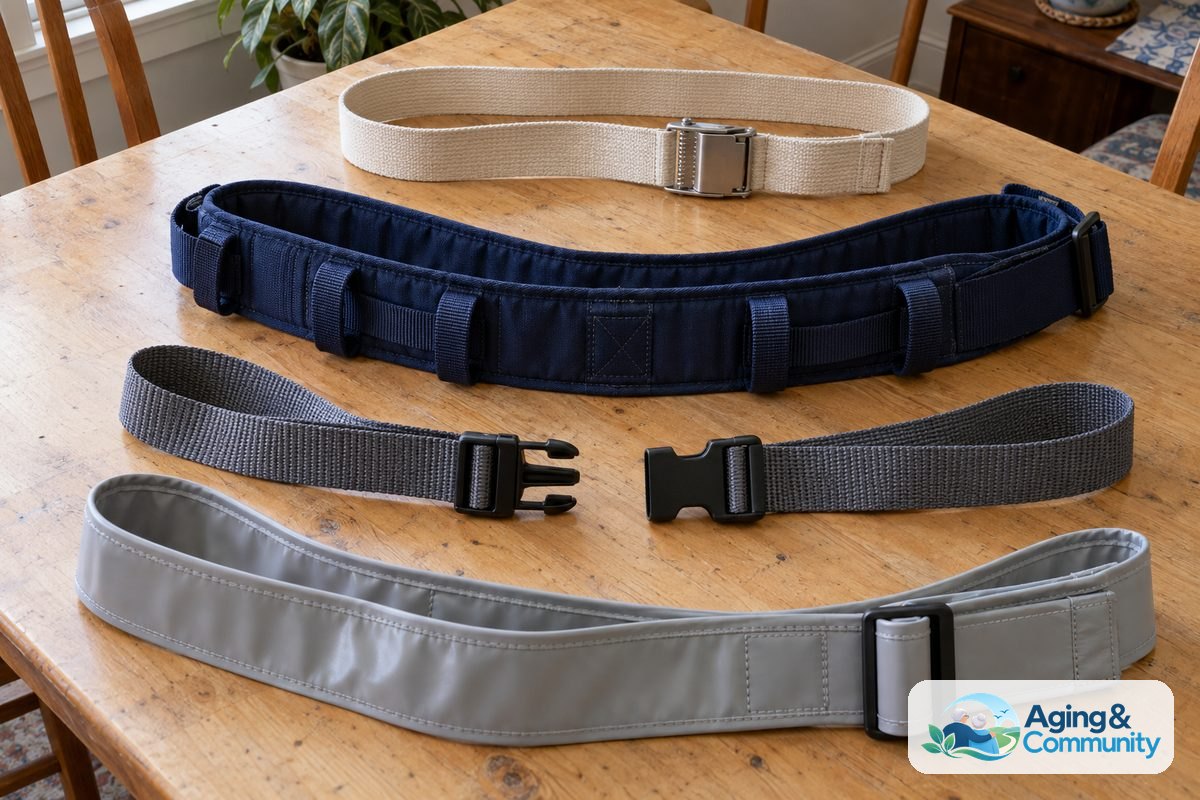
Standard cotton straps with metal buckles are common in clinics and care centers because they are durable and simple to wash. However, specialized styles with stitched hand loops are also widely available. Learning about how to use gait belt with handles can offer additional hold options for family members who need better leverage. Padded versions provide broader surface support around the waist, which can feel much gentler across tender lower backs.
Caregivers can review different designs by looking into options for gait belts for elderly relatives to match specific needs like quick-release plastic buckles or extra-long lengths for heavier winter clothing.
| Belt Style | Best Used For | Key Caregiver Benefit |
|---|---|---|
| Standard Cotton Webbing | Everyday transfers and short indoor walks | Durable metal teeth allow custom tightness |
| Padded Belt with Handles | Assisting larger individuals or frequent balance checks | Vertical and horizontal grips reduce wrist strain |
| Quick-Release Buckle | Quick application and removal | Snaps closed easily without threading metal teeth |
| Wipe-Clean Vinyl | Bathroom visits and hygiene routines | Can be sanitized quickly between transfers |
Frequently Asked Questions
How tight should a transfer strap be?
The belt must be snug enough that it does not slide upward toward the chest when you gently lift. You should be able to slide two fingers flat beneath the material comfortably. If you can fit your whole hand underneath easily, tighten the buckle another notch before standing.
Where should the belt sit on the body?
Place the strap around the narrowest part of the natural waist, usually right over the navel area. If the person has had recent abdominal surgery, a feeding tube, or a colostomy bag, consult their doctor or physical therapist for alternative placement options, such as placing the belt higher across the chest or using an alternative transfer aid.
Can I leave the belt on all day?
No, a transfer strap should only stay on during active movements like walking or standing. Take it off once the person is safely seated in an armchair, wheelchair, or bed. Leaving it secured while resting can cause skin chafing and general discomfort.
What should I do if the person starts to fall?
Do not attempt to pull the person back upright by force, as this can injure your spine or tear muscles. Instead, maintain your underhand hold on the strap, step close, and gently guide their body down along your thigh to the floor in a seated position. Once they are safely on the floor, check for comfort and call for assistance.
Can a gait belt be washed in a washing machine?
Most cotton canvas models can be placed in a standard washing machine using warm water and mild detergent. It is often best to air dry the strap to keep the fibers flat and protect the metal teeth from damage. Always check the manufacturer label for specific cleaning instructions.