

Learning how to use handheld shower head sprayers can make daily bathing far more comfortable and manageable. You simply turn on the water, test the temperature, hold the lightweight wand close to your body, and direct the spray exactly where you want it. This flexible tool allows you to wash thoroughly while standing or while resting comfortably on a bath seat.

Step-by-Step: How to Use a Handheld Shower Head
- Check the spray settings before turning on the water: Look at the dial on the face of the wand and turn it to a gentle, wide spray pattern rather than a hard, narrow stream.
- Start the water flow at the main faucet: Turn on your shower controls while keeping the wand pointed down toward the shower floor or into a corner so water does not splash your face.
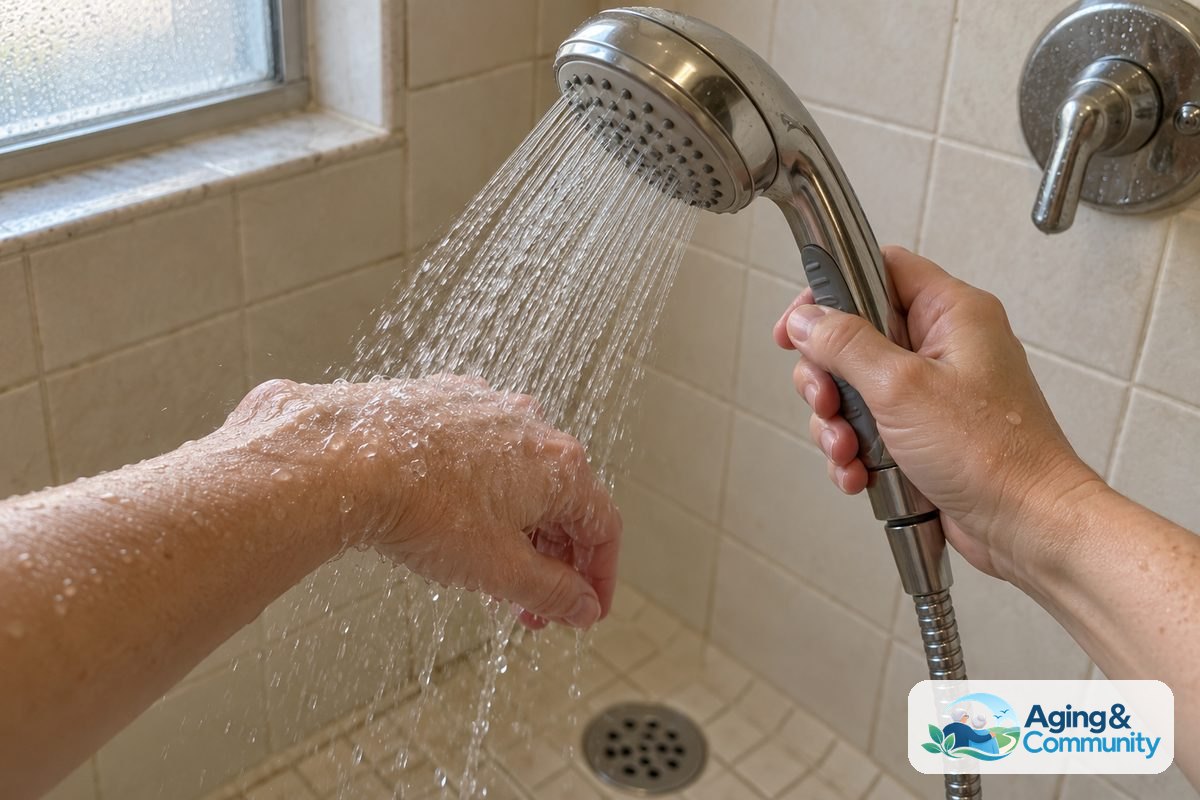
- Test the water temperature carefully: Let the water run over the back of your hand or wrist until it feels warm and comfortable before bringing the wand toward your body.
- Lift the wand from the holder: Hold the handle firmly with your dominant hand, keeping your wrist relaxed and the hose free of loops or tangles.
- Rinse your body from the top down: Bring the spray head close to your shoulders and move downward, holding the head a few inches from your skin to keep the water warm and prevent overspray.
- Turn the water down or use the pause switch to lather: If your unit has a trickle switch on the handle, slide it to slow the stream while you soap your skin or shampoo your hair.
- Rinse off completely: Bring the spray back to full volume and move it systematically across your arms, torso, and legs to wash away soap quickly.
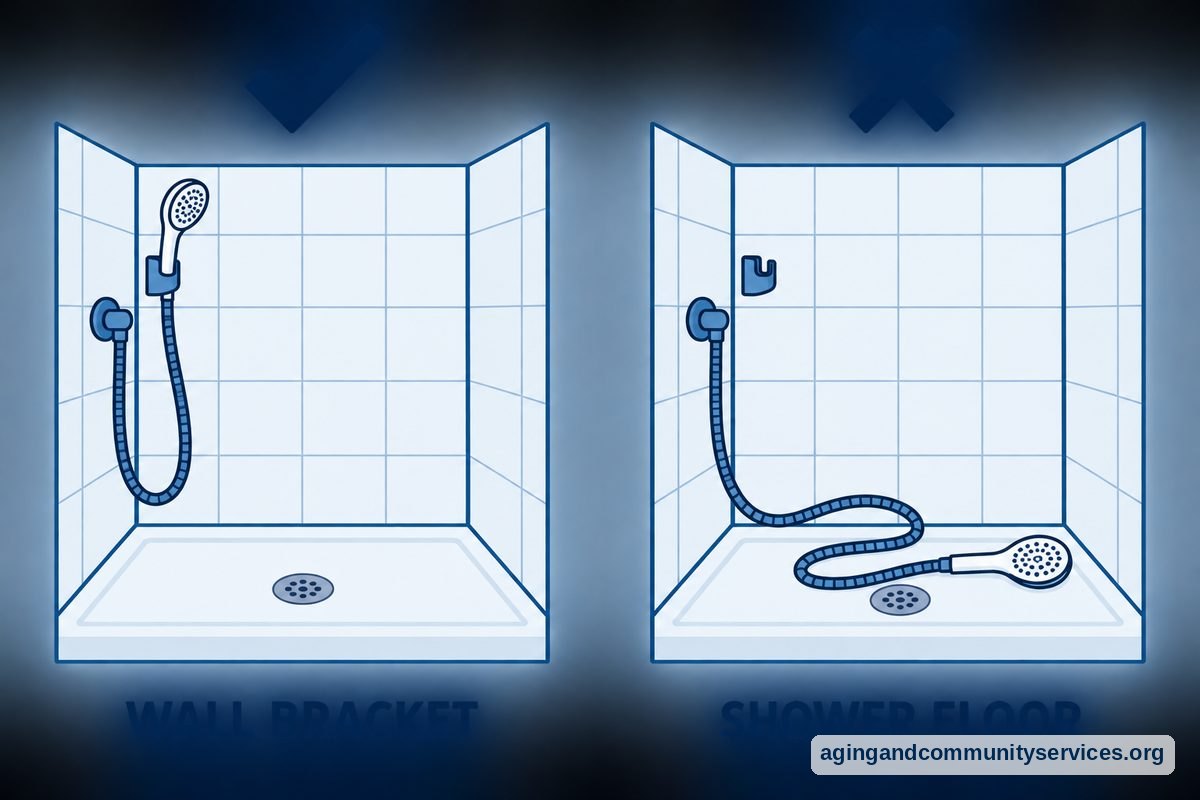
- Return the wand securely to its bracket: Slide the wand back into its wall mount or dock before turning off the main water valve at the wall.
Many older adults find that bathing becomes much less tiring when pairing a flexible wand with comfortable seating. If you prefer to sit while washing, review our guide on how to use shower chair equipment safely to make your routine even smoother.
Common Mistakes to Avoid
- Facing the spray nozzle toward your face when turning on the water: Always aim the wand toward the shower floor until you know the pressure and temperature are right.
- Letting the long hose wrap around your feet: Keep the hose hanging freely between your legs or to the outer side of your body to avoid tripping hazards.
- Pulling on the hose to reach the wand: Always reach for the handle itself rather than tugging on the flexible metal or plastic tubing.
- Using high-pressure massage settings on sensitive skin: Strong jet settings can feel uncomfortable or cause skin redness, so stick to wide, soft aerated streams.
- Leaving the wand resting on the shower floor: A loose wand on the floor can become a tripping obstacle and can collect soap residue.
- Using the shower head as a support handle: Never lean your body weight on the shower wand, hose, or bracket, as they cannot support your balance.
When to Call for Help or Get Professional Advice
While a handheld sprayer is simple to operate, setting up your bathroom for long-term comfort may require extra guidance. If you feel unsteady on your feet, feel dizzy when reaching for controls, or find the hose difficult to manage, reach out to an occupational therapist or a physical therapist. These professionals can visit your home, evaluate your movements, and suggest customized adjustments that make bathing easier.
According to the National Institute on Aging: Falls and Falls Prevention resources, simple home modifications can lower the risk of accidents in wet areas. If you need assistance finding local professionals who evaluate home safety, you can contact the Eldercare Locator to connect with community services in your area.
When you speak with a therapist or home contractor, tell them:
- Whether you sit or stand while bathing.
- If you have trouble lifting your arms above shoulder height.
- Any difficulties you have gripping smooth plastic handles.
- Where you currently reach to turn water on and off.
Using a Handheld Sprayer While Seated
Using a handheld sprayer from a seated position offers comfort and independence. When seated, you do not have to stretch or twist your body to get under an overhead stream. You can simply bring the water right where you need it, keeping your face dry if you do not want your hair washed.
If you are deciding between different seating setups, comparing a shower chair vs shower bench can help you choose the best option for your bathroom layout. A transfer bench allows you to slide over the tub wall while seated, which works wonderfully with an extended shower hose.
For added stability when sitting down or standing up, proper wall supports are essential. Reviewing correct grab bar placement in shower spaces ensures you always have a secure, anchored bar to hold onto with your free hand while your other hand holds the spray wand.

Choosing Features That Make Handheld Showers Easier to Use
Not all handheld units are built the same way. If you are shopping for a new fixture, selecting features designed for ease of use can make a big difference in your daily routine. Exploring specialized handheld shower heads for seniors can give you an idea of which models offer lightweight handles, long hoses, and easy-to-read dials.
| Feature | What to Look For | Why It Helps |
|---|---|---|
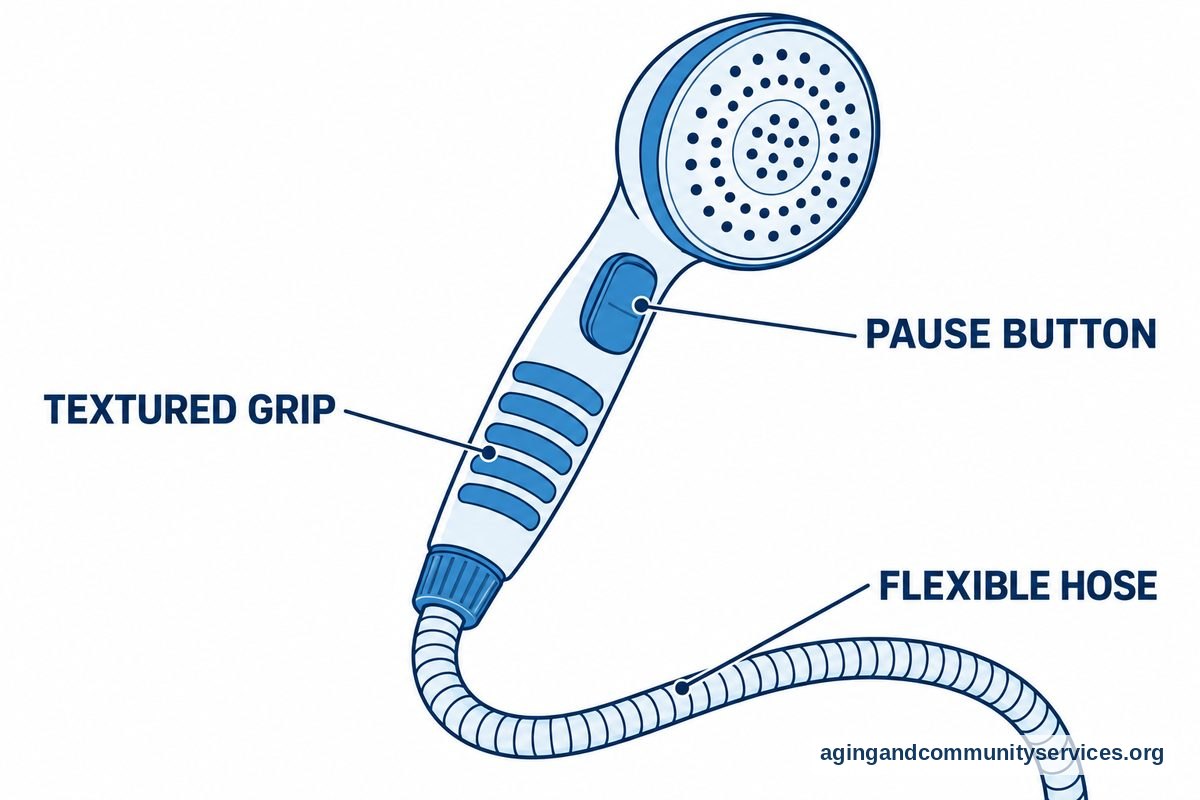
| Hose Length | 72 to 84 inches, flexible metal or silicone | Reaches easily to a seated position without pulling tight |
| Handle Grip | Textured, rubberized, or contoured shape | Prevents slipping when hands are soapy or wet |
| Pause Button | Push-button or rocker switch on the handle | Slows water to a trickle without losing temperature |
| Mounting Bracket | Low-mount wall bracket or slide bar | Keeps the wand within reach while you are sitting down |
Planning these small details supports the goal of aging in place comfortably and maintaining everyday independence.
Frequently Asked Questions
How do I switch between the overhead shower and the handheld wand?
Most combination systems use a small lever called a diverter valve. This lever is usually located right behind the main shower head or on the tub spout. Turn or flip the lever to redirect the water from the top nozzle into the flexible hose. You can do this before stepping into the stall so the water is already flowing through the wand.
Can I use a handheld shower head if I have weak grip strength?
Yes. Look for models that feature a rubberized grip or an attached strap that slips over your hand. You can also ask an occupational therapist about soft silicone wraps that slip over existing handles to make them thicker and easier to hold without squeezing tightly.
How do I keep the hose from getting tangled?
Choose a shower hose labeled as tangle-free or equipped with a swivel connector at the base of the wand. When you finish your shower, let the wand hang straight down for a moment before placing it in the dock so any natural twists in the line unwind on their own.
Where should the wand bracket be mounted if I sit down to shower?
The bracket should be installed at about chest height relative to your seated position, usually around 36 to 48 inches from the shower floor. This placement allows you to take the wand down and put it back without bending over or stretching your arms high overhead.
What should I do if the spray wand feels too heavy?
Consider replacing the wand with a lightweight composite model. Many modern handheld heads weigh only a few ounces. You can also place the wand in an adjustable slide bar bracket pointed directly at your back or shoulders, allowing you to wash hands-free whenever your arm feels tired.