

If you want to know how to use sock aid YouTube demonstrations to make dressing easier, you have come to the right place. A sock aid is a lightweight tool with long cords that brings your footwear right to your toes without bending over. Watching a quick clip or reading these simple instructions helps older adults maintain independence every morning.

Step-by-Step Guide on How to Use a Sock Aid
Using this handy tool takes just a moment to learn. Once you practice the motions a few times, putting on everyday footwear becomes quick and comfortable. Review these core steps to master how to use sock aid devices safely at home.
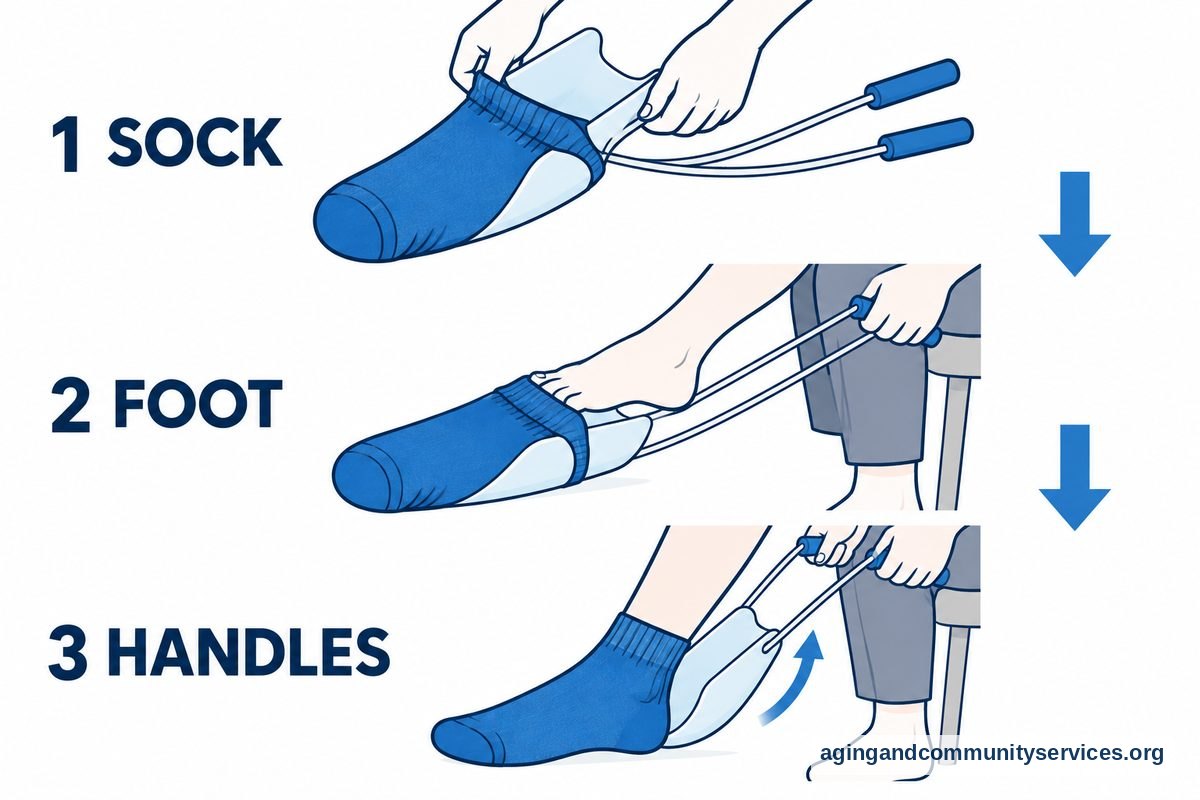
- Sit down comfortably: Sit in a firm chair with your feet flat on the floor so you remain stable and secure throughout the process.
- Slide the sock onto the plastic cradle: Bunch up your sock and stretch the opening over the curved plastic shell, making sure the toe of the sock touches the end of the form.
- Check the heel placement: Ensure the heel of your sock sits along the curved bottom of the device so it lines up with your foot properly.
- Lower the device by the cords: Hold the handles firmly and lower the plastic shell down to the floor directly in front of your foot.
- Slide your toes inside: Point your toes and gently slip your foot all the way into the opening of the sock until your toes reach the front.
- Pull the handles upward: Pull the cords toward your body with an even motion, allowing the plastic shell to glide around your heel and leave the sock resting neatly on your lower leg.
Common Mistakes to Avoid
While this adaptive item is straightforward, small slip-ups can make the process feel tricky. Avoiding these simple mistakes helps you dress smoothly without frustration.
- Pulling the sock too far onto the cradle: Stretching the sock all the way up the straps can make it bunch up. Leave the top rim just over the plastic edge so your toes can enter freely.
- Pulling straight up instead of backward: Tugging cords straight toward the ceiling can pull your foot off the floor. Pull the handles back toward your knees to let the tool glide smoothly off your heel.
- Using shoes or socks with tight elastic: Extremely tight dress socks can crush the plastic shell. Choose socks with gentle stretch until you feel confident with the motions.
- Standing up while dressing: Never attempt to use this tool while standing. Always remain seated to protect your balance and follow smart advice on falls and falls prevention from trusted health experts.
- Letting the cords twist: Tangled ropes can cause the cradle to turn sideways, making it hard to center your toes. Keep both cords flat and untangled before lowering the unit.

When to Ask for Professional Guidance
Sometimes dressing challenges stem from changes in joint mobility, balance, or strength. If using daily tools continues to feel painful, unsteady, or exhausting, it is wise to consult a doctor, physical therapist, or occupational therapist. An occupational therapist can evaluate your routine and recommend tailored daily living equipment to keep you safe.
When you contact a healthcare professional, describe the exact moments where you feel stuck. Tell them if your hips feel stiff, if your grip feels weak, or if reaching down makes you dizzy. If you need local community resources or home support, call the Eldercare Locator to find programs that assist families in your area. Seeking timely guidance ensures your home remains a safe place to thrive.
Choosing the Right Tool for Your Needs
Not every dressing tool looks or feels the same. Finding the right design depends on your personal mobility and the types of socks you prefer to wear each day. You can read more about selecting a quality sock aid for elderly individuals to compare materials, handle styles, and cradle shapes.
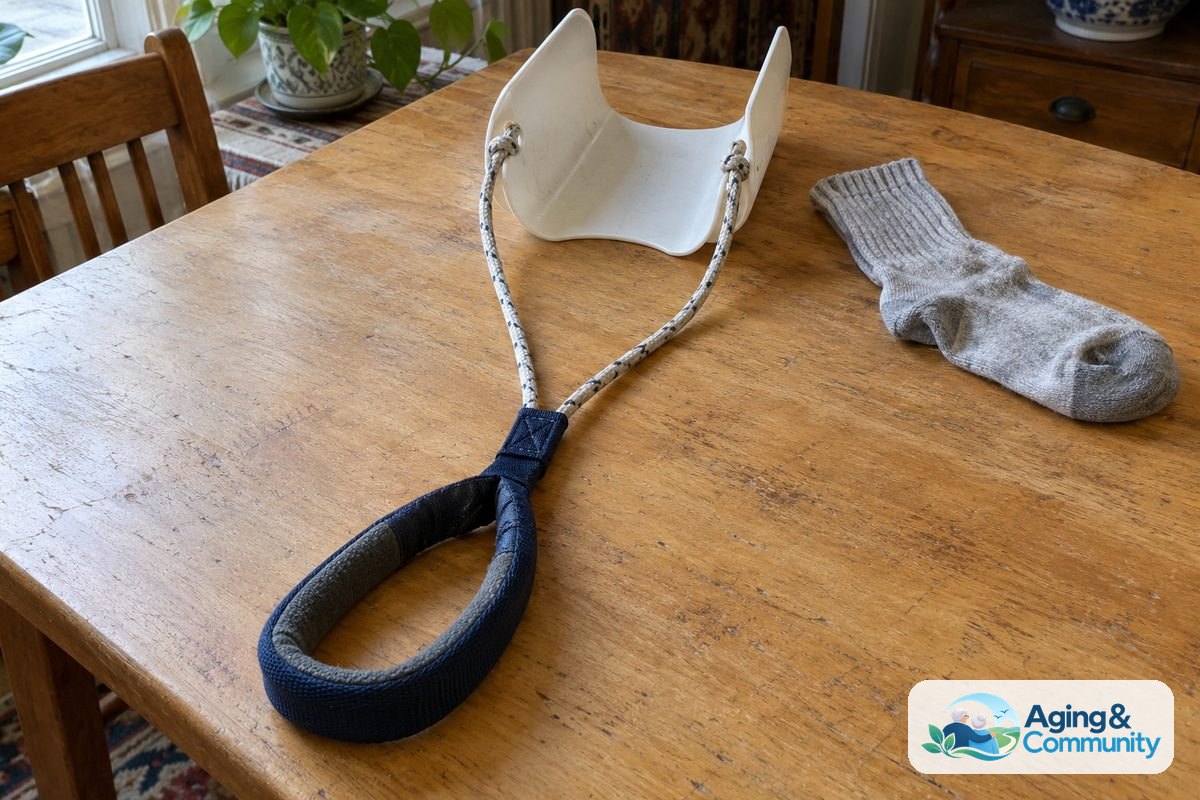
Many models feature a flexible plastic core lined with soft terry cloth on the outside. The fabric helps create gentle friction against the floor so the tool does not slide away while your foot enters. The smooth nylon interior lets your skin slide effortlessly into the sock fabric without pinching. Choosing the right design can support aging in place with greater comfort and dignity.

Adapting the Method for Specific Conditions
People often turn to online video guides when recovering from medical procedures, or consult a compression socks vs ace bandage guide for leg support. For instance, learning how to use a sock aid after hip replacement surgery protects healing tissues by keeping your hips from bending past a ninety-degree angle. In these cases, moving slowly and keeping your legs extended forward makes a major difference.
Other people may have limited mobility on one side due to a stroke or hand injury. Learning how to use sock aid with one hand involves tying the pull cords together or using specialized single-cord handles. You can rest the plastic shell against your opposite thigh while loading the sock, allowing you to dress completely independently using one steady hand.
Frequently Asked Questions
Can I use compression socks with a standard sock aid?
Standard flexible models are usually too soft to handle heavy elastic. Tight medical stockings require a rigid steel wire frame or a heavy-duty stocking donner, especially when dealing with compression socks vs tight socks fit. Check with your doctor or medical supply team to choose a frame that matches your specific compression level.
Where can I watch a visual guide of these steps?
If you prefer visual demonstrations, you can review how to use a sock aid video youtube tutorials for clear, step-by-step camera angles. Seeing someone perform the hand motions in real time can make the instructions click immediately.
What should I do if the sock aid slips away across the floor?
If the device slides too far forward on slick floors, place a non-slip rubber mat or thin throw rug beneath your feet. Many models also have terry cloth on the outer shell, which grips carpet or mats to hold the tool steady as your foot enters.
How do I take my socks off without bending over?
You can remove your socks using a long-handled dressing stick or a basic shoehorn. Simply slip the hook or curved tip behind your heel, push the sock downward past your ankle, and let it slide off your toes.