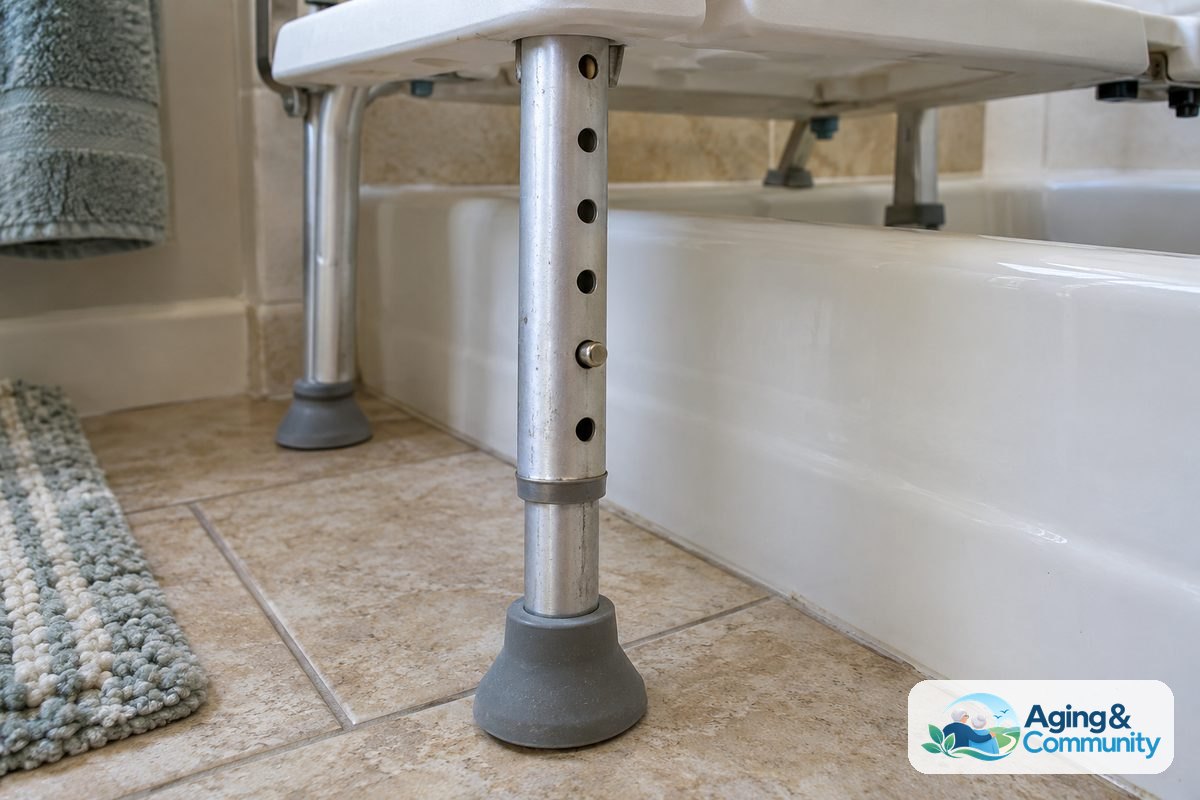
Learning how to use tub transfer bench equipment properly makes bathing safer, simpler, and much more comfortable. A transfer bench sits across the rim of your bathtub so you can sit down outside the tub and slide safely across into the water. This practical tool allows older adults to wash with confidence while remaining seated the entire time.
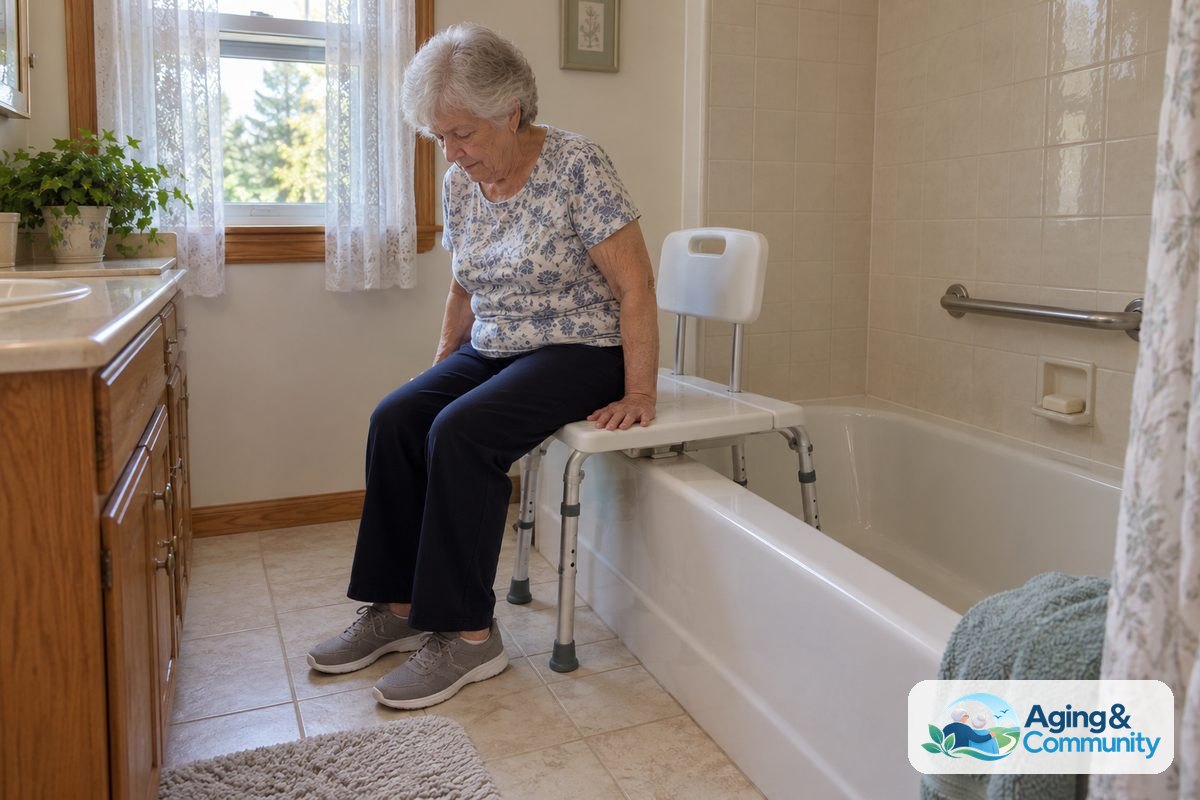
How to Use a Tub Transfer Bench Step by Step
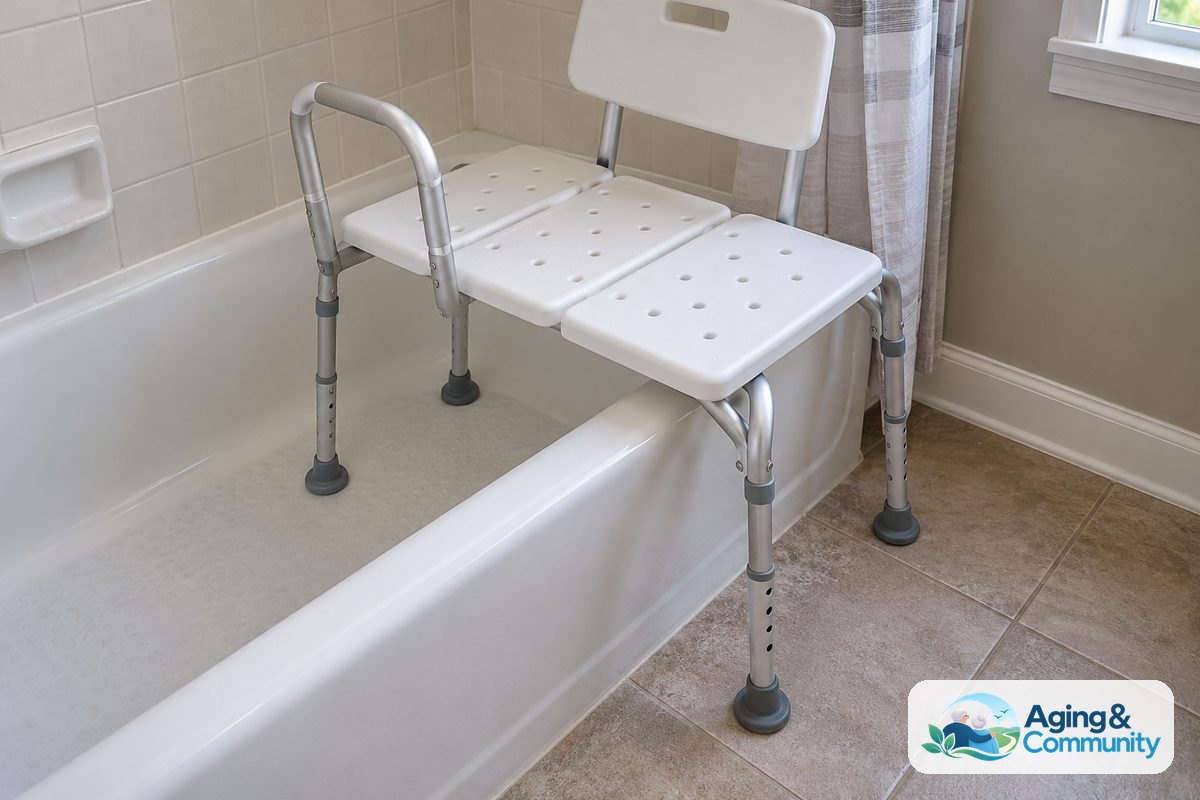
- Set up the bench correctly. Place the two inner legs inside the tub basin and the two outer legs on the dry bathroom floor, making sure the bench seat is level and all four rubber feet rest firmly on the ground.
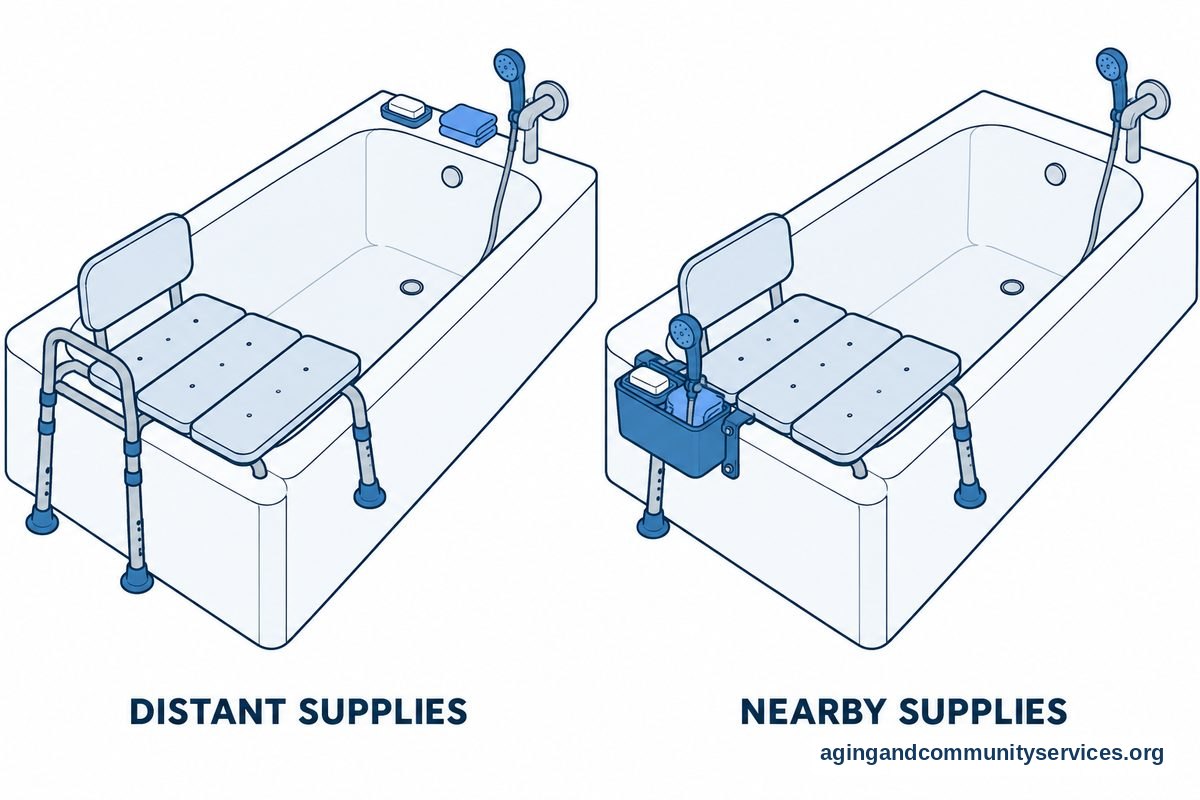
- Prepare your bathing supplies. Place your soap, washcloth, towel, and handheld shower sprayer within easy arm reach before you begin undressing or running water.
- Back up to the bench. Walk slowly toward the bench until the backs of your legs touch the edge of the seat on the outside of the tub.
- Sit down gently. Reach your palms back to feel for the sturdy seat or armrest, then slowly lower yourself into a seated position while keeping both feet on the dry floor.
- Slide across the seat. Scoot your body toward the center of the bench, moving sideways so your hips move closer to the tub basin.
- Lift one leg over the tub wall. Turn your body slowly toward the faucets, lifting your outer leg carefully over the tub rim and resting your foot flat on the tub floor.
- Bring your second leg inside. Lift your other leg over the tub wall so both legs are now resting comfortably inside the bathtub.
- Position yourself for washing. Scoot all the way back into the seat so your back is well supported, close the shower curtain, and begin your shower.
- Reverse the steps to exit. Turn off the water, open the curtain, dry your body, lift your legs over the tub wall one at a time, and slide back to the outer edge before standing.
If you are deciding between different types of bathroom seating, comparing a shower chair vs shower bench can help you see which option fits your bathroom layout best.
Common Mistakes to Avoid
- Leaving the bench height unadjusted: Using a bench that is too high or too low makes sitting down hard on your knees and hips. Your feet should sit flat on the floor when seated on the outer edge.
- Forgetting to tuck the shower curtain: Letting the shower curtain hang outside the tub along the bench line can cause water to run down onto the floor, creating a slippery surface.
- Rushing the transfer: Moving too quickly while lifting your legs can throw off your balance. Take your time with each movement.
- Grabbing the shower curtain for balance: A shower curtain or rod cannot hold body weight. Always use the built-in bench handle or nearby wall bars for steady support.
- Leaving items out of reach: Reaching too far for shampoo or towels while seated can cause you to lean unsafely. Keep all essentials right next to the bench.
When to Call for Help or Professional Advice
Sometimes setting up bathroom equipment brings up questions about personal safety. If you feel unsteady while sliding across the bench, or if lifting your legs over the tub wall causes pain or dizziness, it is wise to seek professional guidance. A doctor, physical therapist, or occupational therapist can evaluate your mobility and recommend adjustments.
When you speak with an occupational therapist, tell them the height of your tub wall, the size of your bathroom, and whether you experience weakness or joint stiffness. An occupational therapist can visit your home to check your equipment setup and show you personalized transfer techniques. The National Institute on Aging aging in place resources offer helpful guidance on home safety modifications that support independent living.
You can also reach out to the Eldercare Locator to find local community programs, home safety assessments, and caregiver assistance programs in your area.
How to Use a Tub Transfer Bench with Shower Curtain
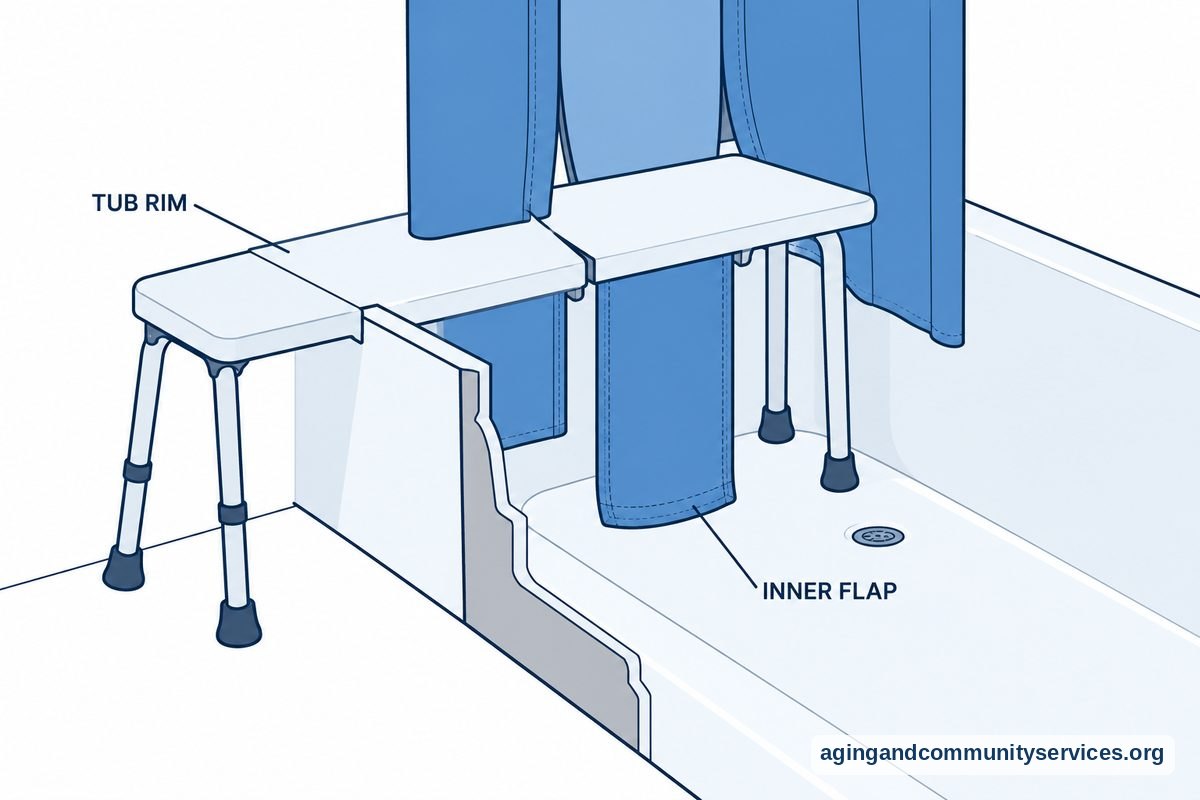
Water leaks on the bathroom floor create slip hazards. Using a transfer bench requires a slightly different shower curtain setup because the bench spans over the edge of the tub. A standard curtain cannot simply hang straight down on the inside of the tub wall where the bench rests.
To fix this, you can use two shower curtains or make simple vertical slits in an inexpensive plastic liner. Cut two vertical slits in the liner from the bottom up to the height of the bench seat. This lets the center flap of the curtain hang between the bench seat and the tub wall, staying inside the tub basin. The outer edges of the curtain can hang freely on either side of the bench legs.
Another clean solution is using a split shower curtain designed specifically for transfer benches. These curtains feature built-in vertical openings with hook-and-loop fasteners that seal tightly around the bench seat, keeping water completely inside the tub.
For added security inside the shower area, proper grab bar placement in bathtub walls provides solid handholds right where you need them most.
Helpful Printable Guides and Video Demonstrations
Many family caregivers find it useful to keep a physical reminder in the bathroom until the transfer steps feel natural. A simple printable reference can be kept nearby in a plastic sheet protector. You can download and print a reference guide or review occupational therapy handouts from your local clinic.
Watching an instructional video can also clarify each movement before you try it yourself. Seeing someone sit, slide, and rotate their legs helps build confidence for both the bather and any family member who is assisting. Many hospital therapy departments and home health agencies publish short educational videos online demonstrating proper seat adjustments and body mechanics.
If you are exploring different models, reviewing various tub transfer benches will help you find the right seat width, weight capacity, and frame style for your tub. Understanding how to use shower chair setups can also give you a broader view of bathing options if you have a standalone walk-in stall instead of a tub.
Frequently Asked Questions
How to use a tub transfer bench if I have weak legs?
If you have weakness in one or both legs, back up to the bench until you feel it against the back of your knees, then use your arms to lower yourself smoothly onto the seat. Once seated, slide across toward the inside of the tub. You can use your hands to gently lift your weaker leg by holding beneath the thigh, guiding it over the tub edge while keeping your upper body firmly supported on the seat.
How to use a tub transfer bench handout or pdf for family caregivers?
A printable handout or pdf gives caregivers a simple checklist to follow during bath time. Keep the sheet posted on the bathroom wall where it is easy to read. It should list key safety reminders, such as checking that all four suction feet are locked, keeping a dry towel on the floor, and ensuring the bather scoots all the way across before lifting their feet.
How to use a tub transfer bench with shower curtain without leaking?
To keep water inside the tub, use a curtain with two vertical slits cut to fit around the bench seat, or buy a dedicated split curtain. Tuck the middle section of the liner inside the tub wall so water drains downward into the tub. Keep the outer portions of the curtain inside the tub at the ends, leaving only the bench frame crossing the tub wall.
How to use a tub transfer bench video resources effectively?
When watching a demonstration video, pay close attention to foot placement and where the person places their palms during each phase of the transfer. Watch the video together with your family caregiver so everyone understands the flow of movements. Practicing the steps with dry clothes on before running any water is an excellent way to turn what you watched into muscle memory.