

Learning how to use wheelchair scale equipment correctly helps you track body weight without requiring someone to stand up. You simply roll the person onto the platform while they remain seated, lock the brakes, and subtract the weight of the chair. This simple process provides an accurate reading while keeping your loved one secure and comfortable.

How to Use a Wheelchair Scale Step by Step
- Clear the area around the scale platform. Make sure the floor is flat, dry, and free of clutter so the ramps sit flush against the ground.
- Turn on the display unit and check for zero. Press the power button and wait until the screen reads zero before moving anyone onto the surface.
- Weigh the empty wheelchair first to find the tare weight. If your scale has a tare button, roll the empty chair on, press tare to reset the screen to zero, and roll it off.
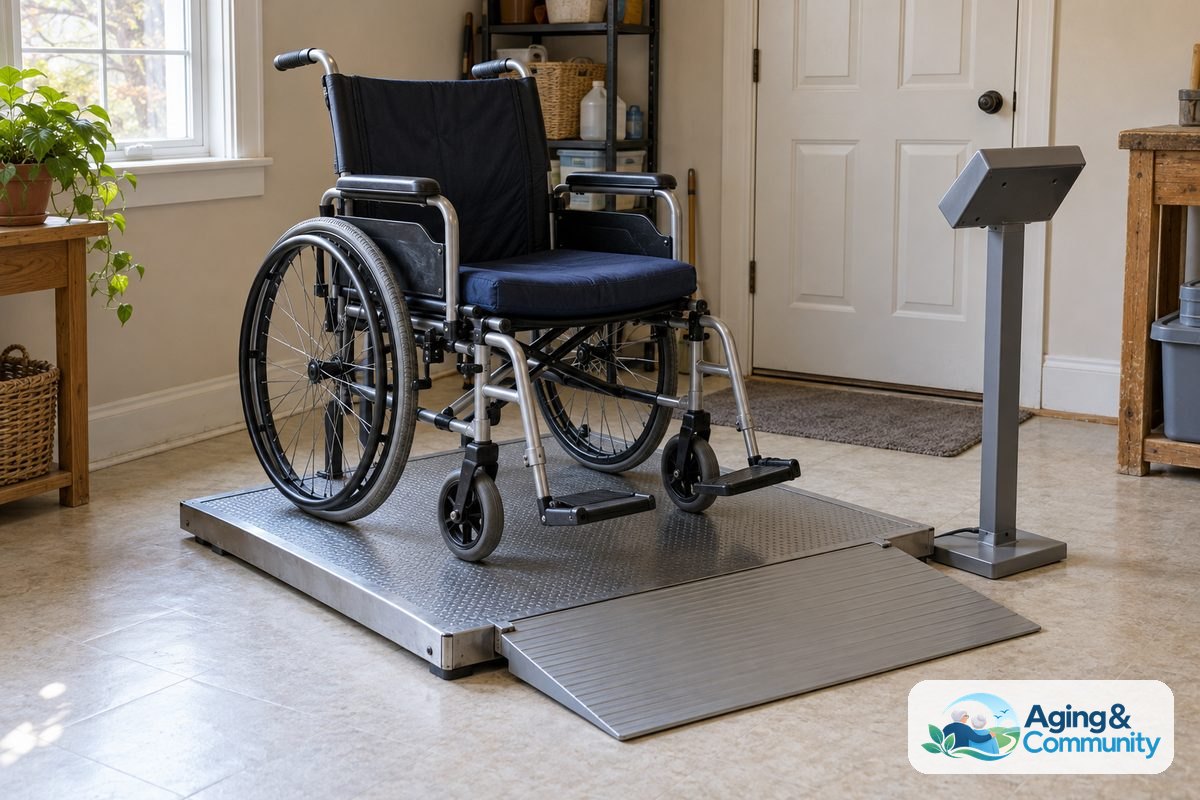
- Push the chair smoothly up the ramp onto the platform. Use proper body mechanics as you guide your loved one, just as you would during general care when learning how to use wheelchair mobility equipment.
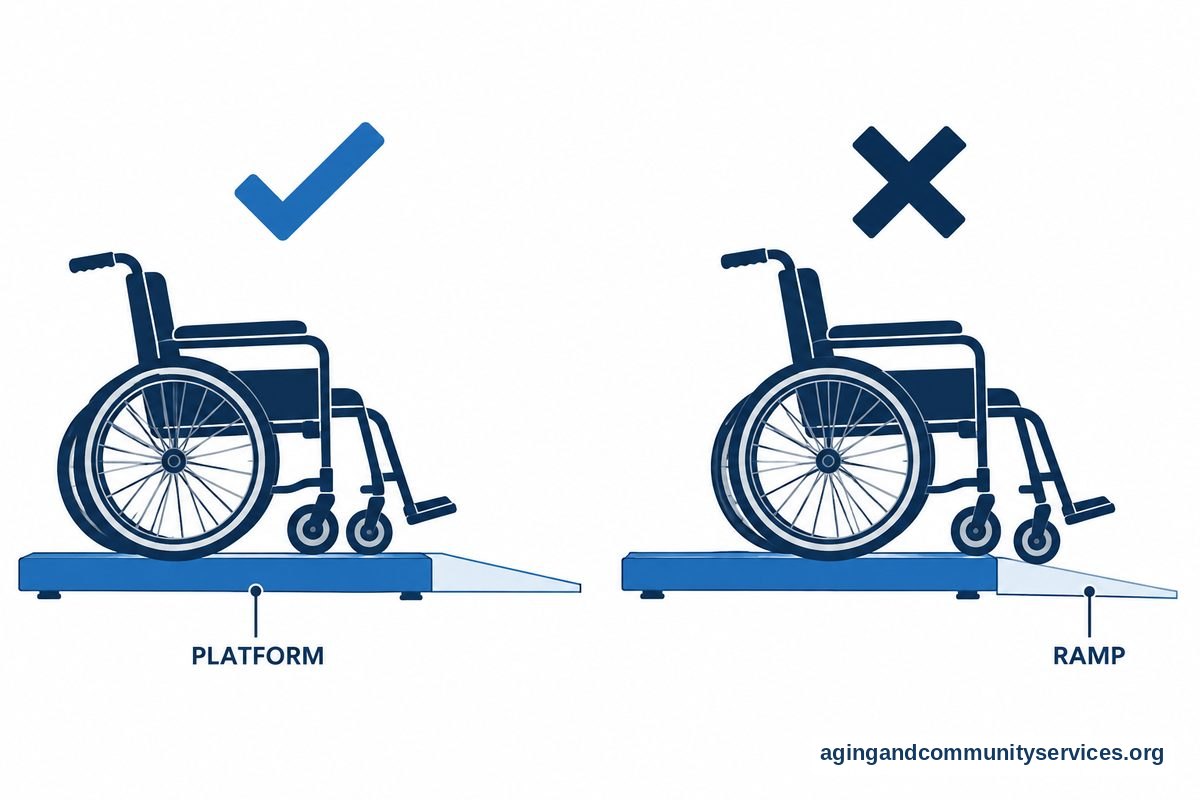
- Center all four wheels on the platform. Ensure no wheels rest on the ramps or touch the side rails of the platform.
- Lock the wheelchair brakes completely. Set both wheel locks so the chair cannot roll or shift during the measurement.
- Ask the person to sit still with hands in their lap. Movement or reaching for the display can cause the numbers on the screen to fluctuate.
- Record the final weight reading. Note the number once the display locks on a final figure, then unlock the brakes and gently guide the chair down the ramp.
Common Mistakes to Avoid
- Leaving loose items on the chair: Heavy blankets, oxygen tanks, or hanging bags will add extra pounds to the reading if they were not part of the tare weight.
- Placing wheels on the ramp edges: If even one wheel rests partially on an incline ramp, the sensors cannot register true body weight.
- Forgetting to lock the wheel brakes: An unlocked chair can roll slightly, which may startle the person or cause inaccurate screen numbers.
- Letting footrests drag on the floor: Ensure the foot plates are up on the platform and not scraping the floor outside the weighing area.
- Skipping regular calibration checks: Over time, bumps and moves can shift scale sensors, so regular zero checks are necessary.
When to Call for Help or Get Professional Advice
Weighing a family member should never put anyone at risk of a fall. If moving the chair onto the platform feels heavy or unstable, ask a second person to assist you with the ramp. You can learn more about balance and safety recommendations through the National Institute on Aging: Falls and Falls Prevention resources.
If your loved one experiences severe pain, dizziness, or weakness during transfers, speak with a doctor, physical therapist, or occupational therapist. They can review your home setup and suggest transfer techniques tailored to your family. If manual transfers become too difficult, a therapist might recommend learning how to use patient lift devices instead of rolling scales. You can also contact the Eldercare Locator to find local community support and caregiver training services in your area.
Setting Up Your Space for Easy Weighing
Having a dedicated space makes routine weigh-ins much smoother for older adults. Choose a room with a hard, level floor such as tile, vinyl, or wood laminate. Thick carpeting can absorb weight and create uneven readings under platform corners.
Make sure you have enough clearance in front of and behind the scale. You need room to approach the ramp straight on without making sharp turns. If you are configuring a permanent home health station, reviewing guides on how to choose a wheelchair ramp can give you helpful measurements for smooth incline transitions. A well-planned layout reduces stress for both you and your loved one.

Understanding Tare Weight and Manual Calculations
Tare weight is simply the weight of an empty wheelchair along with any cushions or footrests. Most modern digital scales handle this calculation with the push of a single button. When you push the tare button with an empty chair on the platform, the scale remembers that number and automatically subtracts it from future readings.
If your scale does not have an automatic tare feature, you can do the math yourself. First, weigh the person while seated in their chair and write down the total combined weight. Next, assist the person to a comfortable armchair or bed, roll the empty wheelchair back onto the scale, and record its weight. Subtract the chair weight from the combined weight to find the true body weight.
| Measurement Step | Example Weight (Pounds) | Action Taken |
|---|---|---|
| Total Combined Weight | 185 lbs | Weigh person seated in chair |
| Empty Chair (Tare) | 35 lbs | Weigh chair with cushion only |
| Actual Body Weight | 150 lbs | Subtract chair weight from total |
Maintaining Accuracy Over Time
Consistency is key to tracking health changes accurately. Try to take readings at the same time of day, ideally in the morning after using the bathroom and before breakfast. Have your loved one wear similar clothing each time, as heavy shoes and winter sweaters can change the numbers.
Keep a simple notebook or digital log near the scale. If your current home model is hard to read from a standing position, you might explore weight scales with large display for seniors to make viewing numbers effortless. Clear visibility helps ensure you write down the right numbers every single time.
Frequently Asked Questions
What does the tare button do on a wheelchair scale?
The tare button resets the display to zero while an object is resting on the platform. When you put an empty wheelchair on the scale and press tare, the scale ignores the chair weight. When the person sits in the chair and rolls back on, the screen shows only their body weight.
Can you weigh an electric power chair on these scales?
Yes, as long as the total weight of the power chair and the person does not exceed the scale capacity. When choosing a wheelchair or gurney, note power chairs are much heavier than standard manual chairs, so check the manufacturer limit on your scale before rolling on. The platform must also be wide enough to fit the power base securely.
How often should a wheelchair scale be calibrated?
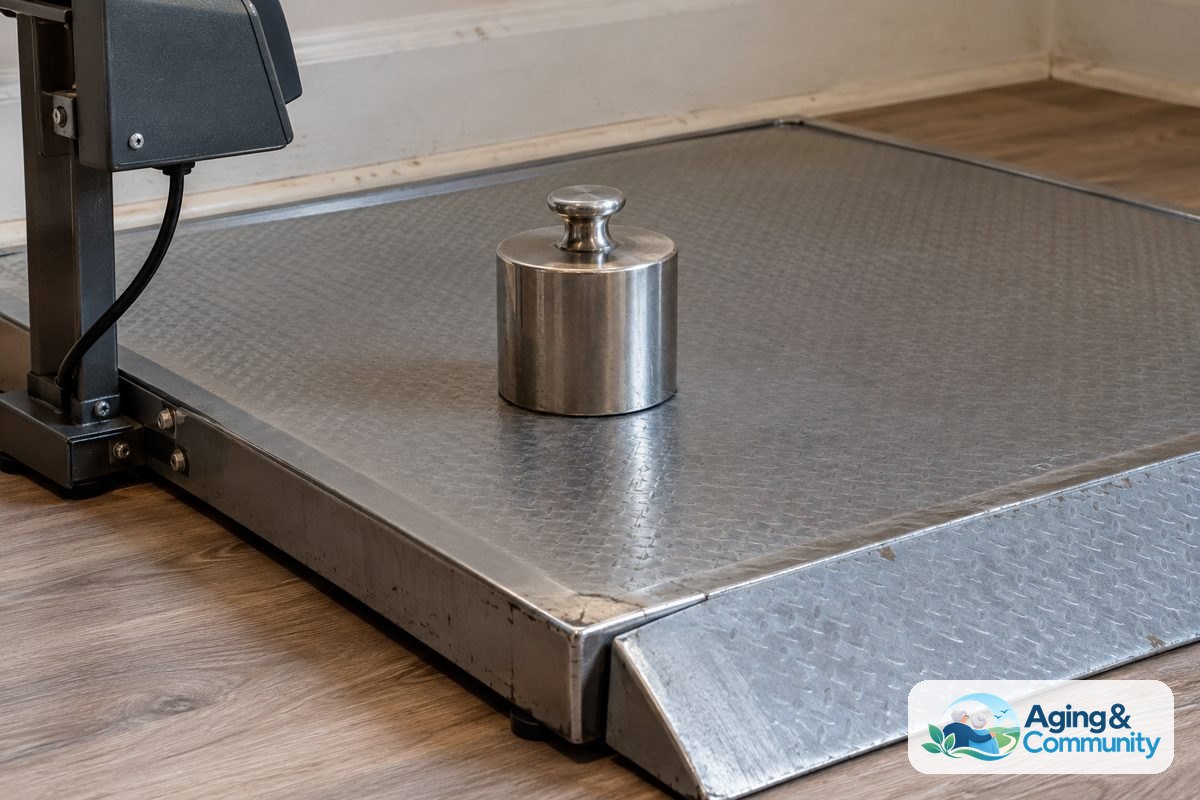
For home use, checking the scale every few months is generally sufficient. You can test calibration by placing a known, accurate weight on the platform to verify the screen reading. If the scale is bumped, dropped, or moved between rooms frequently, check the zero balance before your next measurement.
Can someone stand on a wheelchair scale if they are able?
Yes, someone who is steady on their feet can stand directly on the platform if it features a flat surface and secure handrails. However, if standing causes fatigue or balance issues, staying seated in the wheelchair is the safer and more comfortable choice.