

When choosing between a knee scooter vs hands free crutch, the right choice depends on your balance, your home layout, and how much upper-body freedom you need. A knee scooter offers rolling stability and a rest for your injured leg, making it ideal for flat surfaces and long hallways. A hands free crutch straps directly to your leg so you can navigate stairs and carry items, but it requires much stronger balance and leg strength.
Recovering from foot or ankle surgery takes time and patience. Choosing the proper mobility aid helps you stay active safely around the house, just as selecting transfer aids for your home protects your joints during daily tasks. Talk with your doctor or physical therapist before making a final choice, as they know your personal balance and weight-bearing rules.

Comparison of Key Differences
Both tools keep weight off your lower leg while you recover. However, they work in very different ways during daily tasks.
| Feature | Knee Scooter | Hands Free Crutch |
|---|---|---|
| Balance Needed | Moderate balance; four wheels provide a steady base | High balance; functions like a peg leg |
| Use on Stairs | Cannot be ridden on steps; must be carried | Allows safe stair climbing with handrails |
| Hand Freedom | Hands must stay on handlebars to steer | Leaves both hands free for chores |
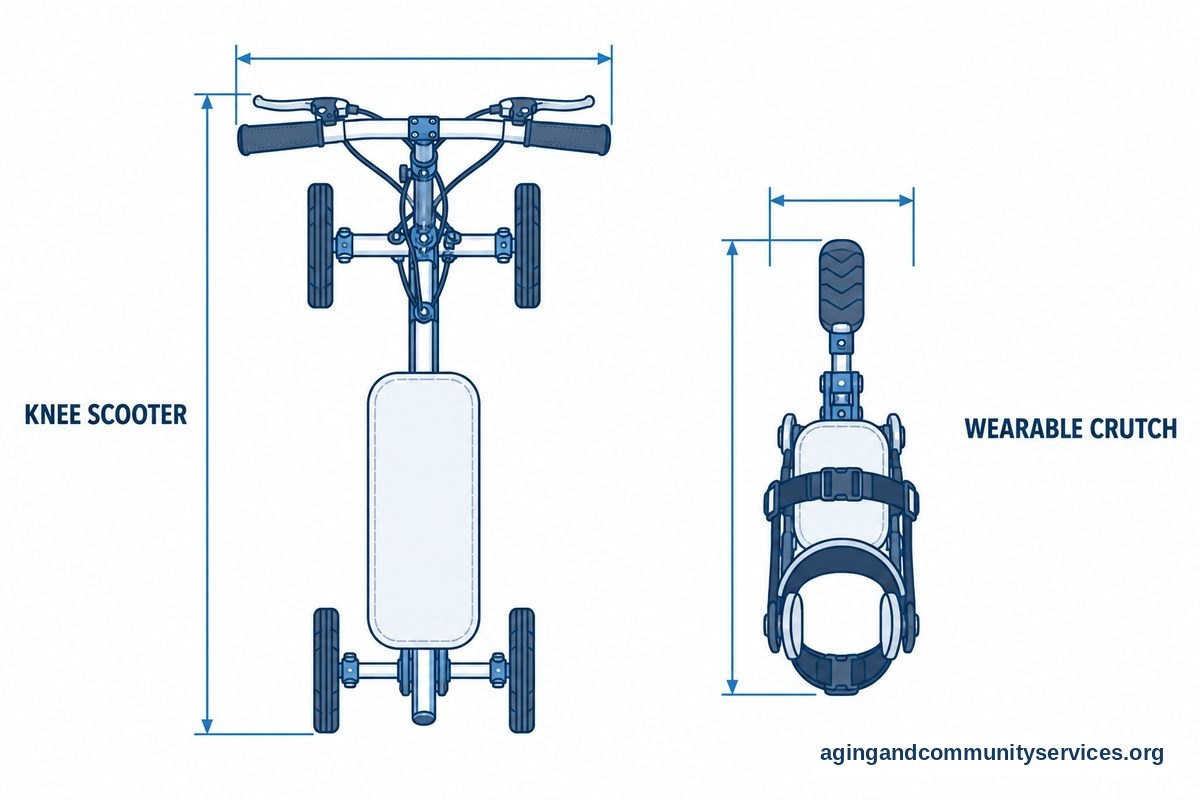
| Tight Spaces | Needs a wide turning space in small rooms | Narrow profile moves easily through small spaces |
| Energy Required | Low effort on flat, smooth indoor floors | Moderate to high effort; uses hip and thigh muscles |
| Resting Support | Built-in padded seat lets you rest anytime | Must sit down in a chair to take weight off |
The Knee Scooter: Comfort and Rolling Stability
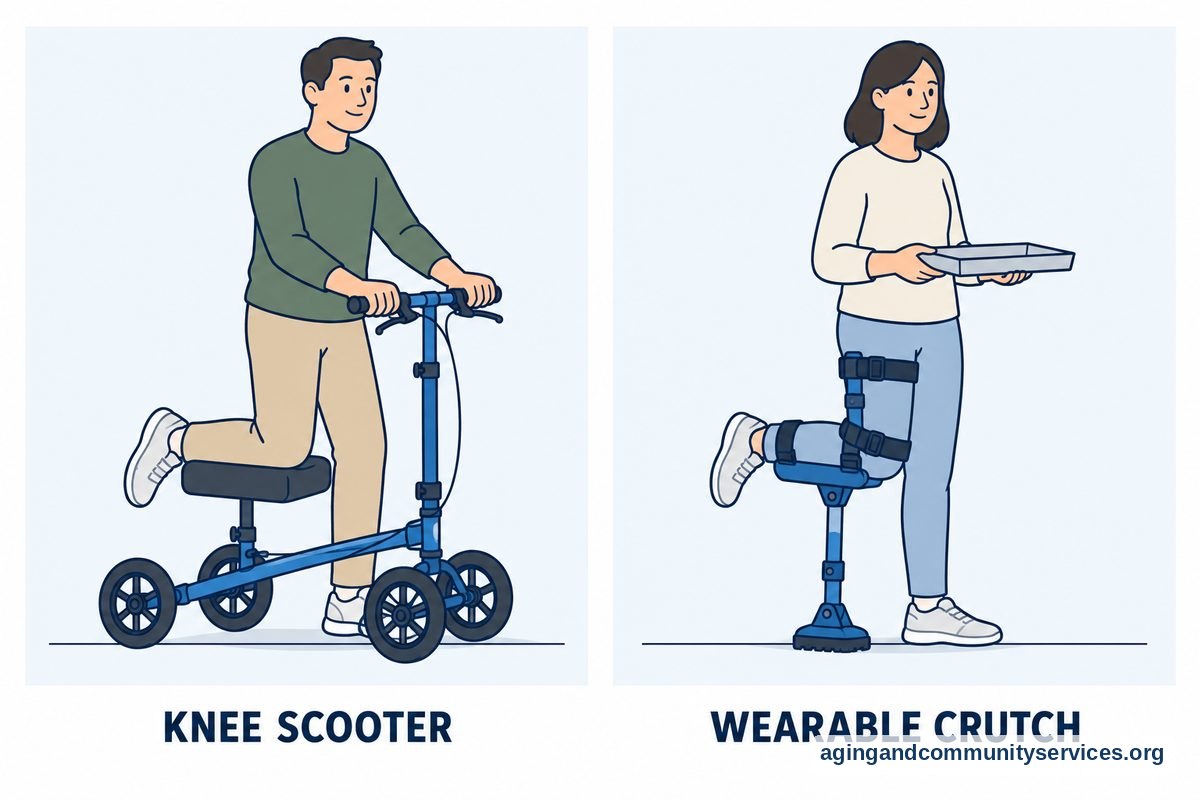
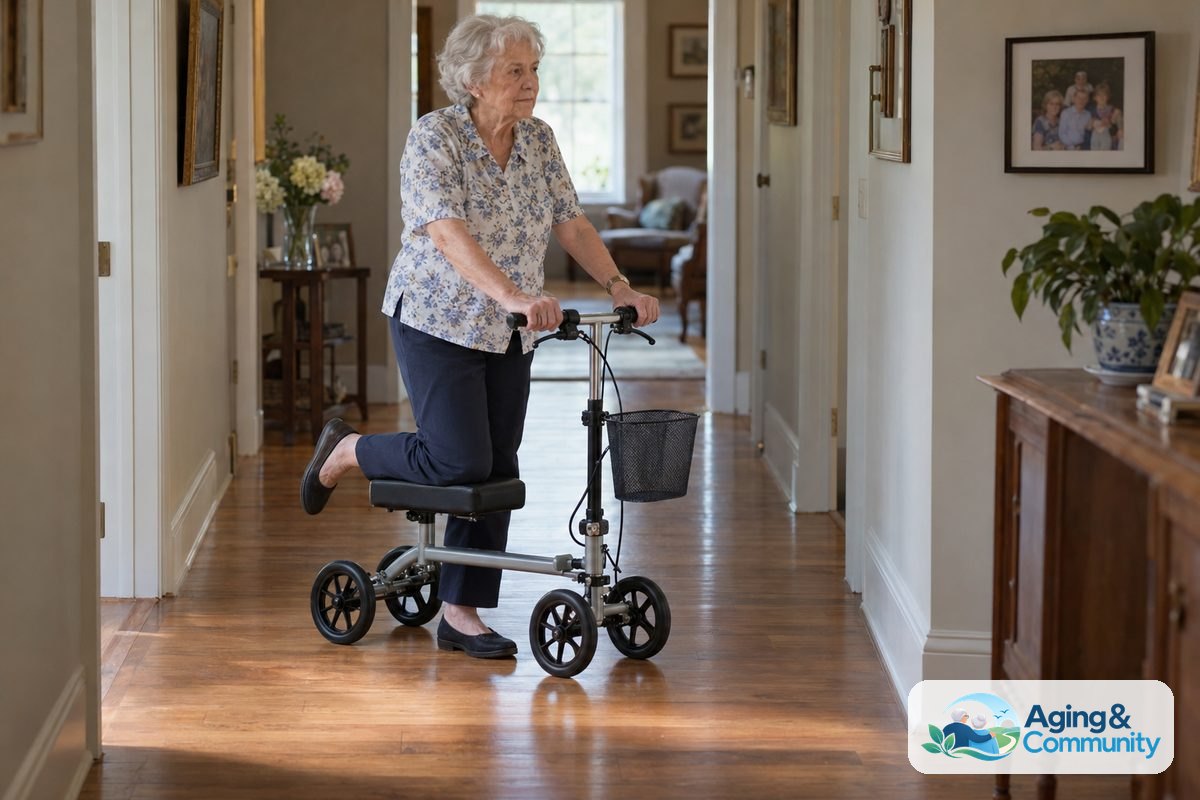
A knee scooter, sometimes called a knee walker, has a padded platform for your injured knee and shin. It features four wheels, handlebars for steering, and hand brakes to help you stop safely. Many older adults appreciate how easy it is to roll from room to room without putting strain on the upper body.
If you want to review specific features, you can explore guides on choosing a knee scooter for elderly recovery needs. These devices work exceptionally well in homes with wide hallways and open floor plans. You simply place your resting knee on the cushion and push forward with your good foot.
Who It Suits
The knee scooter suits people who want dependable stability while moving across flat surfaces. It is an excellent match if you have weak wrists, shoulder pain, or balance concerns that make traditional crutches feel unsafe. It also suits individuals who need to cover longer distances, such as moving through an office, grocery store, or long hallway.
Because it supports your body weight through a solid frame, it does not require significant thigh strength on the injured side. Many models also include a front wire basket. This basket makes it easy to carry mail, a water bottle, or reading glasses without needing your hands free while rolling.
Limits of the Knee Scooter
The main limitation of a knee scooter is dealing with steps. A wheeled device cannot be ridden up or down stairs safely. To learn how people manage split-level homes, review practical tips on how to use a knee scooter on stairs without risking a tumble.
Knee scooters can also feel bulky in tight spaces. Small bathrooms, narrow kitchen galleys, and cluttered bedrooms can make turning difficult. You must also master the brakes so the unit does not roll away while you step onto it. Learning how to use knee scooter hand brakes properly is essential for safe transfers.
The Hands Free Crutch: Freedom and Flexibility
A hands free crutch straps around your upper thigh and lower knee. It positions your lower leg bent back at a ninety-degree angle, resting on a padded shelf. A single vertical strut extends down to the floor with a rubber tread foot, functioning much like a temporary peg leg.
This design allows you to walk with a more natural stride while leaving your hands completely open. You can carry a plate of food, hold a laundry basket, or wash dishes at the sink without leaning against a cart. It is lightweight and compact compared to wheeled walkers.
Who It Suits
This option suits active adults who have strong core stability and good strength in their uninjured leg. If you live in a multi-story home with lots of stairs, a hands free crutch lets you hold onto the handrail while walking up and down steps safely.
It also suits people who enjoy working in the garden, preparing meals in a compact kitchen, or doing light chores around the house. Because it attaches directly to your body, it goes anywhere you can walk, including narrow doorways and uneven lawns where wheels might get stuck.
Limits of the Hands Free Crutch
The biggest hurdle with a hands free crutch is balance. If you already feel unsteady on your feet, strapping a single peg to your leg can increase your fall risk. The National Institute on Aging: Falls and Falls Prevention resource outlines how balance changes as we age, making stable footing a top priority.
It also takes more physical effort to use. Your hip and thigh muscles must work harder to lift the unit with every single step. Fastening the straps can be tricky if you have arthritis in your fingers. Additionally, you cannot quickly sit down; you must loosen or remove straps to sit comfortably in low chairs.

How to Decide
Choosing between these two mobility aids comes down to your personal health, your living space, and your daily routine. Consider these common situations:
- Choose a knee scooter if you have balance concerns: Four points of contact on the floor provide far greater security than a single peg foot.
- Choose a hands free crutch if you must climb stairs daily: It allows you to use handrails normally, whereas a scooter requires an elevator, ramps, or a second device upstairs.
- Choose a knee scooter if you fatigue quickly: The wheeled frame lets you glide with minimal effort and provides an instant seat when you need to rest.
- Choose a hands free crutch if you live alone and cook: Carrying a hot bowl of soup or a cup of tea is much easier when both hands are free.
- Choose a knee scooter if you have thigh or hip pain: A strapped-on crutch puts extra pressure on the upper leg, which can aggravate joint discomfort.
- Choose a knee scooter if you need to travel long distances: Gliding on wheels covers sidewalks and large stores much faster than stepping with a crutch.
If you find that neither option provides enough rest, you can also look into a mobility scooter vs knee scooter comparison to see if a seated power scooter fits your recovery better.
Frequently Asked Questions
Can I use both a knee scooter and a hands free crutch?
Yes, many people find that using both devices works best for a long recovery. You might use a hands free crutch upstairs for morning routines and bathroom trips, while keeping a knee scooter downstairs for cooking, relaxing, and gliding across large living areas. Combining tools gives you flexibility while maintaining safe movement.
Which option is easier to pack into a car trunk?
A hands free crutch is significantly lighter and smaller, making it very easy to toss into a backseat or trunk. Most knee scooters fold down at the steering column, but they still weigh between twenty and thirty pounds. Lifting a folded scooter into a vehicle can be challenging if you are trying to balance on one foot.
How long does it take to learn how to use a hands free crutch?
Most users need several days of practice to feel confident on a hands free crutch. You must adjust multiple straps to get the height and angle just right for your leg. Practicing near a countertop or with the help of a physical therapist ensures your gait is steady before you walk without support.
Will my health insurance or Medicare cover these mobility aids?
Coverage varies depending on your specific plan and medical necessity. Standard crutches and walkers are commonly covered, while knee scooters and hands free crutches may require special documentation from your physician. You can check local community resources or contact the Eldercare Locator to find programs that lend medical equipment at little to no cost.
Can I use a knee scooter on thick carpet?
Knee scooters roll best on hard surfaces such as tile, wood, or laminate. They will work on low-pile rugs, but deep, plush carpet creates resistance and makes pushing much harder. If your home has thick carpeting, test the scooter slowly to ensure the small wheels do not catch or cause you to lose your balance.
Which aid is safer for cooking in the kitchen?
Both have trade-offs in the kitchen. A hands free crutch lets you hold pots and open cabinets with both hands, but standing still for long periods can tire your good leg. A knee scooter offers a stable resting platform, but you must lock the brakes firmly before reaching into ovens or low drawers so the unit does not shift.