

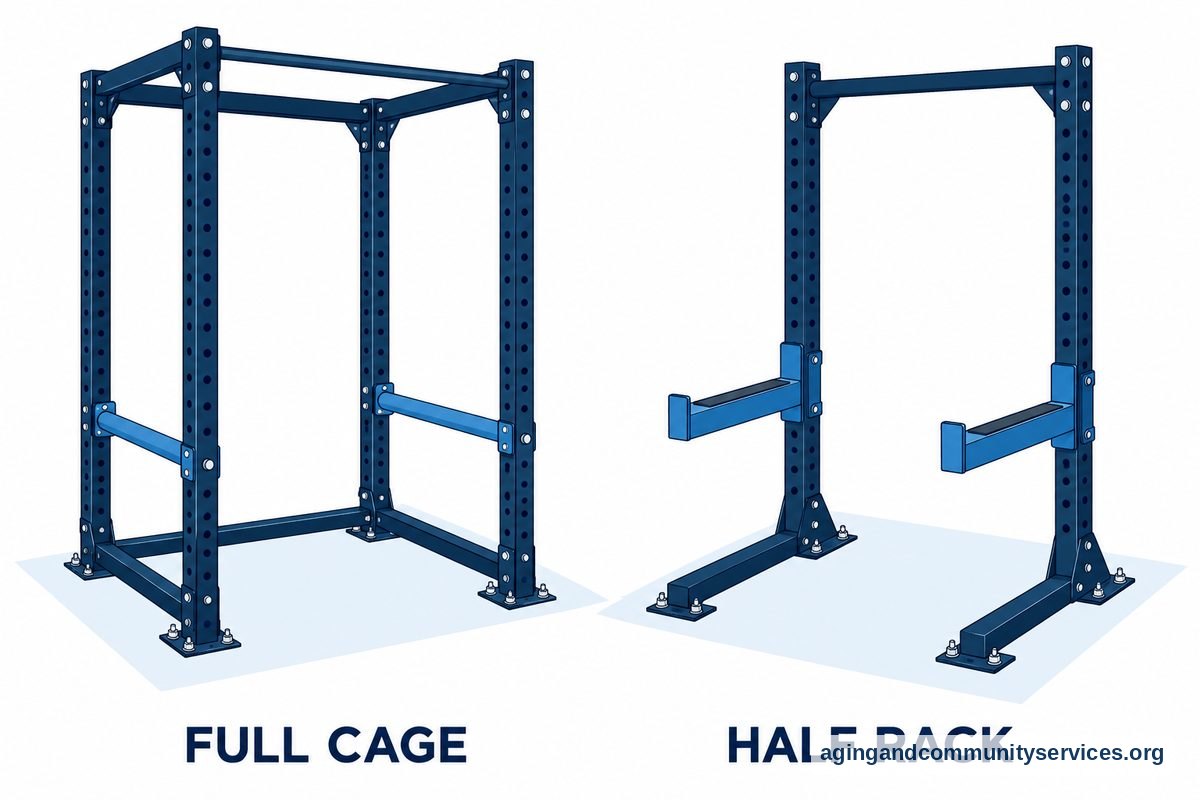
Choosing between safety bars vs spotter arms depends largely on the style of rack you own and how much room you have to exercise. Safety bars work inside full cages to provide sturdy, enclosed support for heavy barbells. Spotter arms attach to open uprights or half racks, giving you quick adjustments and open space while you exercise at your own pace.
Staying active with gentle resistance training offers wonderful rewards for physical independence. As noted by the National Institute on Aging in their guidance on falls and falls prevention, regular balance and strength exercises can lower the risk of balance troubles. Having the right catches in place gives you quiet reassurance each time you pick up a barbell or set up your bench.
Both options serve the same basic purpose, which is to catch a weight bar if your hands slip or your muscles feel tired. Yet their shapes, weight limits, and everyday handling are quite distinct. Let us explore how they stack up side by side.
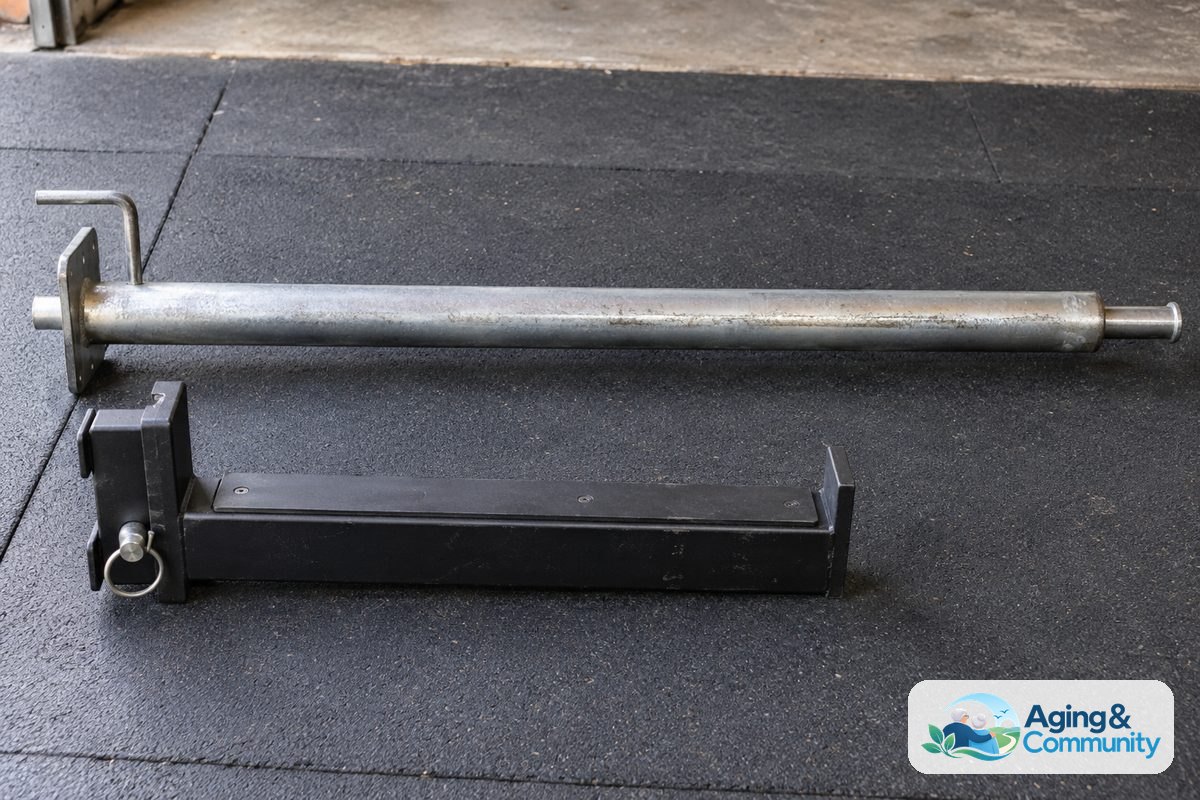
Comparison: Safety Bars vs Spotter Arms
Here is a clear look at how these two home gym tools compare across key daily features:
| Feature | Safety Bars (Pin and Pipe) | Spotter Arms |
|---|---|---|
| Equipment style | Used inside four-post power cages | Used on half racks, squat stands, or cage exteriors |
| Ease of height changes | Requires sliding long steel rods through two posts | Attaches quickly with standard quick-release pins |
| Exercise area | Fully enclosed between upright steel posts | Open front and sides for easy entry and exit |
| Bench press use | Keeps the barbell safely confined inside the rack | Allows training in front of the rack with lots of elbow room |
| Weight capacity | Very high due to dual-post support | Moderate to high, depending on post strength and arm length |
| Storage footprint | Stays inside cage or slides out sideways | Removes easily and hangs on uprights or wall hooks |
| Protection for barbells | Steel on steel unless wrapped in plastic tubing | Usually lined with protective plastic to spare bar knurling |
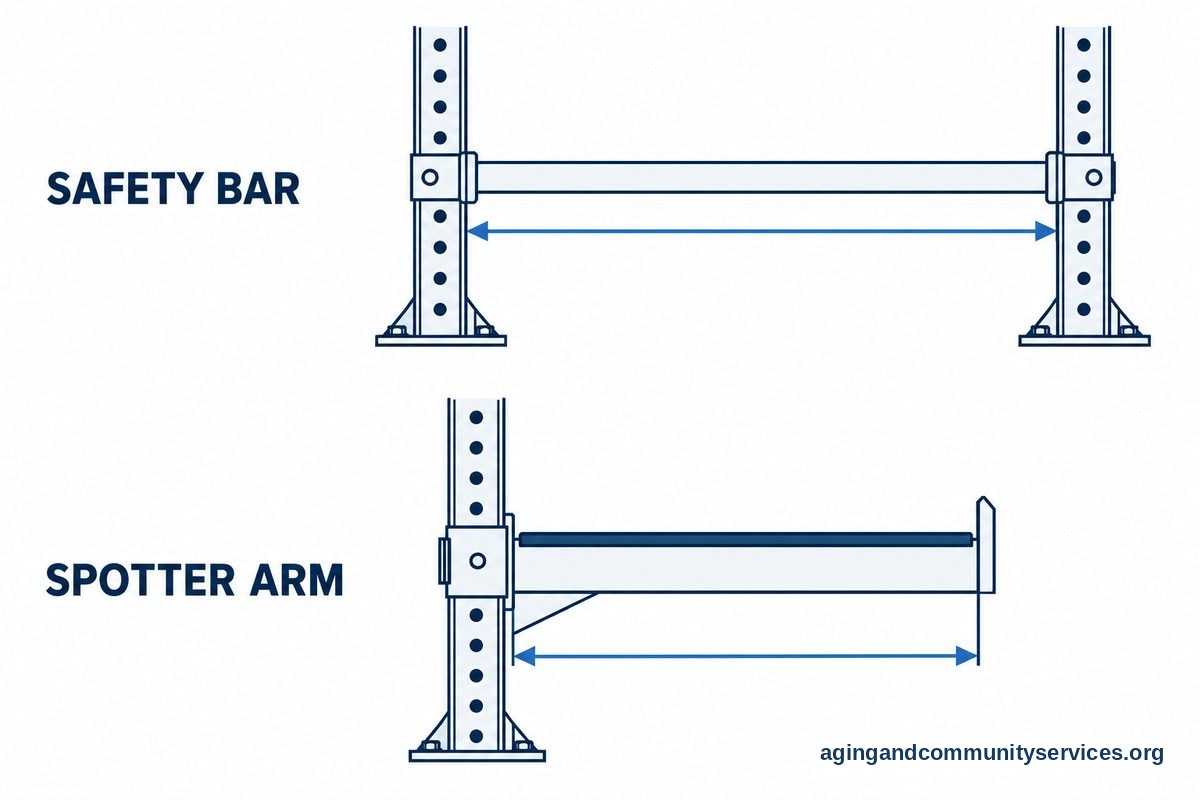
Safety Bars: Sturdy Enclosed Security
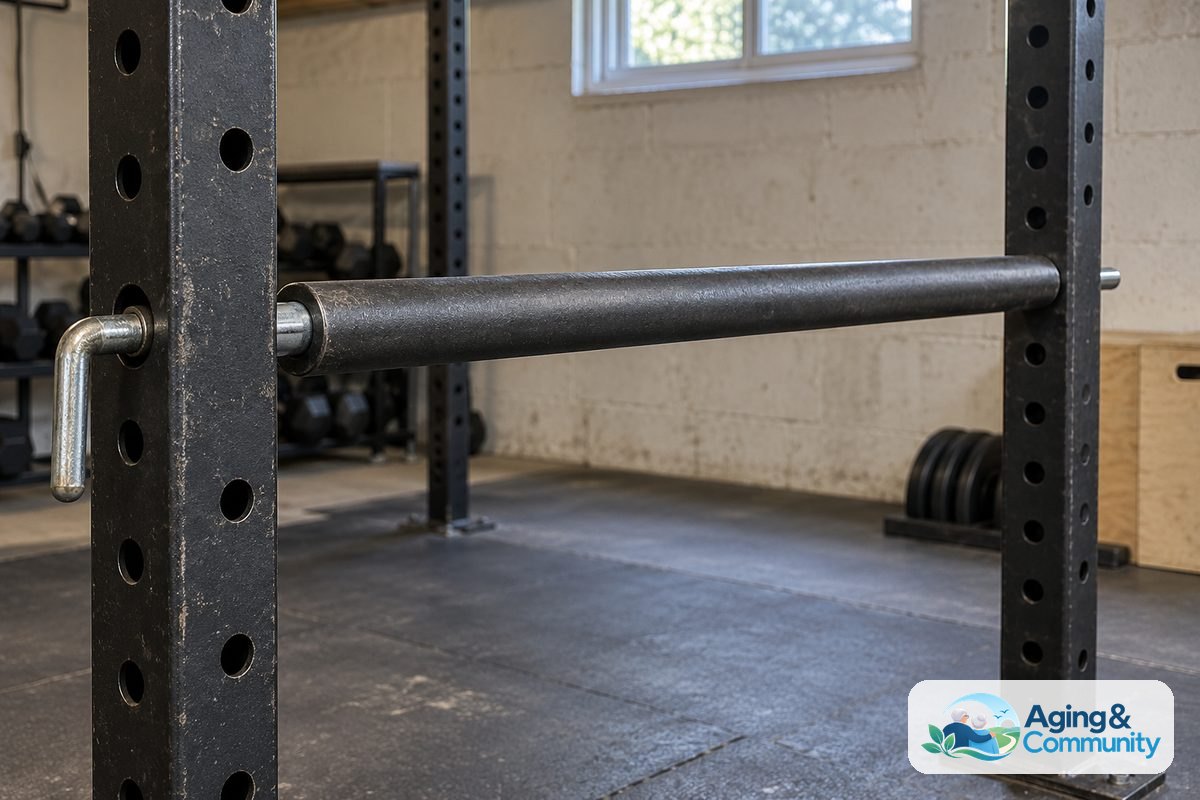
Safety bars, often called pin-and-pipe safeties or solid steel safety rods, span the full depth of a four-post power cage. One solid rod slides through the front upright, passes across the training zone, and locks into the rear upright. Many models include a thick steel pipe that rolls around the center rod to soften any barbell contact.
Because both ends of the bar rest securely in upright steel channels, they offer immense strength. If a barbell drops onto them, the weight spreads evenly across two solid vertical posts. This dual-sided design makes them exceptionally reliable for catching loaded bars during squats, rack pulls, or seated presses.
Who Safety Bars Suit
Safety bars suit older adults who already own a full four-post power cage and prefer an enclosed, protected zone, much like following an adult diapers postpartum guide for personal care. If you lift inside a cage and rarely move your safety pins between different heights, these bars deliver unmatched peace of mind. They are also ideal for people who share a rack with a partner who uses similar lifting heights.
Limits of Safety Bars
The main drawback of safety bars is the effort needed to change their height. You must pull the steel pin entirely out of two posts, align it across the space, and slide it back in. This task can feel heavy or awkward for tired hands and wrists. Also, some lifters prefer fabric webbing to rigid steel, so it can be helpful to compare safety bars vs straps before picking your final cage setup.
Finally, safety bars only work within a four-post cage. You cannot use them on standalone squat stands or on the outside of your frame.
Spotter Arms: Open Space and Fast Adjustments
Spotter arms, also known as safety spotter arms, are cantilevered steel brackets that attach to a single vertical post. They stick straight out toward you, creating a sturdy shelf that catches a dropped barbell. Most modern spotter arms lock in place using a simple pin or hook that takes only seconds to adjust.
Because spotter arms mount to individual uprights, they keep your workout area wide open. There are no crossbars boxing you in. This makes it easy to step in, sit on a workout bench, or step back when you finish a set.
Who Spotter Arms Suit
Spotter arms suit anyone using a half rack, a wall-mounted folding rack, or independent squat stands. They are wonderful for home exercisers who change exercises frequently, such as moving directly from standing shoulder presses to flat bench presses. Because each arm weighs only a few pounds and clicks into place swiftly, adjusting them takes minimal grip strength.
They also suit people who want a welcoming workout area without feeling closed in by steel uprights. If you are browsing practical exercise equipment for seniors, pairing a compact half rack with spotter arms creates a safe setup that takes up very little floor space.
Limits of Spotter Arms
Because spotter arms attach to a single post, they create leverage when a barbell lands near their outer tips. A heavy drop on the far end of an arm puts twisting pressure on the rack uprights. For this reason, spotter arms must always be paired with a rack that is bolted down or weighted at the base.
Spotter arms are also shorter than the interior depth of large cages. You must remain conscious of your position to make sure the barbell stays directly over the arms during your set.
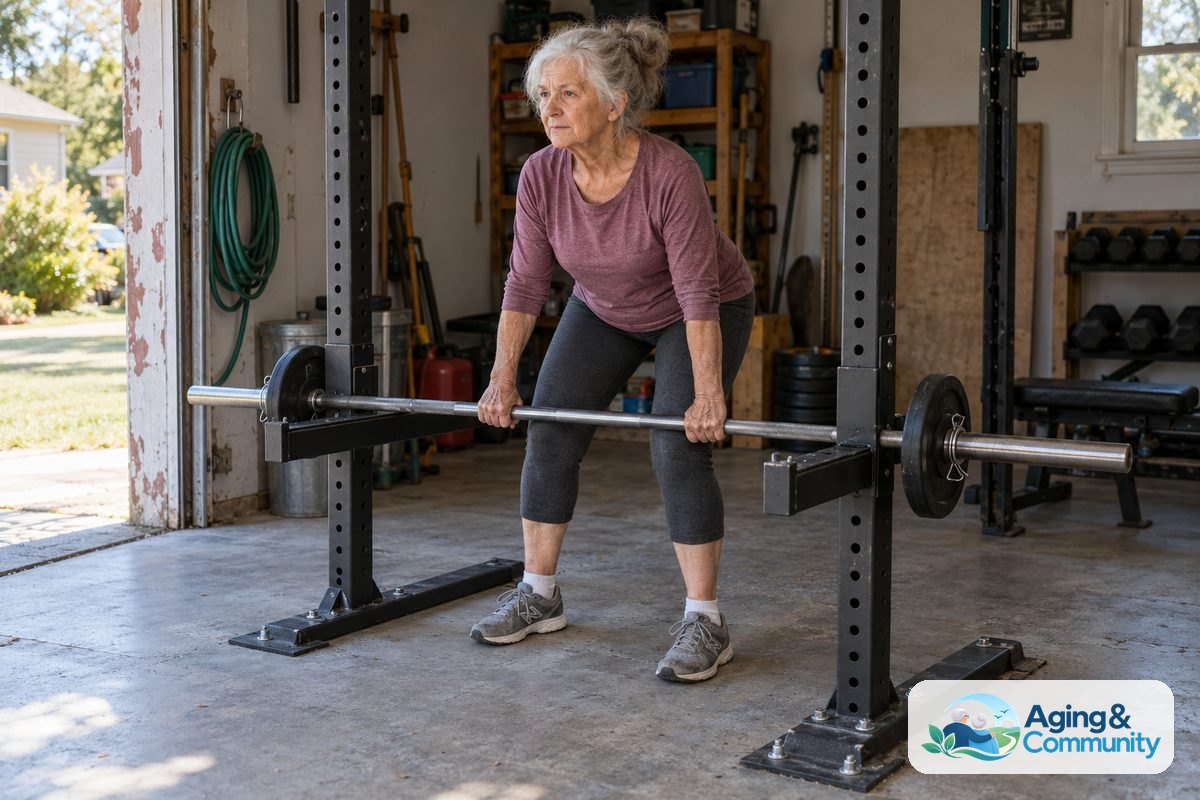
How to Decide
Choosing between these two attachments comes down to your current rack, your physical comfort, and how you prefer to move:
- Choose safety bars if: You already have a sturdy four-post power cage, lift primarily inside the rack, and rarely need to adjust safety heights between exercises.
- Choose spotter arms if: You own a half rack or wall-mounted rack that cannot accept pass-through rods.
- Choose spotter arms if: Sliding heavy steel rods through two holes feels hard on your hands, shoulders, or wrists.
- Choose safety bars if: You want an enclosed training box where a barbell cannot roll forward off the edge of a catch shelf.
- Choose spotter arms if: You feel confined inside a full cage and prefer the open feeling of stepping up to a half rack.
- Choose safety bars if: You practice heavy partial movements where maximum structural rigidity is your top priority.
Before beginning any new lifting routine, consider speaking with a physical therapist or occupational therapist about any medical supplies family need for mobility. A movement specialist can check your exercise form, recommend starting heights for safety catches, and help you plan safe workouts at home.
Frequently Asked Questions
Can spotter arms hold as much weight as safety bars?
Safety bars generally hold more weight because they rest across two vertical posts. This dual connection spreads force through the entire cage frame. Spotter arms are still plenty strong for normal home strength training, but because they attach to one post, they rely on strong welds and a well-anchored rack base.
Are spotter arms safe for bench pressing alone?
Yes, spotter arms can work very well for bench pressing alone when you set their height carefully. Set the arms so they sit just above your chest when you lie flat, but slightly below your chest when you arch your back gently to lift. If your arms tire, simply relax your chest down and let the arms support the bar above your neck and ribs.
Do safety bars damage barbells?
Plain steel safety bars can leave scratches or marks on a barbell if the two pieces of metal collide. Many people slip protective plastic sleeves or heavy rubber hoses over their safety pipes to cushion contact. In contrast, modern spotter arms usually come with protective plastic liners already bolted to the top surface.
Can I use spotter arms on a four-post power cage?
Yes, many people mount spotter arms to the front uprights of a four-post power cage. This setup lets you perform movements like overhead presses or squats outside the cage while keeping safety bars stored inside. Just verify that your power cage is stable and does not tip forward when weight rests on the extended arms.
How high should I set my safety catches for squats?
Set your safety catches roughly one to two inches below the lowest point of your squat. When you reach the bottom of your comfortable squat depth, the barbell should remain slightly above the safety catches without touching them. If you lose your balance or cannot stand back up, lowering yourself by just one inch allows the catches to take the entire load safely.