

When stepping over the rim of a bathtub becomes difficult or risky, a transfer bench bridges the gap between the tub edge and your regular bathroom setup. These benches let your parent sit at a comfortable height on a seat that straddles the tub edge, then slide across into the water without lifting their legs high or losing their footing. The National Institute on Aging reports that falls are a leading cause of nonfatal injuries for older adults, and bathroom slips account for many of them. The best tub transfer benches combine a sturdy frame with legs outside the tub, adjustable height to match your specific bathtub, and non-slip feet to keep the whole unit steady. We compared the published specs of 6 models to help you choose one that fits your space, weight needs, and bathing style.

Pros
- 400lb weight capacity supports bariatric users and heavier individuals
- Height adjusts from 17.75 to 22 inches to fit various tub heights
- Quad-bolt reinforced frame provides wobble-free stability
- Dual-lock system with rubber tips and suction cups prevents sliding
Cons
- Requires 32-inch width clearance, may not fit smaller bathrooms
- Needs manual measurement before purchase to ensure proper fit
- Reversible backrest design adds complexity during initial setup

Pros
- 15 height adjustment levels from 20.7 to 27.2 inches fits different tub heights
- 360-degree rotating seat allows easier pivoting in and out of the tub
- 400 lb weight capacity with aluminum and SUS304 stainless steel frame
- 1.7 inch thick HDPE plastic seat with drainage holes dries quickly
Cons
- Requires assembly and may need space for storage outside the bathroom
- Four-legged design needs stable floor and may shift if tub edges are uneven
- Safety belt is basic and may not fit all body types or clothing styles

Pros
- 360-degree swivel seat enables easier pivoting when entering and exiting the tub
- Padded seat cushion measures 1.9 inches thick for comfort during extended use
- 15-level height adjustment accommodates users from 20.9 to 27.6 inches tall
- Supports up to 330 lbs with high-strength aluminum and SUS304 construction
- Non-slip foot pads and wide arms provide stable, secure seating position
Cons
- Requires assembly and may need caregiver help during initial setup
- Sliding mechanism may accumulate soap residue and require regular cleaning
- Heavier construction means it's not easily portable between bathrooms

Pros
- Supports up to 500 lbs with reinforced frame construction
- Adjustable width ranges from 23.6" to 37.6" for different tubs
- Height adjusts from 17.5" to 22" for comfort in most bathtubs
- Tool-free assembly and lightweight for easy repositioning
- Replacement parts like suction cups and bolts are available
Cons
- Reversible backrest requires manual installation on either side
- Non-slip suction feet may not grip all bathtub surface types equally
- Adjustable modular design has more components to potentially adjust
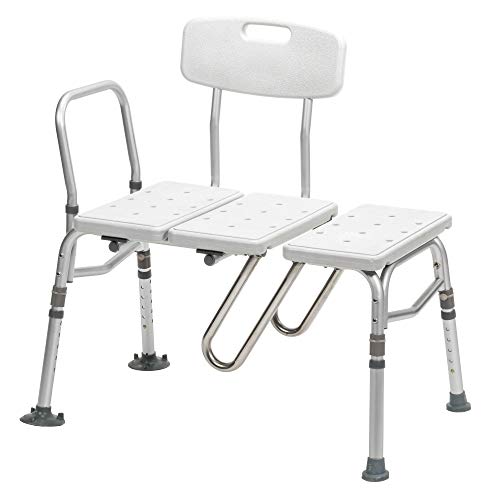
Pros
- Supports up to 400 lbs with dual-column extending legs
- U-shaped cutout design prevents water spillage in tub
- Height adjusts in 0.5-inch increments for custom fit
- Pinch-free lever system protects fingers during setup
Cons
- Reversible design may require initial setup to match bathroom layout
- Seat dimensions of 28 inches long may feel tight for larger users
- Requires stable bathroom flooring to maintain balance

Pros
- 400 lb capacity supports many larger bathers
- 18-22 inch seat height adjusts with push buttons
- Rust-resistant aluminum frame weighs about 12 lb
- 16 x 24 inch padded seat gives wider sitting area
Cons
- 32 inch overall width may crowd smaller bathrooms
- At 12 lb, it may be awkward to lift in and out
- 25.5 inch depth may not suit narrow shower stalls
A Closer Look at Our Top Pick
The meidile careplus Bathtub stands out because it handles the widest range of tub sizes and the heaviest users. It supports up to 500 lbs and adjusts in width from 23.6 to 37.6 inches, so whether your bathroom has a standard tub or an older corner model, you can make this bench fit. The height range of 17.5 to 22 inches covers most standard tub heights, and the tool-free assembly means you can reposition it quickly if you move it between bathrooms or need to adjust the legs without hunting for a wrench.
The reversible backrest adds flexibility: you can attach it to either side depending on your tub layout and which direction feels more natural for transfers. Replacement parts like suction cups and bolts are available separately, so you won’t have to replace the entire bench if one foot wears out. The main trade-off is that the adjustable frame has more moving parts to keep track of during setup, and the suction cups work best on smooth bathtub surfaces. If your tub has a textured or sloped floor, you may need to rely more on the leg pressure than the suction grip.
Find Your Situation
- Best for someone who needs maximum stability and fits a standard or slightly wider tub. Supports up to 400 lbs. Watch out: requires 32-inch width clearance, so measure your bathroom before ordering.
- Best if your parent finds it hard to pivot in and out; the 360-degree swivel seat rotates smoothly. Supports up to 400 lbs with 15 height levels. Watch out: needs a stable, even bathroom floor to work properly.
- Best for someone who prefers padded comfort and smooth height adjustments in smaller bathrooms. Supports up to 330 lbs. Watch out: the sliding mechanism can trap soap and needs regular rinsing.
- Best for the widest range of tub sizes and heavier individuals; adjusts from 23.6 to 37.6 inches wide and supports 500 lbs. Watch out: the adjustable frame has more components to configure during first setup.
- Best if water splashing inside the tub is a concern; the U-shaped cutout design prevents overflow. Supports up to 400 lbs. Watch out: the 28-inch seat length may feel snug for larger users.
- Best for extra comfort with a padded seat and backrest; rust-resistant frame handles moisture well. Supports up to 400 lbs. Watch out: 32-inch width and 32-36 inch backrest height may not fit corner tubs or low-ceiling bathrooms.
How We Narrowed It Down
After comparing the published specifications of 6 benches, we ruled out models with weight limits under 330 lbs because many older adults and family members need higher capacity. We also excluded benches with very narrow width clearances that wouldn’t fit most standard bathtubs. All 6 remaining benches offer non-slip feet, adjustable height, and frame materials that resist rust and moisture. The main differences come down to weight capacity (330 to 500 lbs), width adjustability, seat padding, and whether the seat rotates or slides. If your parent has limited mobility or balance issues, talking with a doctor or physical therapist can help clarify which features matter most for their situation. The Eldercare Locator can also connect you with local occupational therapists who assess bathroom safety.
What to Look For
Does it fit your tub width?
Most bathtubs are between 30 and 32 inches wide inside, but corner or soaking tubs can be wider. Measure the distance from the inside wall to the inside wall of your tub at the rim. The , making it the most flexible, while others have fixed footprints around 28 to 32 inches. Getting the width right is the most common mistake people make, so write down your measurement before you compare models.
What height do you need?
Most benches adjust somewhere between 17.5 and 27.6 inches. Your parent should sit on the bench and be able to slide sideways into the tub without having to drop down steeply or climb up. A general rule is that the bench should be 1 to 2 inches lower than the tub rim on the side where they’re sitting. Standard tubs are about 30 inches high at the rim, so a bench adjusting to 18 to 22 inches is usually safe. If your tub is unusually deep or shallow, check the product specs carefully: the gives more fine-tuning options than fixed-height benches.
How much weight does it need to support?
All 6 benches support at least 330 lbs, but if your parent weighs over 350 lbs or has gained weight recently, look for the 400 to 500 lb range. The meidile careplus supports 500 lbs, the highest on this list. The 330 lb VEVOR sliding model is the lightest-duty option, so it suits average-weight users but leaves less safety margin for heavier families.
Should you choose a seat that rotates or slides?
Rotating seats (like the VEVOR swivel model at 360 degrees) let your parent spin in place once seated, which is easier if turning is painful or difficult. Sliding benches are simpler mechanically and don’t have moving parts that can accumulate soap or hair. The trade-off is that sliding benches require more core strength to move across the seat. Your parent’s strength and balance will determine which works better; if they need caregiving help during baths, ask the caregiver which motion feels safer to assist.
Does padding matter for comfort?
Most benches have plastic seats that dry quickly, but padded versions like the offer more comfort during longer baths. Padding also stays warm rather than cold plastic. The trade-off is that padding can trap moisture and may harbor mildew if not dried thoroughly after each use. If your parent takes short showers or prefers a firm seat, plain plastic is fine; if they soak for 20 minutes or sit to shower, padding is worth the extra maintenance.
Before you buy: measure the space outside your tub
The bench legs extend outward from the tub, so you need clear floor space on at least 2 sides. Most benches require roughly 30 to 36 inches of floor space in the direction your parent will transfer. If your bathroom is small or has a toilet or vanity right next to the tub, sit down and sketch out where the bench legs will rest. Some benches, like the TABEKE and Medline models, are 32 inches wide and need more clearance than narrower designs.
When seat height or rotation alone isn’t enough
If your parent cannot transfer safely even with a bench, or if they’re frequently off-balance, a walk-in tub, professional home modification, or mobility equipment beyond a bench may be needed. A caregiver, occupational therapist, or your parent’s doctor can assess whether a bench is the right solution or if other bathroom aids like suction grab bars, shower stools, or handheld showerheads should come first. Combining a transfer bench with 2 grab bars mounted on the tub wall creates a much safer system than the bench alone.
Quick Tips for Choosing
- Measure your tub width, height, and the floor space beside it before you compare models. This single step eliminates most wrong choices.
- Check that all legs and feet contact your bathroom floor evenly. Uneven floors can cause wobbling even on stable benches.
- If your parent is over 350 lbs or has mobility limits, prioritize benches with 400+ lb capacity and heavy-duty frames.
- Test the locking mechanism or adjustment knobs by hand to make sure your parent or caregiver can operate them without tools or strength.
- Ask your parent to sit on the bench before buying if possible. Many retailers allow in-store trials or have good return policies.
- Plan to install grab bars or an additional safety rail on the tub wall; a bench alone is safer as part of a larger bathroom safety plan.
Frequently Asked Questions
Can a transfer bench work in a shower-only stall?
No. Transfer benches are designed to straddle the rim of a bathtub, with the seat on the rim and the legs on the bathroom floor outside the tub. A shower stall has no rim to straddle. For shower safety, a shower chair or shower bench that sits entirely inside the stall is the right choice instead.
Do I need a caregiver to use a transfer bench?
Many older adults use transfer benches independently if they have decent balance and can stand and sit. However, a caregiver present for safety is helpful, especially at first, and essential if your parent is frail, very weak, or has had falls. A caregiver can also assist with lower-body washing and prevent slips.
How often do I need to clean the bench?
After each bath, rinse the bench with clean water and dry the seat and legs. If suction cups or sliding parts accumulate soap buildup, wipe them with a soft cloth. Once a week, wipe down with a mildew-inhibiting bathroom cleaner, similar to maintaining bidet attachments. Proper drying prevents mold and rust on aluminum or stainless steel frames.
Can I use a transfer bench if I have arthritis in my hands?
Yes, but look for benches with large, easy-to-grip adjustment handles or push-button locks. Fixed-height benches (ones you don’t adjust) are simplest. Avoid models that require small levers, twisting knobs, or high hand strength to lock legs in place. Ask about lever-based systems when shopping.
What if my bathtub is very old or has a sloped floor?
Older tubs sometimes have curved or slightly tilted floors inside. The bench legs on the bathroom floor must all touch the ground firmly. If the floor slopes, you may need shims (thin wedges) under one or two legs to level the bench. Test the bench carefully before your parent uses it, and never rely on suction cups alone if the bench rocks side to side.
Is it safe to use a transfer bench alone at night?
It depends on your parent’s balance, vision, and strength. Having a caregiver or family member in the home during bath time is safest, especially for older adults with a history of falls. At minimum, keep a phone nearby, ensure bathroom lighting is bright, and have bathroom safety seats and grab bars within arm’s reach.
Can I store a transfer bench outside the bathroom?
Yes, most benches are portable and can be stored in a closet, garage, or laundry room. Sliding benches and some rotating models are heavier and take up more space, so check the weight and footprint before assuming you have room. Keep the bench dry to prevent rust and mildew.
Will my insurance cover a transfer bench?
Medicare and many private insurance plans may cover a transfer bench if a doctor prescribes it as medical equipment. Your parent should ask their doctor for a prescription and check with their insurance company about coverage. Some plans require the bench to come from a specific durable medical equipment supplier.
What’s the difference between a transfer bench and a bath seat?
A bath seat or bath chair sits entirely inside the tub and is used by people who can lower themselves into the tub but need a stable place to sit while washing. A transfer bench straddles the tub rim and is for people who have trouble stepping over the rim or lowering themselves into the tub. Transfer benches are a first step toward independence if the main challenge is getting in and out.
Can two people use the same transfer bench?
If both people fall within the weight and height range of the bench, yes. However, if one person is much heavier or taller, the adjustable height may not suit both equally well. It’s safer for each household member to have a bench suited to their specific weight and body height if they differ significantly.
Which One to Start With
Your best first choice depends on your bathroom setup, your parent’s weight and strength, and how much they need to move in and out of the tub daily. If your parent weighs more than 350 lbs or you have an unusually wide or angled bathtub, the is the safest starting point. The tool-free assembly means you can adjust it on the spot if needed. If your parent is average weight and has balance issues but good arm strength, the makes it much easier to pivot in and out without forcing a painful turn of the torso.
For someone who wants simplicity and the most padded comfort, the offers a rust-resistant aluminum frame, padded backrest, and side arm support in a straightforward fixed-frame design. It doesn’t rotate or slide, so it’s mechanically simple and won’t accumulate soap residue in moving parts. The main drawback is the 32-inch width and 32-36 inch backrest height, which rule it out for corner tubs or bathrooms with low ceilings.
If water splashing or containment is a concern (because your parent splashes during transfers or you’re worried about water damage), the helps keep water inside the tub. It also offers the finest height adjustment in 0.5-inch increments, so you can dial in the perfect fit if your bathroom is not standard height. The 400 lb capacity and pinch-free lever system for height adjustment make it practical for most households.
Start by writing down your tub width (measured inside, rim to rim), the height of your tub rim from the floor, and your parent’s weight. Then match those numbers to one of the 6 benches on this list. Order from a retailer with a good return policy so you can try it in your home for a few days before deciding to keep it. If after a week of use the bench still feels unstable or the height is off, most retailers will accept returns. Finally, plan to add grab bars to the tub wall once the bench is in place; the combination of a stable bench plus two grab bars creates a much safer bathing environment than either alone.