

Bedroom safety for senior citizens starts with a room that is easy to move through, easy to see in, and easy to use at night. A safer bedroom does not need to feel clinical or crowded. Small changes to the bed, furniture, lighting, and floor space can make daily routines calmer and more comfortable.
The bedroom is where many daily tasks happen, including getting dressed, reaching for glasses, using the bathroom at night, and getting in and out of bed. Because these tasks often happen when a person is tired or the room is dim, the setup matters. The goal is to make the space simple, steady, and familiar.

Start With Clear Walking Paths
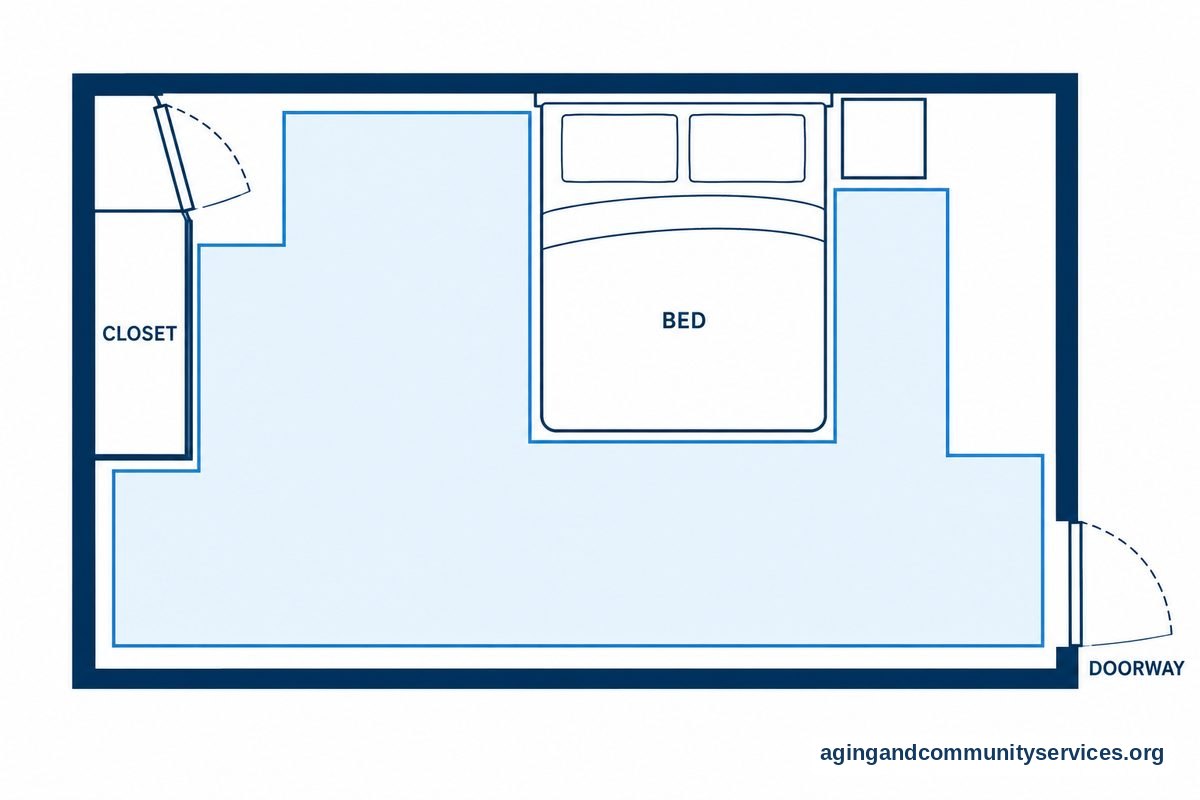
A safe bedroom begins with open space. The path from the bed to the door, closet, bathroom, and light switch should be easy to follow without stepping around baskets, cords, shoes, or extra furniture.
Try walking the route during the day and again in the evening. Notice where feet may catch, where the person has to turn sideways, or where a walker or cane feels tight. If a path feels narrow when you are fully awake, it may feel harder during the night.
- Move laundry baskets, storage bins, and extra chairs out of main walking paths.
- Keep electrical cords against the wall and away from the bed exit area.
- Remove loose rugs, or secure them with a firm non slip backing.
- Make sure closet doors and drawers do not block the route when open.
- Keep pet beds, water bowls, and toys away from night walking paths.
The National Institute on Aging says that home changes and careful habits can lower the risk of falls, and its guide to falls and safety is a helpful place to review common risks. If walking has become harder, a physical therapist or occupational therapist can suggest room changes that fit the person and the home.
Choose Safe Bedroom Furniture for Elderly Needs
Safe bedroom furniture for elderly people should be sturdy, simple to reach, and easy to move around. The safest piece is not always the biggest or most expensive one. It is the one that supports daily use without wobbling, tipping, or forcing awkward movement.
Start with the bed. A bed that is too low can make standing harder, while a bed that is too high can make feet dangle before standing. In many homes, the right height lets the person sit on the edge with feet flat on the floor and knees at a comfortable bend.
- Bed: Choose a steady frame that does not slide when the person sits or stands.
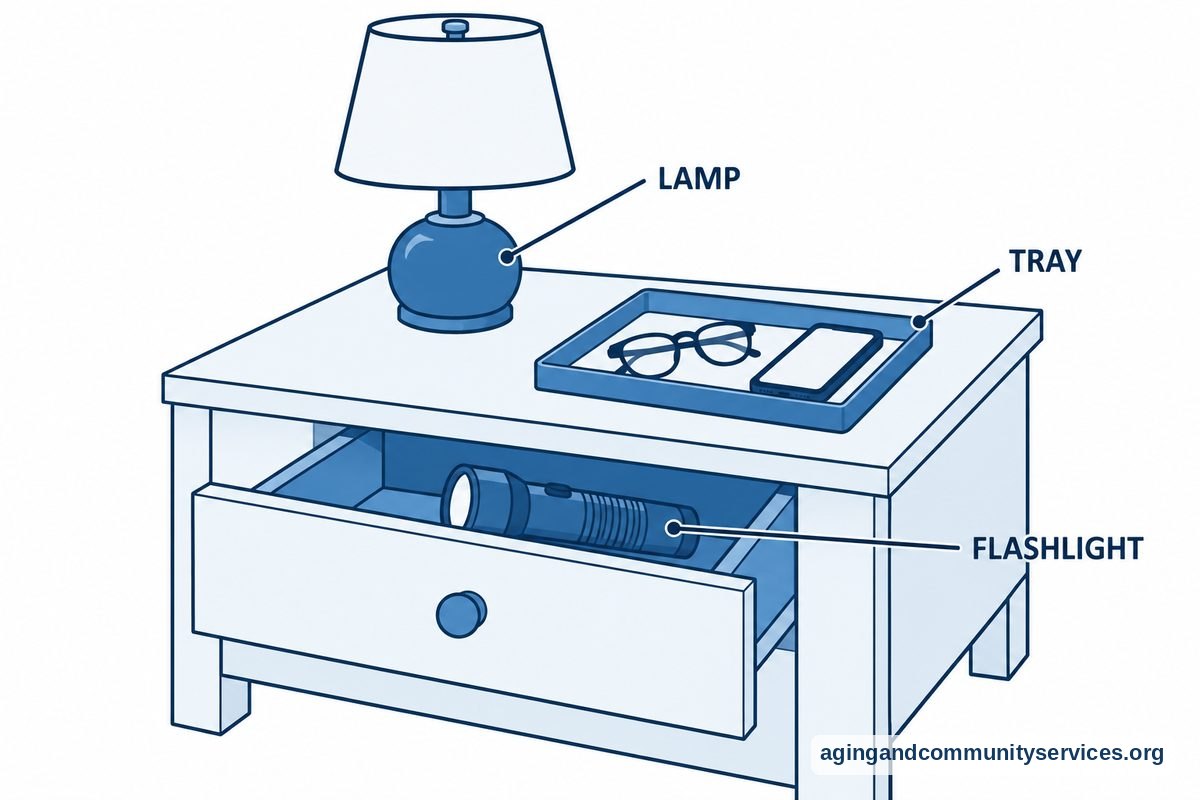
- Nightstand: Use a stable table with enough surface space for glasses, water, phone, lamp, and medications if used.
- Chair: Place a firm chair with arms near the dressing area if the room has space.
- Dresser: Keep daily clothing in drawers that are easy to open without bending low or reaching high.
- Storage: Avoid stacking boxes or bags where they could shift or block movement.
Furniture with rounded corners can be helpful in tight rooms. If sharp corners are near the bed or walkway, simple corner guards may reduce bumps. Heavy furniture should be stable, and tall pieces should not be used for balance unless they are secured and meant for that purpose.
If extra support is needed when getting out of bed, compare options carefully. Some families look at bed assist handles for a steady handhold, while others ask a therapist whether a rail, handle, or different bed height is a better fit.
Make Getting In and Out of Bed Easier
The bed area deserves close attention because it is used many times a day. The person should be able to sit, pause, place both feet on the floor, and stand without rushing. A clear, steady setup can make that routine feel more natural.
Keep the most used side of the bed open and uncluttered. If the room is small, it may be better to remove a second nightstand or a decorative bench. Leave enough room for a walker, cane, or helper if one is used.
- Place the phone, lamp, glasses, and water within easy reach from the bed.
- Use bedding that is warm enough but not so long that it drags on the floor.
- Avoid slippery satin style bedding if it makes sliding too easy.
- Keep slippers beside the bed, not under it.
- Choose slippers or shoes with backs and non slip soles.
Some people consider bed rails for elderly family members, especially when turning or sitting up feels difficult. Bed rails are not right for every person or every bed. Ask a doctor, physical therapist, or occupational therapist for guidance, especially if there is confusion, restlessness, or a history of getting trapped in tight spaces.
A soft mat beside the bed may help cushion the floor area, but it must not create a new trip hazard. Look for a low profile edge and place it where it will not slide. You can review bedside fall mats if you are comparing options for the bed exit area.

Improve Lighting for Nighttime Routines
Good lighting is one of the simplest bedroom safety changes. Many trips to the bathroom, closet, or hallway happen when the room is dark and the person is sleepy. The goal is soft, steady light that shows the path without glare.
Use a lamp that can be turned on from the bed. A large switch, touch lamp, or voice controlled light may be easier than a small knob. If the person uses a walker or cane, avoid cords across the floor.
- Place a night light near the bed, doorway, and bathroom path.
- Use warm light that shows the floor but does not shine into the eyes.
- Keep a flashlight in the nightstand for power outages.
- Replace burned out bulbs right away.
- Use window coverings that reduce glare during the day.
Motion lights can be useful if they turn on gently and stay on long enough. Test them during normal evening routines to make sure they do not surprise the person or leave dark gaps. For more ideas, compare night lights for seniors that are made for hallways, bedrooms, and bathrooms.

Keep Daily Items Easy to Reach
A bedroom is safer when the person does not need to stretch, climb, or bend often. Put everyday items between shoulder and waist height when possible. Less used items can go higher or lower, but only if someone else can help when needed.
The nightstand should be simple, not crowded. Too many items make it harder to find what matters. A small tray can keep glasses, hearing aids, tissues, and a phone in one place.
- Store daily clothing in the top or middle dresser drawers.
- Use closet rods and hooks that are easy to reach.
- Keep a grabber tool nearby if bending is difficult.
- Use labels or clear bins if items are hard to find.
- Place a small trash can where it will not block walking space.
If medications are kept in the bedroom, use the setup recommended by the person’s pharmacist or doctor. Good lighting and a clear surface can make reading labels easier. Avoid moving important items without telling the person, since familiar placement can support independence.
Reduce Slips, Trips, and Clutter
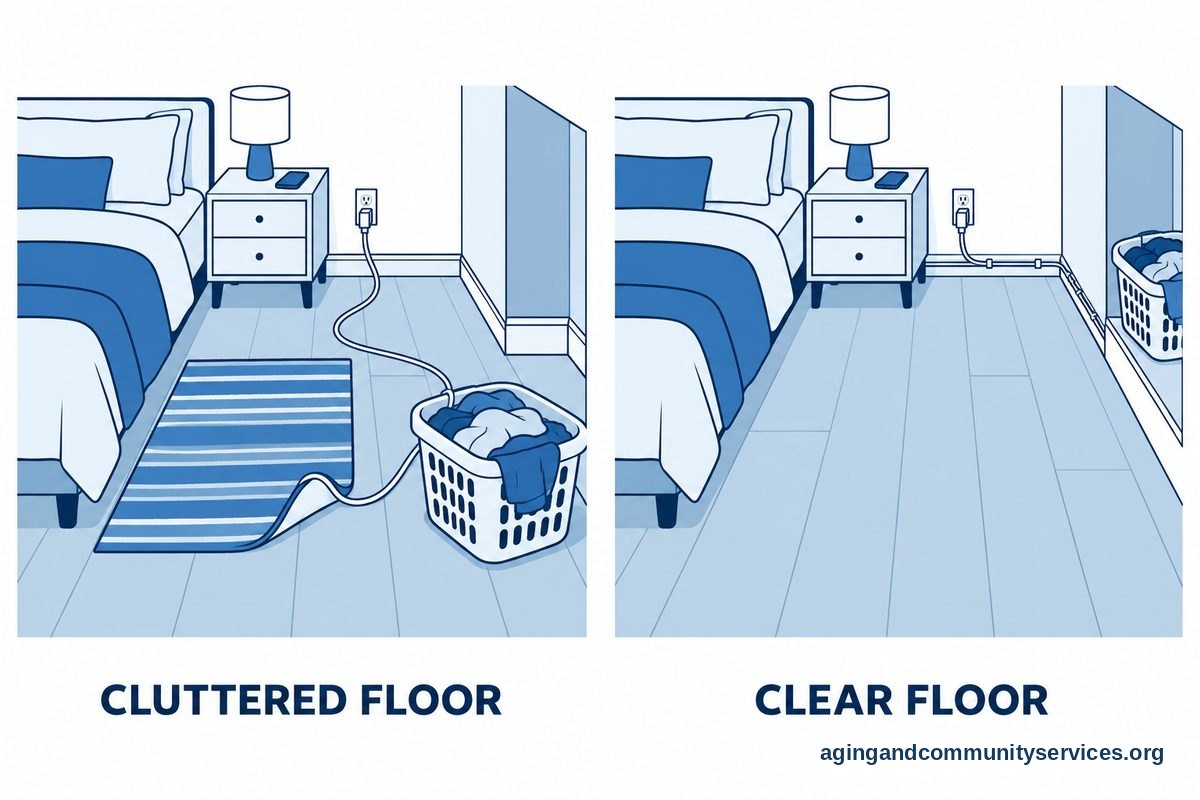
Floor safety is about more than cleaning. It includes texture, traction, and the way objects are arranged. A room can look tidy but still have hazards if cords, rugs, or furniture legs cross the main path.
Carpet should lie flat, without curled edges or loose seams. Hard floors should not be slick. If socks are worn in the bedroom, consider non slip socks or supportive slippers that fit well.
- Remove small throw rugs, especially near the bed and doorway.
- Clean spills right away.
- Keep floors free of magazines, blankets, and charging cables.
- Use cord clips or covers along walls, not across walking areas.
- Check that furniture does not rock or slide when touched.
Clutter can build up slowly, especially on chairs and dressers. A weekly reset can help. Put laundry away, return items to their places, and make sure the path to the bathroom is still clear.
For a wider home safety plan, the National Institute on Aging has practical ideas for aging in place. You can also use a room by room checklist such as fall prevention for seniors to look beyond the bedroom.
What You Can Do Next
Start with one calm walkthrough of the bedroom. Do it at the time the room is often used, such as bedtime or early morning. Bring the person who uses the room into the conversation so changes feel helpful, not controlling.
- Clear the path from the bed to the door, bathroom, closet, and light switch.
- Check the bed height and remove anything that makes standing awkward.
- Move daily items to easy reach on the nightstand, dresser, and closet shelf.
- Add steady lighting from the bed to the bathroom path.
- Remove loose rugs, loose cords, and clutter from the floor.
- Ask a doctor, physical therapist, or occupational therapist about support devices if balance, strength, or bed mobility has changed.
If you are not sure where to start, choose the change that makes the next bedtime easier. A clear floor, reachable lamp, and stable nightstand can make a noticeable difference without changing the whole room at once.
Frequently Asked Questions
How do you make a bedroom safe for elderly family members?
Start by clearing walking paths, improving lighting, and making the bed area easier to use. Remove loose rugs, keep cords against the wall, and place daily items within easy reach. If the person uses a cane, walker, or helper, make sure there is enough room for safe movement.
What is safe bedroom furniture for elderly people?
Safe furniture is sturdy, stable, and easy to use without stretching or bending too much. A comfortable bed height, a steady nightstand, a firm chair with arms, and dressers that open smoothly are good basics. Avoid furniture that slides, wobbles, blocks walkways, or has sharp corners in tight spaces.
What should be kept beside the bed?
Keep only the items used often, such as a lamp, phone, glasses, water, tissues, and any items recommended by a health professional. A simple tray or organizer can keep the surface clear. Avoid piling books, cords, or loose items where they may fall to the floor.
Are bed rails always a good idea?
No. Bed rails may help some people sit up or turn, but they can create problems for others. Ask a doctor, physical therapist, or occupational therapist before adding a rail, especially if the person is restless at night or may try to climb over it.
What lighting is best for a safer bedroom?
Use lighting that is easy to turn on from the bed and bright enough to show the floor. Night lights along the path to the bathroom can help with nighttime routines. Choose soft light without glare, and make sure cords do not cross walking paths.
How often should bedroom safety be checked?
Check the room whenever mobility, vision, furniture, or routines change. A quick weekly look can also help keep clutter, laundry, and cords from building up. If new safety concerns appear, ask a qualified professional for advice that fits the person’s needs.