

Winter elder care safety starts with a warm home, clear walkways, steady routines, and help ready when the weather changes. For older adults, winter can bring slippery surfaces, colder rooms, power outages, and extra travel challenges, so a simple plan can make daily life easier and safer.
The best elder care for winter safety is not one single service or product. It is a mix of home checks, weather awareness, safe movement, reliable heat, and regular support from family, neighbors, or care providers.
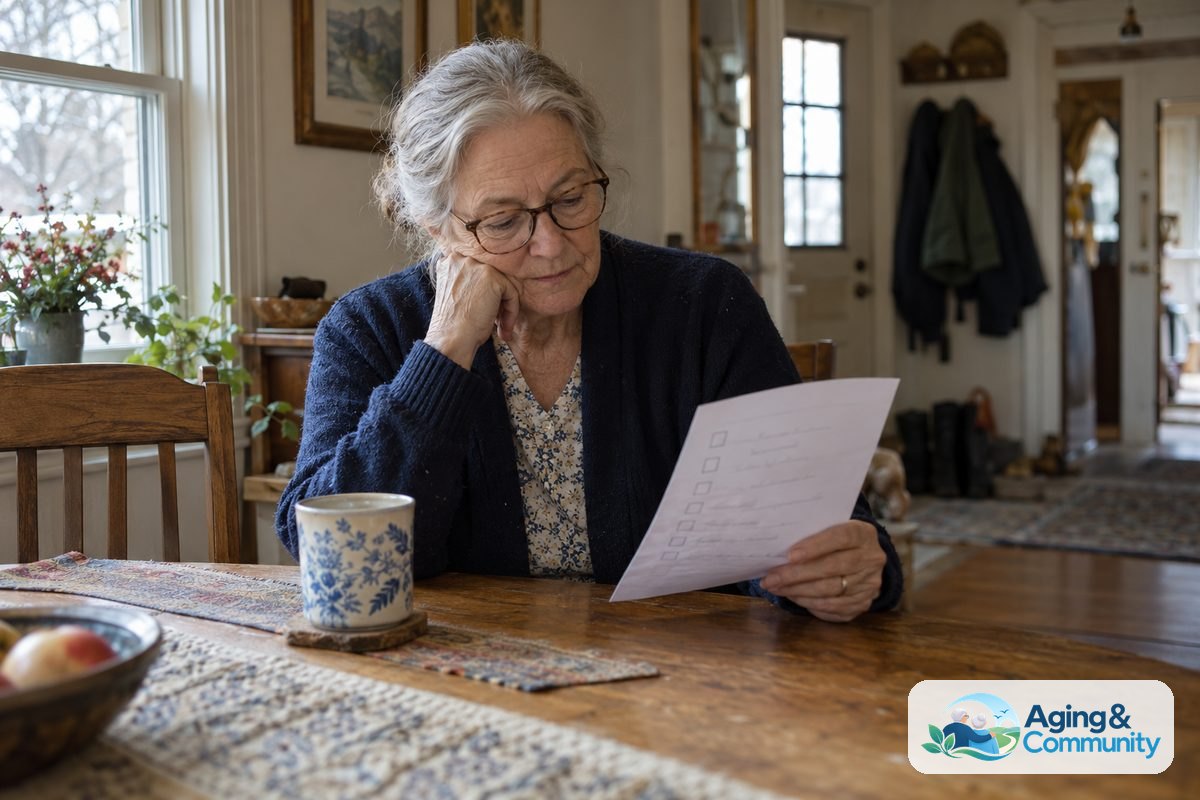
Start With Winter Safety at Home
Winter safety at home begins before snow, ice, or very cold weather arrives. A careful walk through the home can show small problems that may become harder to manage during a storm or cold snap.
Look at the main areas used every day: the bedroom, bathroom, kitchen, stairs, entryway, and path to the mailbox or driveway. A simple home safety checklist can help families notice loose rugs, poor lighting, clutter, and other trip hazards.
- Keep floors clear of cords, shoes, newspapers, and bags.
- Use bright bulbs in halls, stairways, bathrooms, and entry areas.
- Place non-slip mats near doors where snow or rain may be tracked inside.
- Check that handrails are sturdy on both indoor and outdoor steps.
- Keep often-used items within easy reach to limit climbing or bending.
Winter safety for home spaces also includes checking heat sources and smoke alarms. If the home uses a fireplace, space heater, or fuel-burning appliance, follow the maker’s directions and have equipment checked by a qualified professional when needed.
Carbon monoxide alarms should be working on each level of the home. Never use an oven, grill, or outdoor heater to warm a room. If there are concerns about paying for heat, a local agency or utility may be able to explain programs such as heat assistance.
Plan for Cold Weather and Power Outages
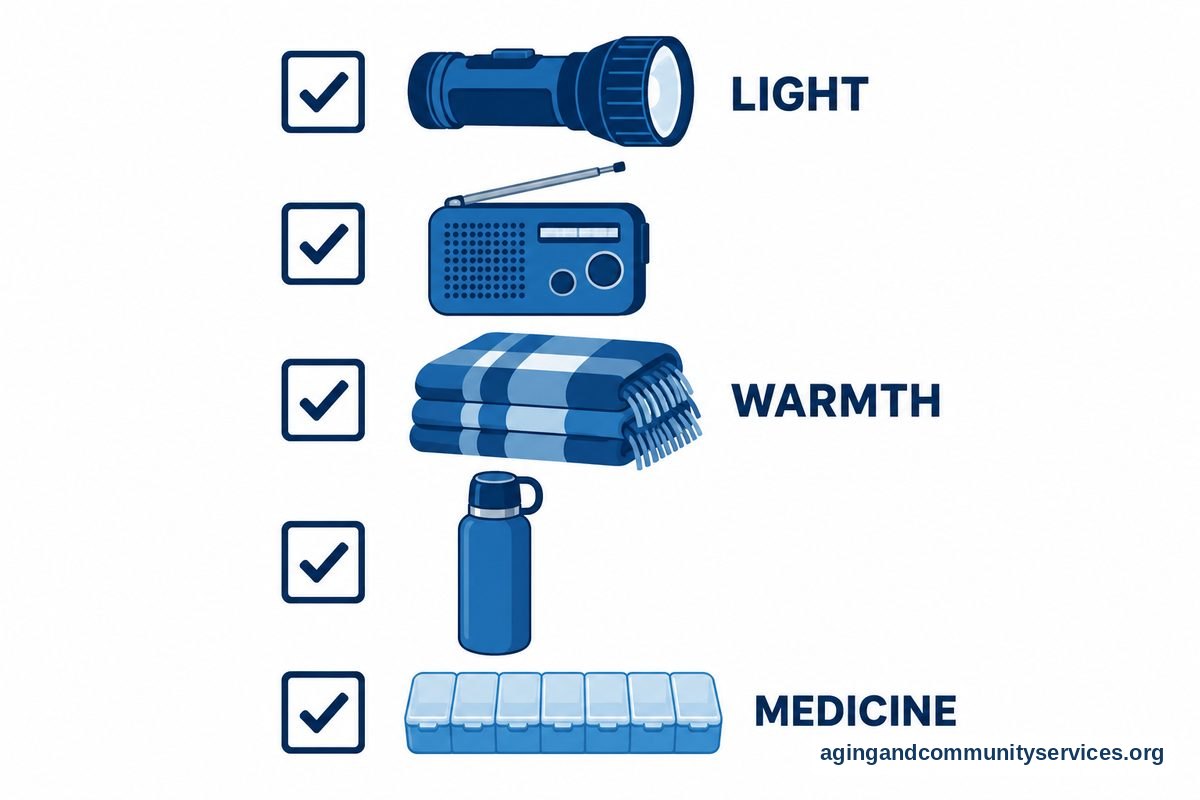
Winter weather tips for seniors often focus on the same basic idea: plan before the forecast becomes urgent. A few supplies and a clear contact plan can make it easier to stay comfortable during bad weather.
Keep flashlights, extra batteries, blankets, a charged phone, bottled water, and easy meals in one known place. If the person uses medical equipment that needs power, talk with the equipment provider, utility company, or doctor about backup steps.
The National Weather Service shares practical cold weather safety information, including how to prepare for low temperatures and winter storms. Families can use local forecasts to decide when to reschedule errands, arrange rides, or ask someone to check in.
- Write down key phone numbers and keep the list near the phone.
- Choose a check-in person for storm days.
- Keep a phone charged before bad weather begins.
- Refill needed household supplies before roads become slick.
- Know where the main water shutoff and fuse box are located.
A power outage plan should be simple. Decide where to go if the home becomes too cold, who can provide a ride, and what items must come along, such as glasses, hearing aids, chargers, medicines, and insurance cards.
Lower Slip and Fall Risks in Winter
Snow, ice, wet shoes, and early darkness can make walking less steady. According to the National Institute on Aging, cold weather steps such as dressing warmly, using safe footwear, and being careful on icy areas can lower the risk of cold-related problems and injuries.
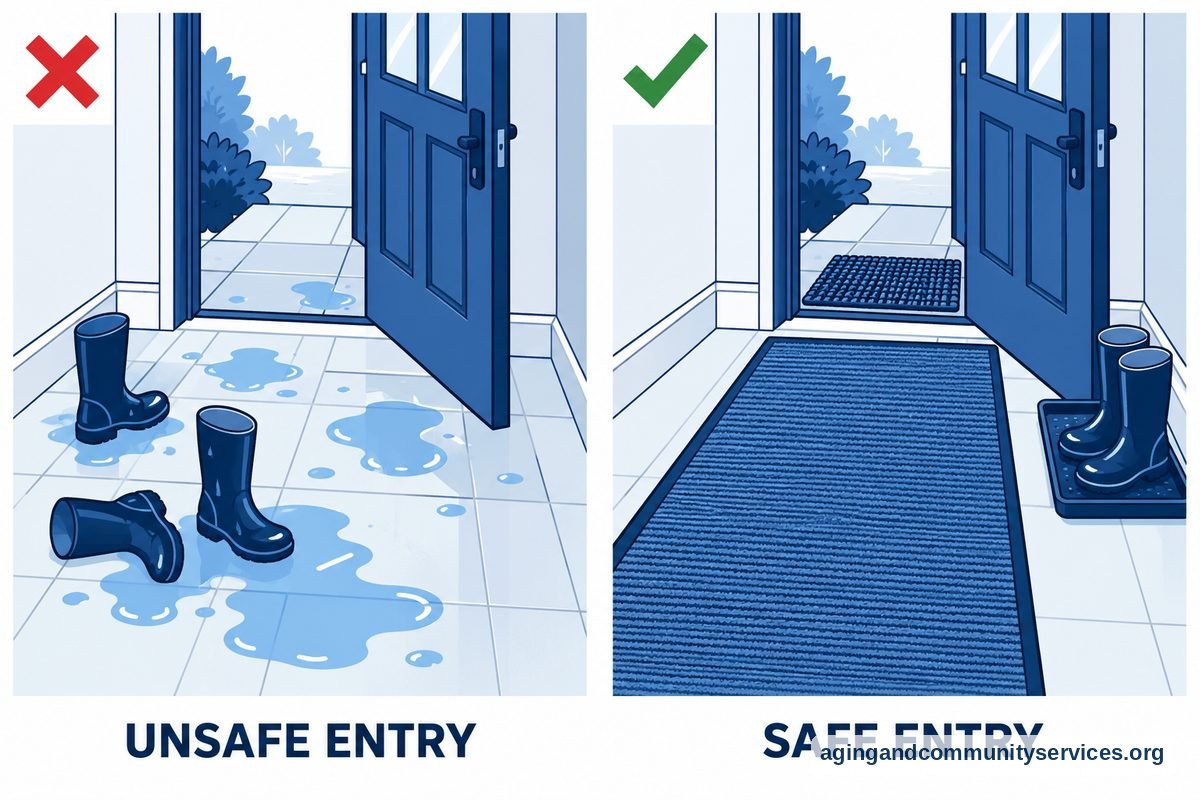
Inside the home, wet floors near doors are a common winter issue. Put a heavy mat outside the door and an absorbent mat inside. Keep a towel nearby so water can be wiped up quickly.
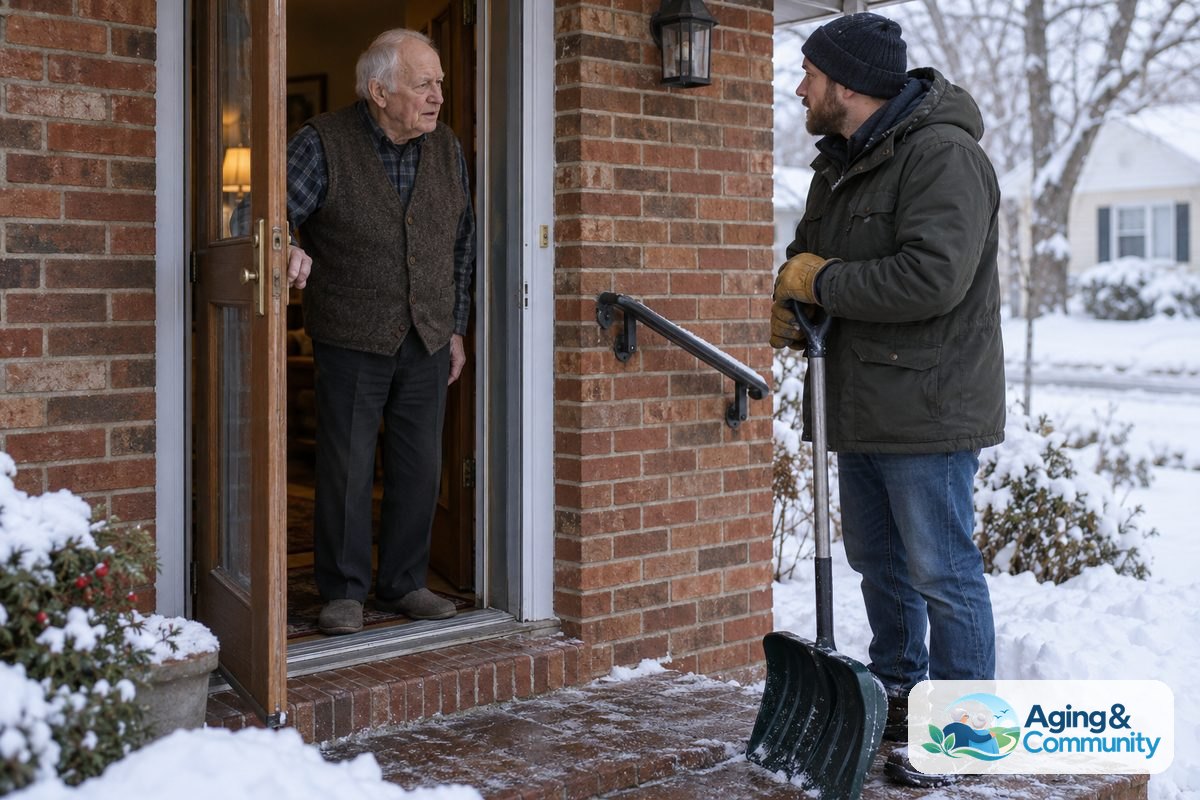
Outside, ask who will shovel, salt, or sand steps and walkways. Do not wait until a storm is over to decide. If a family member cannot do it, consider a neighbor, building manager, local volunteer group, or home care service.
- Wear shoes or boots with good tread.
- Use handrails every time on steps.
- Take shorter steps on wet or icy ground.
- Give the body time to adjust when standing up.
- Use a cane, walker, or other device as directed by a professional.
If balance, strength, or walking confidence has changed, ask a doctor, physical therapist, or occupational therapist for guidance. A fall prevention plan can help match home changes and movement support to the person’s needs.
Support Winter Health and Safety Routines
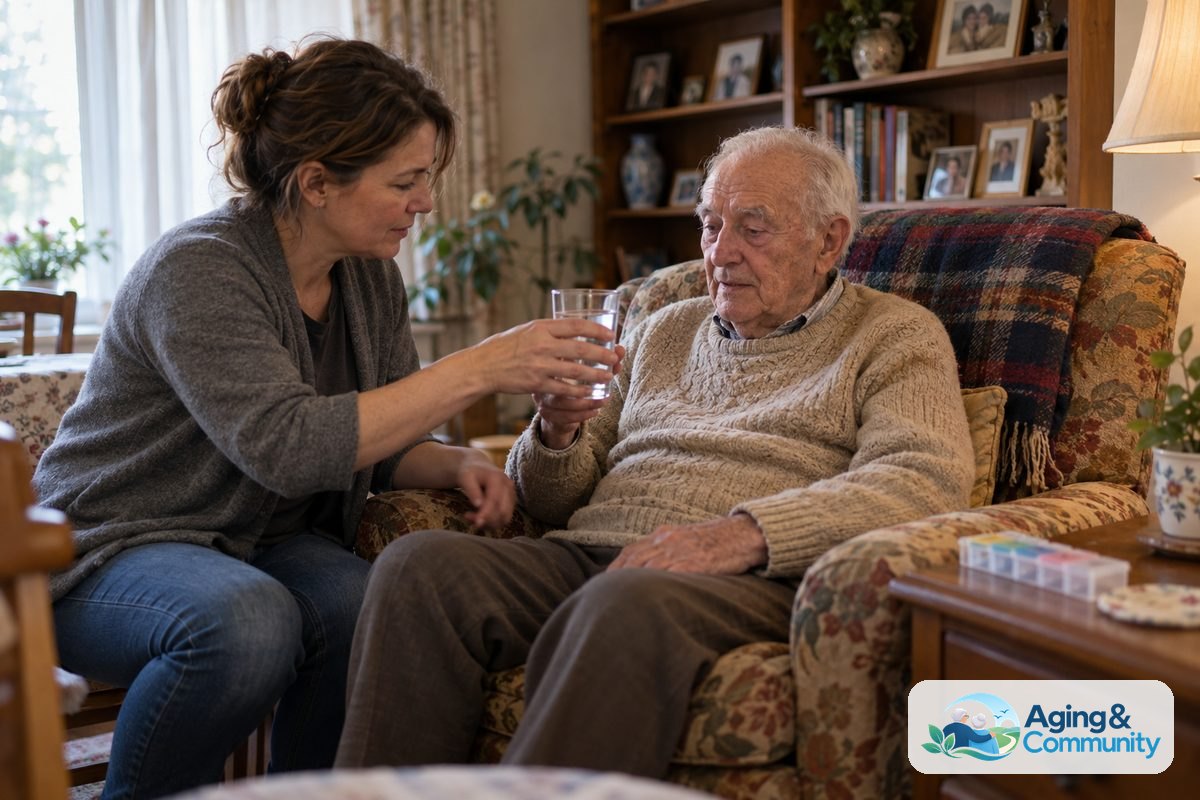
Winter health and safety is also about steady daily habits. Cold days can make it harder to eat well, drink enough fluids, move around, keep appointments, and stay connected.
Set up routines that are easy to follow. A weekly meal plan, a pill organizer if recommended, and a shared calendar can help everyone know what is needed. If medication timing, side effects, or symptoms are a concern, speak with a doctor or pharmacist.
Clothing matters in winter. Layers are often easier to adjust than one heavy item. Choose socks, sweaters, hats, gloves, and coats that are warm but not so bulky that they make walking or driving harder.
- Keep warm clothing near the door and bed.
- Place water and snacks within reach during storms.
- Set reminders for meals, medicine, and appointments.
- Use delivery, rides, or telehealth when travel is difficult.
- Ask a trusted person to check in during severe weather.
Winter can also affect mood and routines. Shorter days and poor weather may reduce visits and activity. Phone calls, video chats, faith groups, senior centers, libraries, and neighbors can help keep social contact steady.
Choose Elder Care Services for Winter Safety
The best elder care services for winter safety depend on the person’s home, health, mobility, budget, and support network. Some people need help only during storms, while others need regular visits through the season.
Helpful services may include homemaker help, personal care, meal delivery, transportation, snow removal, home repairs, case management, or wellness check-ins. For a broader look at home risks and support, a home safety review can be a useful starting point.
When comparing care options, ask clear, practical questions. The goal is to understand what help is available, when it is available, and how the provider handles bad weather.
| Need | Helpful Questions |
|---|---|
| Storm check-ins | Can someone call or visit when weather is severe? |
| Transportation | Are rides available for appointments, groceries, or warming centers? |
| Home help | Can staff assist with meals, laundry, light cleaning, or safe movement? |
| Snow and ice | Is shoveling, salting, or walkway clearing included or referred? |
| Backup support | What happens if a caregiver cannot travel due to weather? |
For local programs, the Eldercare Locator can connect families with community resources through local elder care information. Area agencies, senior centers, and faith communities may also know about transportation, meal programs, and winter support.
Be cautious with winter specials for elder care safety. A seasonal offer may be useful, but the service should still be clear, respectful, and reliable. Ask what is included, who provides the care, how scheduling works, and what happens during storms.
What You Can Do Next
Start with one calm walk-through of the home. Use a notebook or phone to list what needs attention now, what can wait, and who can help.
- Check the main walking paths inside and outside the home.
- Test smoke alarms and carbon monoxide alarms.
- Place flashlights, batteries, blankets, and key supplies together.
- Confirm who will help with snow, ice, errands, and check-ins.
- Review transportation plans before the next storm.
- Ask a doctor, physical therapist, or occupational therapist about balance, mobility, or equipment concerns.
If the list feels long, choose the easiest step first. Clearing the entryway, adding a lamp, calling a neighbor, or making a contact list can all help build a safer winter plan.
Families may also want to review a focused winter safety plan and divide tasks among relatives, friends, and paid helpers. Shared responsibility often works better than leaving one person to manage everything.
Frequently Asked Questions
What is the best elder care for winter safety?
The best elder care for winter safety is care that fits the person’s daily needs. It may include regular check-ins, help with meals, safe transportation, walkway clearing, medication reminders, or personal care.
A good plan also names backup helpers for storms. Ask providers how they handle missed visits, road closures, and urgent weather changes.
What are the best elder care for winter safety tips?
Focus on warmth, safe walking, clear communication, and reliable support. Keep floors dry, remove clutter, use good lighting, stock basic supplies, and plan rides before weather gets difficult.
It also helps to write down a simple storm plan. Include contact names, health details, equipment needs, and where to go if the home becomes too cold.
What are practical winter tips for senior citizens?
Practical winter tips include wearing layers, choosing shoes with good tread, keeping phones charged, and avoiding unnecessary trips during icy weather. It is also wise to keep meals, water, medicines, and warm clothing easy to reach.
If walking feels less steady, talk with a doctor, physical therapist, or occupational therapist. They can suggest safer ways to move and may recommend equipment or home changes.
How can older people focus on staying safe in winter?
Staying safe in winter for older people starts with a steady routine and a prepared home. Clear walkways, use handrails, keep rooms warm, and ask someone to check in during severe weather.
Try to make decisions before the weather turns. Arrange help with shoveling, rides, groceries, and appointments early.
What should be included in winter health and safety tips?
Winter health and safety tips should include home heating, safe walking, storm supplies, transportation, food, water, communication, and social connection. The plan should be written in plain language and kept where others can find it.
Medical questions should go to a doctor or pharmacist. This includes concerns about medicines, symptoms, mobility changes, or use of medical equipment during power outages.
Are winter specials for elder care safety worth considering?
Winter specials for elder care safety may be worth considering if the service matches a real need. Look for clear terms, trained staff, reliable scheduling, and a plan for bad weather.
Do not choose a service only because it is seasonal. Ask what is included, what is not included, and how the provider communicates with family members.