

Home protection tips for seniors living alone start with simple steps that make the home easier to use, easier to monitor, and easier to leave or enter safely. A good plan combines door security, fall safety, lighting, communication, and trusted check-ins without making the home feel less comfortable.
The goal is not to turn a home into a fortress. It is to support daily independence with clear routines, useful tools, and a few backup plans for times when help is needed.
Start With Doors, Windows, and Everyday Entry
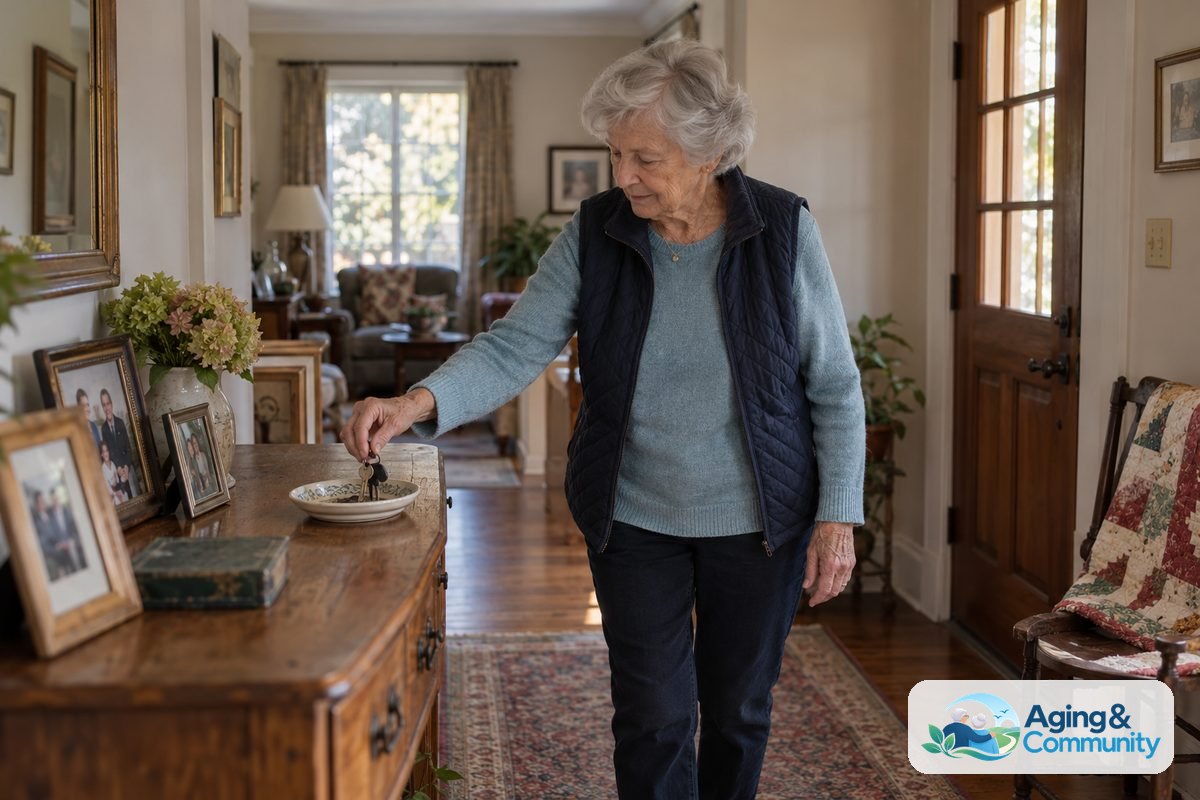
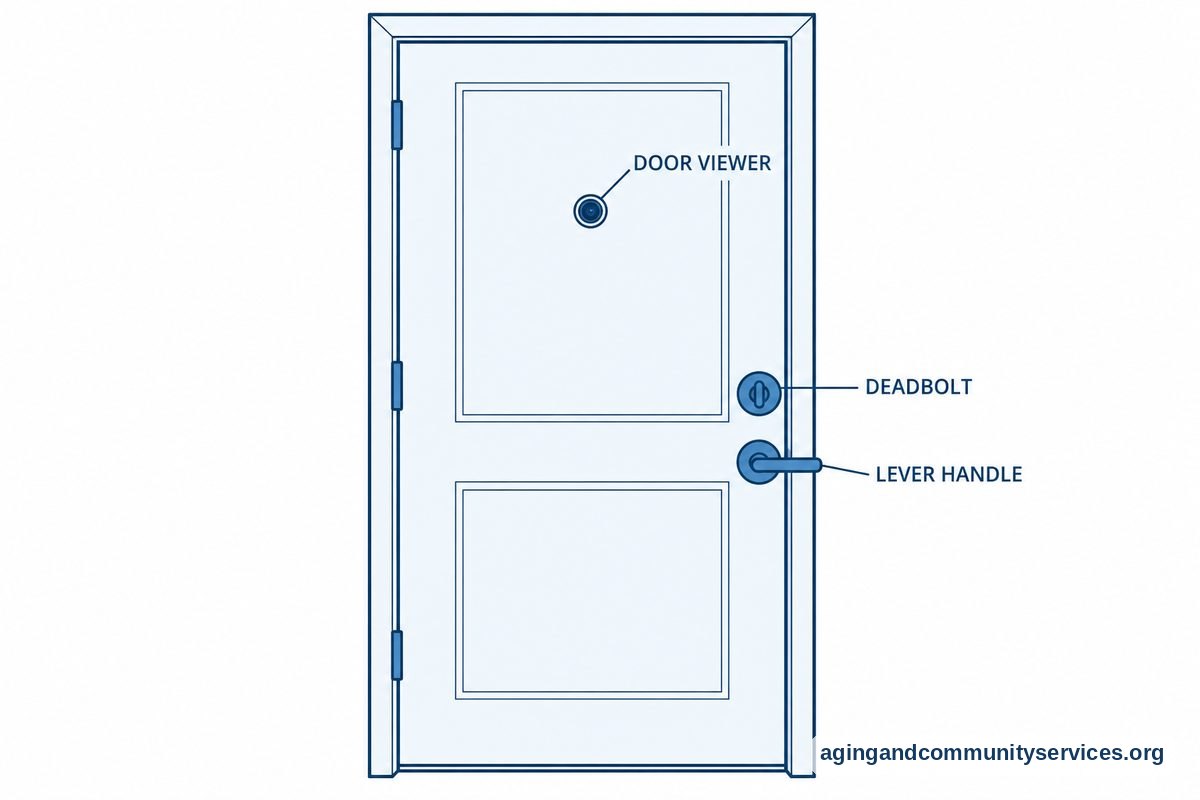
Most home protection begins at the places people enter and leave. Doors, locks, peepholes, and outdoor lighting should be easy to use and easy to understand. If a lock is hard to turn or a key is easy to misplace, it may not help much in daily life.
Check each outside door during the day and again at night. Look for loose strike plates, weak screws, poor lighting, or shrubs that block the view from a window. A trusted handyman, family member, or local aging service may be able to help with small fixes.
- Use sturdy locks on outside doors and make sure they work smoothly.
- Add a wide-angle peephole or door viewer at a comfortable height.
- Keep spare keys with a trusted person, not under a mat or planter.
- Use motion lights near doors, steps, garages, and walkways.
- Keep windows locked when they are not being used for fresh air.
A video doorbell or simple door camera can help someone see who is outside without opening the door. For people who do not want an app, a door viewer and a rule of not opening the door to unexpected visitors can still be a strong choice.
If the person uses paid help, deliveries, or house services, make a clear entry plan. For example, decide who is allowed inside, where packages should go, and how to confirm that a worker is expected.
Reduce Fall Risks Room by Room
Home protection is also about moving through the home safely. The National Institute on Aging says checking the home for hazards can lower the risk of falls. This is a good reason to look closely at floors, stairs, bathrooms, and lighting.
Start with walking paths. Remove loose cords, stacks of magazines, small rugs without grips, and low furniture that can catch a foot. Keep the path from the bed to the bathroom clear, especially at night.
- Use night lights in hallways, bathrooms, and the kitchen.
- Secure rugs with non-slip backing or remove them.
- Place frequently used items between waist and shoulder height.
- Add grab bars near the toilet and inside the shower or tub.
- Use non-slip mats in wet areas.
- Repair uneven steps, loose railings, and torn carpet.
Bathrooms deserve special attention because floors can be wet and space can be tight. Grab bars should be installed into strong support, not just stuck to a wall unless the product is made for that use and installed as directed. A shower chair, hand-held shower head, or raised toilet seat may help some people, but it is wise to ask a doctor, physical therapist, or occupational therapist what fits the person and the home.
A written home safety checklist can make this easier. Walk through one room at a time, write down changes, and handle the most useful ones first.

Choose Safety Devices That Match Daily Life
The best device for seniors living alone is the one the person will actually use. A device that is too hard to charge, too loud, too confusing, or too easy to forget may sit in a drawer. Start with the biggest daily concern, then choose a tool that answers that need.
| Need | Device To Consider | Helpful Feature |
|---|---|---|
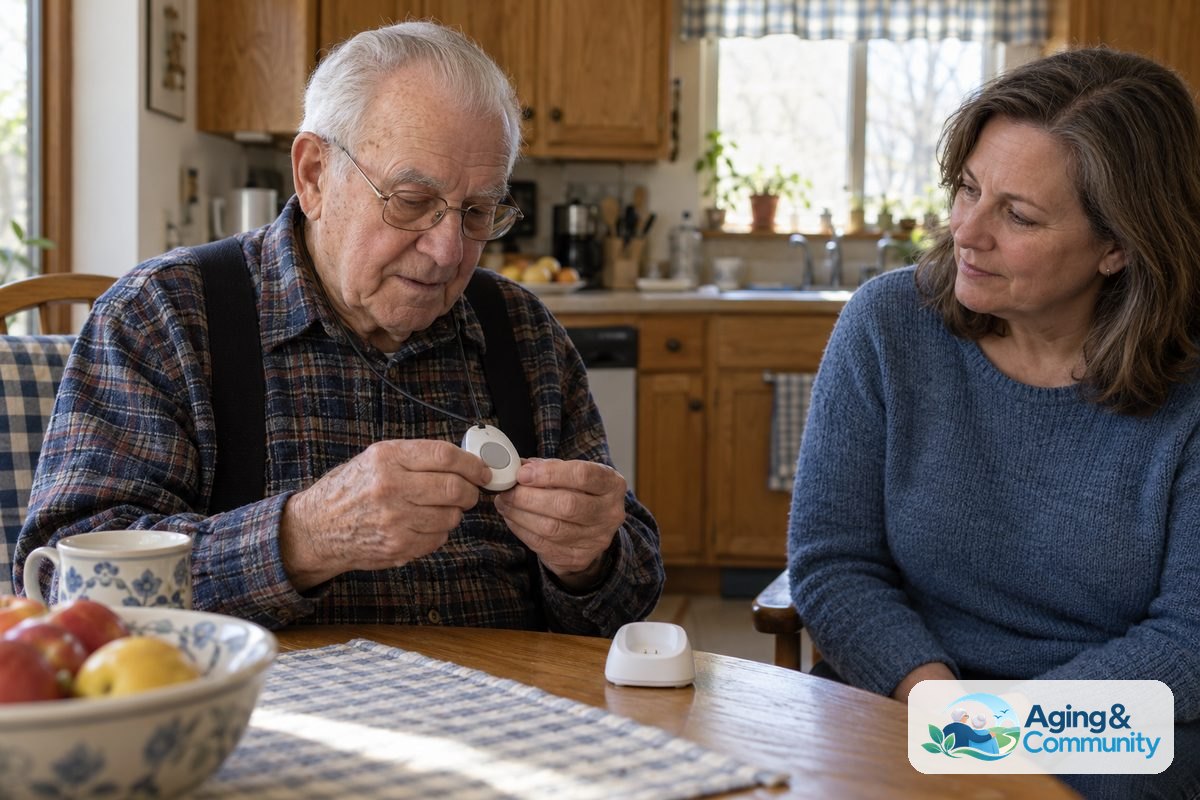
| Reaching help quickly | Medical alert button | Wearable button or base station |
| Knowing who is at the door | Video doorbell or door camera | Live view and two-way talk |
| Finding a way at night | Motion night lights | Turns on without a switch |
| Not missing smoke or gas alerts | Smoke and carbon monoxide alarms | Loud alarm and regular battery checks |
| Keeping in touch | Simple phone or smart speaker | Easy calling and reminders |
Safety devices for seniors living alone at home should be set up before they are needed. Test the alert button, practice answering the video doorbell, and label chargers. Keep instructions in large print near the device.
For some homes, home safety equipment such as grab bars, stair railings, transfer benches, or better lighting may matter more than electronic devices. For other homes, a doorbell camera or personal alert system may be the most helpful first step.
When choosing the best devices for elderly living alone, compare comfort, ease of use, battery life, privacy settings, and who receives alerts. If a device sends notices to family, talk about when alerts are useful and when they may feel too intrusive.
Set Up Simple Routines for Living Alone Safely
How to be safe living alone often comes down to habits. A routine can reduce confusion and make it easier for helpers to notice when something is off. Keep the routine simple enough to follow on busy or tired days.
- Lock doors at the same times each day, such as after coming inside and before bed.
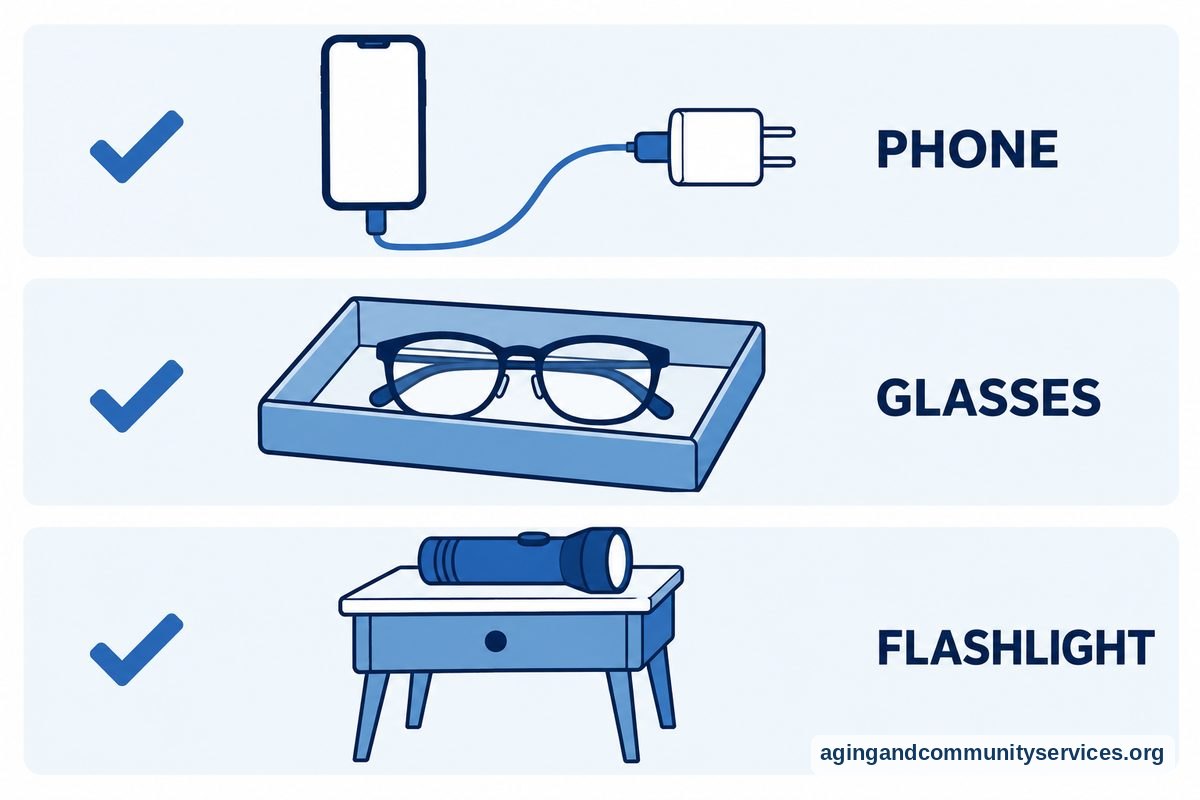
- Keep a charged phone near the bed and another easy-to-reach place.
- Use a daily check-in call, text, or app with one trusted person.
- Let someone know before overnight travel or a change in routine.
- Keep emergency contacts in large print by the phone.
- Make sure the house number is easy to see from the street.
Keep medicines, glasses, hearing aids, keys, and a phone in consistent places. This can make mornings and evenings smoother. It can also help a family member or neighbor assist faster if asked.
A small home notebook can be useful. Include contacts, allergies, the names of regular helpers, pet care notes, utility shutoff locations, and a list of current devices in the home. Keep it in a place that is easy to find but not visible from outside.
For broader planning, a guide on safety for elderly living alone can help families talk through check-ins, transportation, visitors, and home setup without making every choice at once.
Plan for Visitors, Deliveries, and Women Living Alone
Safety tips for women living alone are often the same practical steps that help anyone who lives alone, with extra care around privacy and boundaries. The main idea is to control access to the home and avoid sharing personal routines with people who do not need to know them.
Use first names only on mailboxes if that feels more comfortable. Keep curtains or blinds adjusted so private areas are not easy to see from outside. Do not tell unfamiliar callers or visitors that you live alone.
- Ask unexpected visitors to leave information at the door.
- Confirm service appointments by calling the company number you already have.
- Use a door chain, door viewer, or doorbell camera before opening the door.
- Schedule deliveries for times when someone is home and alert.
- Keep a phone nearby when meeting a new worker or repair person.
Package theft and unwanted visits can be reduced with clear delivery instructions. Ask for packages to be placed out of view when possible. A trusted neighbor may also receive items if that arrangement feels safe and reliable.
If there is concern about a specific person, unwanted contact, or repeated visits, talk with local authorities, a legal aid group, or a trusted community agency. Keep notes about dates and details, and ask for support from someone reliable.
Good Gift Ideas That Support Safety at Home
The best gifts for seniors living alone are useful, respectful, and chosen with the person, not simply for the person. A gift should fit the home, the person’s comfort with technology, and the way they already live.
Some gifts for elderly living alone are simple and low effort. Others need setup, passwords, charging, or a support person. Before buying a device, ask whether the person wants it and who will help maintain it.
- Motion-sensor night lights for halls, bathrooms, and stairs.
- A large-button phone or simple mobile phone.
- A video doorbell, if the person is comfortable using it.
- Non-slip mats and well-installed grab bars.
- A personal alert device with clear instructions.
- A bright flashlight that stays in the same place.
- A small fireproof document pouch for key papers.
For families, the most helpful gift may be time. Offer to replace smoke alarm batteries, organize cords, label switches, install brighter bulbs, or walk through a home safety plan together.
When giving technology, set it up fully. Write down how to use it, how to charge it, and who to call if it stops working. A gift that comes with patient setup is often more useful than a device left in a box.
What You Can Do Next
Start with one walk-through of the home. Choose a calm time of day, bring a notepad, and look at doors, floors, lighting, bathrooms, stairs, and communication tools. Do not try to fix everything in one visit.
- Pick the top three changes that would make daily life easier or safer.
- Handle quick fixes first, such as moving cords or adding night lights.
- Ask a qualified installer for grab bars, railings, or door hardware if needed.
- Choose one communication plan, such as a daily call or check-in text.
- Review the plan again after a month and adjust what is not working.
If the home needs bigger changes, the National Institute on Aging offers guidance on aging in place. Local agencies may also help families think through rides, meals, home changes, and support services.
Senior care safe at home is not one product or one checklist. It is a steady mix of safe spaces, clear routines, trusted people, and tools that fit the person using them. Safe home senior care works best when the person living there has a real voice in every choice.
Frequently Asked Questions
What is the best device for seniors living alone?
The best device for seniors living alone depends on the main concern. For quick help, a wearable alert button may be useful. For door safety, a video doorbell or door viewer may be better. For night movement, motion lights may help most.
What are the best devices for elderly living alone?
Helpful devices can include smoke and carbon monoxide alarms, motion lights, a simple phone, a personal alert system, and a door camera. Choose devices that are easy to use, easy to charge, and supported by a trusted helper.
How can someone be safe living alone?
Use strong daily habits: lock doors, keep a phone nearby, maintain clear walking paths, use good lighting, and set up regular check-ins. Make sure emergency contacts are easy to find and that trusted people know how to enter if invited or needed.
What are good tips for elderly living alone?
Keep the home simple, bright, and easy to move through. Remove trip hazards, store daily items within reach, check smoke alarms, use a check-in plan, and review who has keys. Ask a doctor, physical therapist, or occupational therapist about changes related to mobility or balance.
What are the best gifts for elderly living alone?
Useful gifts include night lights, a large-button phone, a doorbell camera, grab bars, non-slip mats, a flashlight, or help organizing the home. The best choice is one the person wants and feels comfortable using.
What is the best security for elderly living alone?
The best security is layered. Use working locks, good lighting, a way to see visitors, clear visitor rules, and a reliable check-in system. Add devices only when they fit the person’s routine and privacy preferences.