

When comparing a wheelchair vs transport chair, the quick answer is this: choose a wheelchair if the person needs to move themselves, and choose a transport chair if a caregiver will push most of the time. A transport chair is often lighter and simpler for short trips, while a wheelchair is usually better for daily use, longer sitting, and more control.
The right choice depends on where it will be used, who will push it, how often it will be used, and how much support the person needs. For older adults and family caregivers, the goal is not to pick the most advanced chair. The goal is to pick the chair that fits daily life safely and comfortably.

Wheelchair Versus Transport Chair: Practical Differences
| Feature | Wheelchair | Transport Chair |
|---|---|---|
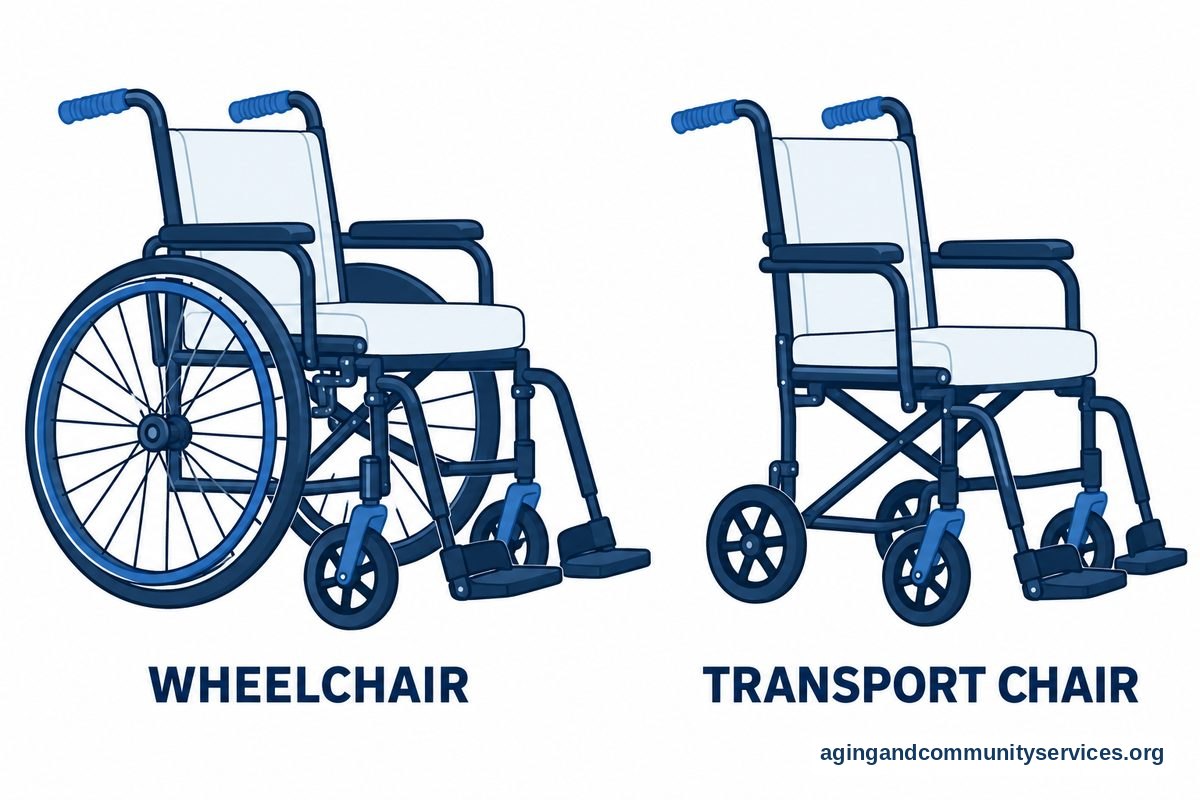
| Who moves it | The seated person can often push the large rear wheels, or a caregiver can push from behind. | A caregiver must push it. The seated person usually cannot move it alone. |
| Wheel size | Large rear wheels, often with hand rims for self-propelling. | Four smaller wheels, made mainly for being pushed. |
| Weight and folding | Can be heavier, though lightweight wheelchair models are available. | Often lighter and easier to lift into a car. |
| Best use | Daily use, longer outings, appointments, and times when independence matters. | Short trips, travel, medical visits, and moving through tight spaces. |
| Comfort | Often has more support options and may be better for longer sitting. | Usually simpler, with less padding and fewer adjustment options. |
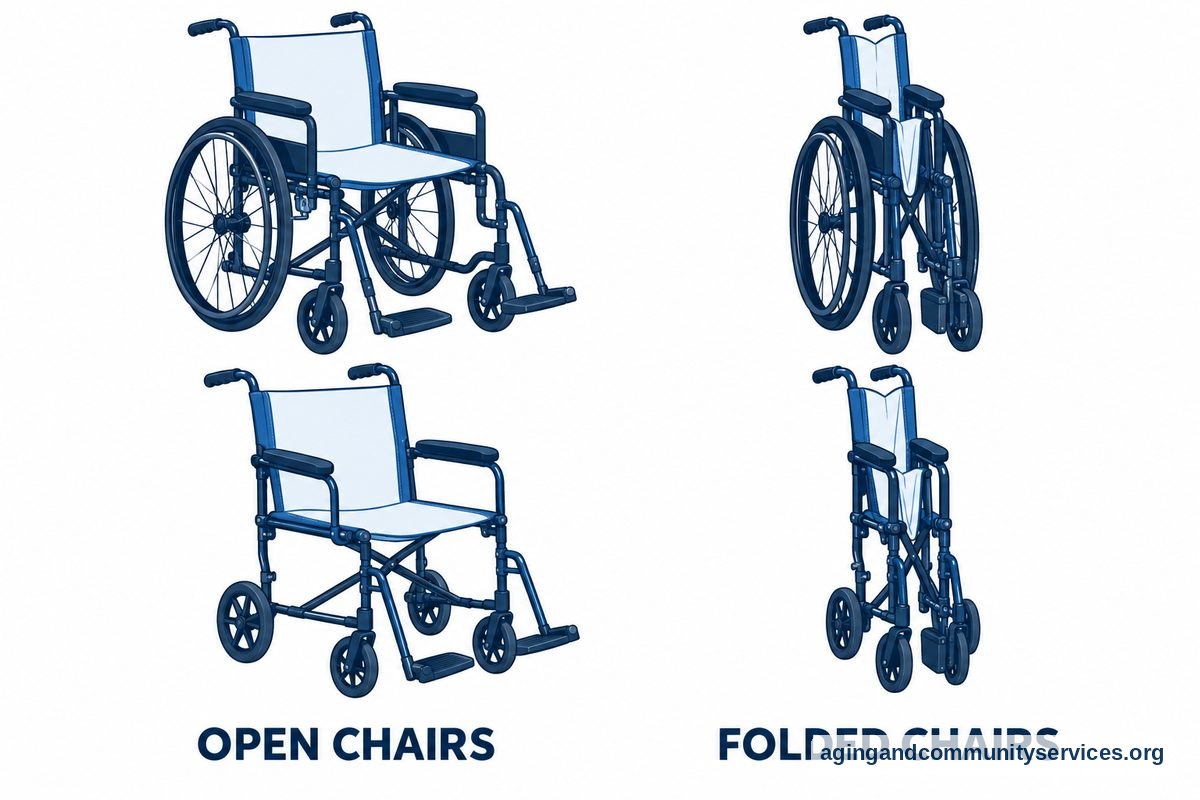
| Storage | Folds, but may take more space because of larger wheels and frame. | Often folds smaller and is easier to store in a trunk or closet. |
| Caregiver effort | May take more effort to lift, but can share movement if the person can push. | May be easier to lift, but the caregiver does all the pushing. |
Wheelchair: Who It Suits and Its Limits
A manual wheelchair suits someone who may want or need to move without being pushed every moment. The large rear wheels let many users push with their hands, turn in place, and manage short indoor distances. A caregiver can still push from behind when needed.
A standard wheelchair can be a strong choice for regular use around the home, at appointments, or during longer outings. It may also work better when the person spends more time seated and needs a stable base. If comfort is a concern, a good cushion can matter, and some families compare pressure relief cushions when planning for longer sitting.
The main limit is weight. A standard wheelchair can be harder to lift into a car, carry up steps, or store in a small space. If lifting is a concern, it may help to compare lightweight wheelchairs before choosing a full size model.
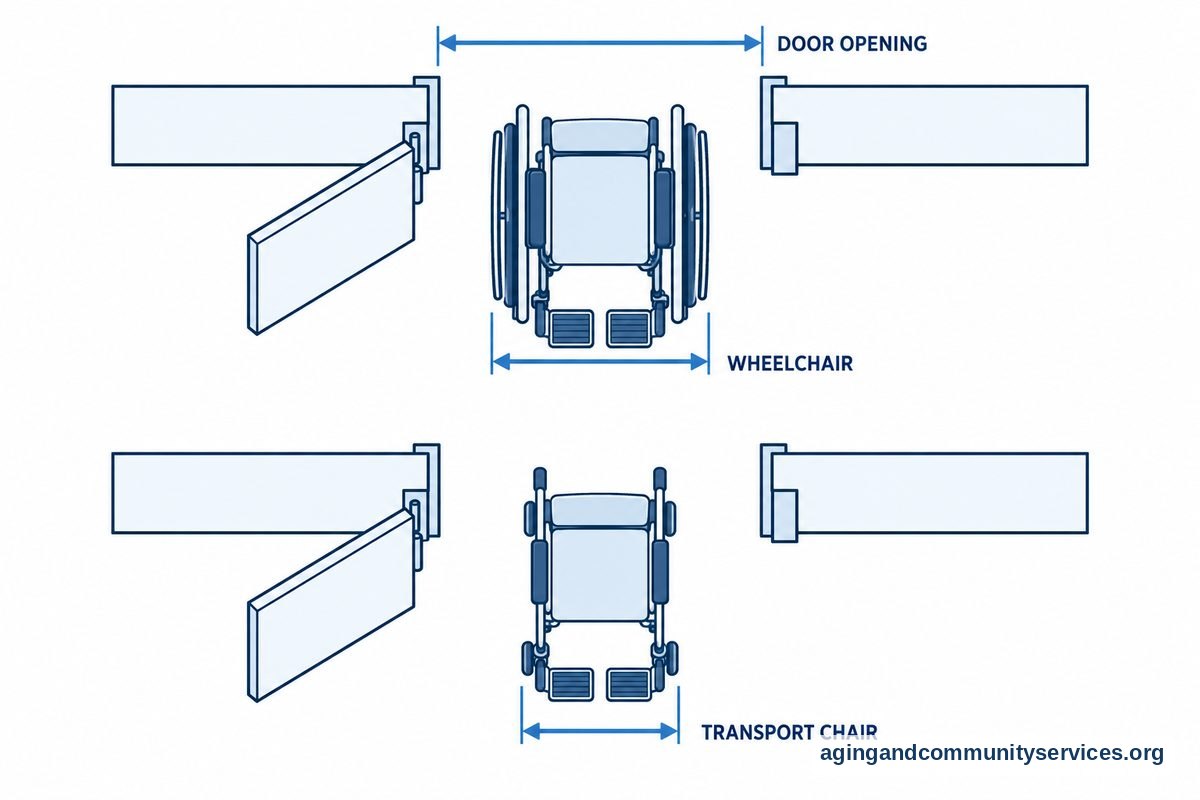
A wheelchair can also be wider and less nimble than a transport chair in tight spaces. Hallways, small bathrooms, narrow doorways, and crowded waiting rooms can make turning harder. Measuring doorways and checking the folded size before buying can save trouble later.
A wheelchair may be the better choice when the person values independence. Even if they only self-propel part of the time, that control can make daily routines feel easier. If strength, balance, or transfers are changing, ask a physical therapist or occupational therapist for help matching the chair to the person and the home.

Transport Chair: Who It Suits and Its Limits
A transport chair, sometimes called a transport wheelchair or transit chair, suits someone who will be pushed by another person. It is often used for short trips, such as from the car to a clinic, through an airport, or across a parking lot. It can also help when walking long distances is tiring, but the person does not need a chair for all-day use.
The biggest advantage is simple handling. A transport chair is often lighter than a standard wheelchair, folds easily, and can be easier to place in a car trunk. This makes it useful for families who need something ready for errands, visits, or occasional outings.
A transport chair can also work well in tight indoor spaces. The smaller wheels may make it easier for a caregiver to guide around furniture or through narrow areas. It can be a practical option for short moves inside a home or facility.
The main limit is that the seated person usually cannot push it alone. Because the wheels are small, there are no large hand rims for self-propelling. If the caregiver steps away, the person may have to wait until someone returns to move the chair.
Transport chairs also tend to have fewer comfort features. The seat and back may be simpler, and the frame may not fit all body types or posture needs. For frequent or longer use, a transport chair may feel less supportive than a wheelchair.
Transfers also matter. Moving from a bed, car, toilet, or dining chair into any mobility chair should be done with care. Families who help with standing or shifting may want to review how to use a gait belt and ask a therapist to show safe technique for their situation.
How to Decide
- Choose a wheelchair if the person wants to move themselves at least some of the time.
- Choose a wheelchair if the chair will be used most days or for longer outings.
- Choose a wheelchair if comfort, posture, cushion choice, and stronger support matter.
- Choose a transport chair if a caregiver will always push and the trips are short.
- Choose a transport chair if lifting the chair into a car is the main concern.
- Choose a transport chair if the home, clinic, or travel setting has narrow spaces.
- Compare both if the person needs help outside the home but still wants some control indoors.
- Ask a professional if there are concerns about transfers, posture, skin comfort, dizziness, weakness, or safe movement.
It can help to think through one normal week. Count the number of times the chair would be used, where it would go, who would lift it, and how long the person would sit in it. That real-life list often makes the choice clearer than product names do.
Home layout matters too. The National Institute on Aging has practical tips on aging in place, including thinking about the home setup as needs change. A chair that looks right online may not work well if it cannot pass through the spaces used every day.
Safety also includes the path around the chair. Clear floors, good lighting, steady shoes, and careful transfers can make daily use smoother. The National Institute on Aging explains that some home and health steps can lower the risk of falls in its guide to falls and prevention.
Wheelchair vs Transport Chair for Home Use
For home use, the best choice often depends on independence and room size. If the person can use their arms to move, turn, and back up, a wheelchair may offer more freedom. If the home is tight and a caregiver is always present, a transport chair may be easier to guide.
Bathrooms and bedrooms deserve special attention. These rooms often have less turning space, and transfers may happen there often. If transfers are difficult, a therapist may suggest equipment, practice, or a different chair style.
Some families also use more than one tool. For example, a wheelchair may stay at home while a transport chair stays in the car. This can work well when daily comfort and travel convenience are both important.
Transport Chair vs Lightweight Wheelchair
A lightweight wheelchair sits between a standard wheelchair and a transport chair in many ways. It may still have large rear wheels for self-propelling, but the frame may be easier to lift than a standard model. This can be helpful when the person wants some independence, but the caregiver also needs easier handling.
A transport chair is usually simpler and lighter, but it gives the seated person less control. A lightweight wheelchair may weigh more than a transport chair, but it may be better for repeated use. Families comparing these options may also want to look at broader wheelchairs for elderly options to understand common features.
If the person will sit for long periods, do not choose only by weight. Seat size, footrests, armrests, brakes, cushion fit, and posture support all matter. A chair that is easy to lift but uncomfortable to sit in may not be the best match.

Transport Chair vs Standard Wheelchair
A standard wheelchair is usually more durable and more supportive for regular use. It often has large rear wheels, stronger frame parts, and more options for cushions or accessories. It may be better when the chair is part of daily routines.
A transport chair is usually better for short-distance help. It is often used like a travel tool rather than a main seating solution. The caregiver pushes, steers, brakes, folds, and lifts it.
The choice is not about which chair is better overall. It is about which chair fits the job. A standard wheelchair can be too much for a quick clinic visit, while a transport chair can be too limited for someone who wants to move around the home without help.
Frequently Asked Questions
What is the transport chair vs wheelchair difference?
The main difference is who controls movement. A wheelchair usually has large rear wheels so the seated person can push, while a transport chair has smaller wheels and needs a caregiver to push. Wheelchairs are often better for regular use, while transport chairs are often better for short assisted trips.
Is a transport chair vs manual wheelchair the same thing?
No. A transport chair is a type of chair for being pushed by someone else. A manual wheelchair usually means a non-powered wheelchair that the seated person may be able to propel by hand. Both are manual in the sense that they are not powered, but they are used differently.
What about transport chair vs wheelchair weight?
Transport chairs are often lighter than standard wheelchairs, which can make them easier to lift and store. Lightweight wheelchairs may narrow the gap, but they can still be heavier than many transport chairs. Always check the chair weight and the user weight limit before buying.
Is a transport chair vs transfer chair different?
People sometimes use these terms in casual ways, but they are not always the same. A transport chair is made to move a seated person from place to place with a caregiver pushing. A transfer chair may refer to equipment focused on moving from one surface to another, so read the product details carefully.
Is a transit chair vs wheelchair different?
In many settings, a transit chair means the same general idea as a transport chair. It is pushed by a caregiver and has smaller wheels. A wheelchair usually offers more independence because the seated person may be able to push the larger rear wheels.
Should I choose a wheelchair or transport wheelchair for travel?
For travel with a caregiver, a transport wheelchair can be easier to fold, lift, and guide through busy places. If the person wants to move without being pushed all the time, a wheelchair or lightweight wheelchair may be a better fit. For longer trips, think about seat comfort, foot support, and how much walking or sitting the day will include.