

Learning how to use cane on stairs comes down to remembering one simple phrase: up with the good, down with the bad. When you go up, your stronger leg leads the way, followed by your cane and your weaker leg. When you come down, your cane leads the way alongside your weaker leg, followed by your stronger leg.
Stairs can feel challenging as our bodies change, but taking them one step at a time makes a huge difference. Using the proper sequence gives your body a stable base of support on every single step. Whether you have an injury, joint pain, or general weakness, this method keeps your weight balanced.
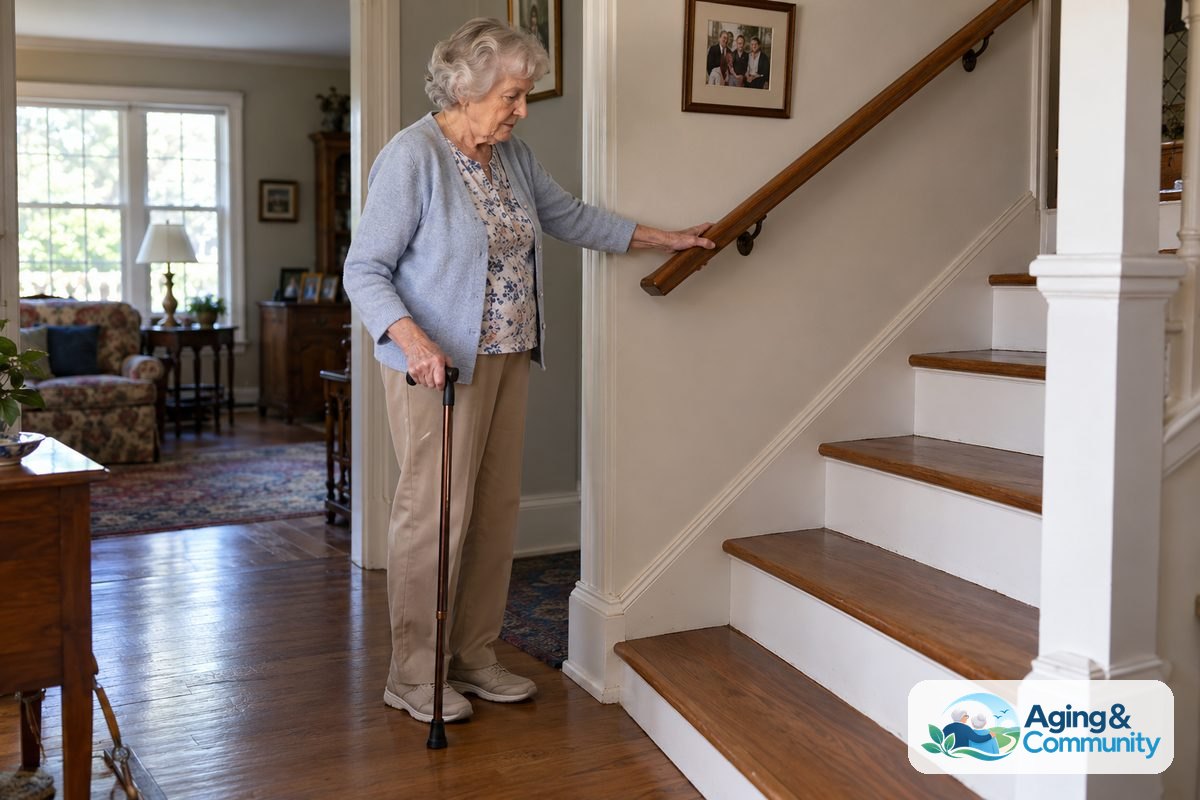
How to Use a Cane on Stairs with a Handrail
Whenever a handrail is available, you should use it. Hold the handrail with one hand and hold your cane in the other hand. If you need a refresher on daily walking balance, reviewing how to use cane basics on flat ground can help build your confidence first.
- Step up with your stronger leg first. Keep your cane and your weaker leg on the starting floor while your stronger foot presses firmly onto the first step.
- Bring the cane and your weaker leg up together. Place your cane and your weaker foot onto that same step next to your strong foot.
- Pause to find your balance. Make sure both feet and your cane are flat and secure before you start the next step.
- Lead with your cane when going down. Lower your cane onto the step below so it is ready to support your weight.
- Step down with your weaker leg. Place your weaker foot onto that lower step next to the cane.
- Finish with your stronger leg. Bring your strong foot down to the same step so both feet are together again.
How to Use a Cane on Stairs Without Railing
Sometimes you encounter outdoor steps or entryway porches that lack a sturdy banister. Knowing how to use a cane on stairs without railing requires extra focus because your cane must carry all the side support. A sturdy grip and good balance are key, and learning how to use quad cane equipment can provide extra ground contact if your therapist recommends one.
When going up stairs without a rail, keep your cane on your stronger side or the side that feels most natural. Place your stronger foot on the step first, straightening your knee to lift your body. Next, bring your cane and weaker leg up to meet it. Rest both feet completely on the step before moving forward.
When coming down stairs without a handrail, place your cane down on the lower step first. Next, step down with your weaker leg, keeping your body weight centered over the cane. Finally, bring your stronger leg down to the same step. Keep your steps small and never try to skip a step.
How to Use a Cane on Steps: Everyday Porches and Curbs
Many daily outings involve small sets of steps, such as curbs, bus platforms, or porch entries. Knowing how to use a cane on steps of this size follows the exact same pattern as a full staircase. You still step up with your stronger leg first and step down with your cane and weaker leg first.
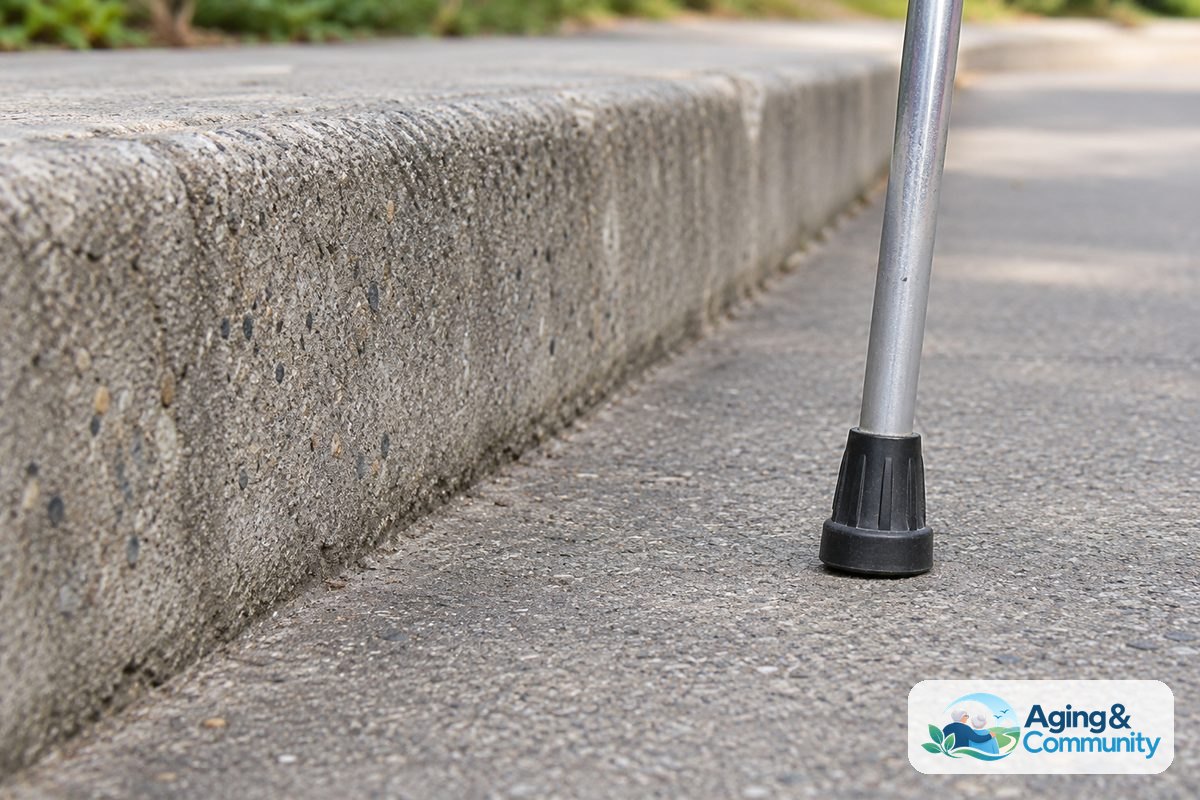
Curbs can be tricky because they often lack rails and may have uneven pavement. Always stop a few inches before the curb to check your footing. Lower your cane first when stepping off the curb into the street, follow with your weaker foot, and finish with your strong foot. Take your time and look out for puddles or loose gravel.
Using Rollators Near Stairs and Steps
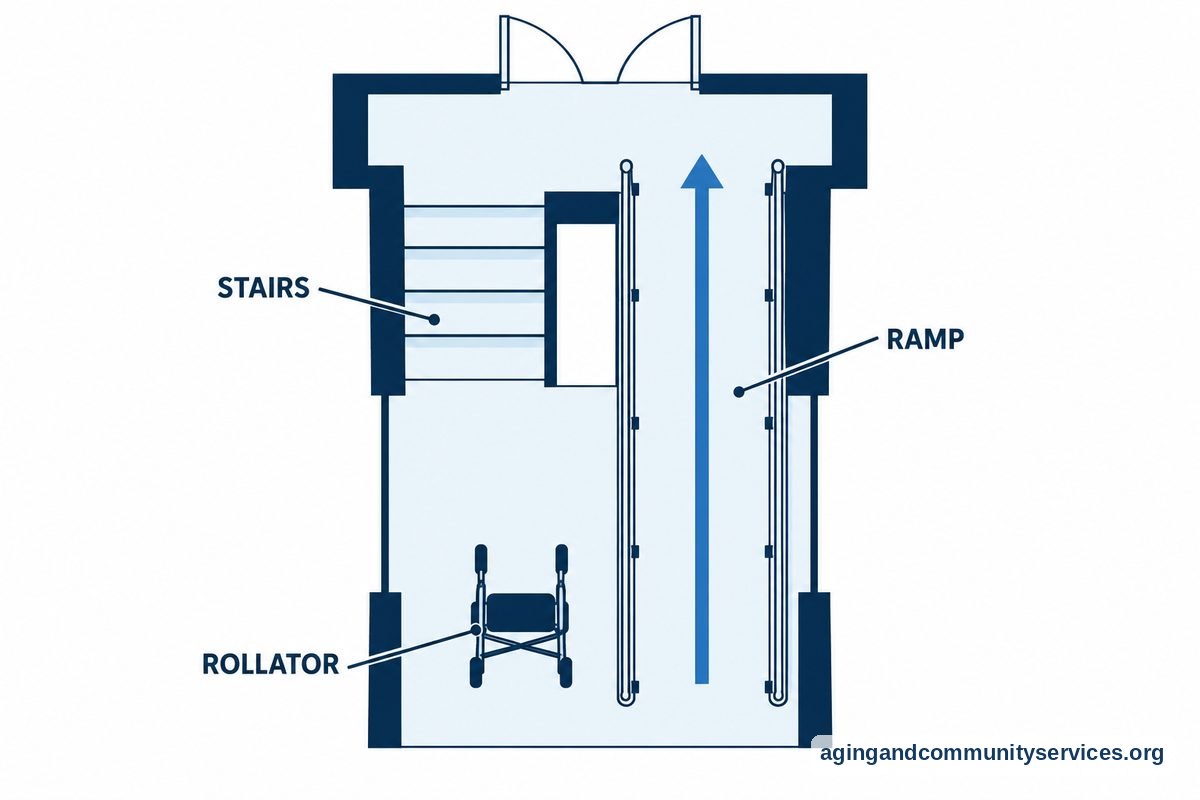
Many people also wonder how to use rollator on stairs safely during daily errands. The general safety rule from physical therapists is clear: you should never attempt to walk up or down stairs while using a rollator. Rollators have wheels and are designed for level surfaces, which makes them unstable on steps.
If you are wondering how to use a rollator on stairs when no one is around, the safest option is to avoid the staircase entirely. Instead, look for an accessible ramp or elevator. If you must use the stairs and have a helper, your helper can carry the folded rollator while you use a handrail and a standard cane to manage the steps. Exploring other stair assist devices for elderly individuals can help you find equipment made specifically for split levels.
Common Mistakes to Avoid
Avoiding small missteps can keep your staircase routines comfortable and smooth. Here are several common habits to watch out for:
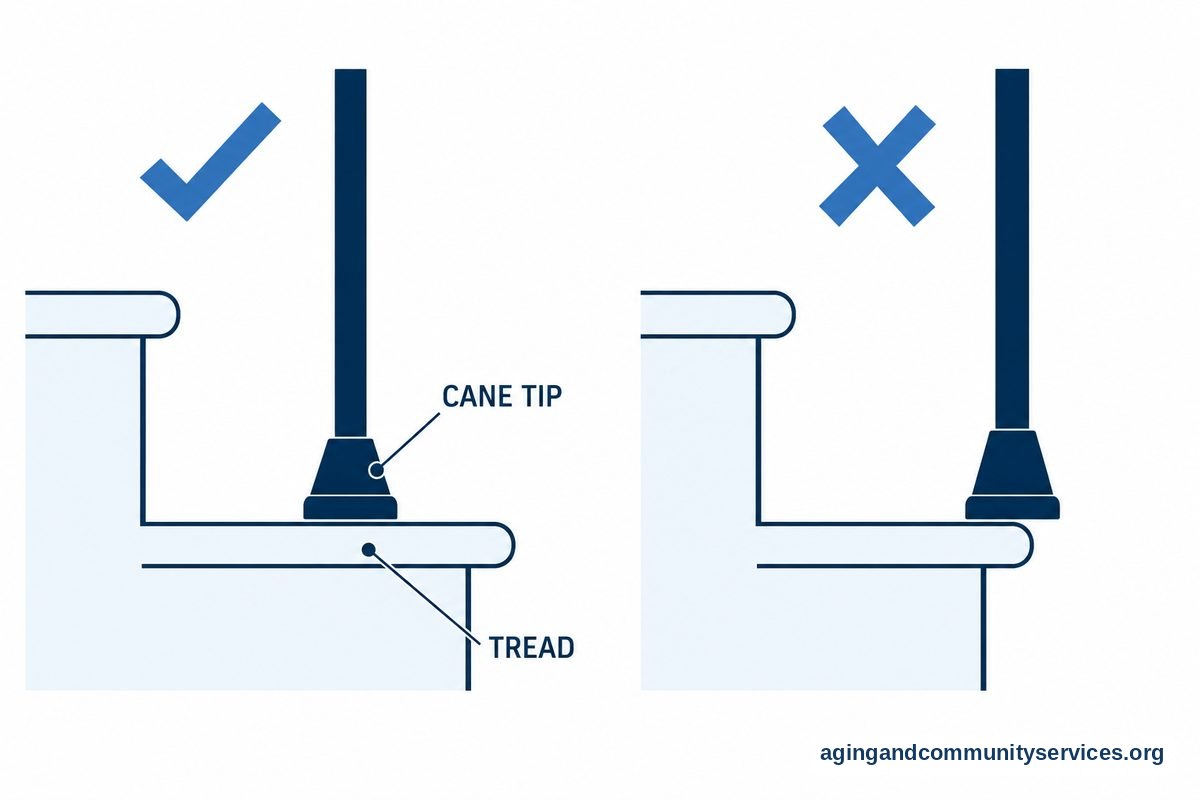
- Moving two steps at a time: Always place both feet and your cane on the same step before attempting the next one.
- Putting the cane too close to the edge: Set the cane tip near the center of the step so it does not slip off the lip.
- Carrying heavy items while climbing: Keep your hands free for the cane and handrail by using a shoulder bag or asking for help.
- Rushing your pace: Give yourself plenty of time to rest between steps rather than hurrying to the landing.
- Looking away from your feet: Keep your eyes focused on where your cane tip and shoes land until you reach the top or bottom.
When to Ask for Professional Guidance
If you feel unsteady, dizzy, or anxious on steps, it is time to speak with a healthcare professional. A doctor, physical therapist, or occupational therapist can evaluate your strength and check your equipment fit. When you call, describe the type of stairs you have at home, including whether they have handrails and how many steps you must climb each day.
Physical therapists can teach you custom ways to move that match your specific joint needs. Helpful programs and safety tips can also be found through the National Institute on Aging falls and falls prevention resources. Practicing under the direct guidance of a therapist builds skill and peace of mind before you tackle steps on your own.
Making Your Home Stairs Safer
Along with proper cane technique, updating your home environment makes climbing much easier. Simple adjustments to lighting and footing can create a much more comfortable space for older adults. You can read more about comprehensive home updates in our guide to stair safety for elderly family members.
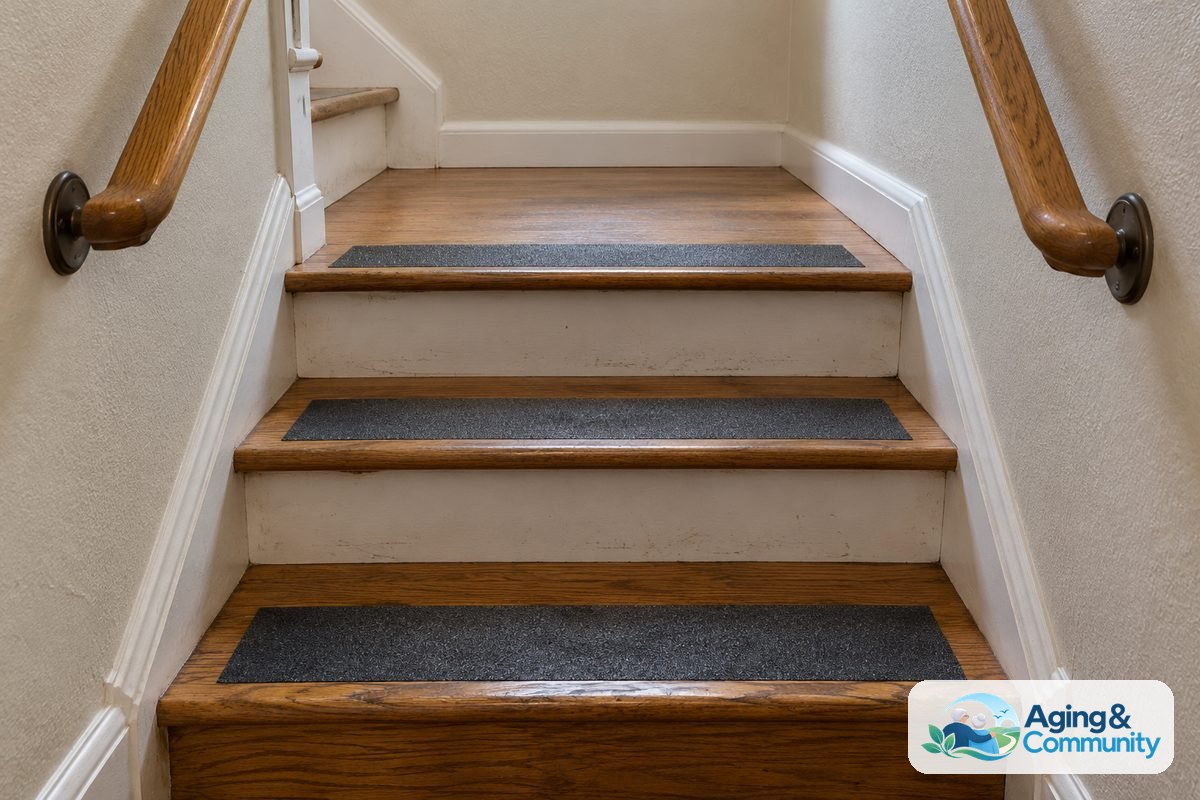
Ensure your stairwells have bright, glare-free light fixtures at both the top and the bottom landings. If your stairs are wooden, consider adding non-slip adhesive treads to improve shoe grip. The National Institute on Aging aging in place materials suggest having sturdy handrails on both sides of the stairway whenever possible.
If you need help finding local handymen or community home modification programs, the Eldercare Locator can connect you with trusted local agencies. Adding a second handrail is often an affordable project that provides lasting support for everyone in the house.
Frequently Asked Questions
How do you hold a cane while using a handrail?
Hold the handrail with the hand closest to the wall. Hold your cane in your other hand. If your cane is on the same side as the handrail, you can hold both the cane handle and the rail in one hand, or carry the cane horizontally while gripping the rail firmly.
Which foot goes first when going up stairs with a cane?
Your stronger foot always steps up first. Think of the phrase “up with the good.” Your stronger leg lifts your body weight up to the step, and then your cane and weaker leg follow to meet it.
Which foot goes first when going down stairs with a cane?
Your cane and your weaker foot go down first. Think of the phrase “down with the bad.” Your cane provides a solid base so your weaker leg can step down easily, followed by your strong leg.
Can I take my rollator on stairs if it has hand brakes?
No, you should never use a rollator on stairs even if the brakes are locked. The wheels can easily shift or tip on narrow step edges, creating an unstable surface. Always use a ramp, an elevator, or a standard cane with a handrail instead.
What should I do if my stairs do not have a handrail?
Take each step very slowly and keep your cane firmly planted in the center of the step. If you regularly use stairs without a banister, consider having a contractor or family member install a sturdy railing as soon as possible.