

On stairs, balance can change quickly because the body is shifting weight from one level to another while one foot is higher than the other. The best stair assist devices for elderly shoppers are meant to add a steady handhold or step aid at that exact moment, not replace a railing or a person’s own judgment. After comparing 3 options on paper, the HeywoodCabin 20 stands out for its 20 height levels and 4.4 lb frame, while the POWYS Stair may suit homes where a 12-inch platform is easier for the person to place a foot on before the next step.
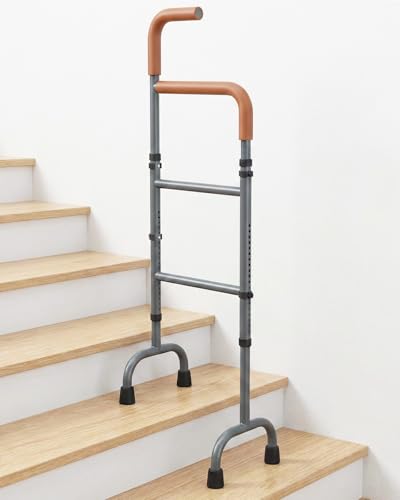
Pros
- 20 height levels adjust from 35 to 45 inches
- Carbon steel frame supports up to 300 lbs
- 4 non-slip rubber feet for wood, tile, or stone
- 4.4 lb slim frame stands near stairs for storage
Cons
- Only intended for stairs, not general walking support
- 300 lb capacity may not suit heavier users
- White plastic plug must stay in place during use
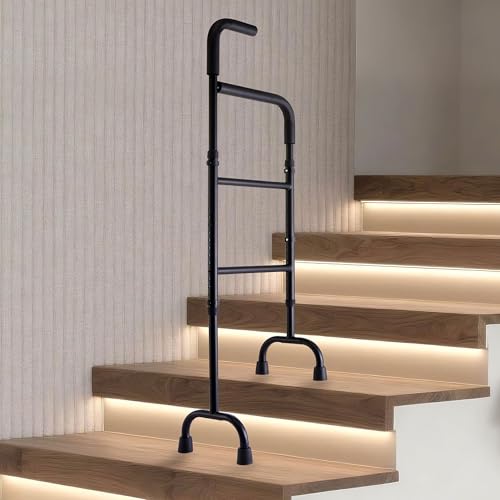
Pros
- 13 height settings adapt to stairs, steps, and floors
- Carbon steel frame supports users up to 300 lbs
- Non-slip rubber tips grip wood, tile, and carpet
- Foam handle offers a softer hold during stair use
Cons
- Assembly screws must be fully tightened before use
- Plastic sleeve should stay on, limiting part removal
- Vertical weight design may not suit severe weakness

Pros
- 12-inch widened platform offers more foot room
- 10 height settings cover a 78-99 cm range
- Iron and stainless steel frame supports up to 400 lb
Cons
- Wide 12-inch base may feel bulky on narrow stairs
- Iron and stainless steel may add noticeable weight
A Closer Look at Our Top Pick
The HeywoodCabin 20 is the place we would start for many families because it combines a wide adjustment range with a light, simple frame. Its 20 height levels adjust from 35 to 45 inches, which gives a caregiver more room to match the handle to the person and the stair layout. The carbon steel frame supports up to 300 lbs, and the 4 non-slip rubber feet are intended for wood, tile, or stone. At 4.4 lb, it should be easier to move beside a stairway than a heavier aid, and the slim shape can stand near the stairs for storage.
The main reason this model rises to the top is that stair setup is often about small fit differences. A handle that is a little too high or low can feel awkward, so a 20-level stair assist cane gives more adjustment than the 13-level and 10-level alternatives here. It is still a stair-specific aid, not a general walking support, and the white plastic plug must stay in place during use. Families should also respect the 300 lb capacity and choose another route if the person needs support above that number.
Find Your Situation
- the HeywoodCabin 20: best starting point when the person needs fine handle adjustment, with 20 height levels from 35 to 45 inches. Watch out: it is intended only for stairs, not general walking support.
- the ZczCjWq Stair Assist: a reasonable fit when the person wants a softer hold, with 13 height settings and a foam handle. Watch out: assembly screws must be fully tightened before use.
- the POWYS Stair: worth considering when a wider foot area matters, with a 12-inch platform and 10 height settings. Watch out: the wide base may feel bulky on narrow stairs.
How We Narrowed It Down
We compared published specifications rather than handling the products, so the focus here is fit, capacity, adjustment, base design, and setup cautions. We excluded items that did not clearly serve stair use, because a device meant for general walking is not the same thing as a stair aid. We also gave more weight to models with stated height settings, stated weight capacity, and clear base information. For safety planning beyond a product page, the National Institute on Aging has practical fall guidance for older adults and caregivers that can help families think through the whole home. If your parent has new weakness, dizziness, pain, or a recent change in mobility, ask a doctor or physical therapist before choosing any stair aid.
What to Look For
Start with the step, not the product
Measure the stairs and watch how the person moves through 1 normal trip with a helper nearby. A stair assist device has to match the real place where it will be used, including the landing, the first step, and the turn at the top if there is one. A 12-inch platform may feel supportive in an open area, but it can feel like too much on a narrow stair. If the person cannot place the device squarely on each step, the number of height settings will not solve the fit problem. For powered options, compare stair lifts instead.
Height adjustment should match the person
Handle height matters because the person is loading weight through the hand while stepping up or down. The HeywoodCabin 20 offers 20 height levels from 35 to 45 inches, which gives the most adjustment among these 3 choices. The ZczCjWq model has 13 height settings, while the POWYS Stair has 10 settings from 78 to 99 cm. More settings are not automatically better, but they can make it easier to find a comfortable position.
Look closely at the base on your stair surface
The base is where the device meets the stair, so it deserves careful attention. The HeywoodCabin 20 has 4 non-slip rubber feet for wood, tile, or stone, and the ZczCjWq model has rubber tips for wood, tile, and carpet. A device with non-slip rubber tips for stairs and floors may make sense where the person transitions between a step and a floor surface. Still, rubber contact points need a clean, flat place to sit, so check the stair edge and landing before each use.
Capacity should leave no guessing
Weight capacity is a hard limit, not a suggestion. The HeywoodCabin 20 and ZczCjWq Stair Assist each list support up to 300 lbs. The POWYS Stair lists support up to 400 lb with an iron and stainless steel frame. Choose only a device with a stated capacity that fits the person, clothing, and any light items they may carry.
Before you buy, think about setup help
Some stair aids are simple in concept but still need careful setup. The ZczCjWq Stair Assist has assembly screws that must be fully tightened before use, and its plastic sleeve should stay on. The HeywoodCabin 20 has a white plastic plug that must stay in place during use. If a caregiver will be the one adjusting or placing the device, the 4.4 lb HeywoodCabin frame may be easier to manage than a design described as iron and stainless steel.
When this is not enough, widen the plan
A stair assist device is only 1 part of a home mobility plan. If your parent needs another person lifting most of their weight, or cannot keep a steady hand on a handle, a cane-style stair aid may not be enough. In that situation, ask a clinician about safer transfer choices and contact Eldercare Locator at 1-800-677-1116 for local aging support services. The right answer may involve the stairs, the railing, the lighting, and the person’s daily routine.
Storage can affect daily use
A device that is hard to store may not be where the person needs it at the right time. The HeywoodCabin 20 weighs 4.4 lb and has a slim frame that can stand near stairs for storage. A wider aid with a 12-inch platform may take more space at the landing. Before buying, decide exactly where the device will sit when it is not being used, especially compared with an adult recumbent trike.
Quick Tips for Choosing
- Match the device to the actual stairs, not just the person’s height.
- Check the listed capacity before comparing handles or bases.
- Favor more height settings when 2 people may share the same aid.
- Make sure screws, sleeves, plugs, and feet are in place before use.
- Keep the stair area clear so the base can sit flat.
- Ask a clinician if strength, balance, or confidence has changed recently.
Frequently Asked Questions
What is a stair assist device?
It is a mobility aid, not a wheelchair for elderly users, meant to give the person an extra handhold or step support while using stairs. The models compared here use adjustable handles, rubber feet or tips, and stated capacities such as 300 lbs or 400 lb.
Is a stair assist cane the same as a regular cane?
No. A stair assist cane is designed around step use, while a regular cane is generally used for walking on level ground. One model here is specifically described as intended only for stairs, not general walking support.
How many height settings should I look for?
More settings can make fine adjustment easier, especially when stair height or body position makes fit tricky. The choices here range from 10 settings to 20 height levels.
Do rubber feet work on every stair?
Rubber feet and tips can help on listed surfaces such as wood, tile, stone, or carpet, depending on the model. They still need a clean, stable contact point on the step.
Can one device work for more than one person?
Possibly, if the height range and capacity fit each person. A model with 20 height levels may be easier to adjust between people than a model with 10 settings.
What weight capacity should I choose?
Choose a listed capacity that fits the person without pushing the limit. The models here list either 300 lbs or 400 lb, so that number should be checked before anything else.
Are wider platforms better?
A wider platform can give more foot room, such as a 12-inch platform. It can also feel bulky on narrow stairs, so the stair width and landing space matter.
Should my parent use this without a railing?
A stair aid should not be treated as a complete substitute for a secure railing unless a qualified professional has advised that setup. The safest choice depends on the stairs, the person’s strength, and how much help is available.
How often should the device be checked?
Check it before each stair use if it has removable parts, screws, sleeves, plugs, feet, or tips. One model here specifically requires screws to be fully tightened before use.
When should we ask for professional guidance?
Ask for guidance if your parent has a recent change in walking, strength, balance, pain, or confidence on stairs. A doctor or physical therapist can help decide whether a stair aid, home change, or supervised plan is more appropriate.
Which One to Start With
If you want the most sensible first look for a typical home stair setup, start with the HeywoodCabin 20. Its 20 height levels, 35 to 45 inch range, 4 rubber feet, and 4.4 lb frame give it the strongest balance of adjustability and practical handling among these 3 choices. It is the option I would compare first when your parent needs a stair-specific handhold and a caregiver may need to place or store the device near the steps.
If the grip is the main concern, consider a foam-handle stair assist cane next. The 13 height settings offer useful adjustability, and the rubber tips are listed for wood, tile, and carpet. Just make sure the assembly screws are fully tightened and the plastic sleeve stays on, because setup details matter with this style of aid.
If foot placement is the bigger issue, look at the POWYS Stair. Its 12-inch widened platform offers more foot room, and the 10 height settings cover 78 to 99 cm. I would choose it only if the stairway has enough room for the wider base and the person can manage a device made with iron and stainless steel. For narrow stairs, begin with the slimmer HeywoodCabin 20 instead.