

Learning how to use sock aid with one hand can restore your morning routine and bring back daily independence. The process works by securing the plastic shell against your body or a flat surface while you slide the fabric on, then lowering it to your foot using a single cord or strap. With a bit of practice and the right setup, you can dress comfortably without needing to bend over or ask for extra assistance.

Step-by-Step: How to Use a Sock Aid With One Hand
Putting on your socks using only one hand requires stabilizing the plastic tool so it stays still while your working hand loads the fabric. Take your time during each part of the process, and make sure you sit in a sturdy armchair with your feet firmly on the floor.
- Sit safely in a supportive chair. Choose a stable seat with a firm back and armrests, ensuring both feet can rest flat against the ground to maintain your balance throughout the task.
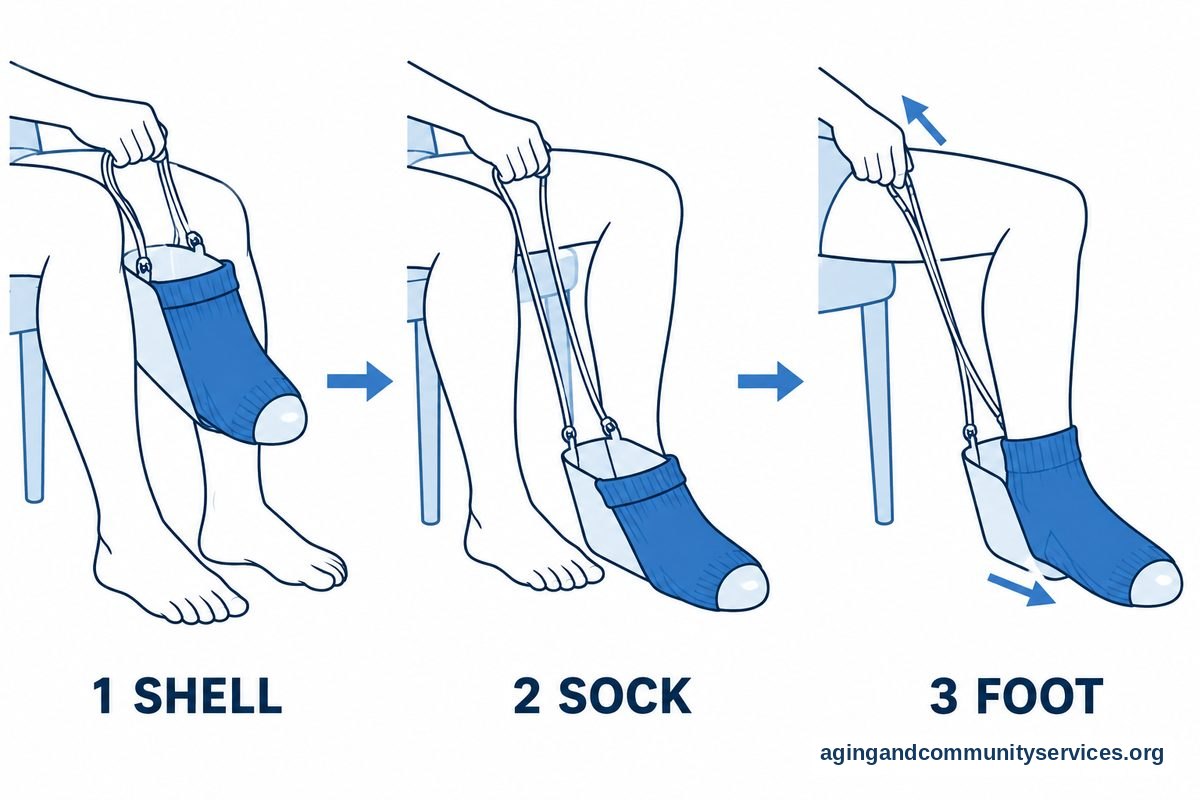
- Anchor the plastic cradle between your knees. Place the curved trough between your thighs or knees with the open top facing upward, squeezing your legs gently together so the device will not wobble or slip away.
- Slide the sock opening over the shell. Holding the sock with your working hand, stretch the elastic band over the end of the plastic trough and push it down until the toe rests firmly against the front tip.
- Loop the strap around your wrist. If your tool features two separate handles, tie them together with a small knot beforehand so you can hold both cords simultaneously or drape them across your forearm.
- Lower the device toward your toes. Hold the cord firmly in your good hand, drop the loaded trough down in front of your foot, and point your toes directly into the sock opening.
- Pull smoothly back and upward. Draw the cord back toward your knee in a steady motion, allowing the plastic to slide along the sole of your foot while the sock slips up over your heel and calf.
Common Mistakes to Avoid
Using adaptive equipment with one hand takes coordination, and small errors can cause frustration. Watching out for these common missteps can save you energy and keep your morning routine moving forward smoothly:
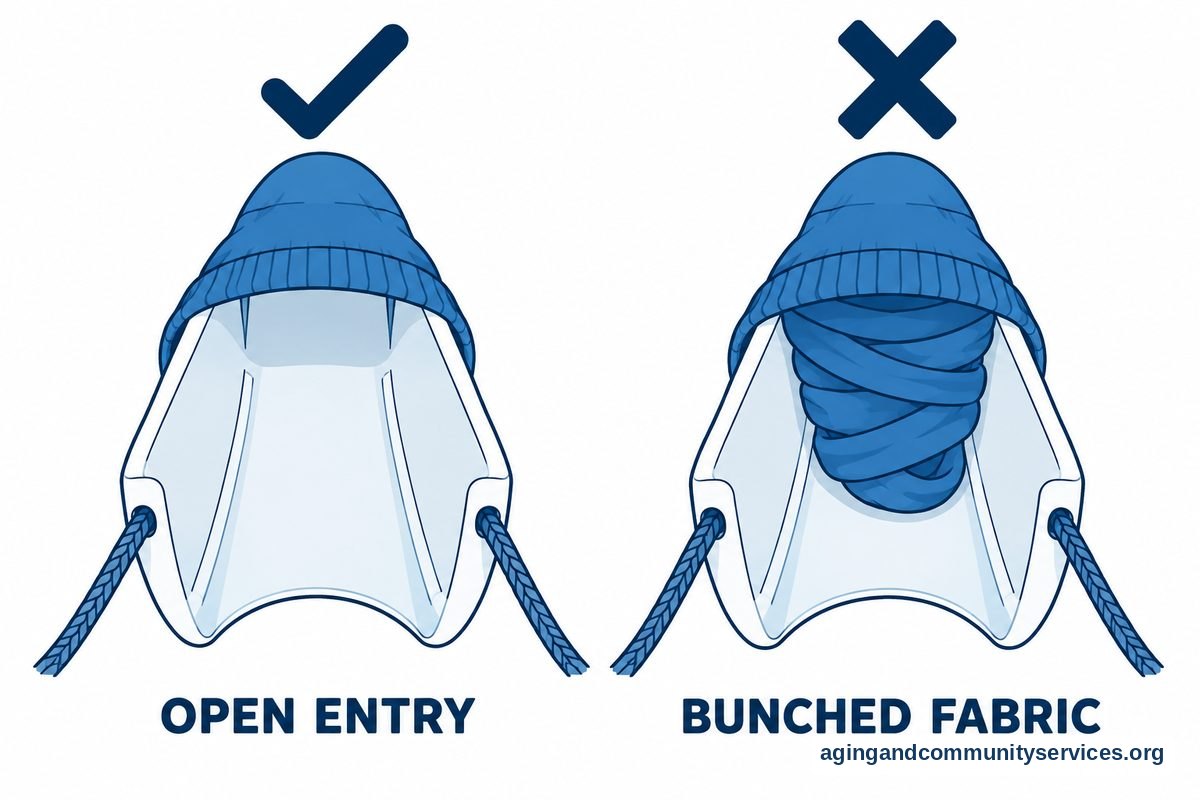
- Pulling the sock too far onto the trough: Bunching the entire sock onto the shell leaves no room for your toes to enter, which often forces the sock off before your heel is covered.
- Jerking the cords upward instead of backward: Pulling straight up toward the ceiling can flip the cradle upside down, while pulling gently backward toward your hip glides the fabric right onto your heel.
- Letting go of the straps while lowering: Dropping the cords completely means you have to bend to the floor to retrieve them, defeating the main purpose of the tool.
- Sitting on a bed or soft couch: Soft surfaces cause you to sink and lean, which makes knee stabilization harder and can increase your risk of tipping sideways.
- Rushing the preparation stage: Trying to stretch tight hosiery onto the shell without securing it firmly between your knees almost always leads to the tool dropping to the floor.
When to Seek Professional Advice
If you find that dressing remains difficult or causes you physical pain, it is wise to reach out to a healthcare professional. An occupational therapist is trained specifically in daily living skills and can watch your technique, adjust your tools, and recommend personalized strategies. You might also speak with a physical therapist if you feel unsteady while seated or reaching toward your feet.
When you contact a therapist or your family doctor, describe the specific barriers you face each morning. Mention if your fingers fatigue quickly, if you experience dizziness when reaching forward, or if muscle stiffness limits your reach. They can evaluate your movement patterns and ensure your dressing routine supports your overall safety at home. Learning safe habits can lower the risk of falls during morning routines, especially when following balance recommendations outlined by the National Institute on Aging: Falls and Falls Prevention.
If you need help locating a qualified specialist in your community, the Eldercare Locator is a public service that connects individuals and caregivers with local community resources and therapy providers.
Choosing the Right Tools for One-Handed Dressing
Standard helpers often feature two long pull ropes that require two hands to operate in unison. When managing dressing with hemiplegia, a broken arm, or hand weakness, certain design features make a dramatic difference. You can modify a standard device or choose an option built specifically for single-handed use.
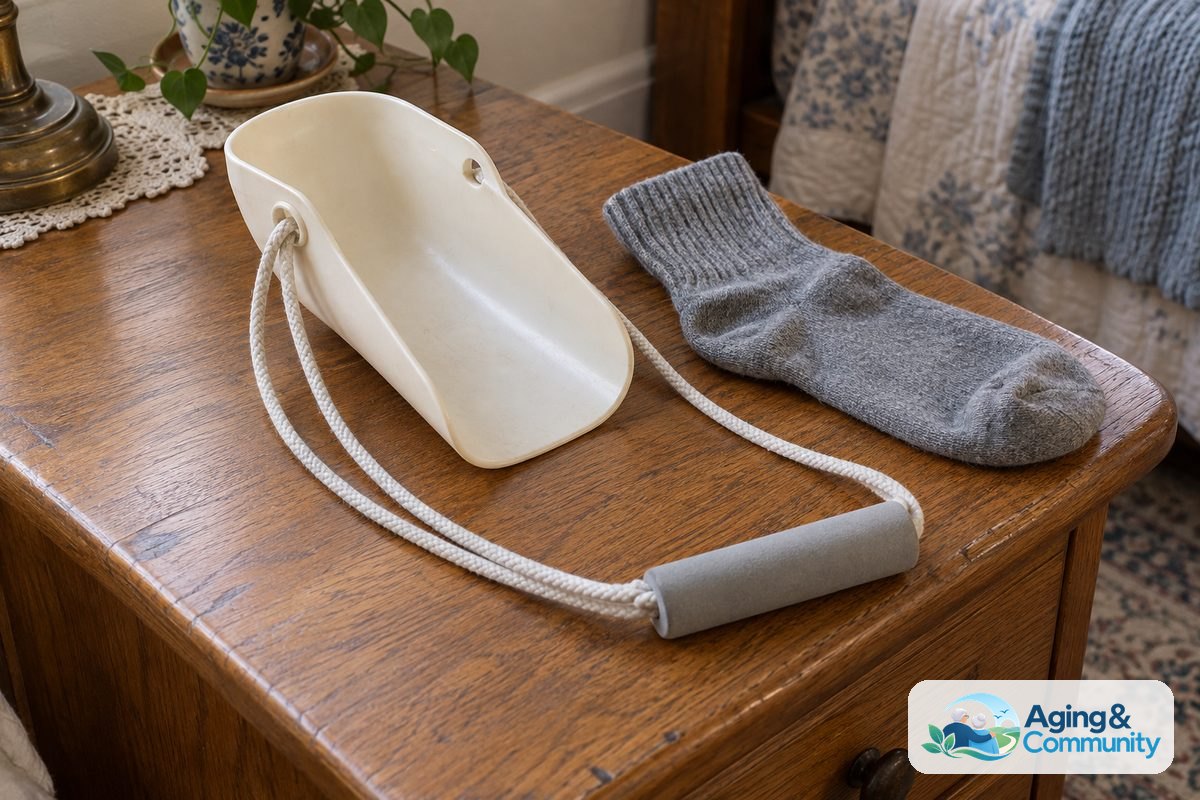
Many individuals find success by tying the two pull strings into a single handle or replacing them with a continuous cotton strap. Others prefer semi-rigid plastic models that hold their shape against the floor without curling up. If you are comparing different styles, reading our guide on the how to use sock aid basics can give you a better understanding of how these devices function.
Selecting a supportive model made for delicate or fragile skin is also important. The sock aid for elderly category features wide troughs with soft fabric exteriors that protect the skin from friction. Exploring broader collections of dressing aids for seniors, such as long-handled shoehorns and dressing sticks, can also help you complete your outfit without outside help.
| Tool Feature | Standard Use | One-Handed Adaptation |
|---|---|---|
| Pull Cord | Two separate ropes held in each hand | Tied into a single loop or linked with a crossbar |
| Shell Stabilization | Held firmly with one hand while loading | Held between the knees or placed flat on the lap |
| Sock Placement | Both thumbs stretch the elastic band open | Fingers stretch fabric against knee or thigh |
| Device Removal | Pulled evenly with both arms | Drawn back smoothly with the dominant arm |
How to Use Sock Aid PDF and Printable Instructions
Many individuals prefer having a printed checklist on the nightstand or bathroom wall rather than looking at a phone screen every morning. Creating your own reference sheet or finding a simple instructional page gives you an easy visual reminder of each step. It also helps visiting aides, family members, or caregivers understand your routine so they can assist you consistently without taking over your independence.
To turn these instructions into a quick paper guide, you can use your web browser to print this article directly or choose the save as PDF option on your computer. Keep your printed sheet near the chair where you dress each morning. Maintaining self-sufficiency with personal care is a central part of comfort and confidence, echoing the practical lifestyle strategies highlighted in the National Institute on Aging: Aging in Place resources.
Handling Tight or Compression Garments
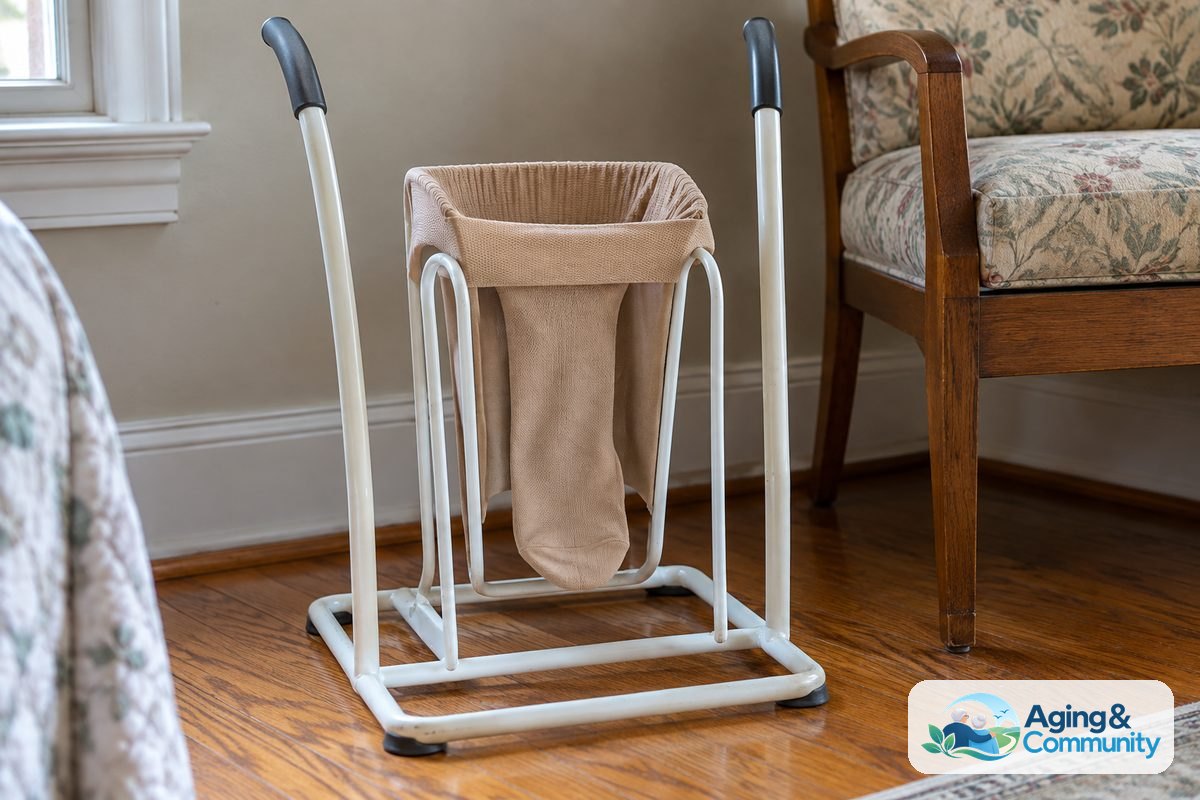
Firm elastic support hosiery presents a unique challenge when working with a single hand. Standard thin plastic troughs often buckle or snap under the tension of medical-grade stockings, which can cause frustration and sore fingers. Specialized steel-framed tools, often called stocking donners, hold the garment open without requiring you to pinch or squeeze the shell continuously between your thighs.
If your doctor prescribes elastic support wear, using a dedicated sock aid for compression socks is usually much easier. These tools feature rigid metal frames that stay wide open on the floor by themselves. You can work the heavy elastic down over the frame using your palm and fingers in stages, place your toes inside, and pull the frame up your leg using a centered grip handle.
Frequently Asked Questions
Can I use a standard sock aid if I only have the use of one hand?
Yes, standard models can be adapted easily for one-handed operation. Simply tie the two pull cords together near the top to form a single loop, or knot them around a short wooden dowel. You can then stabilize the plastic shell between your knees while your active hand stretches the sock over the rim.
How do I stop the sock aid from slipping out of my lap?
Placing a non-skid mat, silicone jar opener, or textured hand towel across your lap or between your knees helps grip the plastic shell. This keeps the tool steady while you use your working hand to stretch and work the cuff downward over the body of the device.
Where can I find a how to use sock aid PDF to print?
You can easily create a printable reference sheet by using the print command on your internet browser and selecting the PDF destination. Many occupational therapy clinics and hospital discharge teams also distribute printed, illustrated instructional sheets that outline these exact movements for home recovery.
How do I take my socks off with one hand?
Removing socks without bending down can be accomplished with a long-handled dressing stick or a push-off shoehorn. Hook the blunt edge behind the sock cuff at your heel and push downward toward the floor until the fabric slips off your toes.
What type of socks are easiest to put on with one hand?
Loose-fitting crew socks with wide, non-binding cuffs are the simplest to manage. Crew cuts slide easily over plastic troughs, whereas short ankle socks may slip off the device prematurely and tall knee-high socks require significantly more pulling force to clear the calf.