

Knowing how to use bed rail for elderly loved ones can make mornings smoother and daily rest much safer. A proper rail provides a secure, physical anchor for shifting positions and moving to a seated posture. Using it correctly ensures that the bar offers solid support without getting in the way of smooth movement.

Steps for Using a Bed Rail Safely
- Check the fit and security. Give the bar a firm shake before every use to ensure the safety straps and base tubes remain tight against the bed frame.
- Turn onto your side facing the bar. Bend your knees slightly while lying down, then roll your shoulders and hips together toward the side of the bed where the rail sits.
- Grasp the rail with both hands. Place your hands firmly around the top or middle grip zones, keeping your elbows close to your torso for maximum leverage.
- Swing your legs over the mattress edge. Lower both feet slowly off the side of the bed while using your arms to help pull your upper body upward into a seated posture.
- Pause and catch your balance. Sit on the edge of the mattress for a moment with your hands resting on the rail to let your blood pressure adjust.
- Push upward into a stand. Shift your weight forward over your feet, keep one hand on the support rail, and push down gently with your legs to rise.
If you are looking at different styles of supportive hardware for your bedroom, reviewing various bed rails for elderly adults can help you find a model that matches your mattress type and frame design.
Common Mistakes to Avoid
- Pulling on the rail from across the bed. Reaching too far across the mattress twists the spine and puts awkward pressure on your shoulders. Always roll close to the bar before reaching for it.
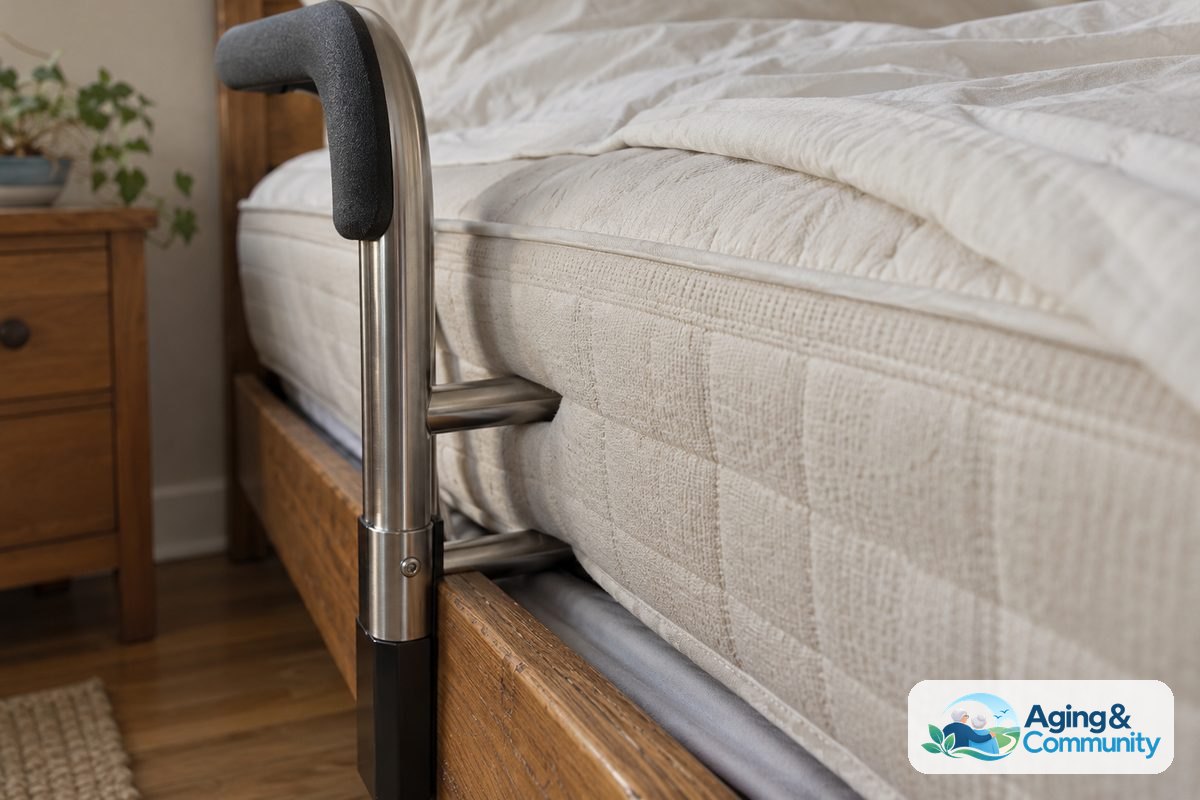
- Leaving wide gaps between the rail and mattress. Gaps can create unsafe spaces where blankets, pillows, or limbs can slip. The support bar must sit flush against the side of the mattress at all times.
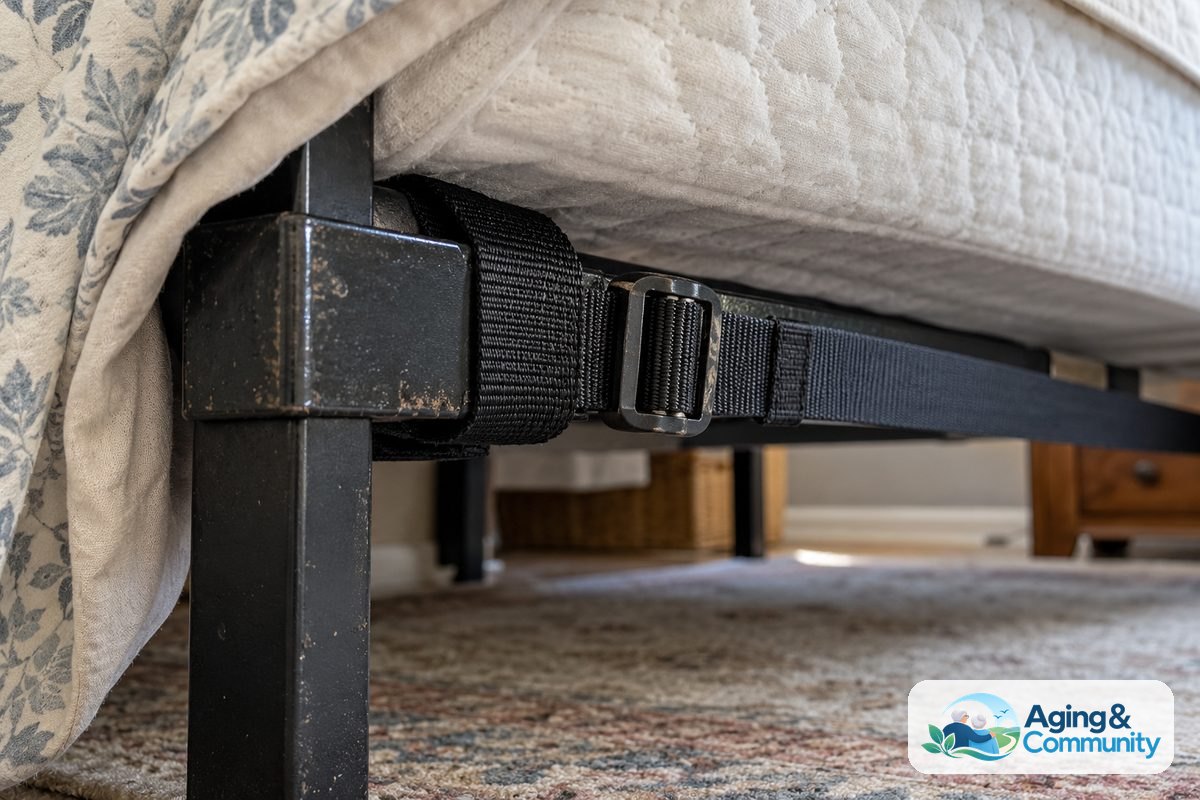
- Skipping the safety anchor strap. Most home models include a long nylon strap that clamps to the opposite side of the bed frame. Skipping this strap can allow the base to slide outward during movement.
- Standing up too quickly without pausing. Rising in one fast motion can cause sudden dizziness. Always take a few quiet seconds in a seated position before standing up fully.
- Using the rail as a walking cane. A bed bar is meant for resting and sitting transfers only. Once you are fully standing, transition your hands to a standard walker or cane.
When to Call for Help or Get Professional Advice
Every person has unique physical abilities, and what works well for one household may not suit another. If you notice weakness, hesitation, or pain during daily bed transfers, reach out to a licensed physical therapist or occupational therapist. You can also consult your primary care doctor for guidance on mobility aids.
When speaking with a physical therapist or doctor, describe the exact moments that feel difficult. Tell them if moving the legs feels heavy, if gripping the bar causes wrist discomfort, or if balance feels unsteady after sitting up. These details help professionals recommend tailored exercises or alternative assistive equipment.
For help locating local mobility specialists and support programs, families can connect with the Eldercare Locator to find trusted community services. You can also review materials from the National Institute on Aging on falls and falls prevention to learn more about home safety assessments.
How to Use a Bed Rail to Get Out of Bed
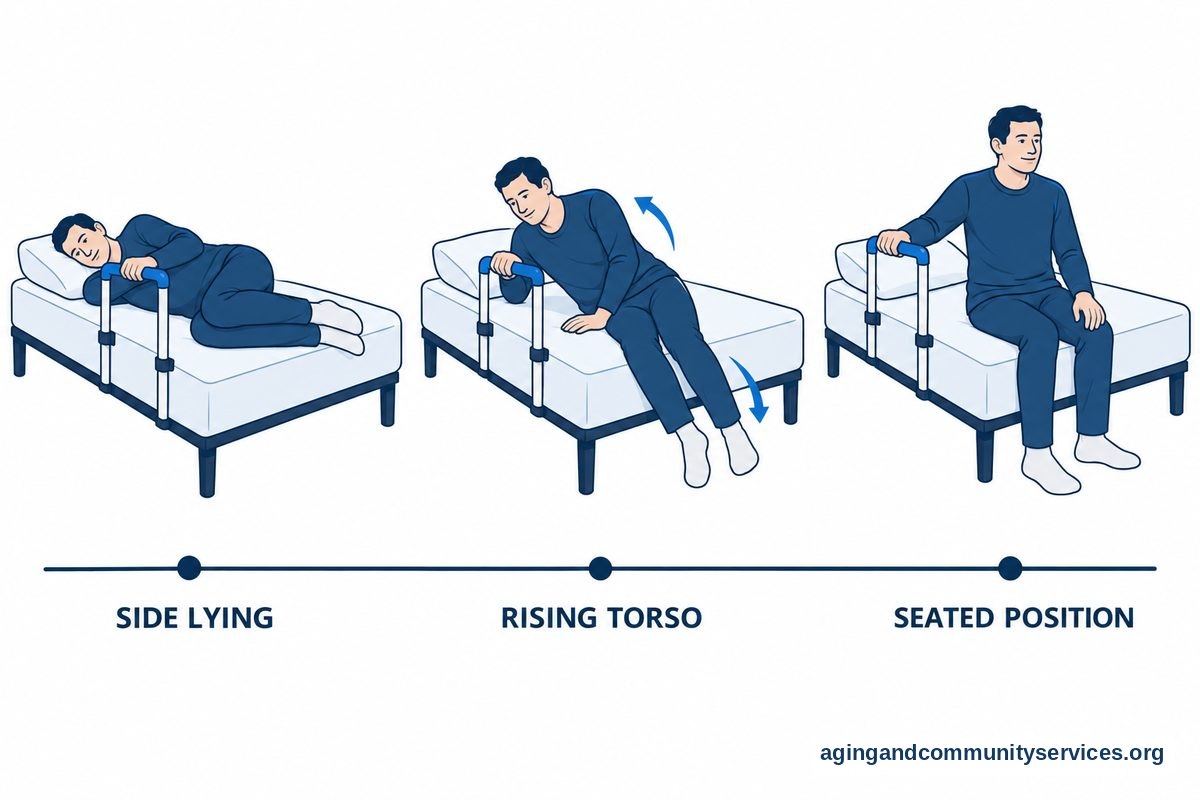
Getting out of bed smoothly comes down to body mechanics and using gravity to your advantage. Rather than straining your abdominal muscles by sitting straight up, use the side-roll method. This simple movement protects your lower back and lets your arm and leg strength do the work together.
Start by taking a slow breath and bending your knees toward your chest. Roll your whole body onto the side closest to the support bar. Reach out with your top arm and secure a comfortable hold on the foam handle. Keep your bottom elbow tucked beneath your shoulder on the mattress surface to help push upward.
Next, slide your lower legs gently off the mattress. As the weight of your legs moves downward toward the floor, press down against the mattress with your bottom elbow while pulling steadily on the rail with your top hand. Your torso will rise naturally into an upright sitting position. Keep both feet flat on the floor before you release your grip on the support.
For rooms where individuals prefer a smaller profile that focuses strictly on rising from a seated position, compact bed assist handles offer a neat alternative that fits closely beside the upper chest area.
How to Use a Bed Rail for Repositioning and Turning
Bed rails are not just for getting in and out of the room; they are also helpful tools for shifting positions during the night. Lying in one posture for too long can cause stiffness and muscle aches. Using a sturdy bar gives you an anchor point to change postures without needing full assistance from a caregiver.
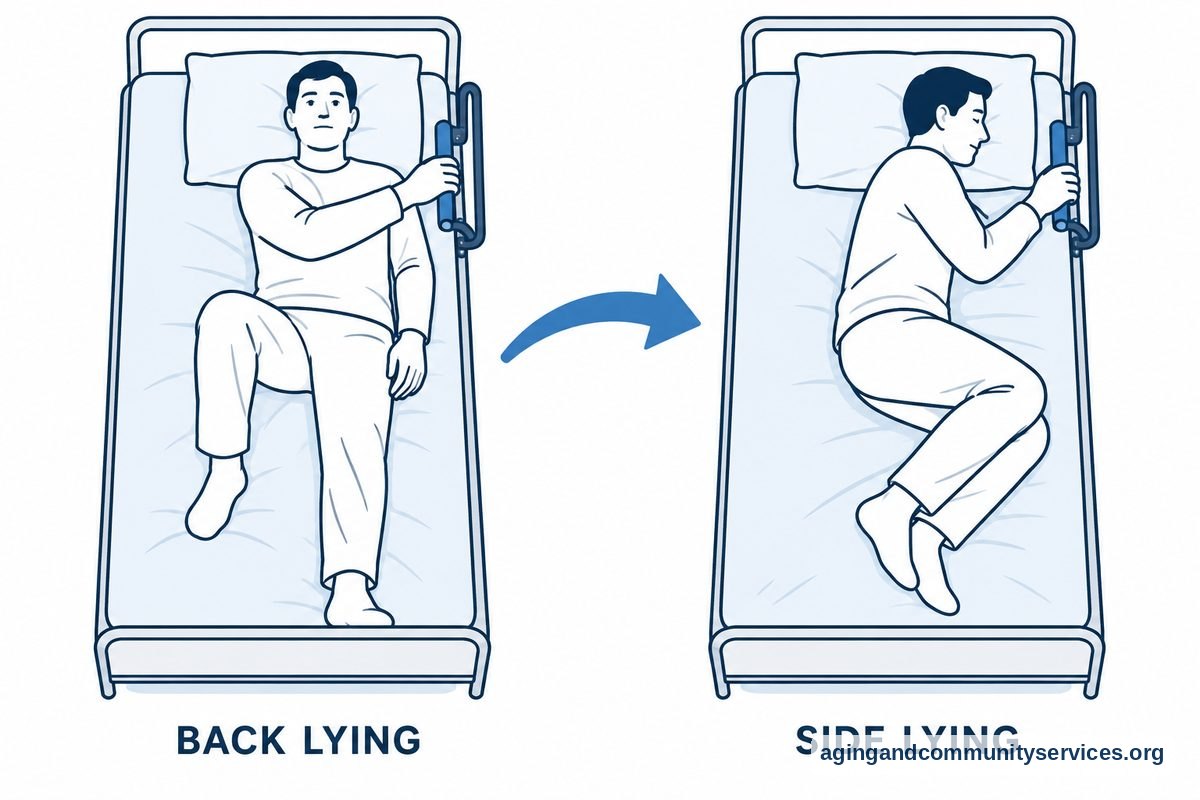
To turn from your back to your side, reach across your chest with one hand and grasp the rail. Bend the knee opposite the rail, planting that foot flat on the mattress. Push through that foot while gently pulling on the rail with your arm. Your hips and shoulders will rotate smoothly onto your side.
To scoot higher up in bed toward your pillows, bend both knees and keep your feet flat on the sheets. Hold onto the support bar with both hands near hip level. Push with your heels and pull backward with your hands in small, measured motions until your head rests comfortably on your pillow again.
Creating a complete bedroom safety plan often involves layering equipment. Many families place durable bedside fall mats right beside the support rail to provide a cushioned landing zone in case of accidental slips during morning transfers. You can find helpful advice on home adaptations through the National Institute on Aging guide on aging in place.
Frequently Asked Questions
How to use a bed rail safely on an adjustable bed?
Using a rail on an adjustable frame requires checking that the rail base does not pinch moving mechanisms. Look for models made specifically for adjustable frames, or attach the rail to the stationary head section so the bar stays in place when the mattress elevates.
How do you hold the rail when standing up?
Keep your primary hand on the rail grip while placing your other hand on the edge of the mattress. Lean your chest slightly forward over your knees, push through both feet, and press down evenly with both hands until your knees lock into a comfortable standing position.
Can a bed rail be used on both sides of the bed?
Yes, many homes use dual rails or install two separate handles if a person sleeps on both sides or needs equal support across a shared bed. Make sure each rail has its own secure strap anchored across the bed frame base.
How tight should the bed rail strap be?
The nylon anchor strap should be pulled completely taut against the opposite frame rail. There should be zero slack in the webbing, ensuring the support handle cannot pull away from the edge of the mattress under full body weight.
Is a bed rail suitable for someone who wanders at night?
Full-length rails can present safety risks for people who may attempt to climb over them when confused. In those situations, speaking with an occupational therapist about gentle alternatives or low-height platform beds is a helpful next step.