

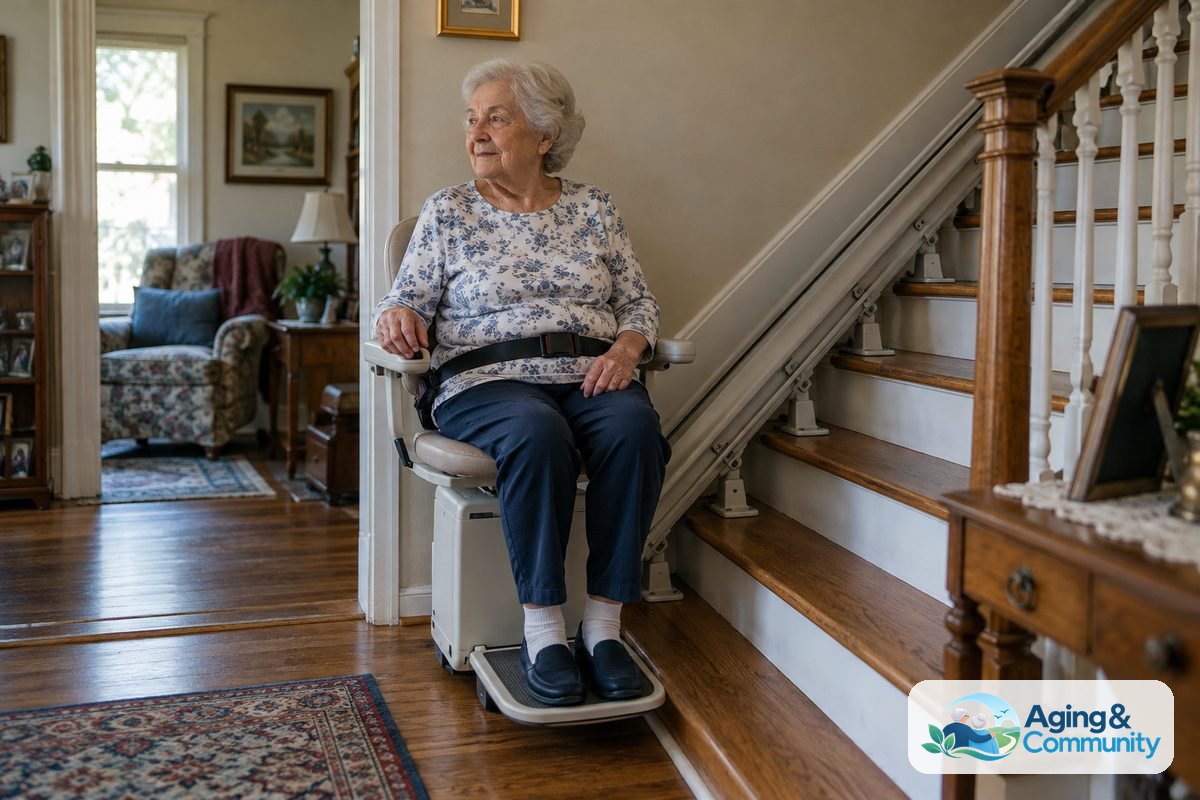
The short answer to whether Medicare covers stair lift chairs is no. Original Medicare does not pay for a stair lift chair because it views the equipment as a home modification rather than medical equipment. In contrast, Medicare may pay for a standard recliner lift chair mechanism if a doctor certifies that it is medically necessary for your daily care.
Understanding what Medicare will and will not pay for can feel confusing, much like having a gait belt vs transfer belt explained. People often mix up stair lifts, which carry a person up a flight of stairs, with seat lift chairs, which help a person stand up from a seated position. Knowing the difference helps you plan ahead and find the right support for your home.
What Medicare Covers and What It Doesn’t
Original Medicare Part B helps pay for durable medical equipment when a Medicare-enrolled doctor or healthcare provider prescribes it as medically necessary for use in your home. The equipment must serve a medical purpose and meet specific guidelines to qualify for payment.
A stair lift takes a person safely between different floors of a house. Original Medicare generally does not cover items it considers convenience or home modification. This means that stair lifts, grab bars, bath safety rails, and walk-in tubs are not covered by Original Medicare. In the same way, families often ask does medicare cover wheelchair ramps, and the answer is usually the same because ramps modify the home.
A lift chair is very different from a stair lift. A lift chair looks like a standard living room recliner, but it has an electric base that tilts the seat upward to help a person reach a standing position. For these items, Medicare Part B may cover the seat lift mechanism as durable medical equipment when a doctor prescribes it and the person meets the medical criteria.
It is important to know that Medicare only covers the motorized lifting part of the lift chair. It does not pay for the chair itself. The fabric upholstery, wooden frame, and standard reclining functions are considered furniture, so you must pay for those parts on your own.

How to Get It Covered
If you need a seat lift mechanism for a living room chair, you must follow clear Medicare steps to get payment approval. Here is the process you will need to follow with your healthcare team.
- Make an appointment with a doctor or physical therapist to discuss your mobility needs and daily living challenges.
- Ask your Medicare-enrolled doctor to write a prescription stating that the seat lift mechanism is medically necessary for use in your home.
- Confirm that your provider documents your medical need, such as severe arthritis in the hips or knees, or a severe neuromuscular disease.
- Locate a medical equipment supplier that is enrolled in Medicare and agrees to accept assignment for the lifting part.
- Have the supplier submit the required paperwork, medical records, and official claim directly to Medicare for review.

What You Might Pay
When you purchase covered medical equipment, your out-of-pocket costs depend on your current Medicare status. You can read more about standard rules through Medicare costs information pages. Before Medicare pays its share, you must first pay your yearly Part B deductible.
After you meet the yearly Part B deductible, you usually pay twenty percent of the Medicare-approved amount for the covered equipment. Medicare pays the remaining eighty percent of that approved amount. Keep in mind that some covered items are rented while others are bought outright, depending on the specific equipment.
If you purchase a seat lift chair, you will pay the full price of the chair frame, cushion, and fabric. You will also pay twenty percent of the cost for the lifting motor after your deductible is met. Make sure to use a supplier that accepts assignment. Suppliers that accept assignment agree to the Medicare-approved amount. If you buy from a supplier that is not enrolled in Medicare, Medicare may pay nothing at all.

If Medicare Won’t Pay
If Medicare will not pay for the equipment you need, you have several choices. If a claim for a prescribed item is denied, you can ask for a written explanation and file an appeal. Your Medicare Summary Notice explains how to start that appeal process step by step.
You might also look into private health plans. Medicare Advantage plans, also called Part C plans, must cover everything that Original Medicare covers. Some of these plans add extra benefits that Original Medicare does not offer. Plan rules, supplier networks, and prior approval steps vary by plan, so you should call your plan representative directly to ask about your options.
Other programs may assist older adults with home safety needs. Medicaid programs often help with home accessibility changes for people who meet income and asset limits. Veterans Affairs benefits may also provide help with home modifications for eligible veterans. You can also reach out to your local Area Agency on Aging, which you can find through the Eldercare Locator, to learn about community grant programs and local mobility loans.
Exploring other tools can also help you manage stairs safely. Families often research different stair assist devices for elderly family members, such as handrail extenders or non-slip treads. Looking into community programs for stair assistance for elderly individuals can connect you to volunteer networks and local non-profit grants.

Frequently Asked Questions
Is stair lift covered by Medicare under any part?
Original Medicare does not cover a stair lift under Part A or Part B. Medicare rules state that stair lifts are home modifications rather than durable medical equipment. Because they alter the home, Medicare classifies them as personal convenience items.
Does Medicare Advantage pay for stair lifts?
Medicare Advantage plans must provide the same basic coverage as Original Medicare, but some plans offer special supplemental benefits. A few plans may help pay for home safety features, but rules differ greatly by plan. You must check with your specific plan carrier to see if they offer coverage or network discounts for home modifications.
What is the difference between a stair lift and a lift chair?
A stair lift is a motorized seat that runs along a track mounted to your home staircase to carry you between floors. A lift chair is an armchair that sits in your living area and lifts up to help you stand from a sitting position. Medicare may help pay for the motor inside a lift chair, but it does not pay for a stair lift.
Can a physical therapist prescribe a stair lift?
A physical therapist or occupational therapist can evaluate your home and recommend safe mobility equipment. However, Medicare will not pay for a stair lift even if a therapist recommends it. A therapist can help you find other safe movement techniques or suggest local community resources that help with equipment.
Where can I find an approved equipment supplier?
You can search for certified suppliers through the Medicare website using their directory to find medical equipment suppliers in your area. Always confirm that the supplier is actively enrolled in Medicare and accepts assignment before you agree to buy any equipment.