

Learning how to use a sock aid after hip replacement surgery helps you dress on your own while protecting your healing joint. A sock aid is a simple curved plastic or fabric shell with long straps that brings your footwear up to your foot so you do not have to lean forward. By following a few easy steps, you can slip your socks on smoothly without bending past ninety degrees.
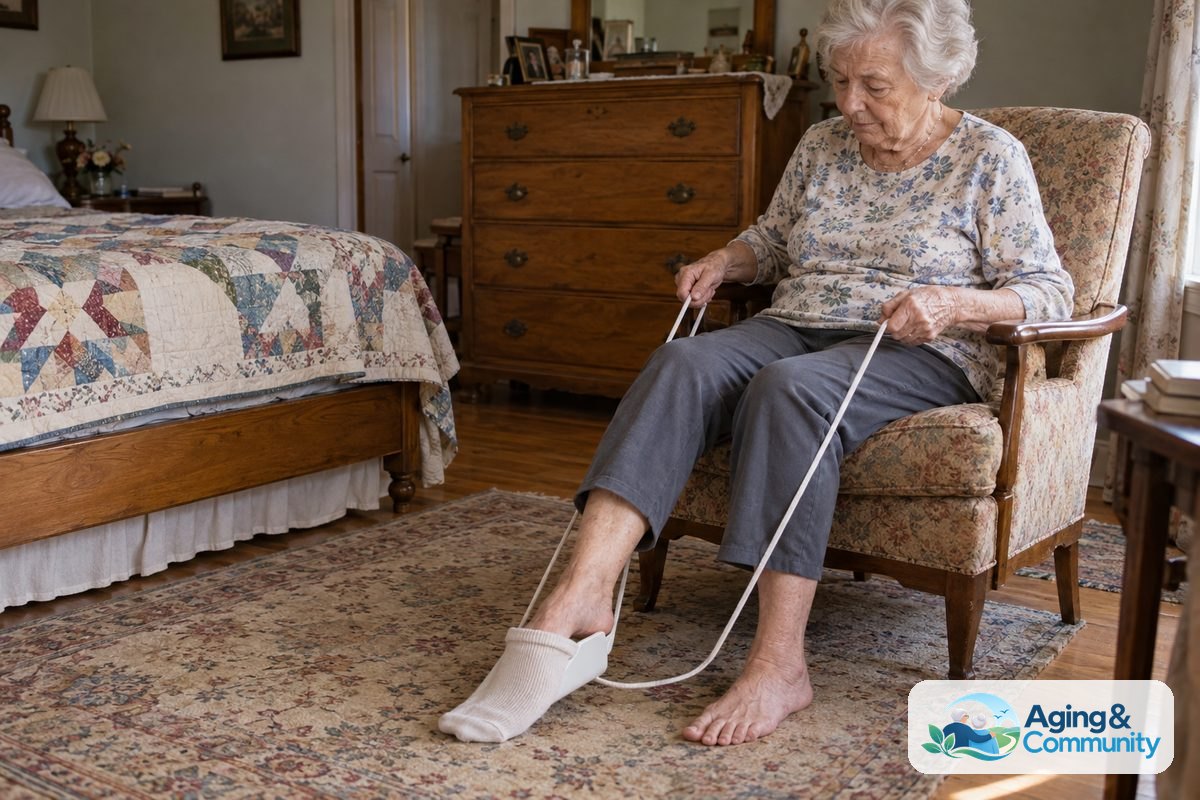
Steps for Using a Sock Aid After Hip Surgery
- Sit in a stable chair with armrests. Make sure your feet can touch the floor flat and avoid soft couches that cause your hips to sink lower than your knees.
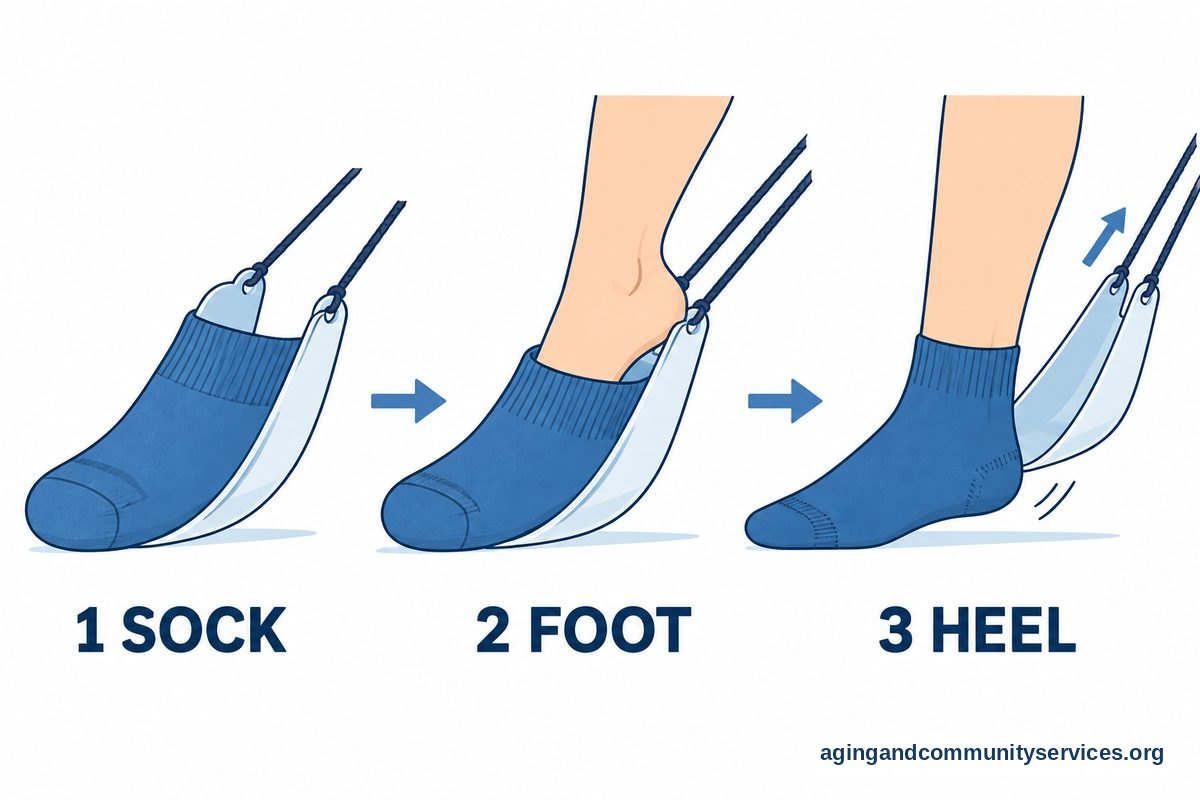
- Slide the sock onto the plastic shell. Bunch the sock up with your fingers and pull it over the end of the curved plastic until the toes of the sock sit firmly against the end of the tool.
- Leave the top open and flat. Ensure the cuff of the sock stays wide open across the top of the shell so your toes have plenty of room to slide straight inside.
- Hold the cords firmly in each hand. Keep a solid grip on the handles or ropes while holding the device out in front of you.
- Drop the device gently to the floor. Lower the plastic shell down by the cords, keeping the open side of the sock facing up toward your body and pointing toward your toes.
- Slide your toes into the opening. Extend your healing leg slightly forward and guide your foot straight into the pocket of the sock.
- Pull the cords back toward your hips. Draw the straps gently backward with a smooth motion so the plastic slips out from behind your heel, leaving the sock fully on your foot.
Common Mistakes to Avoid
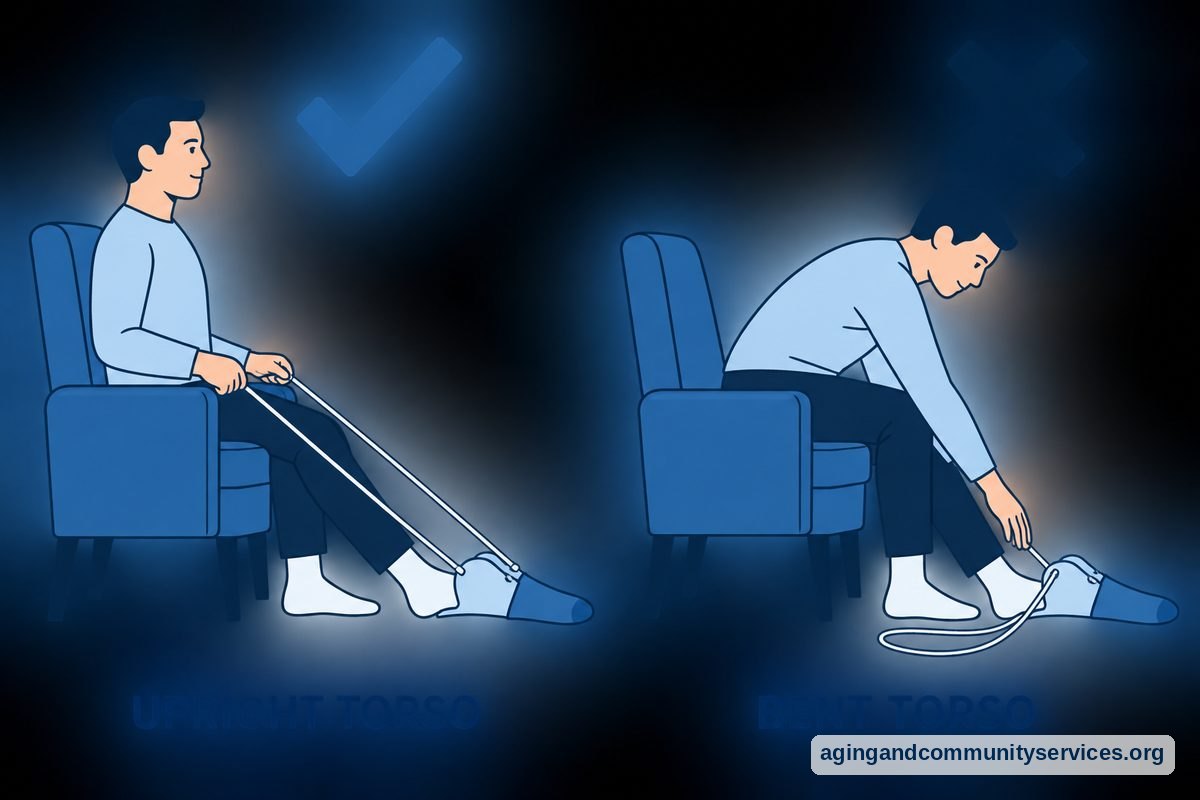
- Bending too far forward from the waist. Reaching down with your hands breaks the ninety degree movement rule, so let the cords do the work instead of leaning down.
- Crossing your legs to pull up a heel. Crossing your operated leg over your knee or ankle places unwanted stress on your hip joint while it heals.
- Using tight compression socks without practice. Heavy compression wear can bend standard plastic devices, so consider specialized tools or extra guidance from a therapist before trying them.
- Pulling the straps straight upward. Jerking the cords toward the ceiling will pull the sock off your toes instead of sliding it over your heel, so pull the straps back along the floor toward your chair.
- Standing up while putting on your socks. Trying to balance on one leg while using daily tools creates a tipping hazard that can lead to a slip or fall.
When to Contact Your Therapy Team
Always talk to your surgeon, physical therapist, or occupational therapist if you feel unsure about your movement rules. If you feel sharp pain in your hip, groin, or thigh while dressing, stop right away and rest. You should also call your care team if your joint feels unstable or if you notice new swelling that makes slipping into your footwear unusually difficult.
When you call your therapist, describe the exact motion that caused you trouble. Let them know if you had difficulty holding the cords, keeping your knee straight, or sitting comfortably in your chair. Your occupational therapist can watch you use your device during a visit and adjust your routine so you stay comfortable.
Setting Up a Safe Dressing Station at Home
Preparing your room ahead of time makes getting dressed each morning much easier. Choose a firm armchair in your bedroom or living area where you have plenty of open floor space around your feet. Keeping your area tidy reduces hazards, which aligns with guidance from the National Institute on Aging: Falls and Falls Prevention team regarding safe home environments.
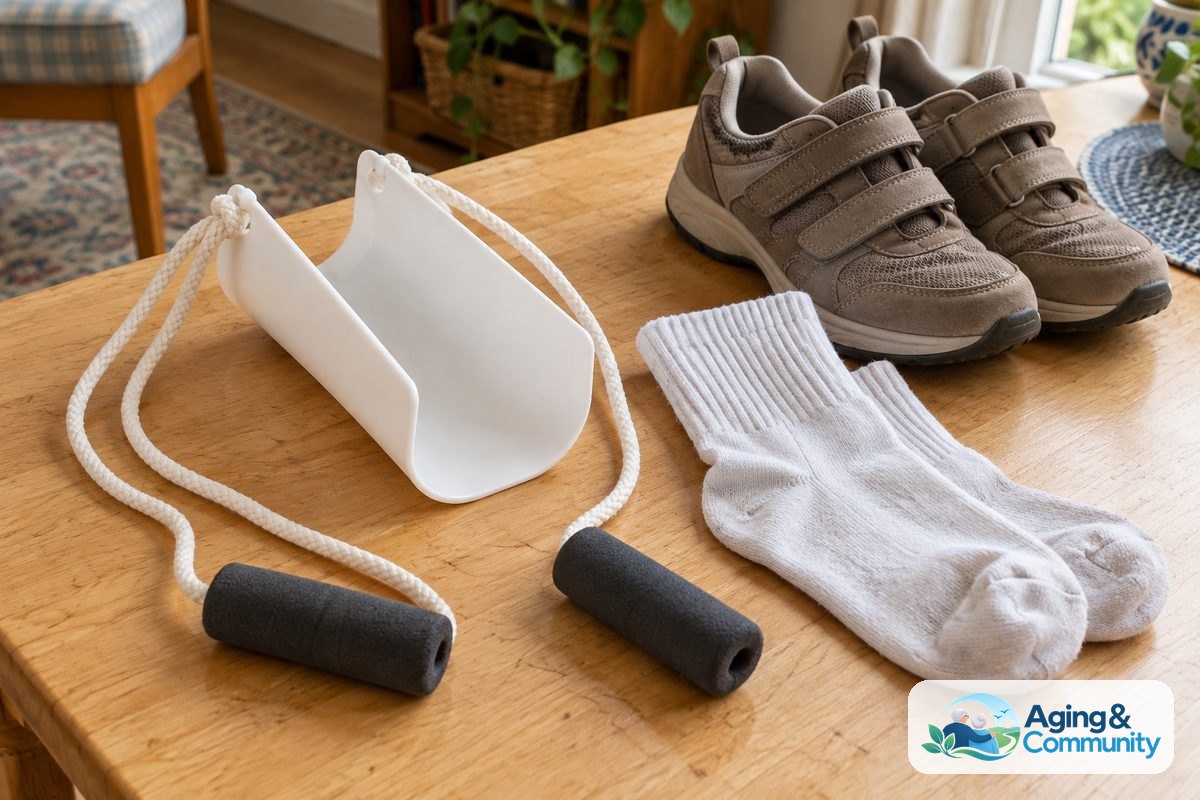
Store your device, shoes, and clothes on a waist-high table or dresser nearby. This keeps you from having to bend down to open low drawers or reach high shelves. Many older adults find that pairing their daily routine with other helpful dressing aids for seniors creates a calm morning setup that supports independent living.

Choosing the Right Footwear and Equipment
Not all garments slide onto a dressing device with the same ease. Loose crew socks, cotton athletic socks, and diabetic socks with a stretchy sock fit work well because they slide smoothly over the plastic frame. Avoid very short ankle socks or no-show liners, as they can slip off the plastic shell before your foot reaches the toe area.
If you need extra help selecting a tool, look into the features of a dedicated sock aid for elderly users to find designs with soft foam handles or wide flexible shells. Having the right tools supports your goal of comfortable living, similar to the practical advice shared by the National Institute on Aging: Aging in Place resources. Making thoughtful choices about your daily gear keeps your recovery moving in the right direction.
Other Helpful Recovery Routines
Getting dressed is just one part of your daily routine after leaving the hospital. You will also use equipment to help you move between rooms and maintain personal hygiene without breaking your precautions. For example, learning how to use walker after hip replacement surgery provides the balance you need to walk over to your dressing chair safely.
Bathing also requires careful attention to your range of motion. Understanding how to use shower chair after hip replacement recovery keeps you seated comfortably while washing, saving your energy for dressing afterward. Taking your time with each of these activities helps build your confidence day by day.
Frequently Asked Questions
How long do I need to use this tool after surgery?
Most people use an assistive dressing tool for six to twelve weeks following surgery. Your doctor or physical therapist will tell you when your joint has healed enough to lift your leg or bend forward comfortably without special tools.
Can I put on compression socks with this device?
Standard flexible models can buckle under the firm pressure of tight medical compression garments. If you consult a leg support guide and are required to wear compression hosiery, ask your therapist about metal wire stocking frames or specialized heavy-duty tools designed specifically for firm fabric.
What is the easiest way to take socks off?
You can remove your socks without bending by using a long-handled shoehorn or a dressing stick. Simply slide the hook or edge behind your heel and gently push the sock down past your foot.
What should I do if the plastic shell cracks?
If the plastic cracks or splits, replace it immediately to avoid snagging your skin or catching on your clothing. If you need assistance finding replacement equipment locally, you can contact the Eldercare Locator to find nearby community supply programs and support services.