

Learning how to use sock aid with foam handles is a simple way to dress without bending forward or straining your back. You slide your garment over the plastic shell, drop it to the floor by the soft grips, and slide your foot directly inside. This simple tool helps many older adults dress every morning with comfort and confidence.
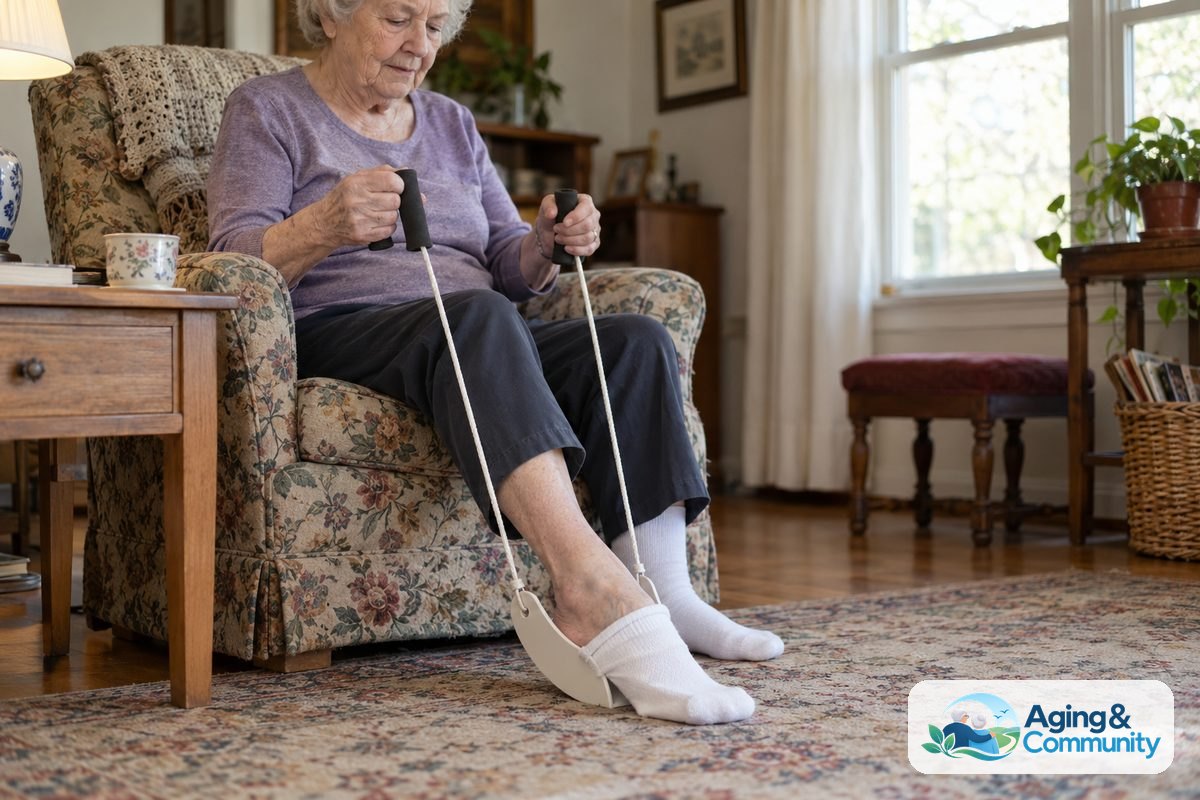
Steps for Using a Sock Aid With Foam Handles
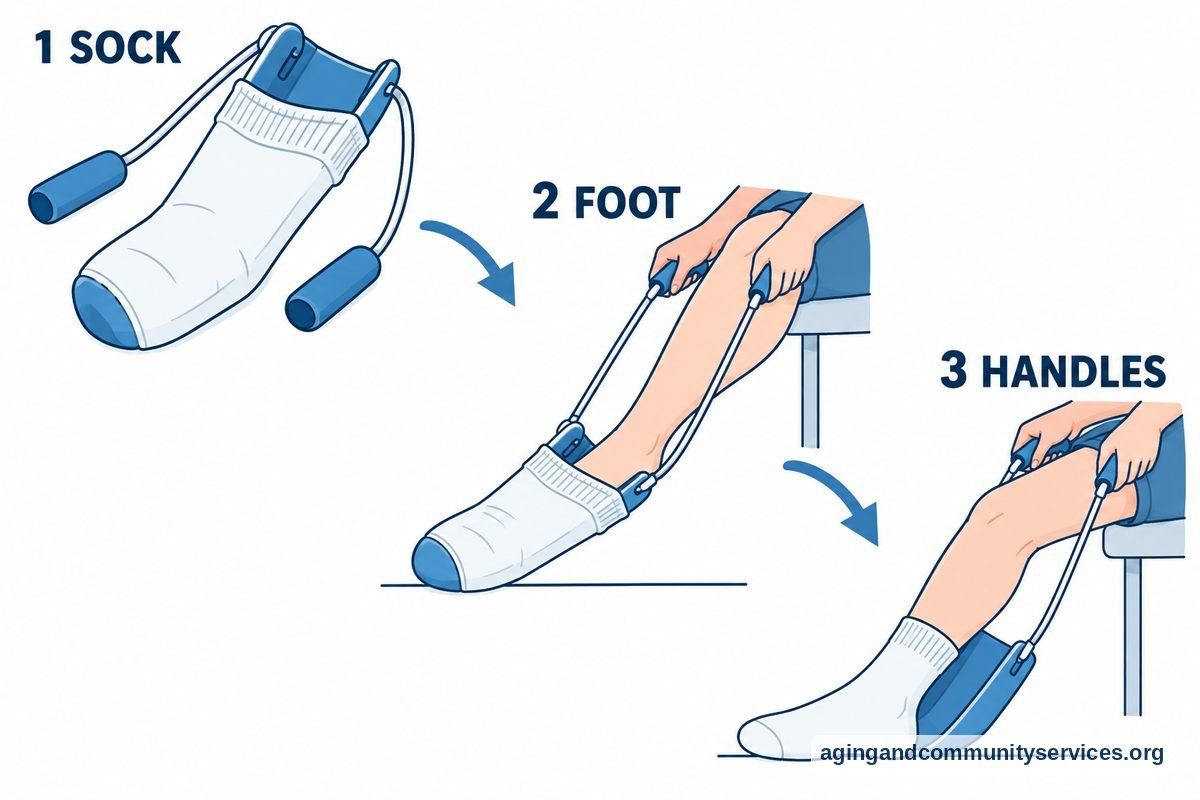
- Sit in a stable chair with your feet flat. Choose a sturdy seat with armrests so you stay balanced while getting dressed.
- Place the plastic shell between your knees or in your lap. Point the open curved side of the plastic trough up toward your body with the ropes hanging freely down your legs.
- Slide the sock onto the shell. Bunch the fabric together and pull the opening over the curved plastic until the toe rests firmly against the end of the shell.
- Leave the top band of the sock open. Make sure the heel of the garment sits along the bottom curved edge so your foot can glide in without catching.
- Hold the soft foam handles and lower the tool. Keep a secure grip on both straps and gently lower the plastic shell to the floor directly in front of your toes.
- Slip your toes into the opening. Point your foot forward and push your toes straight into the sock opening until they touch the fabric at the end.
- Pull the straps smoothly toward your body. Draw the handles back and slightly upward so the plastic slides under your heel and leaves the garment resting on your leg.
Common Mistakes to Avoid
- Pulling the sock too far onto the shell: If you stretch the fabric past the top edges, your toes might get stuck before the heel has room to slide through properly.
- Standing up while pulling: Trying to balance on one leg while pulling on the cord raises the chance of losing balance. The National Institute on Aging shares that falls and falls prevention resources focus heavily on staying seated during dressing routines.
- Yanking the handles quickly: Pulling the cords with quick, jerky motions can flip the plastic shell upside down or pull it away from your foot before the fabric catches your heel.
- Using worn or twisted cords: Tangled ropes make the shell twist sideways on the carpet, making it hard to keep your toes lined up with the opening.
- Wearing loose clothing that snags: Wide pant legs can get caught under the shell as it slides up your ankle, so roll up your pant cuffs before you begin.

When to Ask for Professional Guidance
If you experience sharp pain in your back, hips, or knees while dressing, stop and ask a healthcare provider for help. An occupational therapist can visit your home to show you customized ways to dress or check if your chair height is safe for your daily routine. They can also review your technique if your hands feel weak or if your joints ache when gripping the soft handles.
You can talk to your primary care doctor about a referral for occupational therapy. You can also contact the Eldercare Locator to find local support programs and community resources that help with personal care. When you speak to a professional, tell them exactly where you feel stiffness, whether you get dizzy when looking down, and which shoes or socks give you the most trouble.
Choosing the Right Garments and Setup
The type of socks you wear can make a big difference in how smoothly your dressing routine goes each morning. Thin trouser socks, proper compression socks fit styles, and smooth cotton blends slide off the curved plastic shell with very little effort. Thick winter socks, fuzzy fabrics, or styles with sticky rubber grips on the bottom create friction against the plastic, which requires a firmer pull on the handles.
If you wear medical support hosiery, everyday plastic models might bend under the tight elastic. Finding a dedicated sock aid for compression socks can make that specific morning task much easier. Making small changes to how you dress makes aging in place safer and far more comfortable as your daily needs change over time.
Tips for Stiff Hands and Weak Grip
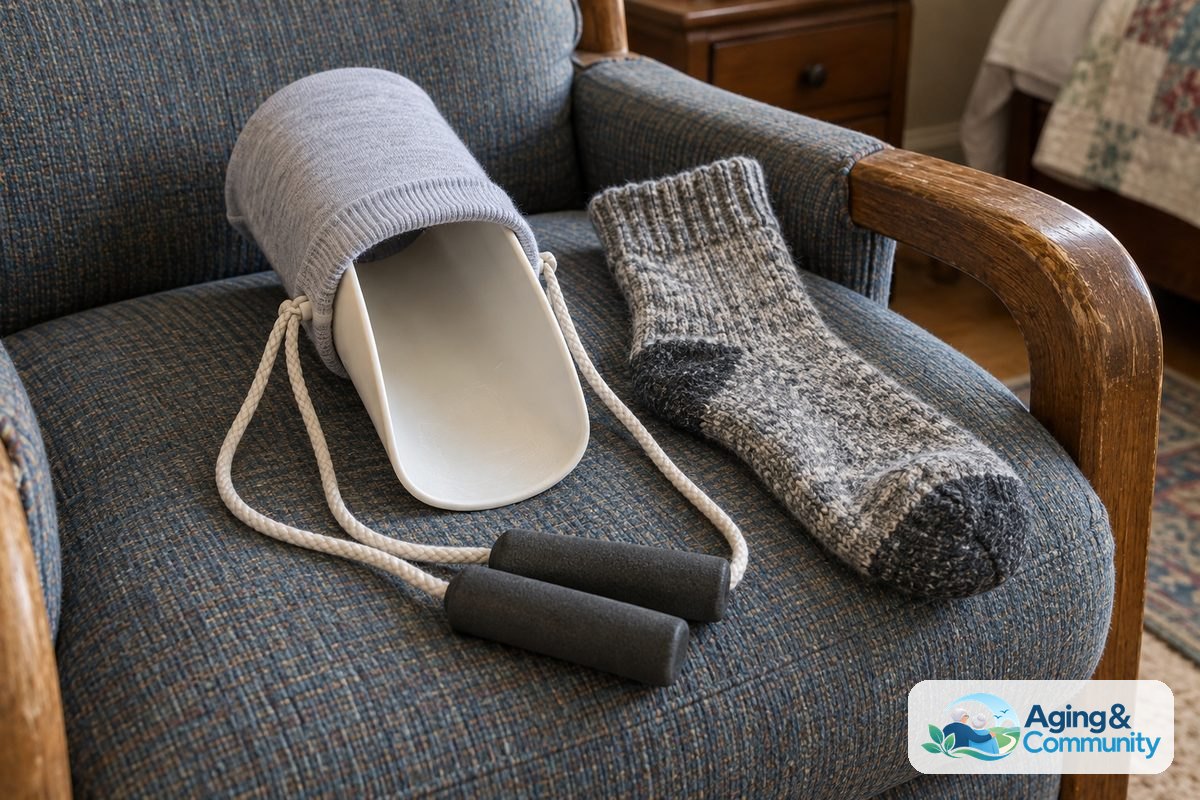
The thick padding on foam handles helps reduce pressure on your fingers, which is especially helpful if you live with arthritis or joint swelling. You do not need to squeeze the handles tightly to use them well. Instead, rest the soft foam across your palms and wrap your fingers gently around the padding while your upper arms do the work of pulling back.
For people recovering from surgery or managing limited arm movement, standard techniques might need small adjustments. Reviewing how to use sock aid with one hand can help you adapt if one side of your body is weaker than the other. Adding other useful tools, like long shoe horns and reachers found among practical dressing aids for seniors, allows you to manage your entire wardrobe while sitting down.
If you are exploring different styles of dressing tools for yourself or a loved one, looking into a versatile sock aid for elderly users can help you find models with wide shells, flexible plastic, or extra-long straps.

Frequently Asked Questions
Can I use this tool after a hip operation?
Yes, many people rely on this dressing tool during joint recovery because it stops you from bending your hip past a right angle. You can learn specific precautions by reading how to use a sock aid after hip replacement, and you should always confirm proper movements with your physical therapist.
What should I do if the sock slips off before my foot is in?
If the garment falls off too soon, you may not have pulled it far enough onto the plastic shell. Try pulling the toe tight against the tip of the tool and bunching more fabric along the sides. Make sure the collar of the garment sits snugly in the side notches if your model has them.
How do I clean the foam handles and plastic shell?
Wipe down the plastic body with warm water and mild dish soap using a soft cloth, then dry it thoroughly with a clean towel. For the soft handles, wipe them gently with a damp cloth and let them air dry completely before your next use to protect the cushion.
Can I shorten the cords if they are too long?
Yes, most models allow you to adjust the rope length to fit your height and arm reach. You can untie the knot inside the foam grip, slide the handle down the rope, tie a new knot at your preferred length, and trim the excess cord safely with scissors.
Why does the plastic shell get stuck on my heel?
The plastic can catch on your heel if your foot is pointing too far upward or if the straps are being pulled straight up toward the ceiling instead of back toward your knees. Keep your foot relaxed, point your toes slightly down, and pull the straps back along the line of your lower leg.