

Learning how to use compression socks for POTS helps gently squeeze your lower legs so blood does not pool in your feet when you stand up. Postural orthostatic tachycardia syndrome, often called POTS, can make standing upright feel exhausting, but wearing snug support garments helps promote better blood flow back toward your heart. Putting these garments on first thing in the morning and wearing them consistently throughout your waking hours can make daily tasks much more manageable.
For many older adults and family caregivers, managing daily upright time is a team effort. Understanding how garments fit, when to wear them, and how to safely put them on can make a big difference in daily energy levels and comfort.
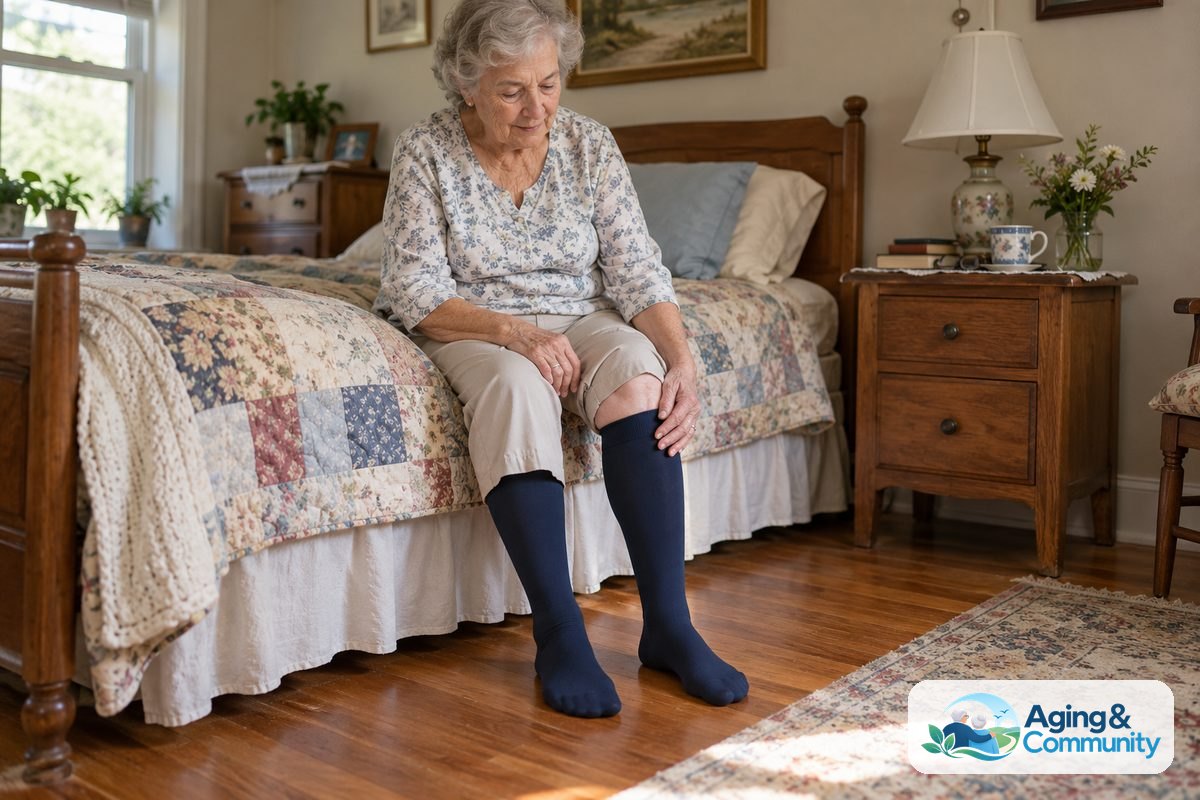
How to Use Compression Socks for POTS Step-by-Step
- Get your doctor’s input on pressure levels. Speak with your healthcare provider to learn the right strength rating and style of garment suited to your specific health profile.
- Put them on before getting out of bed. Slip your socks on first thing in the morning while you are still lying down, before gravity causes blood to settle in your lower legs.
- Ensure your skin is completely dry. Dry your legs thoroughly after washing, or apply a light dusting of talc-free powder so the fabric slides smoothly over your skin.
- Turn the garment partially inside out. Reach inside to grab the heel pocket, pull the leg portion inside out, and gently slide your foot in until the heel fits snugly in place.
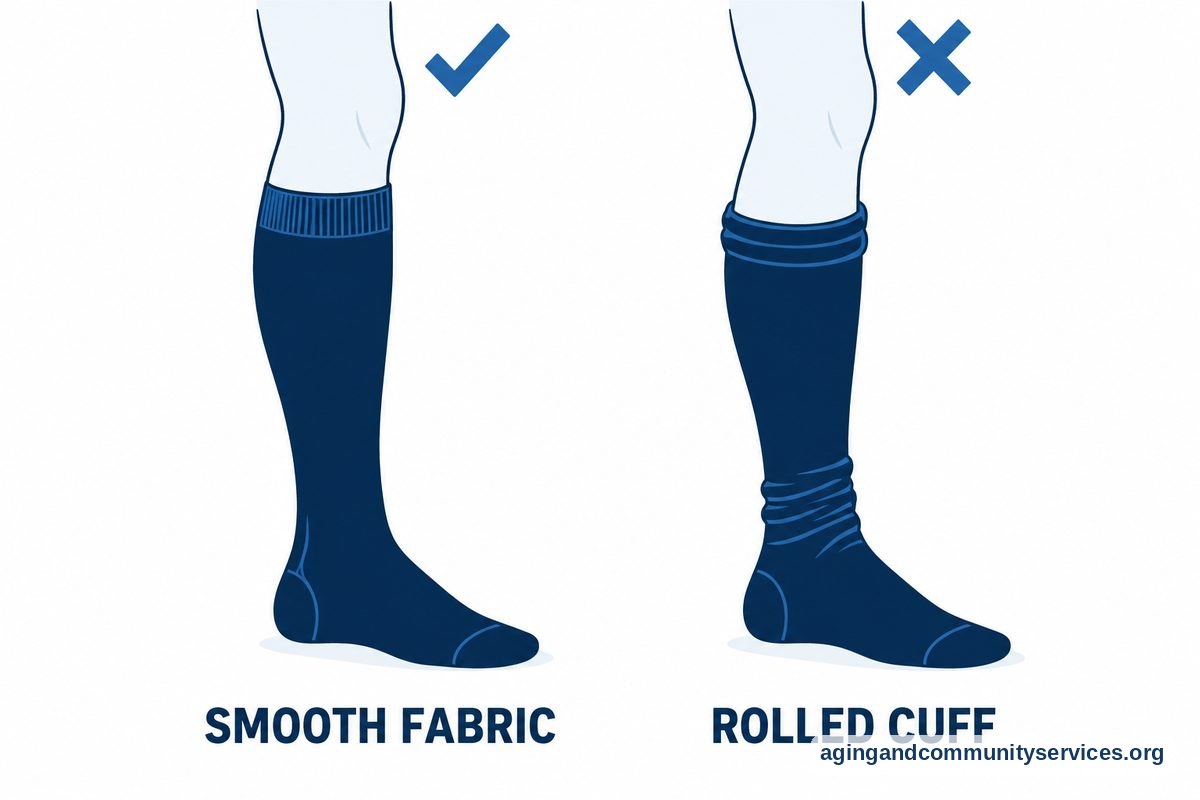
- Smooth the fabric up your leg without bunching. Unroll the fabric gradually up toward your knee or thigh, keeping the material flat so it never gathers into tight rings or folds.
- Remove the socks before going to sleep at night. Take the garments off right before bed so your skin can breathe and rest while your body is horizontal.
If bending down to put garments on causes dizziness or lightheadedness, using a specialized sock aid for compression socks can help you slide them on from a comfortable, seated position without straining. You can also review general steps for how to use compression socks to master different hand techniques and gripping gloves that make the fabric easier to handle.
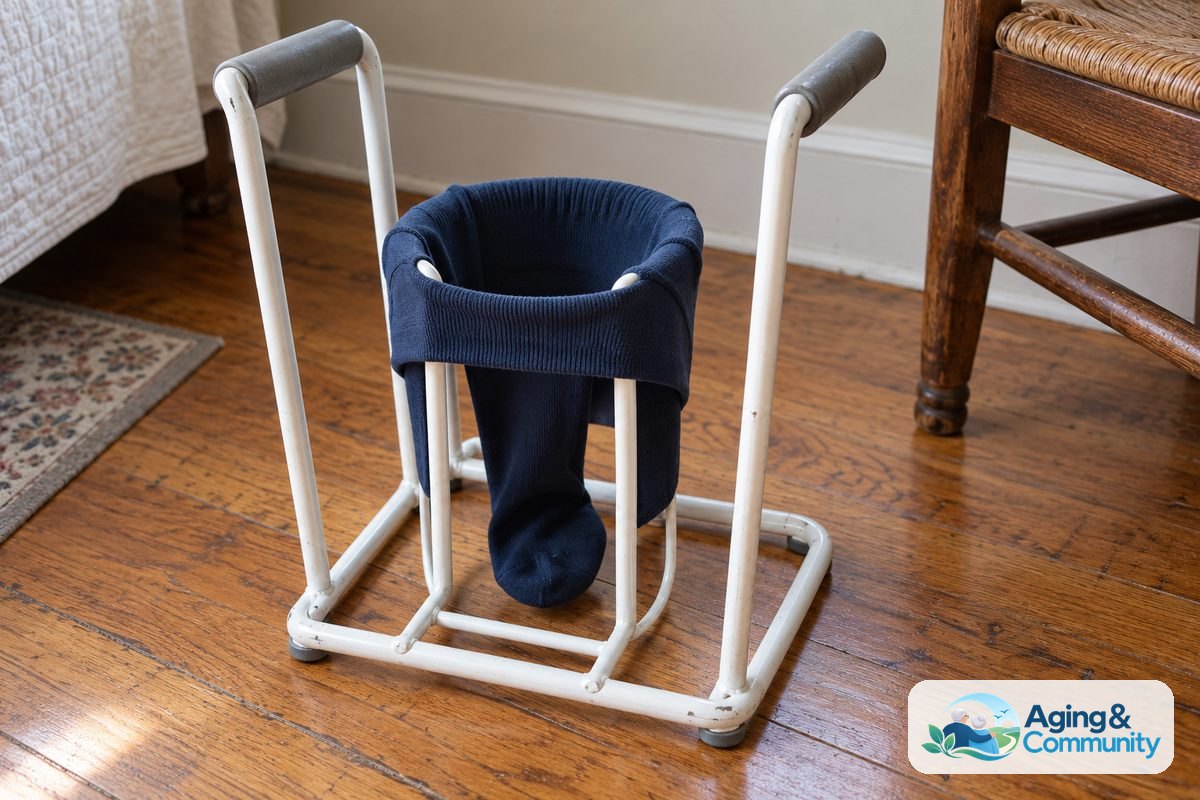
Common Mistakes to Avoid
- Letting the top band roll down: When the elastic band at the top rolls over, it can create a tight band that restricts blood flow instead of supporting it.
- Wearing socks overnight in bed: Compression wear is designed for when you are sitting or standing, so wearing them while lying flat is usually unnecessary and may irritate delicate skin.
- Putting socks on after standing for hours: If you wait until the afternoon, fluid and blood have already pooled in the lower extremities, making the garments much harder to put on.
- Choosing the wrong size or length: Wearing garments that are too small can pinch nerves, while loose socks will not provide the gentle squeeze needed for circulation.
- Ignoring wrinkles or bunched fabric: Bunched fabric acts like a tourniquet, which can cause skin abrasions, bruising, or uneven pressure over bony spots.
- Pulling by the top seam: Yanking the top band with your fingertips can tear the elastic threads and shorten the useful life of your support wear.
When to Call for Help or Get Professional Advice
Always talk to your primary care doctor, cardiologist, or an occupational therapist before starting or changing your compression routine. If you notice any sudden changes in your skin, such as numbness, tingling, cold toes, skin discoloration, or sharp pain, remove the socks right away and contact your medical clinic. Tell the nurse or doctor how long you wore the garments, the exact pressure level listed on the packaging, and the symptoms you noticed.
You should also seek prompt medical attention if you experience severe shortness of breath, sudden chest discomfort, or unexpected swelling in only one leg. For questions about home safety support, programs, or local medical transport, families can connect with the Eldercare Locator to find regional assistance and helpful community resources.
Choosing the Right Compression Level and Style for POTS
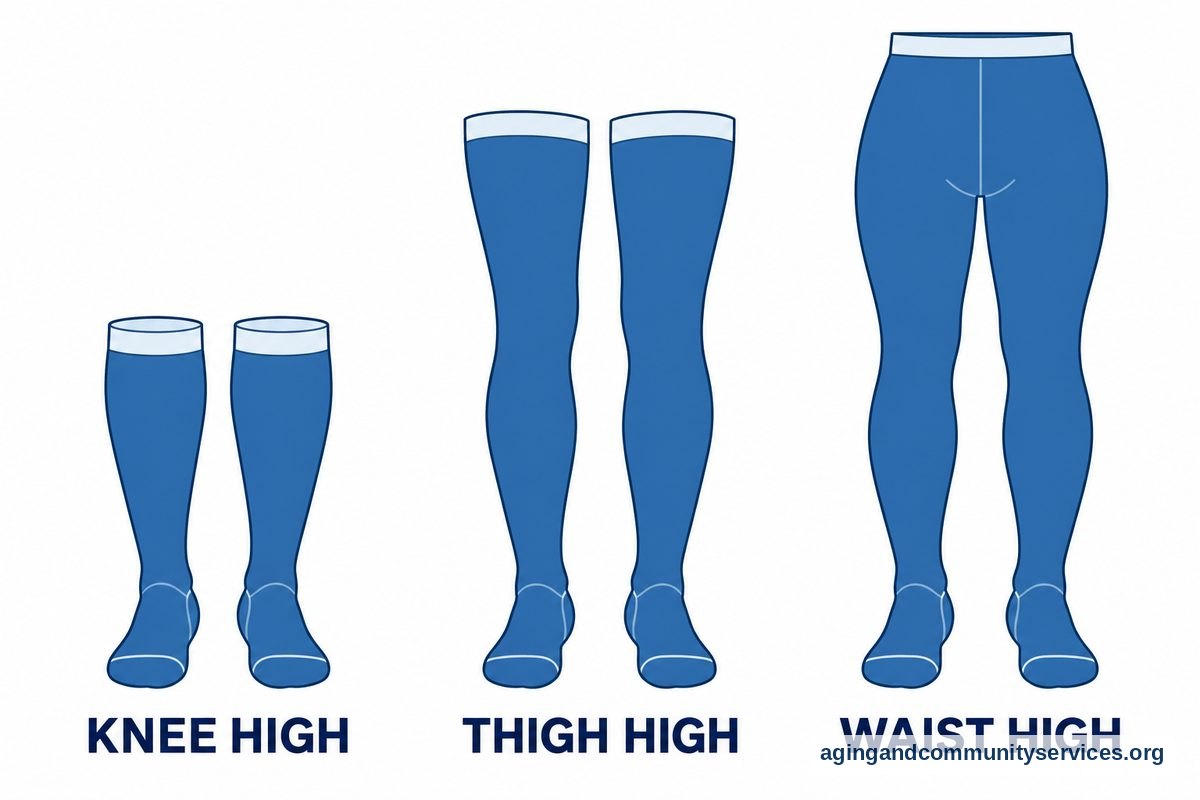
Selecting the right garment depends on where your blood tends to pool and what you can comfortably put on each day. Many clinicians recommend knee-high, thigh-high, or waist-high garments with medical-grade pressure, typically starting around 20 to 30 millimeters of mercury. To learn more about picking the right fabric weave, foot style, and length for your daily routine, read this guide on how to choose compression socks.
Waist-high tights or abdominal binders often provide strong benefits for POTS because they support the large blood vessels in the abdomen and pelvis. However, knee-high socks remain the easiest style to pull on and take off independently. A physical therapist or occupational therapist can evaluate your hand strength and balance to suggest the style that gives you the best mix of circulatory support and ease of use.
Daily Care and Skin Health for Compression Wearers
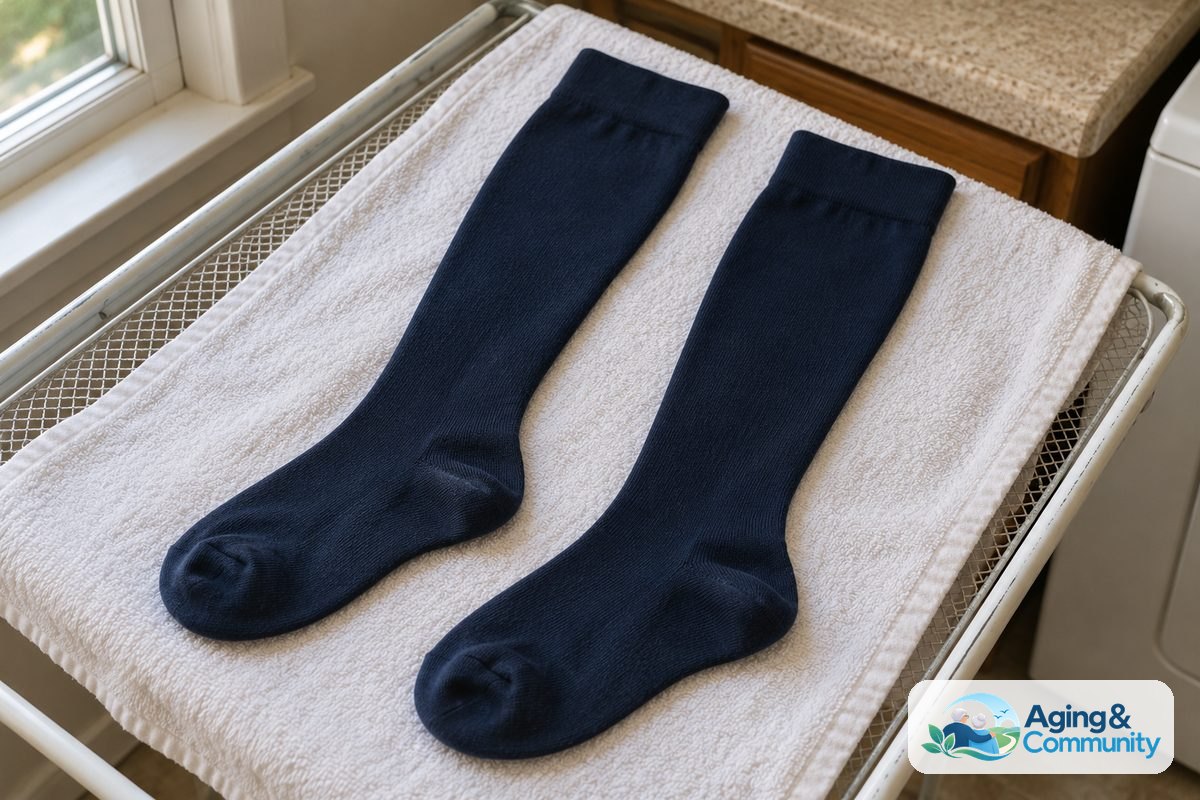
Taking good care of your skin and your garments will make daily wear much more comfortable over time. Wash your support socks after every single wear using mild, unscented soap and warm water. Washing removes skin oils, sweat, and dead skin cells while restoring the natural elasticity of the knit fabric. Always hang your socks to dry or lay them flat, as high heat from a clothes dryer can damage the fine elastic fibers.
Pay close attention to skin health, especially around the ankles, shins, and the backs of the knees. Apply a rich moisturizer in the evening after removing your socks, rather than in the morning right before putting them on. Putting moisturizer on immediately before wearing compression can break down the elastic and make the fabric slide around. Checking your legs each night also lets you catch any minor red marks, dryness, or chafing before they turn into tender skin sores. See the MedlinePlus Foot Health page for more background.
Hydration, Balance, and Fall Awareness with POTS
Compression wear works alongside good daily hydration to help your body manage upright postures. People with POTS often lose fluids quickly, so pairing your compression wear with fluids and balanced electrolytes for elderly individuals, under the supervision of a physician, can help keep blood volume stable. This stable volume makes it easier for your heart to pump efficiently when you transition from sitting to standing.
Because POTS can cause sudden lightheadedness, careful movement habits are essential for home safety. Take your time when standing up, pausing on the edge of the bed for a minute before rising to your feet. Reviewing research-backed advice from the National Institute on Aging: Falls and Falls Prevention can provide practical strategies to keep pathways clear, improve home lighting, and lower your chances of tripping when feeling unsteady.
Frequently Asked Questions
How long should I wear compression socks each day for POTS?
Most clinicians suggest putting your compression socks on shortly after waking up and wearing them all day while you are sitting, standing, or walking. You should take them off right before you get into bed to sleep at night. If your skin needs a short break during the day, resting with your legs elevated while socks are off is a good option.
Are knee-high or thigh-high compression socks better for POTS?
Thigh-high socks and waist-high tights generally provide more comprehensive circulatory support because they cover larger veins in the thighs and abdomen where blood can gather. However, knee-high socks are significantly easier to put on, especially for those with arthritis or back stiffness. The best option is the style you can comfortably and consistently wear every day.
Can I wear compression socks while exercising with POTS?
Yes, many people find that wearing compression socks during light exercise, walking, or physical therapy helps keep them feeling steadier and less fatigued. The gentle exterior squeeze supports your leg muscles as they pump blood back toward your heart. Be sure to drink plenty of fluids and stop to rest if you feel dizzy or short of breath.
How do I know if my compression socks are too tight?
Compression socks should feel very snug and supportive, but they should never cause numbness, tingling, sharp pain, or blue or pale toes. If you see deep, painful indentations in your skin or feel like your circulation is being pinched off, remove the socks and check your leg measurements against the sizing chart.
How often do compression socks need to be replaced?
With daily wear and regular washing, most compression socks lose their supportive elastic tension after four to six months. If the fabric feels loose, slides down your calf on its own, or shows visible holes and thread wear, it is time to replace them with a fresh pair to ensure you receive the proper amount of pressure.