

Choosing low height beds for elderly safety can make a bedroom feel much more secure and accessible. These designs bring the sleep surface closer to the floor, which helps make getting into and out of bed feel manageable. Combined with the right room setup, a lower sleeping surface supports everyday comfort and steady movement.

How Low Height Beds Support Daily Comfort
A bed that sits too high can create extra physical strain. When a person sits on the edge of a mattress, their feet should rest flat on the floor while their knees remain at a comfortable ninety-degree angle. If the mattress is too tall, swinging legs over the side can lead to slipping or feeling off balance.
Lower frames bring the sleeping surface down to a level that feels natural to approach. For individuals who worry about night movement, reducing the distance between the mattress and the rug provides reassurance. Reviewing options for beds for elderly with mobility issues can help you evaluate how different frames adjust to individual body sizes.
These pieces of furniture come in several styles. Some models feature fixed low legs, while adjustable models allow users to raise the platform for sitting up and lower it completely when it is time to sleep.
Adding Safety Bars for Beds for Elderly Loved Ones
While a low platform addresses height, standing up from a seated position still requires upper body strength. Installing safety bars for beds for elderly family members can offer a firm handhold during morning and evening routines.
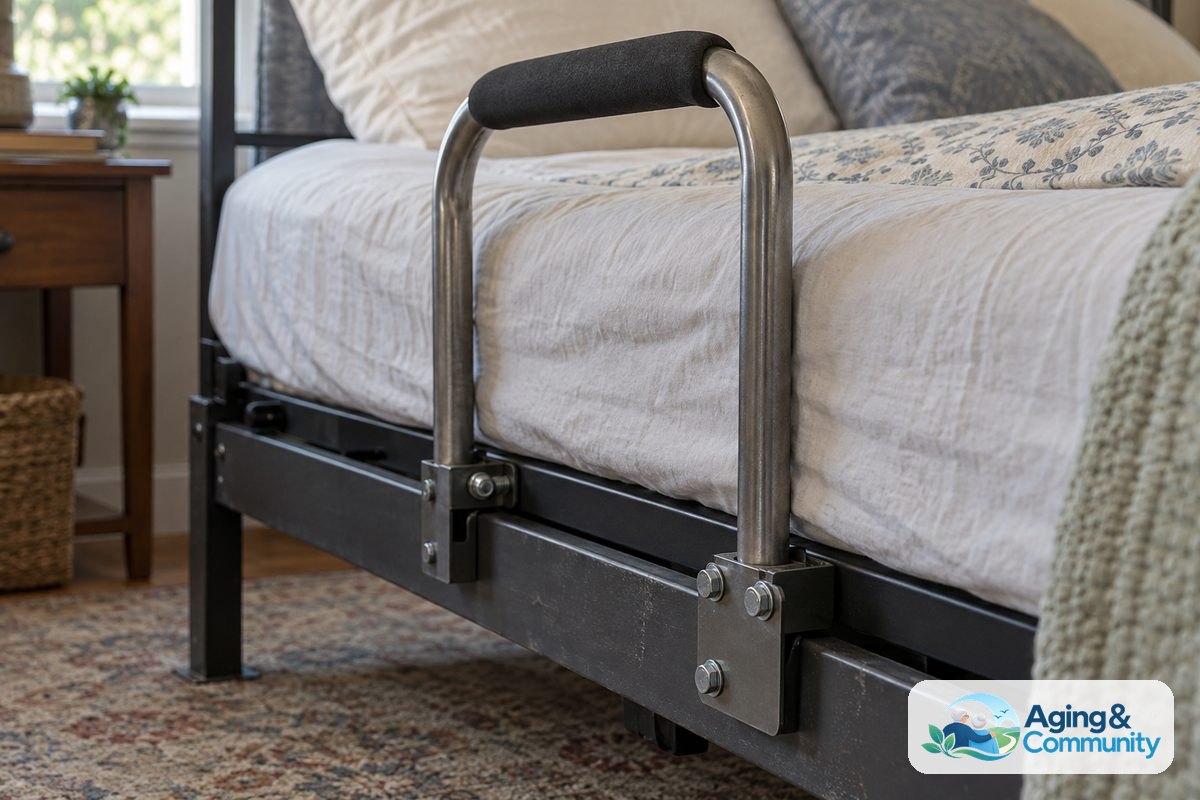
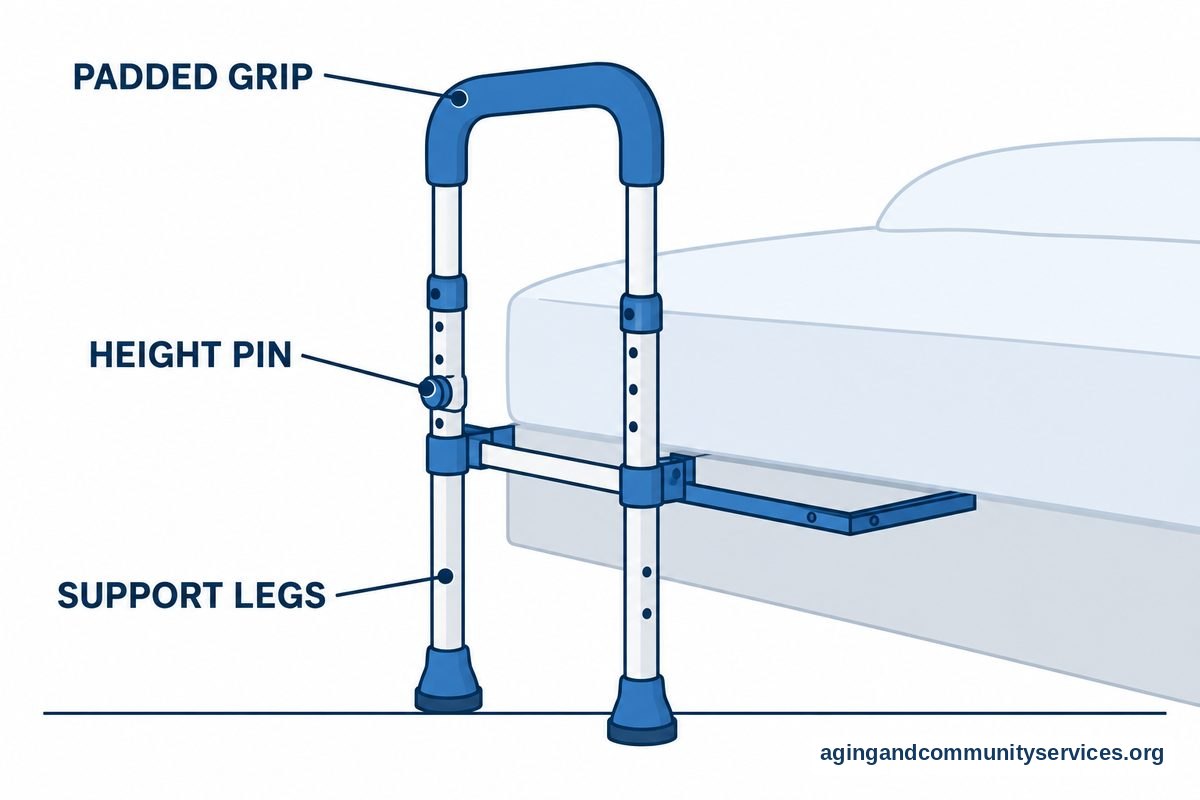
A sturdy support bar attaches securely to the bed structure or slides firmly between the box spring and mattress. When selecting a handle, look for features that fit daily habits:
- Padded grip areas that feel comfortable for sensitive hands.
- Safety straps that wrap tightly around the opposite side of the bed frame to stop shifting.
- Storage pockets along the side to keep glasses, tissues, or phones within easy reach.
- Adjustable height settings that align with the thickness of the mattress.
Using a bed rails for elderly resource can help clarify the difference between full-length barriers and simple support handles. It is important to ensure that any handle is installed according to manufacturer directions so that gaps between the mattress and bar are eliminated.
Choosing the Right Bed Safety Bar for Seniors
Every person has unique physical needs, so picking a bed safety bar for seniors requires looking at both the room layout and the user’s mobility. Some bars extend all the way down to rest legs on the floor, providing extra leverage for people who push down firmly to stand.
Other designs fold down flat when not in use. This folding action allows family members or caregivers to assist with changing sheets or transferring to a chair without reaching over an obstacle. Make sure the bar does not wobble when full body weight is applied.
Before installing any handle, consider consulting a physical therapist or occupational therapist. A professional can watch the person move, check their balance, and suggest the exact placement that best supports smooth transfers.
Creating a Safer Sleep Environment
A low mattress is only one part of creating a restful space. Surrounding the sleep area with practical adaptations makes night waking much easier to navigate. Resources from the National Institute on Aging on falls and falls prevention emphasize that simple adjustments in the home can lower the risk of balance troubles.
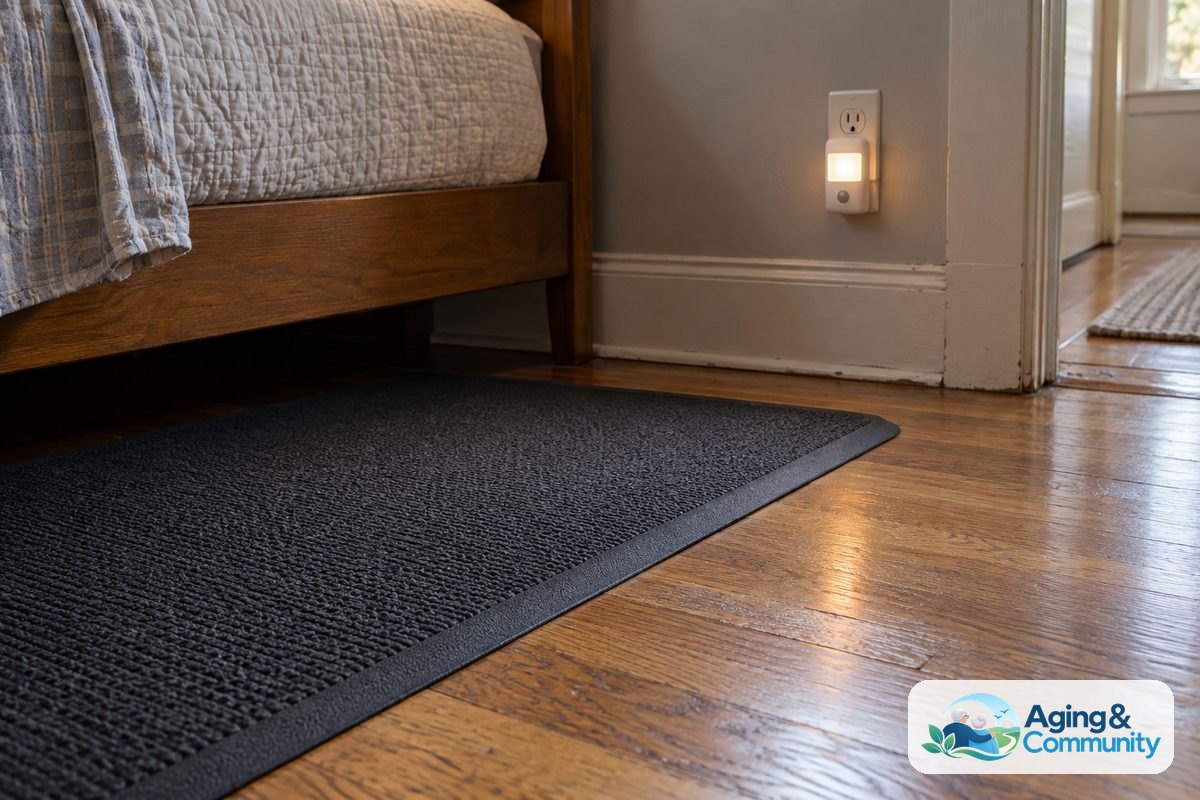
Consider placing durable bedside fall mats right alongside the mattress. These specialized mats provide a cushioned boundary along the floor without creating a tripping edge. They are designed with beveled borders so walking across them feels smooth and stable.
Lighting also plays an important role. Motion-activated nightlights along baseboards ensure that pathways to the hallway or bathroom are clearly visible without needing to reach for bright overhead lamps in the dark.
Comparing Standard Frames and Low Platform Designs
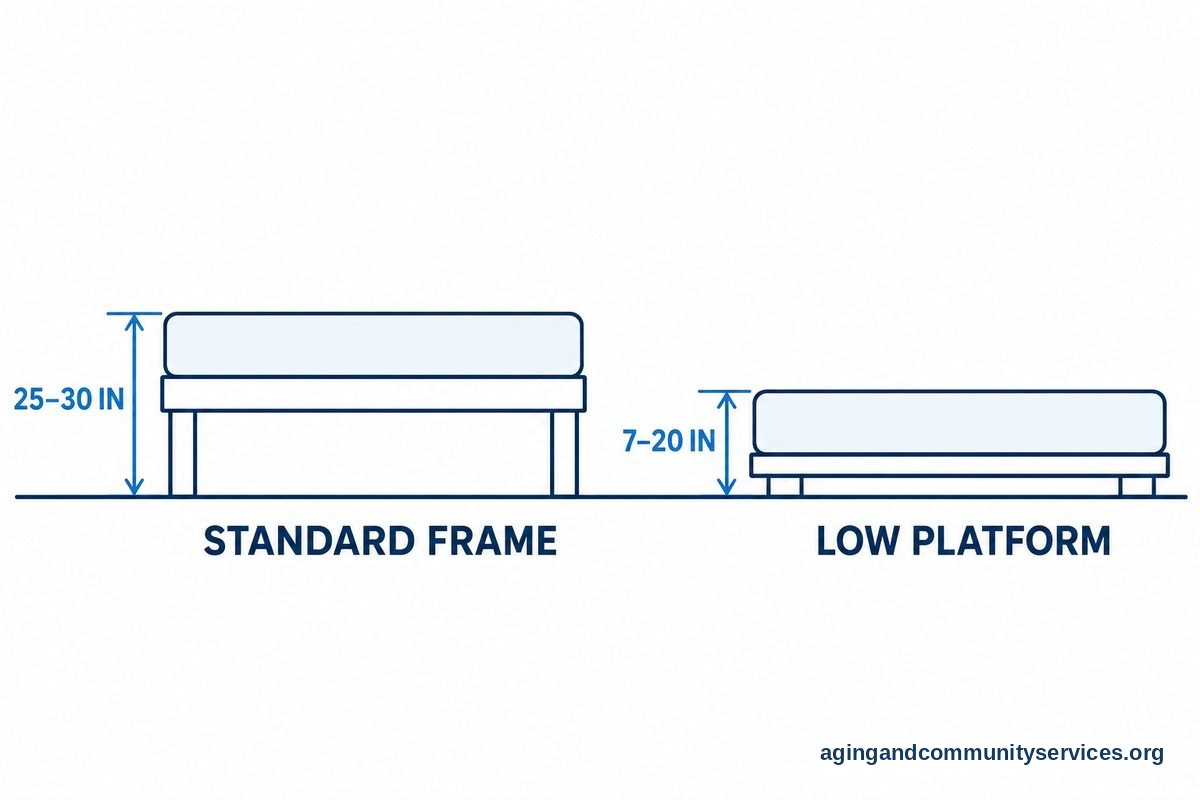
Understanding how dimensions differ can help you measure your current setup accurately. Here is a simple comparison of standard setups and accessible low-profile options:
| Feature | Standard Bed Setup | Low Height Bed Setup |
|---|---|---|
| Floor to Mattress Top | Twenty-five to thirty inches | Seven to twenty inches |
| Foot Placement | Feet may dangle off the edge | Feet plant flat on the floor |
| Transfer Effort | Requires sliding or hopping down | Allows a gentle rise to standing |
| Companion Support | Taller reaches for caregivers | Comfortable height for floor-level support |
Taking measurements of the user while they sit upright in a chair helps identify their ideal floor-to-knee height. Matching that number to the top of the mattress creates the most comfortable daily experience.
Practical Steps You Can Take Next
Making changes to the bedroom does not have to happen all at once. You can start by assessing the current setup and taking small, practical actions to improve the space today:
- Measure the current distance from the floor to the top of the mattress to see if the user’s feet touch the ground easily.
- Clear wide walking pathways around all sides of the bed, removing loose throw rugs, clutter, and extension cords.
- Check our guide on bedroom safety for senior citizens for more room layout ideas.
- Explore local community resources through the Eldercare Locator to find home assessment programs in your neighborhood.
- Discuss physical needs with a doctor or physical therapist to decide whether an adjustable low frame or a side support handle is the best choice.
Frequently Asked Questions
What is the ideal height for a low bed?
For most adults, an ideal surface height allows the feet to touch the floor flat while sitting on the edge of the mattress. In low-profile beds, this measurement often ranges between sixteen and twenty inches from the floor to the top of the bedding. Ultra-low frames used in care settings can drop down to under ten inches when needed.
Are safety bars for beds easy to install without tools?
Many bedside handles require minimal assembly and slide directly beneath the mattress. They often secure in place using strong fabric straps that clip around the bed frame. Always read the instructions carefully to make sure the bar is anchored tightly before relying on it for support.
Can a bed safety bar be used with an adjustable bed frame?
Some handles work with adjustable beds, but many traditional models cannot flex when the head or foot of the bed moves. If your frame articulates, choose a handle specifically made to mount directly to the moving metal frame rather than sliding beneath the mattress.
How can I make a low bed easier to stand up from?
If a mattress sits too low, standing up can require significant knee and leg strength. Adding a sturdy bedside assist bar provides an upper-body pushing point. You can also adjust mattress firmness, as a supportive edge makes it easier to push off compared to a soft, sinking cushion.