

Getting in and out of bed depends on height, edge support, surface feel, and how much the mattress shifts when the person sits near the side. That is why the best mattress for seniors is less about one firmness label and more about matching the bed to daily movement, sleep position, cleanup needs, and caregiver setup. After comparing 6 options on paper, the HAOREN Full stands out for a standard bedroom because its 10-inch hybrid build combines foam with pocket springs and reinforced edges. For a care-bed setup, the Drive Medical 15076 is the more specific fit, with an 80 x 36 x 8 inch size and corner straps.

Pros
- 10-inch profile balances foam with pocket springs
- Breathable knitted fabric cover feels soft and cool
- Fiberglass-free design may reassure caregivers
- Reinforced edge support around 10-inch build
Cons
- Full size may be tight for couples who need more room
- Boxed mattress still may be heavy for one caregiver
- Hybrid firmness may feel too firm for some side sleepers

Pros
- 80 x 36 x 8 inch size fits many hospital beds
- Fluid-resistant nylon cover helps manage moisture
- 4 corner straps and non-slip bottom aid placement
- 2 side carry handles help with lifting and setup
Cons
- 275 lb weight capacity may not fit heavier users
- Requires 24-72 hours to fully regain its shape

Pros
- Cooling Gel Memory Foam helps pull heat from the body
- 8 inch profile fits guest rooms, apartments, or bunks
- CertiPUR-US foam and OEKO-TEX certified cover
- Carbon-rayon flame barrier avoids fiberglass construction
Cons
- Full size may feel cramped for two larger adults
- Medium feel may not suit those needing extra firmness

Pros
- 3.5-inch thickness adds cushioning for floor sleeping
- Polyester fiber cover feels soft and breathable
- PP cotton layers add comfort above and below foam
- CertiPUR-US and Oeko-Tex Standard 100 certified
Cons
- Floor height may be hard for some older adults to rise from
- Compressed packaging needs time to expand after opening
- 3.5-inch profile may feel thin on very hard floors
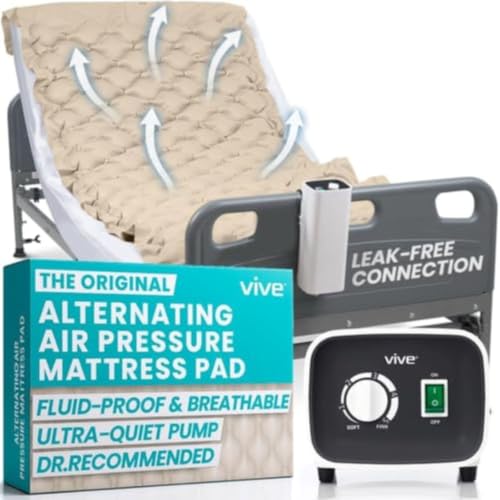
Pros
- 130 air cells provide alternating pressure support
- 22 dBA pump is quieter than many bedside devices
- Waterproof vinyl surface helps simplify cleanup
- Supports users up to 300 lb on an existing mattress
Cons
- Requires pump to run continuously beside the bed
- 300 lb weight limit may not suit larger users

Pros
- 10-inch queen profile offers substantial foam depth
- Green tea and ActivCharcoal are infused in the foam
- CertiPUR-US certified foam for content and durability
- Queen size supports up to 500 lbs total weight
Cons
- May take 24-72 hours before reaching its full shape
- Cold rooms can slow the memory foam expansion process
A Closer Look at Our Top Pick
For many older adults sleeping in a standard room, the HAOREN Full is the most balanced place to begin. Its 10-inch hybrid design pairs memory foam with pocket springs, which can be a useful middle ground when the person wants cushioning but does not want the deep, slow sink of an all-foam bed. The reinforced edge support is also meaningful because sitting on the side of the bed is part of the bedtime and morning routine for many people. A full size can work well for one sleeper, a smaller room, or a caregiver setting up a separate sleeping space without moving into a larger frame.
The trade-off is space and feel. A full mattress may be tight for 2 adults, and a hybrid surface may feel too firm for some side sleepers who prefer more give at the shoulder or hip. The boxed delivery can make room setup simpler than hauling a fully expanded mattress through the home, but the box may still be heavy for 1 caregiver. If you want a standard-bed option that does not feel too specialized, this 10-inch hybrid full mattress is the clearest starting point on paper.
Find Your Situation
- the HAOREN Full: Best suited to 1 older adult in a standard bedroom who wants a 10-inch hybrid feel with foam, pocket springs, breathable knitted fabric, and reinforced edges. Watch out: the full size may be tight for 2 adults, and the hybrid feel may be too firm for some side sleepers.
- the Drive Medical 15076: Best suited to a home or care bed that takes an 80 x 36 x 8 inch foam replacement surface, especially when corner straps and a non-slip bottom matter. Watch out: the 275 lb weight capacity will not fit every person.
- the Zinus 8 Inch: Best suited to a guest room, apartment, or smaller space where a full memory foam mattress with an 8 inch medium feel is enough. Watch out: the full size may feel cramped for 2 larger adults, and medium may not feel firm enough for everyone.
- the SCHNAUZER HOME Japanese: Best suited to a flexible floor-sleeping setup, guest mat, or travel surface with a 3.5-inch foldable profile. Watch out: floor height can be hard for some older adults to rise from.
- the Vive Alternating Air: Best suited to a person who spends long hours in bed and needs an alternating air pad placed on an existing mattress, with 130 air cells and a 22 dBA pump. Watch out: the pump needs to run continuously beside the bed.
- the Zinus Memory Foam: Best suited to a standard queen bed where 10 inches of memory foam and a 500 lb total weight support rating are priorities. Watch out: it may take 24 to 72 hours to reach full shape, especially in a cold room.
How We Narrowed It Down
We compared published specifications rather than handling the products, focusing on details that matter in daily care: mattress height, size, support type, weight capacity, setup needs, surface materials, edge support, straps, handles, and expansion time. We excluded options that did not clearly fit an older adult use case such as a standard bed, hospital-style bed, floor mat, guest setup, or pressure-relief pad. We also looked for practical caregiver details, including a fluid-resistant cover, a non-slip bottom, 4 corner straps, 2 side carry handles, fiberglass-free construction, and stated certifications. If your parent has pain, limited mobility, skin concerns, or a recent change in sleep tolerance, ask a doctor or physical therapist before choosing a new support surface. The National Institute on Aging notes practical home safety steps around bedrooms and movement in its falls and falls prevention guidance.
What to Look For
Start with bed height, not just firmness
A mattress that feels comfortable while lying down can still be awkward if it makes the bed too high or too low. The 10-inch profiles here add more height than an 8 inch mattress, while a 3.5-inch floor mat changes the whole movement pattern. Think about whether the person can sit with feet steady on the floor before standing. If the bed frame is already tall, a thinner profile may be easier to manage.
Check whether the edge helps with sitting
Many older adults pause at the side of the bed before standing, adjusting clothing, or reaching for a walker. Reinforced edge support on a 10-inch hybrid mattress can make that sitting moment feel more stable than a soft edge that compresses quickly. This does not replace safe transfer habits, but it can make the bed feel less vague at the border. For a standard full bed, a hybrid mattress with reinforced edges is worth considering.
Match the surface to the bed type
A hospital-style bed usually needs a different surface than a regular household frame. An 80 x 36 x 8 inch foam replacement mattress is meant for a narrower care-bed format, while full and queen mattresses are made for standard rooms. If the person already has a home care bed, look closely at size, straps, and bottom grip, and consider adding a waterproof protector for durability. A mismatch of even 1 category can make setup frustrating.
Before you buy, plan the first 72 hours
Several boxed foam mattresses need 24 to 72 hours to regain their full shape. That matters if your parent needs the bed ready the same day. Warmer rooms can help memory foam expand faster, while cold rooms can slow the process. If the old bed cannot stay in place during expansion, arrange another sleep spot before opening the box, and keep warm slippers handy for comfort.
Think about cleanup before it is urgent
Moisture management is a daily comfort issue in many homes, not just a medical issue. A fluid-resistant nylon cover or waterproof vinyl surface can make cleanup simpler for a caregiver. Corner straps, a non-slip bottom, and 2 side carry handles are also practical if the mattress needs repositioning. For care-bed routines, an 80 x 36 inch foam surface with corner straps may be easier to manage than a standard mattress.
When this is not enough, add local help
A mattress cannot solve every sleep, transfer, or caregiving challenge by itself. If your parent needs help choosing between a standard bed, a care bed, or added home support, the Eldercare Locator can connect families with local services by web or by calling 1-800-677-1116. This can be useful when equipment choices overlap with transportation, home safety, or respite needs. Bring the mattress dimensions and weight capacity details when you ask for guidance.
Look at weight limits and room sharing
Weight capacity matters for safety, comfort, and long-term durability. One care-bed foam mattress lists a 275 lb capacity, while one queen memory foam option supports up to 500 lbs total. If 2 people share the bed, consider both body weight and sleeping space. A full size may be fine for 1 person but cramped for 2 larger adults.
Quick Tips for Choosing
- Choose a 10-inch mattress when extra height and deeper cushioning make sense.
- Choose an 8 inch mattress when the bed frame is already tall.
- Use an 80 x 36 inch surface only when the bed is built for that size.
- Allow 24 to 72 hours for boxed foam to expand.
- Check whether 1 caregiver can move the box safely.
- Match the weight capacity to the person or couple using the bed.
Frequently Asked Questions
Is a firm mattress always better for an older adult?
No. A firmer feel can help some people feel supported, but others need more cushioning at the shoulder or hip. The better question is whether the person can rest comfortably and get out of bed with steady movement.
Is memory foam a good choice for side sleepers?
Memory foam can suit side sleepers because it cushions pressure points, but a medium feel may not be enough for every body type. A side sleeper who feels jammed at the shoulder may prefer more give, while another may want firmer support.
What mattress height is easiest to get out of?
There is no single height that fits everyone. Compare the mattress profile, such as 8 inches or 10 inches, with the bed frame height and the person’s leg length.
Should an older adult use a floor mattress?
A floor mattress can work for a person who already gets up from the floor comfortably. A 3.5-inch floor surface may be difficult for someone who needs a higher sitting position before standing.
How long should a boxed mattress expand before use?
Some foam mattresses need 24 to 72 hours to regain their full shape. If the room is cold, expansion may take longer.
Does a hospital bed need a special mattress size?
Many home care beds use an 80 x 36 inch mattress size. Always match the bed frame and mattress dimensions before ordering.
Are straps useful on a care-bed mattress?
Yes, straps can help keep a mattress positioned on the bed frame. A design with 4 corner straps is especially useful when caregivers need the surface to stay aligned.
Is an alternating air pad the same as a mattress?
No. An alternating air pad is placed on top of an existing mattress and uses a pump to move air through cells. One such design uses 130 air cells and a continuously running pump.
What should couples consider?
Couples should consider both space and total weight support. A queen size gives more room than a full, and one queen option here lists support up to 500 lbs total.
Do certifications matter?
Certifications can reassure shoppers about foam content or textile standards. Examples in this group include CertiPUR-US foam and OEKO-TEX certified covers.
Which One to Start With
If you are choosing for 1 older adult in a regular bedroom and do not have a special care-bed frame, start with the HAOREN Full. Its 10-inch hybrid build, pocket springs, foam comfort, breathable knitted cover, and reinforced edge support give it the broadest standard-bed appeal on paper. It is not the roomiest choice for 2 people, but for 1 sleeper who wants a full mattress with a more structured edge, it is the first option I would compare against the existing bed height.
If the person uses a home or care bed, start instead with the Drive Medical 15076. The 80 x 36 x 8 inch size, fluid-resistant nylon cover, 4 corner straps, non-slip bottom, and 2 side carry handles are all practical details for that setting. The 275 lb capacity is the key number to check before moving forward.
For a standard queen room, a 10-inch queen memory foam mattress with 500 lb total support is the more spacious starting point. For a temporary guest setup, the 8 inch full memory foam option is simpler, while the 3.5-inch foldable floor mat should be reserved for people who can comfortably rise from floor level. If your parent spends long hours in bed, the alternating air pad belongs in the conversation as an add-on to an existing mattress, not as a stand-alone bed.