

Long hours in bed can concentrate body weight on the same spots, while everyday spills, heat, and hard-to-change sheets can make rest harder for both the person and the caregiver. The best mattresses for seniors are often not whole mattresses at all, but overlays and covers chosen for a clear job: pressure redistribution, waterproof protection, easier cleanup, or a better fit on an existing bed. After comparing 6 options on paper, the Soaids Alternating Pressure stands out for a 298 lb limit, 10 firmness levels, and a pump rated under 40 dB. For a larger bed, the Lunderg Queen Size offers a 53 by 77 inch pad and 320 lb support.
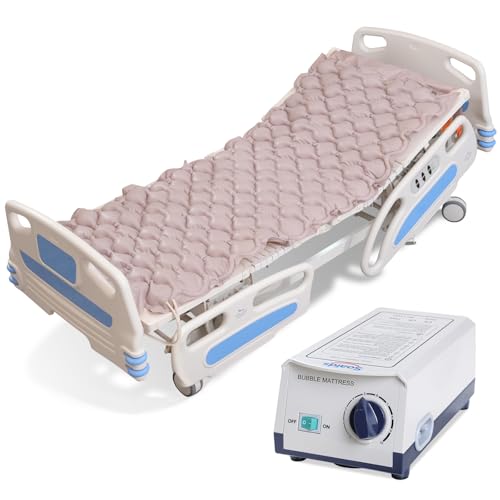
Pros
- 130 bubble cells help spread pressure across the pad
- 0.32mm medical-grade PVC wipes clean after use
- Pump runs under 40 dB for quieter overnight use
- 10 firmness levels let caregivers fine-tune feel
Cons
- 30-40 minute inflation requires advance setup time
- 298 lb limit may not fit every user's needs
- PVC surface may feel warm without a soft sheet

Pros
- 130 heat-sealed air bubbles spread body weight evenly
- Standard 5mm connectors fit many pressure pumps
- Twin-sized overlay can sit over an existing mattress
- 2 inflation tubes included with the extra long pad
Cons
- Pump is sold separately, so replacement pad alone cannot inflate
- Standard 5mm connectors may not match every pump
- Overlay is twin-sized, limiting use on larger beds
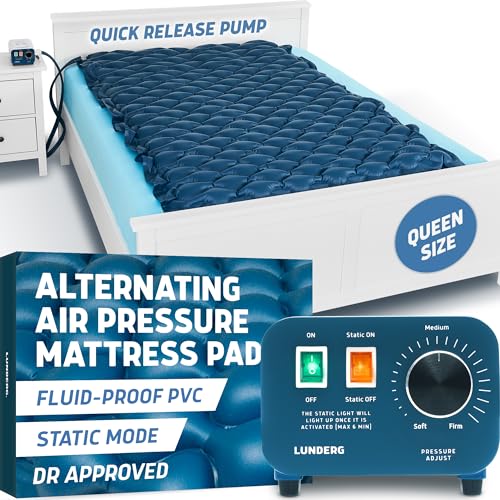
Pros
- 53x77-inch size fits queen or larger beds
- Supports users up to 320 lbs for broader fit
- 23 dBA pump is quiet for overnight caregiving
- 23 dBA Static Mode keeps cells inflated for stability
Cons
- Pad must be covered with a sheet to manage moisture
- 53x77-inch pad may overhang smaller full-size beds

Pros
- Waterproof coating helps block sweat and spills
- Soft-touch material is gentle against skin at night
- 6-18 inch deep pockets fit many full mattresses
Cons
- Only covers full size mattresses, not other bed sizes
- Care rules exclude ironing, bleaching, and dry cleaning

Pros
- Waterproof vinyl helps block fluids and stains
- 36 x 80 x 6 inch sizing fits twin mattresses
- Non-allergenic vinyl may suit sensitive users
- Contoured vinyl design avoids a full zipper closure
Cons
- Vinyl may feel warmer or noisier than fabric
- 6 inch depth may not fit thicker twin mattresses

Pros
- 36 x 80 x 6 size fits many twin mattresses
- Vinyl surface can be wiped after everyday spills
- 6-inch depth suits slimmer twin mattress profiles
- Twin 36-inch width is manageable for one caregiver
Cons
- Vinyl may feel warm or crinkly under thin sheets
- 36 x 80 x 6 sizing will not fit full or queen beds
- 6-inch depth may be shallow for thicker mattresses
A Closer Look at Our Top Pick
The Soaids Alternating Pressure is the first option I would compare for an older adult who spends long stretches in bed and already has a standard mattress underneath. It is an air mattress pad, not a full replacement mattress, so its job is to add an alternating surface over the bed. The pad uses 130 bubble cells to spread pressure across the body, and the pump lets a caregiver choose from 10 firmness levels. That matters when the person is light one night, sore the next, or simply prefers a softer feel without changing the whole bed setup.
There are practical trade-offs. The pad supports up to 298 lbs, so weight fit should be checked before ordering. It also takes 30 to 40 minutes to inflate, which means it is better set up before bedtime rather than during a rushed evening routine. The 0.32mm medical-grade PVC surface wipes clean, but PVC can feel warm without a soft sheet between the person and the pad. Consider pairing with a bedside fall mat for added nighttime safety. The pump is rated under 40 dB, a useful number for shared bedrooms or overnight caregiving, but the main reason to start here is the mix of pressure support, adjustability, and cleanup.
Find Your Situation
- the Soaids Alternating Pressure: suits a person in bed for long periods when a caregiver wants 10 firmness levels and a 298 lb limit. Watch out: the 30 to 40 minute inflation time needs advance setup.
- the Vive Alternating Air: suits a twin bed when a caregiver already has a compatible pump with 5mm connectors. Watch out: the pump is sold separately, so the pad alone will not inflate.
- the Lunderg Queen Size: suits a queen or larger bed when the person needs a 53 by 77 inch overlay and support up to 320 lbs. Watch out: the pad should be covered with a sheet to help manage moisture.
- the Lunsing Soft Full: suits a full mattress that needs waterproof protection and pockets for 6 to 18 inch depth. Watch out: it only fits full size mattresses.
- the Drive Medical Drive: suits a twin mattress measuring 36 by 80 by 6 inches when spills, odors, or dust are the main concern. Watch out: vinyl may feel warmer or noisier than fabric.
- the Drive Medical Drive: suits a slimmer twin mattress measuring 36 by 80 by 6 inches when wipe-clean care matters. Watch out: the 6 inch depth may be shallow for thicker mattresses.
How We Narrowed It Down
We compared published specifications rather than handling the products, so the emphasis is on measurable details that affect older adults and caregivers day to day. We looked for clear sizing, stated weight limits, pump details where relevant, surface materials, cleanup needs, and setup limits. We excluded options that did not give enough practical fit information for a caregiver to make a safe purchase decision at home. For pressure-style overlays, numbers such as 130 air cells, 10 firmness levels, 23 dBA, and 320 lbs helped separate more adjustable choices from simpler covers. For protectors, dimensions such as 36 by 80 by 6 inches or 6 to 18 inch pockets mattered most. If the person has pain, wounds, limited mobility, or changing medical needs, ask a doctor or physical therapist which support surface fits the care plan. The National Institute on Aging notes that home setup and health changes both matter in fall prevention, as explained in its falls and falls prevention guidance.
What to Look For
Start with the bed size you already have
A mattress pad that does not fit the bed will shift, bunch, or leave edges uncovered. Twin protectors in this group measure 36 by 80 by 6 inches, while the queen-style air pad measures 53 by 77 inches. A full protector with 6 to 18 inch pockets is different from a twin vinyl cover with a 6 inch depth. Measure the mattress before comparing comfort claims.
Match the surface to the person’s time in bed
For a person who spends many hours lying down, an alternating air overlay may be more useful than a simple waterproof cover. The Soaids and Vive pads each use 130 air cells, while the Lunderg option uses an alternating air design with static mode. These products are support surfaces, not medical treatment. If the person mainly needs protection from spills, a waterproof cover may be enough.
Check the pump details before you count on it
Air overlays depend on pump compatibility and sound. The Soaids pump is rated under 40 dB, while the Lunderg pump is rated at 23 dBA. The Vive replacement pad uses standard 5mm connectors, but the pump is sold separately. If a caregiver needs a complete setup, choose an option that includes the parts required to inflate it.
Think about cleanup at 2 in the morning
Care is easier when the surface can be wiped or washed without a complicated routine. The Soaids pad uses 0.32mm medical-grade PVC that wipes clean, and the twin vinyl covers also wipe clean after everyday spills. The Lunsing protector is machine washable and dryer-safe, which helps when a full mattress needs regular laundering. Avoid choosing by softness alone if cleanup happens often.
Before you buy, check weight and depth
Weight limits and mattress depth are not small details for older adults. The Soaids pad supports up to 298 lbs, while the Lunderg pad supports up to 320 lbs. Twin vinyl covers in this guide fit 6 inch mattress depth, so they may not suit thicker twin mattresses. A full protector with 6 to 18 inch pockets gives more depth range, but only on a full bed.
When this is not enough, ask for local help
A mattress pad cannot solve every sleep, transfer, or caregiving problem. If the person needs more support than a 130-cell overlay or a 320 lb rated pad can provide, bring the question to a clinician. Families who need help finding local aging services can contact Eldercare Locator or call 1-800-677-1116. Local support can help connect the bed choice with the rest of the home setup.
Choose comfort with sheets in mind
Many protective surfaces work best with the right sheet over them. PVC and vinyl can feel warmer or crinkly under thin bedding, especially on a 36 by 80 inch twin surface. The Lunderg pad should be covered with a sheet to manage moisture. Warm fleece slippers and a soft sheet can make a waterproof or air surface feel more familiar without changing its protective role.
Quick Tips for Choosing
- Measure the mattress width, length, and depth before choosing.
- For long bed rest, compare air cells, pump sound, and firmness control.
- For spills, focus on waterproof surfaces and washing instructions.
- Check weight limits such as 298 lbs or 320 lbs before ordering.
- Allow 30 to 40 minutes when an air pad needs inflation.
- Use a sheet over PVC or vinyl if warmth or noise bothers the person.
Frequently Asked Questions
Is an alternating air pad the same as a regular mattress?
No. An alternating air pad usually sits over an existing mattress and changes air pressure through connected cells. In this group, several pads use 130 cells or a pump, while covers simply protect the mattress surface.
Who should consider an air overlay?
An air overlay may suit a person who spends long stretches in bed and needs a surface that spreads body weight differently. Look for concrete details such as 10 firmness levels, 130 cells, or a stated weight limit.
Do waterproof covers add comfort?
Some waterproof covers add a softer layer, but their main job is protection. A full protector with 6 to 18 inch pockets may feel different from a 36 by 80 by 6 inch vinyl cover.
Will vinyl feel hot?
Vinyl can feel warmer or noisier than fabric, especially under thin sheets. An electric blanket or a soft sheet over a 36 by 80 inch twin cover may make the surface more comfortable for nightly use.
How important is pump noise?
Pump noise matters if the bed is in a shared room or the person wakes easily. Compare numbers such as under 40 dB and 23 dBA when choosing an overnight setup.
Can a queen air pad go on a full bed?
Size should be checked carefully because a 53 by 77 inch pad may overhang a smaller full-size bed. Overhang can make sheets harder to fit and may make the bed feel less tidy.
What if the person is close to the weight limit?
Choose a product with a stated limit that leaves comfortable room for the person’s weight. In this guide, listed limits include 298 lbs and 320 lbs.
Is a pump sold with every air pad?
No. Some air pads are replacement pads and need a separate compatible pump. A pad with 5mm connectors still needs the right pump to inflate.
How often should a protector be washed or wiped?
Follow the care instructions for the surface. Some covers wipe clean after spills, while one full protector is machine washable and dryer-safe.
Should a doctor be involved in the choice?
Yes, if the person has wounds, pain, limited mobility, or a medical care plan. A clinician can help decide whether a simple cover, a 130-cell overlay, or another support surface is appropriate.
Which One to Start With
If you are choosing for an older adult who spends long periods in bed and you want the most adjustable starting point, begin with the Soaids Alternating Pressure. Its 10 firmness levels, 130 bubble cells, and 298 lb limit make it the most balanced first comparison for a twin-style overlay setup, as long as you can allow 30 to 40 minutes for inflation. It is also the better starting point when a caregiver wants a wipe-clean PVC surface and a pump rated under 40 dB.
If the person sleeps on a queen or larger bed, start instead with a 53 by 77 inch alternating air pad. The 320 lb support and 23 dBA pump make it the stronger fit on paper for a larger bed, and static mode may help when a steadier surface is preferred for care tasks. Just plan to use a sheet over the pad.
If pressure support is not the main issue and the bed simply needs easier cleanup, choose the protector by bed size. For a full mattress, the Lunsing Soft Full is the cleanest starting point because it fits 6 to 18 inch depths and can be machine washed. For a slim twin mattress, a 36 by 80 by 6 inch vinyl cover is the simpler route, especially when one caregiver needs a wipe-clean surface.