

Bending to reach the toes asks the hips, back, hands, and balance to work together at the same time, and that can make a simple sock feel like a chore. The best sock aid for elderly shoppers is usually the one that matches 2 everyday details: how far the person can reach and what kind of socks they wear most. After comparing 6 options on paper, the DMI Sock Aid stands out for a 4-piece design that combines sock help with a shoe horn, while the Carex Sock Aide is a sensible adjustable-strap choice for many seated routines.

Pros
- 4-piece design stores more compactly between uses
- 3-step process keeps sock setup straightforward
- Included screws and screwdriver support assembly
- Metal connector helps secure the joined handle
Cons
- Assembly requires attaching the base before first use
- Cradle style may not suit very tight compression socks
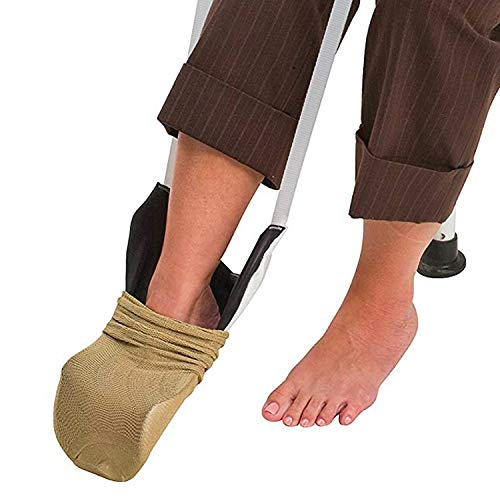
Pros
- Terry cloth cover helps hold socks in place
- Nylon lining lowers friction while pulling socks on
- Terry cloth design works sitting or standing
- Hand washable with mild detergent after use
Cons
- Hand wash only; machine washing is not advised
- May take practice to position socks correctly

Pros
- 47.2-inch strap supports seated two-hand pulling
- 60-day guarantee adds a short trial window
- One or both hands can use the long pull loop
Cons
- Rigid shape may still be awkward with very tight socks
- Side hook requires some hand control and coordination

Pros
- 26- to 41-inch strap adjusts for different heights
- Works with dress, footie, and athletic socks
- Carex has 35+ years in senior care products
Cons
- May take practice to load socks smoothly onto the form
- Not ideal for users who cannot grip or pull the strap

Pros
- Fits foot widths up to 4.6 inches for regular socks
- Flexible ABS shell helps socks slide onto the form
- U-shaped ABS shell keeps the sock opening preset
- 4.6-inch width limit gives caregivers a clear fit check
Cons
- Not compatible with compression socks or stockings
- May not fit feet wider than 4.6 inches
- Regular socks still need to be stretched over the ABS shell

Pros
- 28-inch overall length offers extra reach
- Terry cloth cover grips sock fabric gently
- Nylon lining helps foot slide through sock
- 28-inch shell-and-cord design can be shortened
Cons
- Not suitable for compression socks or pantyhose
- May struggle with crew socks, toe socks, and nylons
A Closer Look at Our Top Pick
The strongest place to start is a 4-piece sock aid and shoe horn combo because it addresses 2 common dressing steps in 1 kit: opening the sock and helping with the shoe. The long handle and cradle are designed so the sock can be held open near the floor, then the foot slides in without the person having to bend down to the toes. That matters when your parent can sit safely but does not want to turn sock dressing into a long reaching task. The included screws and screwdriver also make the setup more complete, though the base still has to be attached before first use.
The trade-off is that this is not the simplest one-piece fabric style. A 4-piece tool needs a little space for setup, and the cradle shape may not be the right match for very tight compression socks. Still, the metal connector is a useful detail because it helps secure the joined handle once assembled. For an older adult who wants fewer separate dressing tools near the chair, combining a sock aid and shoe horn is a practical idea. It is especially appealing when a caregiver can assemble it once, show the 3-step process, and store the pieces compactly between uses.
Find Your Situation
- the DMI Sock Aid: suits a person who wants a sock aid and shoe horn in 1 kit, with a 4-piece design for compact storage. Watch out: the base needs assembly before first use.
- the DMI Deluxe Sock: suits a person who prefers a soft terry cloth cover and nylon lining for seated or standing sock routines. Watch out: it is hand wash only with mild detergent.
- the Vive Sock Aid: suits a person who wants a 47.2-inch strap and a side hook for taking socks off. Watch out: the side hook takes some hand control and coordination.
- the Carex Sock Aide: suits a person who needs an adjustable 26- to 41-inch strap for different heights. Watch out: it is not ideal if the person cannot grip or pull the strap.
- the KEKOY Sock Aid: suits a person with foot width up to 4.6 inches who wears regular ankle, calf, knee, or dress socks. Watch out: it is not compatible with compression socks or stockings.
- the KkaFFe Sock: suits a person who wants a 28-inch overall length with a terry cloth cover and nylon lining. Watch out: it is not suitable for compression socks or pantyhose.
How We Narrowed It Down
We compared published specifications rather than handling the products, focusing on 6 choices with clear details about reach, sock type, shell style, and setup. We gave more weight to tools that explain strap length, usable sock styles, or foot-width limits, because those details help families choose with fewer surprises. We excluded options that did not fit a straightforward dressing routine or that leaned on broad claims instead of practical design details. If your parent has new pain, swelling, weakness, or a recent procedure, ask a doctor or physical therapist which dressing movements are appropriate. For general home-safety context, the National Institute on Aging notes that older adults and families can review everyday hazards through its falls and falls prevention guidance without turning a sock routine into a medical decision.
What to Look For
Start with the socks already in the drawer
The right tool depends first on whether the person wears regular socks, dress socks, athletic socks, or tighter specialty socks. A product that works with dress, footie, and athletic socks gives more flexibility than a tool limited to regular sock shapes. If compression socks are part of the routine, pay close attention because 2 options here say they are not suitable for compression socks. A clear sock match is more useful than a longer handle if the sock cannot load smoothly.
Match the reach to the chair
Most people use a sock aid while seated, so strap length should match the chair height and the person’s arm reach. A 47.2-inch strap gives more room for 2-handed pulling from a seated position. A 26- to 41-inch adjustable strap can be easier to tune for different heights in the same home. If your parent sits in a low chair, do a careful dry run before making it part of the morning routine.
Check whether the hand grip is realistic
Every sock aid still asks the person to load, guide, or pull something. If gripping is difficult, a long strap may not solve the main problem, even when it adds 41 inches of reach. A caregiver may be able to load the sock onto the form so the person only pulls the cord or strap. For families comparing options, an adjustable strap for different heights is helpful only if the hand action is manageable.
Before you buy, measure the foot width
A foot-width limit is one of the clearest buying details because it removes guesswork. One flexible ABS shell lists a fit for feet up to 4.6 inches wide. That makes it worth measuring the widest part of the foot while the person is seated comfortably. If the foot is wider than that number, choose a different style instead of forcing the sock over the shell.
Think about setup time on a slow morning
Some sock aids are simple fabric sleeves, while another option uses a 4-piece design with screws and a screwdriver for assembly. Assembly is not a problem for many families, but it should happen before the person needs the tool or other dressing aids. A 3-step process can make the daily routine easier once everyone understands it. If a caregiver visits only once a day, choose a style that can be left ready near the chair.
When this is not enough, add local help
A sock aid is only 1 part of getting dressed, and it may not cover shoes, clothing fasteners, or bathing setup. If your parent needs help beyond socks, the Eldercare Locator can connect families with local support services at 1-800-677-1116. This is useful when a household needs practical service information rather than another gadget. Keep the conversation focused on what the person wants to do more comfortably each day.
Do not ignore cleaning and storage
Cleaning matters because sock aids touch feet, socks, and sometimes the floor. A hand-wash-only terry cloth and nylon helper needs mild detergent, not machine washing. Storage also matters, especially if the person uses a walker, cane, or small bedroom chair nearby. Nearby grabber tools need storage too. A compact 4-piece design may be easier to put away than a long rigid tool in a tight room.
Quick Tips for Choosing
- Pick the sock aid around the socks worn most often.
- Choose a longer strap if the person sits higher or reaches less.
- Avoid compression socks unless the product says that use fits.
- Measure foot width when a shell lists a width limit.
- Set up any multi-piece tool before the first dressing routine.
- Ask a therapist when movement limits have recently changed.
Frequently Asked Questions
Can a sock aid be used while sitting?
Yes, many sock aids are designed for seated use, which is why strap length and pull control matter. A 47.2-inch strap or a 26- to 41-inch adjustable strap can make seated pulling easier for some people.
Can a caregiver set up the sock first?
Yes, a caregiver can often stretch the sock over the form before handing the straps or cord to the person. That divides the routine into 2 parts: loading the sock and pulling it on.
Do sock aids work with compression socks?
Some sock aids in this group are not compatible with compression socks or stockings. If compression socks are part of care, ask a doctor or physical therapist for a suitable method, including compression sock aids.
What strap length should families look for?
Look at the person’s seated reach and chair height first. In this group, the listed strap ranges include 26 to 41 inches and 47.2 inches.
Are soft sock aids different from rigid shell styles?
Soft styles may use terry cloth to help hold fabric and nylon to lower friction. Rigid or flexible shell styles hold the sock opening in a preset shape, which can help some regular socks slide on.
Can a sock aid remove socks too?
Some designs include a feature meant to help take socks off, such as a side hook. That feature still requires hand control and coordination, so it may not suit every person.
Will a sock aid fit wide feet?
Fit depends on the shell or cradle design. One option lists a foot-width limit of 4.6 inches, so measuring the foot is a practical first step.
How much practice does a sock aid take?
Many people need a few calm tries to learn how far to pull the sock over the form. Loading the sock smoothly is often the hardest 1st step.
Can sock aids be cleaned?
Some fabric styles can be hand washed with mild detergent. If a product says hand wash only, machine washing is not the right cleaning method.
Is a sock aid enough for dressing independently?
It may help with 1 part of dressing, but it does not replace help with shoes, clothing fasteners, or room setup. If several dressing steps are difficult, a therapist can look at the whole routine.
Which One to Start With
If you want 1 practical starting point for a parent who needs help with both socks and shoes, start with the DMI Sock Aid. Its 4-piece design, long handle, cradle, included screws, and metal connector make it a strong first choice when a caregiver can handle the initial assembly and explain the 3-step process. It is not the best match for very tight compression socks, but it gives families a broad dressing setup without buying a separate shoe horn right away.
If your parent already has shoes under control and mainly needs a seated sock routine, the Carex Sock Aide is the next place to look. The 26- to 41-inch adjustable strap is useful when chair height, arm reach, or caregiver setup changes. It also works with dress, footie, and athletic socks, which covers more everyday drawers than a tool aimed only at regular socks.
For a person who wants help taking socks off as well as putting them on, a sock aid with a 47.2-inch strap and side hook is the more targeted option. Choose it when the person has enough hand control to guide the hook and pull loop. If regular socks and a clear width limit matter most, consider the 4.6-inch foot-width style instead, but skip it for compression socks or stockings.