

TV watching gets harder when the remote asks for too much: tiny buttons, 2 devices, app menus, and input choices that can undo a familiar routine. For many families searching for best tvs for seniors ease of use, the better first step is not always a new television. It may be a simpler controller, a limited channel setup, or clearer private sound. After comparing these 4 options on paper, the Flipper Big Button stands out for homes that need fewer choices, while the TV · EARS TV may help when the main issue is hearing the program without turning up the whole room.
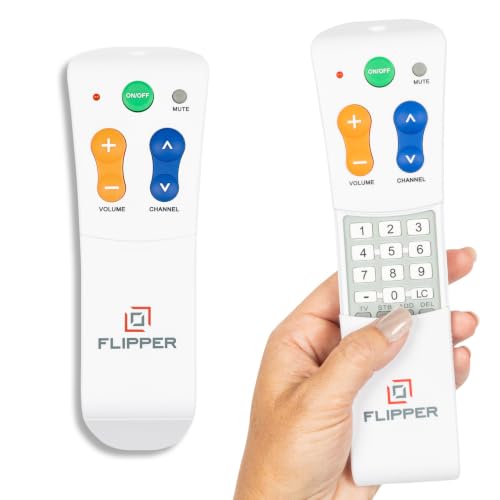
Pros
- 4-button face limits controls to power, volume, channel
- 25 favorite channels can be programmed for routine viewing
- 1 remote controls both TV and cable or satellite box
Cons
- Cannot navigate Netflix, YouTube, Hulu, or other apps
- Basic functions only on Smart TVs and streaming devices

Pros
- Controls 1 TV and 1 cable or satellite box
- 90-day free replacement window for caregivers
- 12-hour support response promised after purchase
- Large color-coded buttons support 1-handed selection
Cons
- Xfinity boxes hidden behind furniture may need IR extender
- Requires direct line of sight to the cable or satellite box
- Basic TV functions only, not a full universal remote
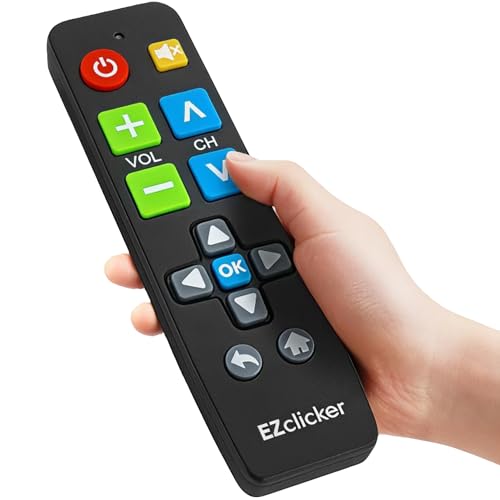
Pros
- 7 x 2 x 1 inch size is compact for small tables
- Sony TV compatibility keeps controls focused
- No pairing needed after inserting 2 AAA batteries
- Big button layout includes tactile feedback for Sony TVs
Cons
- Only compatible with Sony TVs, not cable boxes
- 2 AAA batteries are required and not included
- No controls for streaming devices or TV platforms

Pros
- 120 decibel maximum volume for very loud TV audio
- 2 oz headset is light for long viewing sessions
- 3.5mm Auxiliary and RCA inputs support older TVs
Cons
- 120 decibels requires careful volume control
- Headset style may feel awkward with some glasses
- No apps or WiFi means fewer advanced audio settings
A Closer Look at Our Top Pick
The strongest starting point for many families is a remote that removes choices rather than adding them. A 4-button TV remote with favorite channels is built around power, volume, and channel control, which keeps the face of the remote calm and predictable. The caregiver can program 25 favorite channels, so the person is less likely to drift into unfamiliar stations while still keeping a meaningful selection. It can also control both the TV and a cable or satellite box, which matters in a living room where 2 remotes often cause more confusion than the television itself.
The trade-off is clear. This is not the right choice for someone who wants to move through Netflix, YouTube, Hulu, or other apps. It also offers only basic functions on Smart TVs and streaming devices, so it is better for routine channel watching than for app browsing. That limitation is also the reason it can work well for a simpler setup. If your parent mostly watches familiar channels, wants volume control, and benefits from seeing only 4 main controls, this style of remote keeps the task narrow in a useful way.
Find Your Situation
- the Flipper Big Button: Best for a person who watches familiar cable or satellite channels and benefits from 4 large color-coded buttons plus 25 programmed favorites. Watch out: it cannot navigate Netflix, YouTube, Hulu, or other apps.
- the Nettech Big: Best when your parent needs 1 remote for a TV and 1 cable or satellite box, with large color-coded buttons and a 90-day replacement window. Watch out: the cable or satellite box needs direct line of sight, and hidden Xfinity boxes may need an IR extender.
- the EZclicker Sony TV: Best for a Sony TV household that wants a compact 7 x 2 x 1 inch remote with no pairing after adding 2 AAA batteries. Watch out: it works only with Sony TVs and does not control cable boxes.
- the TV · EARS TV: Best when the person mainly needs private TV sound from a 2 oz headset with large dials and no apps or WiFi. Watch out: the 120 decibel maximum calls for careful volume setting.
How We Narrowed It Down
We compared published specifications, stated functions, and setup limits rather than handling the products. The focus was on controls that reduce the number of decisions: fewer buttons, direct TV and cable box control, simple battery setup, familiar channel access, and audio help without apps. We excluded products centered on full Smart TV navigation, voice assistants, or streaming platform control because those add layers that may not suit a person who mainly wants power, volume, channel, and clear sound. We also looked for concrete details such as 4 buttons, 25 favorites, 90-day replacement coverage, or a 2 oz headset. If changes in balance, vision, hearing, or hand strength are affecting daily routines, ask a doctor or physical therapist for personal guidance, and review home setup basics from the National Institute on Aging as part of a broader safety check.
What to Look For
Start with the job, not the TV size
Ask what the person does most often in 1 sitting. If the answer is turning on the TV, adjusting volume, and moving through familiar channels, a simpler remote may matter more than a new screen. A 4-button face can be easier to learn than a full controller with rows of similar keys. If streaming apps are part of the routine, make sure the person is comfortable with menus, like those on video calling devices, before choosing a remote that cannot navigate them.
Keep the number of remotes low
Many living rooms have 2 devices involved: the television and a cable or satellite box. A remote that controls both can reduce the need to remember which controller changes volume and which changes channels. A large-button remote for TV and cable box control is most useful when the box is visible from the chair. If the box is hidden behind furniture, direct line of sight can become the real setup issue.
Make favorite channels do the work
Favorite-channel programming can narrow browsing to a smaller, familiar set. A remote with 25 favorite channels gives a caregiver room to include news, sports, local stations, and a few regular programs without opening the whole channel guide. This can help when the person prefers a routine and does not want to search through long lists. It is still worth writing the channel numbers on a small card near the chair if that feels familiar.
Before you buy, check the box and batteries
Compatibility is the quiet detail that decides whether setup feels simple. A Sony-only remote can be easy in the right home, but it will not control a cable box. If a remote needs 2 AAA batteries, have them ready before you sit down to set it up. For a cable or satellite box, place the box where the remote can point directly at it from the usual chair.
Look at button feel and color, not just size
Large color-coded buttons can support faster recognition, especially when the person uses the same 3 or 4 controls every day. Tactile feedback can also help when someone confirms a press by feel rather than by staring at the remote. A compact 7 x 2 x 1 inch housing may fit a small side table better than a bulky controller. The goal is a remote that is easy to find, easy to hold, and hard to misread.
When this is not enough, think about sound
If the main complaint is volume, a simpler remote may not solve the problem by itself. A 2 oz wireless headset can give the person private listening while the room stays quieter for others. Large dials and no WiFi can make the sound path more direct, but a 120 decibel maximum should be adjusted carefully. For local caregiver support beyond product choice, the Eldercare Locator can connect families with nearby services at 1-800-677-1116.
Match the setup to the person helping
A simple product still needs someone to set it up correctly the first time. If a caregiver can program 25 favorites, label the remote, and place the box in view, the daily experience may be much smoother. A 90-day replacement window can be useful when family members are helping from a distance using simple phones and want time to confirm the fit. Choose the option that the helper can maintain, not just the one that looks simplest in the box.
Quick Tips for Choosing
- Choose fewer buttons if the person mostly watches regular channels.
- Pick cable box control if the home uses 2 devices every day.
- Check Sony-only compatibility before buying a brand-specific remote.
- Have 2 AAA batteries ready when the remote requires them.
- Keep cable and satellite boxes in direct line of sight.
- Set headset volume carefully when the maximum is very high.
Frequently Asked Questions
Is a new TV always the easiest fix?
No. If the screen works and the person mainly struggles with the controller, a simpler remote may be the better first step. Reducing 2 remotes to 1 can matter more than changing the television.
What button layout is easiest for many older adults?
A layout with power, volume, and channel controls keeps the task focused. A 4-button face can be easier to remember than a full remote with many similar buttons.
Can a simple remote control streaming apps?
Some simple remotes are not made for Netflix, YouTube, Hulu, or other app menus, unlike senior-friendly smartphones. If the person watches streaming every day, check that app navigation is part of the design before choosing.
Why do favorite channels help?
Favorite channels reduce the need to move through a long guide. A set of 25 familiar stations can preserve choice without making browsing feel open ended.
What if the cable box is hidden?
Some remotes need a direct path to the cable or satellite box. If the box is behind furniture, the person may need the box moved or an IR extender for reliable control.
Are big buttons enough for low vision?
Big buttons can help, especially when they are color-coded and spaced clearly. Good room lighting and placing the remote in the same spot every day can also support the routine.
What if the person has a Sony TV?
A Sony-only remote can keep controls focused when the home uses a Sony television. It is not the right tool if the person also needs to control a separate cable box.
Do TV headsets replace hearing care?
No product should be treated as hearing care or medical advice. A headset can provide private TV listening, but ongoing hearing concerns should be discussed with a qualified professional.
How loud is too loud for a TV headset?
A headset with a 120 decibel maximum should be adjusted carefully and gradually. Start low, then raise the volume only as much as needed for comfortable listening.
What should a caregiver set up first?
Start with the usual chair, the remote location, and the main 3 tasks: power, volume, and channel. Then add favorites or sound help after the basic routine feels clear.
Which One to Start With
If your parent watches cable or satellite most of the time and gets stuck because the remote has too many buttons, start with the Flipper Big Button. Its 4-button face and 25 favorite channels make it the clearest first choice for a familiar, channel-based routine. It is also the better match when 1 remote needs to control both the TV and a cable or satellite box, as long as streaming apps are not part of the daily plan.
If the setup also uses a cable or satellite box and you want extra purchase support on paper, a big-button remote with a 90-day replacement window is the next place to look. It keeps TV and box control together, but the box needs direct line of sight, so check the furniture layout before choosing it. For a Sony TV without a cable box, the Sony-only option is simpler than a general remote because it works after adding 2 AAA batteries and does not require pairing.
If the person understands the remote but the household tension is about volume, choose the TV · EARS TV instead of changing the controller. The 2 oz headset, large dials, and no WiFi setup make it a practical sound-first choice. Set the volume carefully because the maximum is 120 decibels.