

When your parent spends hours in a wheelchair, office chair, or car seat, the pressure on their lower back and tailbone builds gradually. A good pressure relief cushion redistributes that weight, reduces discomfort during extended sitting, and makes daily life easier for both them and their caregivers. We compared the published specifications of five leading options to identify the best pressure relief cushions for elderly adults across different chair types and comfort preferences. After reviewing dimensions, materials, cover designs, and real-world fit, we narrowed down which cushions work best for specific situations. The CYLEN Ifoam and AeriGnix Gel emerge as the strongest options for most wheelchair users, though the right choice depends on your parent’s chair type and how soft or firm they prefer their seating support.

Pros
- Gel-infused foam construction provides cooling comfort
- Non-slip bottom prevents cushion from shifting during use
- Removable, breathable mesh cover for easy washing
- Fits multiple chair types: wheelchairs, scooters, office chairs
Cons
- 18x16 inch size may not fit all wheelchair dimensions
- 3-inch thickness requires checking clearance under chair
- Polyfoam base requires regular cleaning to maintain gel properties
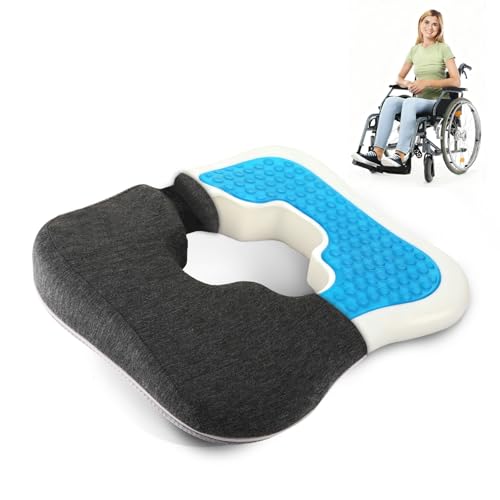
Pros
- Cross-shaped zoning design with 15-degree slope distributes pressure evenly
- Waterproof gel-cooled surface cover protects against sweat and spills
- Double anti-slip bottom with particle density keeps cushion firmly in place
- 18-inch length fits most wheelchairs, office chairs, and car seats
Cons
- 3-inch thickness may feel firm for users preferring softer, deeper cushioning
- Cooling gel material requires regular cleaning to maintain effectiveness
- Zoning design may not suit all body types or sitting positions equally

Pros
- 2.4-inch thickness is 50% thicker than previous versions
- Honeycomb gel structure distributes pressure across sitting surface
- Breathable cover with ventilated holes reduces heat buildup
- Detachable, machine-washable cover for easy cleaning
- Non-slip dots prevent cushion from shifting on seats
Cons
- 16.5" x 14.5" size may not fit all chair dimensions properly
- Gel material may retain some heat despite ventilation holes
- Not suitable for very soft or cushioned seating surfaces

Pros
- Ventilated gel design keeps users cool during long sitting periods
- Machine-washable removable cover simplifies cleaning and hygiene
- Non-slip rubberized base stays secure on wheelchairs and office chairs
- OEKO-TEX STANDARD 100 certified for safety and quality construction
Cons
- Ventilated design may not provide maximum firmness for heavier individuals
- Gel layer can retain some heat in very warm environments despite ventilation
- Works best on firm surfaces and may shift on soft car seats

Pros
- Double-layer gel design provides cushioning without permanent deformation
- Honeycomb pattern with air channels prevents heat buildup during long sitting
- Weighs only 2.6 pounds, making it portable between home and car
- Zippered cover removes for easy washing without replacing entire cushion
Cons
- 1.51-inch thickness may not provide enough support for severe pressure relief needs
- Gel material can shift if used frequently without proper support underneath
- Limited color options not specified for matching existing home decor
A Closer Look at Our Top Pick
The CYLEN Ifoam stands out for wheelchair users who need reliable, everyday comfort without fussing over the cushion’s care. At 18 by 16 inches and 3 inches thick, it fits most standard wheelchairs, office chairs, and kitchen chairs. The gel-infused memory foam layer absorbs pressure from prolonged sitting, while the non-slip bottom keeps the cushion from sliding around as your parent shifts position. This stability matters when caregivers are helping someone move in and out of a chair multiple times a day.
The removable, breathable mesh cover is a genuine practical advantage. You can unzip it, toss it in the wash, and put it back without replacing the entire pressure relief cushion. For families managing daily caregiving, easy washing means the cushion stays fresh and hygienic with minimal effort. The gel infusion does require regular cleaning to work at its best, so plan on washing the cover every week or two depending on use. If the chair’s footrest or under-seat clearance is tight, measure before ordering, because 3 inches of thickness can make a difference in how well the cushion fits.
Find Your Situation
- CYLEN Ifoam: Best for wheelchair and office chair users who want a durable, easy-to-clean option and have 3 inches of clearance. Watch out: The 18 by 16 inch size may not fit all wheelchair models without checking dimensions first.
- AeriGnix Gel: Best for users who spend most of their day sitting and want cross-shaped pressure zones with a waterproof cover. Watch out: The 3-inch thickness feels relatively firm compared to softer cushions, so it suits those who prefer a more structured feel rather than a plush sink-in.
- LYUANEC Gel: Best for older adults on hard wooden or metal chairs who want extra softness and a slightly thinner profile at 2.4 inches. Watch out: The 16.5 by 14.5 inch footprint is smaller, so measure your chair to confirm it covers the seating area adequately.
- Everlasting Comfort Ventilated: Best for users who tend to get warm or sweat during long sitting sessions and want certified safe materials. Watch out: The ventilated design prioritizes airflow over maximum firmness, so heavier individuals may find it less supportive than solid gel options.
- OMCOZY Gel: Best for caregivers who move the cushion between home, car, and office because it weighs only 2.6 pounds and has a zippered cover. Watch out: At 1.51 inches thick, it offers less deep cushioning, so it works better for mild discomfort rather than severe pressure relief needs.
How We Narrowed It Down
We compared the published product specifications and dimensions of these five cushions rather than handling them in person. Our focus was on foam type, cover design, thickness, dimensions, and real-world fit across common seating situations. We excluded cushions without removable covers, since caregivers need washability for hygiene and maintenance. We also excluded options under 2.4 inches thick if they lacked gel or memory foam layers, because thinner cushions alone do not provide enough pressure redistribution for users spending 4 or more hours sitting daily. If your parent experiences persistent pain or skin breakdown, talk with their doctor or physical therapist before choosing a cushion, as a professional can recommend the specific support they need. The National Institute on Aging also provides guidance on comfort and mobility aids for older adults.
What to Look For
Thickness matters for daily comfort
Cushions range from 1.51 to 3 inches thick. Thicker is not always better, but it generally means more pressure absorption. A 3-inch cushion spreads weight over a larger volume of foam, while a 1.5-inch option works best for sitting that lasts 2 to 3 hours at a time. If your parent sits for 5 or more hours daily, aim for at least 2.4 inches of material. Check your chair’s clearance before buying to make sure the cushion will not interfere with armrests or footrests.
Gel and memory foam do different jobs
Gel-infused foam cools the seating surface and resists permanent denting from repeated use. Memory foam molds to your parent’s body shape but may retain heat. Many cushions combine both: gel on top for cooling and memory foam underneath for support. When comparing, look for at least 2 layers rather than a single material, because layering distributes pressure better. Honeycomb gel designs also add air channels that reduce heat buildup.
Cover washability keeps hygiene simple
A removable, machine-washable cover is essential if a caregiver is handling daily cleaning. Zippered covers and mesh covers both work well. Waterproof covers protect against sweat and spills and are especially useful for office or car settings. Check that the cover material is breathable too, so moisture does not trap heat underneath. Most of these cushions have covers that can be washed weekly without damaging the foam inside.
Non-slip bottoms prevent shifting during transfers
When your parent moves into or out of a chair, the last thing you want is a cushion sliding around. Double anti-slip bottoms or rubberized bases keep the cushion anchored to the seat surface. This matters especially during standing transfers or when caregivers are repositioning someone to prevent pressure sores. Test the grip by placing the cushion on your own chair and shifting your weight side to side.
Before you buy, measure your chair carefully
Wheelchair dimensions vary widely, and a cushion that is too large or too small will not deliver proper support. Measure the seating surface from back to front and side to side. Check how much clearance exists under armrests and above footrests, as well as near nearby furniture like over-bed tables with wheels. Most cushions in this group are 16 to 18.5 inches long, which fits standard wheelchairs, but office chairs and car seats may have different requirements. Take a photo of your measurements and keep them handy when comparing options.
Pressure zones can help, but they are not one size fits all
Some cushions, like the AeriGnix, use a cross-shaped zoning design with a 15-degree slope to focus support on high-pressure areas like the tailbone and sitting bones. Zoning works well for many users, but it may not suit everyone equally. If your parent has a very wide or narrow frame, or an unusual sitting posture, a simple flat gel cushion might feel more comfortable. When possible, ask whether the retailer has a return policy so you can test the zoning design with your parent’s actual posture.
When this is not enough, bring in a professional
A cushion is one tool, but comfort during long sitting also depends on armrest height, backrest angle, and how often your parent changes position. If after 2 to 3 weeks a cushion is not reducing discomfort, contact the Eldercare Locator at 1-800-677-1116 to find a physical therapist or occupational therapist in your area. They can assess your parent’s seating setup and recommend additional supports or positioning aids that work alongside the cushion.
Quick Tips for Choosing
- Measure your parent’s chair width, depth, and under-seat clearance before ordering to avoid sizing surprises.
- Pick a cushion with a removable, washable cover so caregivers can keep it clean without extra hassle.
- Look for at least 2 layers (gel plus foam) rather than a single material for better pressure distribution.
- Check the product weight if you plan to move the cushion between locations; under 3 pounds is portable, over 4 pounds requires more effort.
- Non-slip bottoms are essential if your parent transfers in and out of the chair multiple times daily.
- Plan to test a new cushion for 2 to 3 weeks before deciding it is not working, since comfort can improve as foam settles.
Frequently Asked Questions
How long does a pressure relief cushion typically last?
Most gel and memory foam cushions last 2 to 4 years with regular use and proper care. Frequent cleaning and proper storage help extend the life. If the foam starts to flatten permanently or the cover cracks, it is time to replace it.
Can a pressure relief cushion prevent pressure sores?
A cushion is one part of pressure sore prevention, but not a complete solution by itself. Repositioning every 2 hours, maintaining healthy skin, eating well, and staying active also matter. Talk to a doctor if your parent is at high risk.
Is gel or memory foam better for hot environments?
Gel-infused foam tends to run cooler than plain memory foam because gel disperses heat better. If your parent’s home or workplace is warm, look for cushions with gel on the top surface and ventilated designs that allow airflow.
Will a thicker cushion always be more comfortable?
Not necessarily. A 3-inch cushion spreads pressure more, but if your parent prefers a firmer, more responsive feel, a 2.4-inch option may actually feel better. Comfort is personal; thickness is just one factor.
Can I use a pressure relief cushion on a soft sofa or car seat?
Cushions work best on firm, flat surfaces like wooden chairs, wheelchairs, and car seats, as well as on recliners for elderly. On soft couches, the cushion may sink unevenly and lose its supportive structure. Test it first if you are unsure.
How often should I wash the cushion cover?
Weekly washing is ideal if your parent sits 5 or more hours daily. If they sit for shorter periods, every 2 weeks is acceptable. More frequent washing keeps the cover fresh and prevents odor and bacteria buildup.
What if my parent’s wheelchair is an unusual size?
Measure the exact seating surface dimensions and compare to the cushion specs before buying. Many retailers accept returns if the cushion does not fit, so ask about their policy upfront.
Do I need a special cover if my parent sweats a lot?
A waterproof or water-resistant cover with ventilation holes is ideal. It protects the foam from moisture while allowing sweat to evaporate rather than trap heat. Machine-washable waterproof covers are available on several options in this group.
Can a pressure relief cushion help with tailbone or lower back pain?
A cushion designed to redistribute weight can reduce strain on the tailbone and lower back during sitting. However, if pain is severe or persistent, your parent should see a doctor to rule out other causes.
What is the difference between a wheelchair cushion and a general seat cushion?
Wheelchair cushions are often shaped to fit standard wheelchair seats and usually have non-slip bottoms to stay in place during transfers. General seat cushions work on any firm chair but may not have wheelchair-specific features. All five options in this guide work on both wheelchairs and office chairs.
Which One to Start With
For most families, the CYLEN Ifoam is the logical starting point. It covers the basics well: a 3-inch gel-infused foam layer, easy-to-wash removable cover, non-slip bottom, and compatibility with nearly all standard wheelchairs and office chairs. At 18 by 16 inches, it fits the widest range of seating situations. The main thing to verify is that your parent’s chair has at least 3 inches of under-seat clearance. If you measure and find tight clearance, the LYUANEC Gel at 2.4 inches thick is your next best option, though it has a smaller 16.5 by 14.5 inch footprint.
If your parent runs warm or sweats during long sitting, the Everlasting Comfort Ventilated prioritizes cooling over maximum firmness. Its ventilated gel design keeps air moving and has a machine-washable cover. The trade-off is that it provides less deep support than the CYLEN, so it works best for mild to moderate discomfort rather than severe pressure relief needs.
For users who move the cushion constantly between home, car, and office, the OMCOZY Gel is the lightest at 2.6 pounds and includes a convenient zippered cover that comes off in seconds. However, at 1.51 inches thick, it is best for sitting periods under 4 hours. If your parent sits longer than that daily, pair it with regular position changes or choose a thicker option.
The AeriGnix Gel sits in the middle of this lineup. Its cross-shaped zoning with a 15-degree slope is designed to concentrate support on the tailbone and sitting bones, which helps many people feel less strain in those high-pressure spots. The 18-inch length fits most wheelchairs, and the waterproof zipper cover is easy to maintain. The main consideration is firmness: it feels more structured than soft, so it suits older adults who prefer a supportive, responsive cushion rather than a plush sink-in feel. If after 2 to 3 weeks of testing any cushion you find discomfort has not improved, ask your parent’s doctor to rule out other contributing causes. Then revisit your choice or explore additional support options with a physical therapist or occupational therapist in your area.