

Keys usually go missing because routines have 2 parts: the item gets set down during another task, and the next search starts in a different room. The best key finders for the elderly keep that search simple by pairing a large remote with beeping tags, so your parent can press 1 color and listen. After comparing 6 RF sets, the Reyke Key Finder stands out on paper for its 4 receivers, 80 dB+ beep, and 131 ft range, while the Esky Key Finder is worth a look when 6 tagged items matter more than the longest listed range.
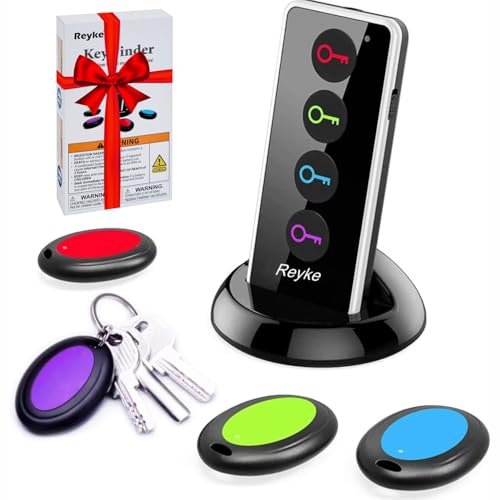
Pros
- Includes 4 receivers for multiple everyday items
- 80 dB+ beep helps locate keys under cushions
- RF range reaches up to 131 ft through walls
- Includes 4 CR2032 and 2 AAA batteries in box
Cons
- No phone app or GPS map for locating items away from home
- Receivers add bulk to small key rings or slim wallets
Pros
- 4 coded tags cover several remotes, keys, or bags
- 120 ft RF range can reach through walls or cushions
- 85 dB beep plus flashing light aids locating
Cons
- Receivers use button cells that need replacing
- Stick-on tags may add bulk to small remotes

Pros
- 6 receivers let caregivers tag several daily items
- 85dB sound plus LED light supports quicker locating
- 100ft RF range can reach through doors and furniture
- CR2032 coin batteries are pre-installed in all tags
Cons
- RF remote must be nearby and cannot use a phone map
- 100ft range may drop through dense walls or metal
- Coin batteries are small and fiddly to replace

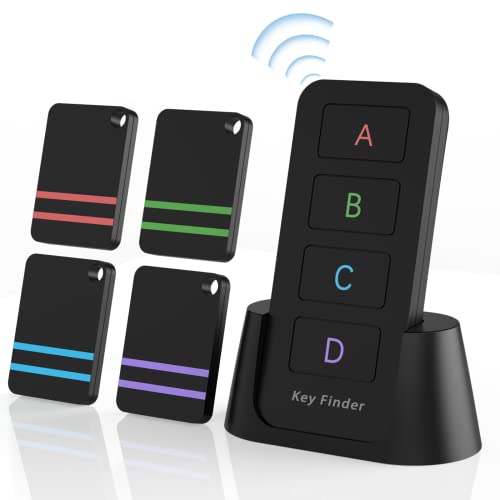
Pros
- Includes 4 receivers for several everyday items
- 80db beep helps locate keys under cushions
- 40M/131ft range can pass through walls and doors
- LED flashlight helps spot items in dark corners
Cons
- Receivers may add bulk to smaller key rings
- RF remote must be kept somewhere easy to find
- 80db alarm may be hard to hear from another floor

Pros
- 80dB buzzer is louder than many 60dB finders
- 98ft RF range can reach through drawers and sofas
- 3-second finding claim is quick for daily searches
- 360° protection covers keys, wallets, and remotes
Cons
- 80dB alarm may still be hard to hear in another room
- Receivers add bulk to small hearing aid cases
- RF remote must be kept somewhere easy to find

Pros
- Includes 4 receivers for keys, wallets, remotes, or phones
- 80dB+ beep helps locate misplaced items by sound
- 100ft RF range can reach through walls and cushions
- Includes 4 CR2032 and 2 AAA batteries in the box
Cons
- Receiver tags add bulk to small key rings or wallets
- Beeping may be hard to hear in noisy rooms
- RF remote must be kept somewhere easy to find
A Closer Look at Our Top Pick
The Reyke Key Finder is the set I would start with for many homes because it balances 4 receivers, an 80 dB+ beep, and a listed RF range up to 131 ft. That combination fits the most common home search pattern: keys in a coat pocket, a wallet near a chair, a TV remote under a cushion, and a bag by the door. The large color-coded buttons also matter because the person does not have to open an app, remember a password, or pair a phone before searching.
There are 2 practical trade-offs to weigh. First, the receivers add bulk, so a very slim wallet or small key ring may feel different once a tag is attached. Second, this is an at-home RF finder, not a GPS map device for an item left away from home. For many older adults and family helpers, that limitation is acceptable because the daily problem is usually within 1 house or apartment. The included 4 CR2032 and 2 AAA batteries also make setup more straightforward on day 1.
Find Your Situation
- the Reyke Key Finder: suits a home with 4 important items to tag and a need for up to 131 ft of RF range. Watch out: the receivers can feel bulky on a small key ring or slim wallet.
- the Jegoteer Remote: suits a person tracking 4 remotes, keys, phones, or bags, especially when an 85 dB beep and flashing light are helpful. Watch out: the stick-on tags may add bulk to smaller remotes.
- the Esky Key Finder: suits caregivers who want 6 receivers for several daily items, with 85 dB sound and LED help. Watch out: the 100 ft range may drop through dense walls or metal.
- the A-SZCXTOP Key: suits a home where 4 tagged items and a 40M/131ft range are enough, and an LED flashlight could help in dark corners. Watch out: the RF remote needs a clear, easy-to-remember place.
- the Vodeson Key Finder: suits someone who wants an 80dB buzzer, 98ft range, and color-coded RF buttons for keys, wallets, remotes, canes, or medicine boxes. Watch out: the 80dB alarm may still be hard to hear in another room.
- the BIGTRIDE Key Finder: suits a person who wants 4 receivers, an 80dB+ beep, and a 100ft RF range for keys, wallets, phones, or TV remotes. Watch out: beeping may be hard to hear in noisy rooms.
How We Narrowed It Down
We compared published specifications rather than handling the products, focusing on the details that matter most in a 65+ household: number of receivers, stated loudness, listed range, battery setup, lights, and whether a phone app is required. We excluded choices that did not fit the simple RF pattern, because every product here uses a remote and receivers rather than a GPS map. We also favored sets with at least 4 receivers, since keys, remotes, wallets, and bags often all need attention. If misplaced items are tied to new confusion, dizziness, medication changes, or mobility concerns, ask a doctor or physical therapist for guidance; the National Institute on Aging also explains practical home safety steps. A key finder is a convenience tool, not a medical device.
What to Look For
Start with the sound level your parent can actually hear
The products compared here list beeps from 80 dB to 85 dB, which is the main reason they are more useful than a silent tag. A louder number helps on paper, but room layout, closed doors, and television noise can change what the person hears. If hearing is a concern, choose a set with both sound and a flashing LED. For example, an 85 dB finder with flashing tags gives 2 cues instead of relying on sound alone.
Match the range to the home, not the box
Listed RF range runs from 98 ft to 131 ft in this group, with 100 ft and 120 ft options in between. Those numbers are useful for comparison, but walls, metal, and furniture can shorten the real search path. In a small apartment, 98 ft may be enough; in a larger home, 131 ft gives more breathing room. If your parent often searches from 1 floor while the item is on another, keep expectations modest.
Choose enough receivers for the daily loop
Most sets here include 4 receivers, while 1 set includes 6. Count the items that cause the most repeated searching before buying: keys, wallet, TV remote, bag, phone, cane, or medicine box. A 4-receiver set works well when the problem list is short and stable. A 6-receiver set gives a caregiver more room to tag several items without moving tags around.
Make the remote easier to find than the keys
Every RF set depends on a transmitter remote, so the remote needs 1 obvious home. Put it in a bowl, on a hook, or beside a favorite chair, then keep it there. Color-coded buttons help, but they only help if the remote is not missing too. If 2 people help with errands, agree on the same storage spot so the routine stays simple. For exit safety, consider door alarms for dementia.
Before you buy, check the tag size against the item
Several products note that receiver tags can add bulk to small key rings, slim wallets, small remotes, or hearing aid cases. That does not make them poor choices, but it changes where they fit best. A bag zipper, TV remote, or larger key ring can usually tolerate more bulk than a thin wallet. If comfort matters, start by tagging 1 item for a few days before adding all 4 receivers.
When this is not enough, widen the support plan
A beeping tag helps with misplaced objects around the home, but it does not solve every daily support need. If your family is trying to organize transportation, in-home help, or caregiver services, the Eldercare Locator can connect older adults and caregivers with local resources at 1-800-677-1116. Keep the key finder as 1 small tool inside a broader routine. A simple landing spot for keys and a written checklist may matter as much as the device.
Look at batteries before the first beep fades
The product data mentions CR2032 coin batteries in several receiver tags, and 2 sets include both receiver and transmitter batteries in the box. Coin batteries are small, so replacing them can be fiddly for some hands. If your parent prefers not to change tiny batteries, choose a family member to check them on a regular schedule. Keep spare CR2032 cells in 1 labeled drawer if that battery type is used.
Quick Tips for Choosing
- Choose 4 receivers if keys, wallet, remote, and bag are the main items.
- Choose 6 receivers if a caregiver wants extra tags ready.
- Prioritize 85 dB if sound is the main cue.
- Prioritize 131 ft if the home has more distance to cover.
- Pick LED tags if dark corners or cushions are common hiding spots.
- Give the transmitter 1 permanent place before attaching any tags.
Frequently Asked Questions
Do these key finders need a phone?
No phone app is required for the RF models compared here. The person presses 1 button on a handheld transmitter, and the matching receiver beeps or flashes.
Will a key finder work outside the home?
These RF finders are mainly for nearby searches, with listed ranges from 98 ft to 131 ft. They do not provide a GPS map for an item left at a store or in a car far away. For falls, a fall detection watch serves a different need.
How loud should the beep be?
The listed sound levels here run from 80 dB to 85 dB. If the person has trouble hearing from another room, look for the higher number and a flashing LED. For help calls, compare personal alarms too.
How many tags should I buy?
Start by counting the items that go missing in a normal week. A 4-receiver set covers the usual keys, wallet, remote, and bag, while 6 receivers give more flexibility.
Can the receiver go in a wallet?
Some receiver tags can fit with wallets, but several add bulk. A slim wallet may feel awkward with a tag, so a bag pocket or key ring may be a better first spot.
What if the remote gets lost?
The remote is the control center, so it needs 1 reliable home. A bowl by the door, a hook, or a side table can make the routine easier to repeat.
Are flashing lights important?
Flashing LEDs add a second cue when sound alone is not enough. They can help when an item is under a cushion, in a dark corner, or inside a bag.
Do walls affect the range?
Yes, walls, doors, furniture, and metal can reduce RF performance. A listed 100 ft or 131 ft range is best treated as a comparison number, not a promise in every room.
Are the batteries hard to replace?
Several receivers use CR2032 coin batteries, which are small. If fine hand movement is difficult, have 1 family member handle battery changes and keep spares in a labeled place.
Can this help a caregiver?
Yes, a caregiver can tag several daily items and help set up the routine. The most useful setup usually combines 4 or 6 tags with a consistent place for the transmitter.
Which One to Start With
If you want the easiest first choice for a typical home, start with the Reyke Key Finder. Its 4 receivers match the common group of keys, wallet, remote, and bag, while the 80 dB+ beep and 131 ft range give it strong published numbers for an RF set. It is also a good fit when a family helper wants to set everything up in 1 sitting, because the product data lists 4 CR2032 and 2 AAA batteries in the box.
If your parent regularly misplaces more than 4 items, choose the 6-receiver Esky set instead. The 85dB sound and flashing LED are useful on paper, and 6 tags mean you can cover keys, remotes, wallets, bags, and 2 extra items without constantly reassigning receivers. The trade-off is that its listed 100ft range may be less forgiving than a 131 ft set in a larger home.
If the main issue is TV remotes, phones, and bags rather than only keys, the Jegoteer Remote is a sensible alternative because it combines 4 coded tags, a 120 ft range, an 85 dB beep, and a flashing light. For most families, I would decide this way: 4 common items and longer range, choose Reyke; more tagged items, choose Esky; louder beeps with stick-on style tags, choose Jegoteer.