

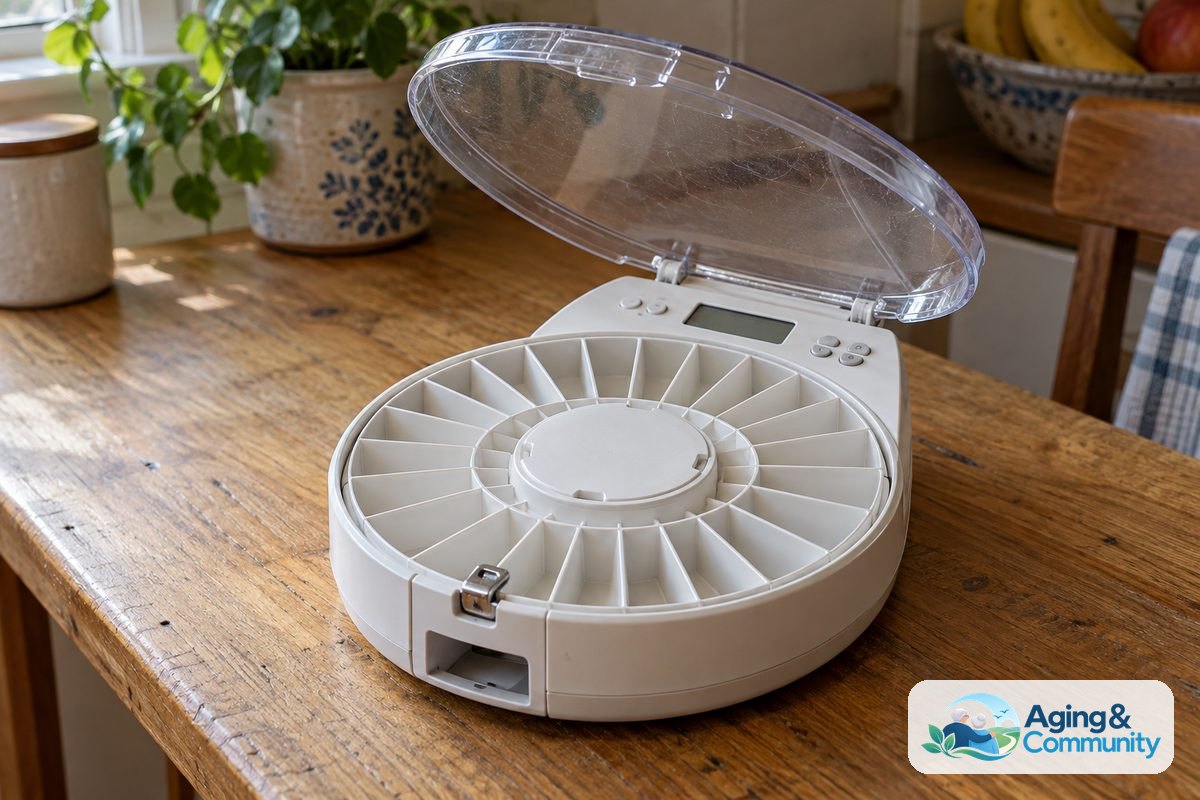
Original Medicare generally does not cover a pill dispenser. These tools are usually viewed as convenience items rather than medical necessities. If you are wondering whether Medicare covers a pill dispenser, the short answer is almost always no under standard rules.
Keeping track of daily medications is very important for older adults. Having the right tools can make a big difference in daily routines. While traditional coverage is rare, there are specific guidelines and alternative programs to explore.

What Medicare Covers and What It Doesn’t
Original Medicare Part B covers durable medical equipment when a Medicare-enrolled doctor or other provider prescribes it as medically necessary for use in the home. Durable medical equipment includes items like walkers, wheelchairs, and hospital beds. You can review official guidelines through the durable medical equipment coverage rules.
Original Medicare generally does not cover items it considers convenience or home modification. Examples of uncovered items include grab bars, stair lifts, bath safety rails, and walk-in tubs. Most medication boxes and automated pill boxes fall into this same convenience category.
For certain specialized equipment, Medicare covers only specific working parts. For example, with lift chairs, Medicare Part B may cover the seat lift mechanism as durable medical equipment when a doctor prescribes it and the person meets the medical criteria. It does not pay for the chair itself, including the upholstery, frame, and recliner functions, which Medicare considers furniture.
Original Medicare also does not cover hearing aids or exams for fitting them. In a similar way, simple daily organizers, alarms, and medication containers are excluded from standard Part B benefits.
Depending on the type of durable medical equipment approved by Medicare, some items are rented while others are bought outright. Because a pill box is rarely classified as durable equipment, Medicare does not establish rental or purchase options for it.
How to Get It Covered
If you believe an automated device is medically essential for your safety, there are steps you can take to seek coverage.
- Talk with your doctor or occupational therapist about your specific physical or cognitive needs.
- Ask your healthcare provider to write a formal prescription stating that the device is medically necessary for your care at home.
- Locate an enrolled medical supplier. You can check the directory to find medical equipment suppliers who participate in Medicare.
- Confirm that the chosen supplier agrees to accept assignment for the item.
- Submit the detailed claim and medical documentation through your supplier to Medicare or your health plan.
What You Might Pay
If Medicare does approve coverage for an item, your out-of-pocket costs follow standard rules. You must first meet your yearly Part B deductible. After meeting that deductible, you usually pay twenty percent of the Medicare-approved amount.
The supplier must be enrolled in Medicare for coverage to apply. Suppliers that accept assignment agree to the Medicare-approved amount. Using a non-enrolled supplier can mean Medicare pays nothing at all.
Understanding your overall share of costs is helpful when planning your budget. You can learn more about general expenses by reviewing Medicare costs online.
If Medicare Won’t Pay
If a claim is denied, you have the right to ask for a written explanation and file an appeal. Your Medicare Summary Notice explains how to start that appeal process.
Medicare Advantage plans must cover what Original Medicare covers and may add extra benefits. Rules, networks, and prior approval differ by plan, so you should check with your specific plan to see if it covers specialized equipment or health-related tools.
Medicaid programs may help cover adaptive daily living aids that Medicare excludes. Eligibility rules differ by state, so contacting your local office is a good step.
Veterans Affairs benefits often provide assistive devices and daily living aids for enrolled veterans. If you have VA health benefits, talk to your VA primary care team.
Your local Area Agency on Aging can also connect you to community resources and support programs. You can find your local agency through the Eldercare Locator.
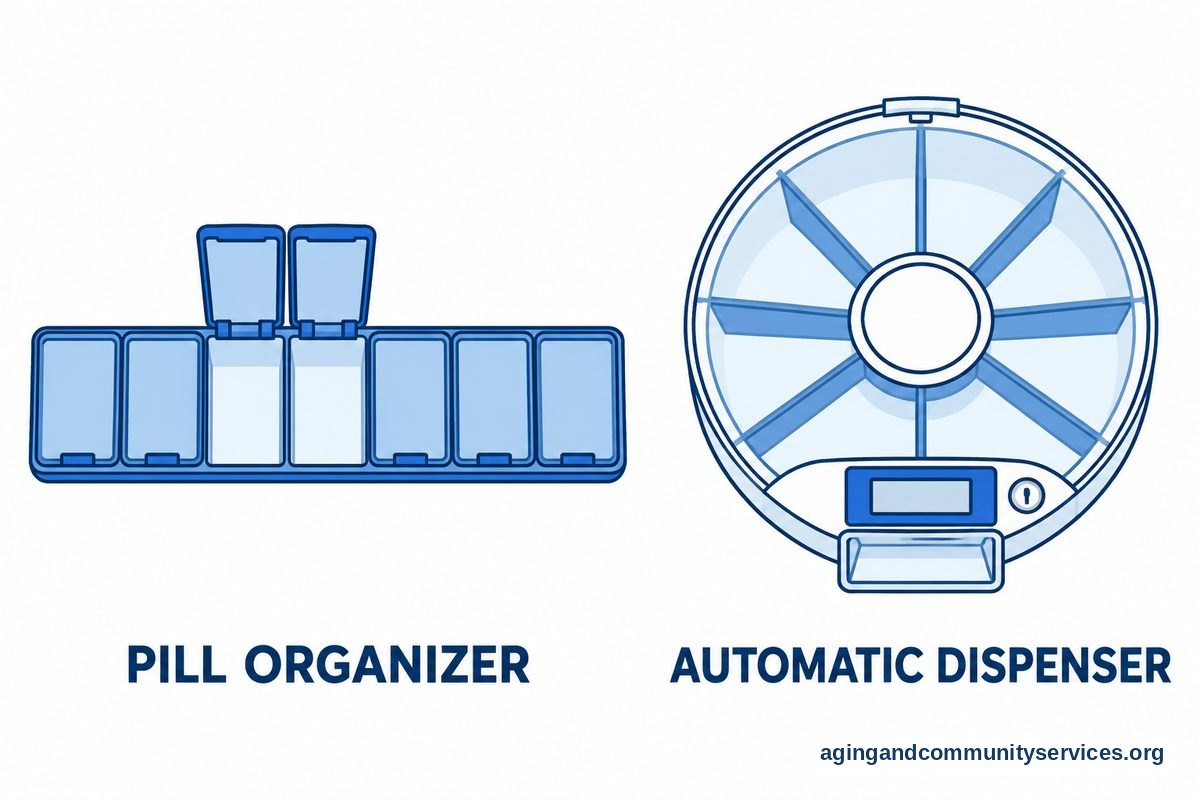
Many families also look into affordable retail options. You might explore simple pill organizers for seniors that sort daily doses into clear compartments. For extra support with sound or light alerts, look at automatic pill dispensers designed to reduce confusion.
There are also specialized pill dispensers for elderly family members with locking lids for extra safety. Newer technology, such as ai for seniors to manage prescriptions, can also provide digital reminders without high medical costs.
Frequently Asked Questions
Why does Medicare consider a pill box a convenience item?
Medicare views durable medical equipment as items that serve a direct medical purpose for an illness or injury. Containers, timers, and storage units are typically classified as self-care aids or personal convenience items.
Do Medicare Advantage plans offer help for medication management tools?
Medicare Advantage plans must cover what Original Medicare covers, but some plans include extra supplemental benefits for daily wellness. You must contact your individual plan to find out if it offers allowances for safety devices or organizers.
Can a doctor prescription make a medication dispenser covered?
A prescription is required for any durable medical equipment claim, but it does not assure that Medicare will approve the item. The item must still meet the strict definition of durable medical equipment set by Medicare regulations.
What should I do if Medicare denies my claim for an adaptive device?
You can review your Medicare Summary Notice to see the exact reason for the denial. The notice gives step-by-step instructions on how to file a formal appeal and submit additional supporting notes from your doctor.
Where can I find financial help if Medicare denies coverage?
Medicaid, Veterans Affairs benefits, and local Area Agencies on Aging can often help with items that Medicare does not cover. Community programs may offer grants or loan closets for helpful assistive devices.