

An elderly fall sensor is a device or system that notices a possible fall and sends an alert, either to a caregiver, monitoring center, or connected app. It can be worn on the body, placed in a room, built into a watch, or used near a bed or chair.
These sensors are not a substitute for care, check-ins, or medical advice. They are one practical tool that may help a family respond sooner when someone needs help.

What an Elderly Fall Sensor Does
A fall sensor is made to notice signs that a person may have fallen. Depending on the device, it may look for sudden motion, a change in body position, lack of movement, or a person on the floor.
When the sensor notices a possible fall, it can send an alert. That alert may go to a family member, a paid monitoring service, or a phone app. Some systems also let the person press a help button if they feel unsteady, weak, or unable to get up.
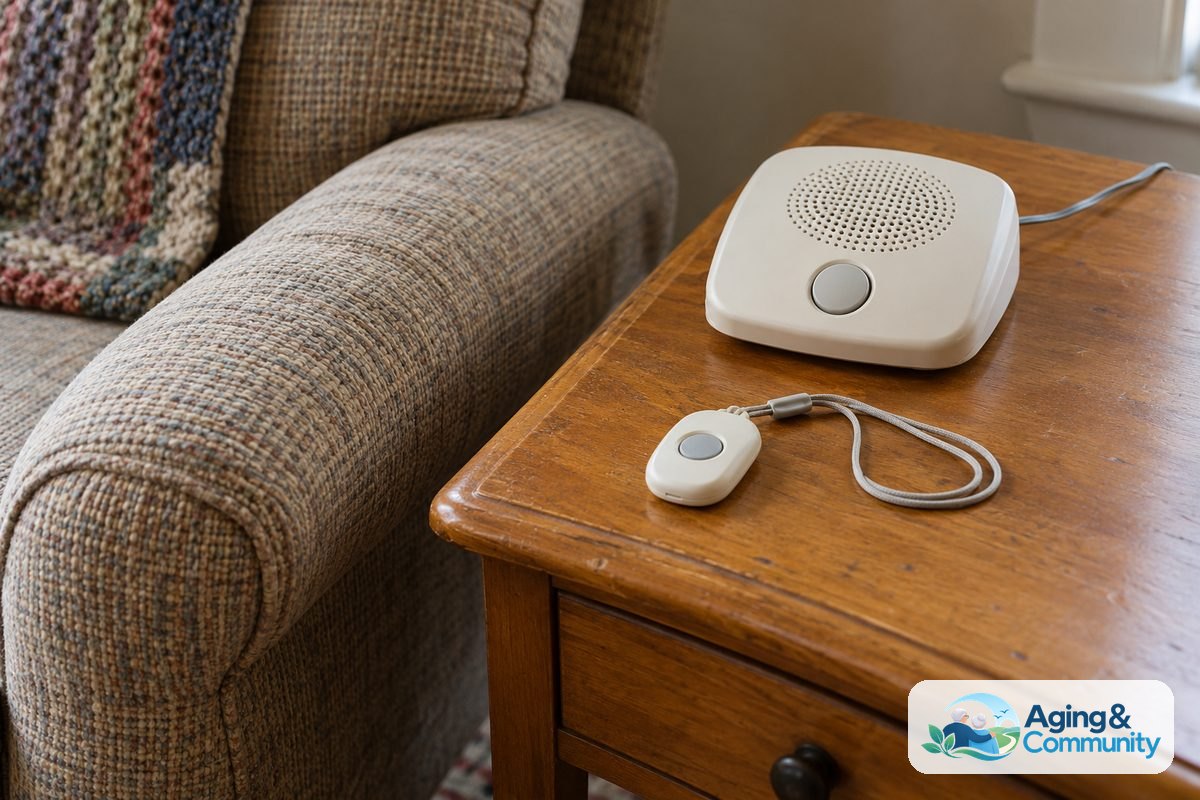
Fall sensors are often part of broader elderly fall alert devices. These may include wearable buttons, base stations, mobile units, and caregiver apps.
It helps to think of a fall sensor as a notice system, not a promise. It may miss some events, and it may send an alert when there was no fall. The right choice depends on the home, daily routine, comfort with devices, and how alerts will be handled.
Main Types of Fall Sensors
There are several common types of fall sensors. Each one fits a different need. Some people prefer a simple button, while others want a system that works without being worn.
| Type | How it works | May fit when |
|---|---|---|
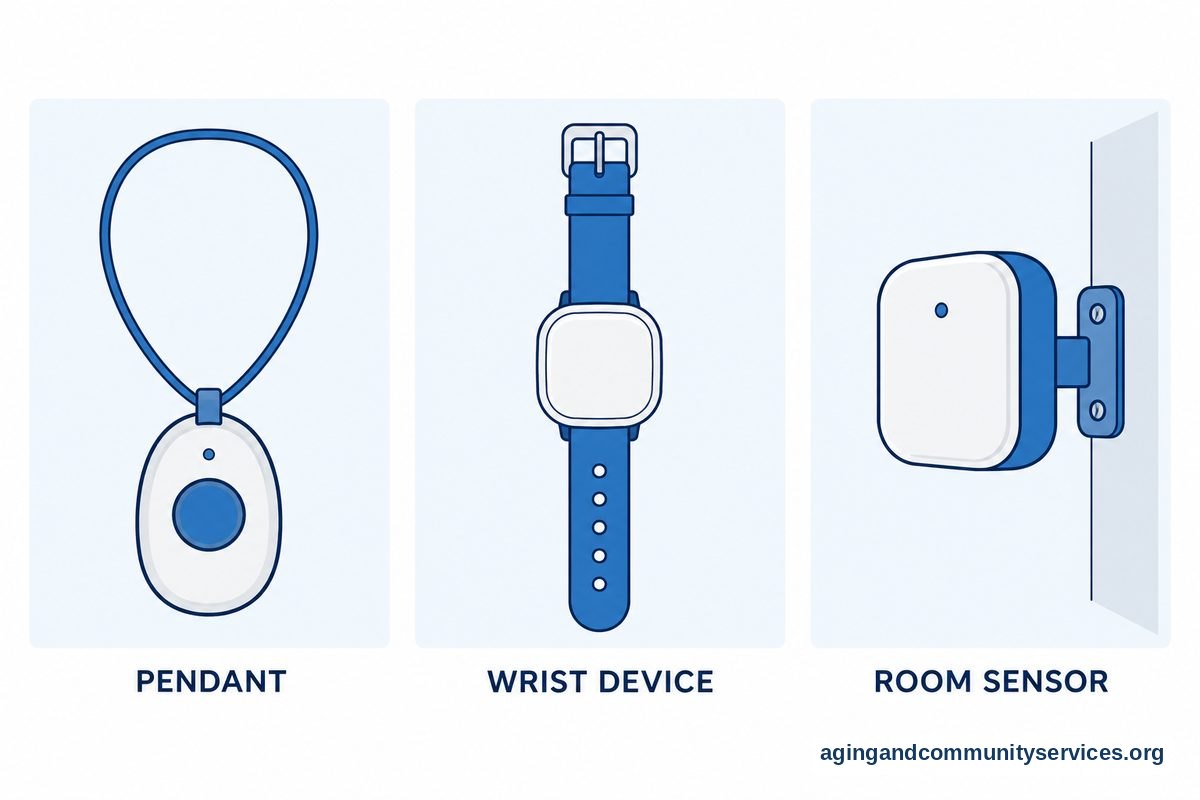
| Wearable pendant | Worn around the neck or clipped to clothing | The person is willing to wear a device most of the day |
| Watch or wrist device | Worn like a watch and may include alerts | The person already likes wearing a watch |
| Room sensor | Placed in a room to notice motion or a possible fall | The person may forget to wear a device |
| Bed or chair sensor | Notices movement from a bed or chair | Nighttime routines need extra attention |
| Mobile alert device | Works outside the home through a mobile connection | The person goes out alone or walks outdoors |
Wearable options are common because they stay close to the person. A pendant or wrist device may be easier to understand than a room-based system. The main concern is whether it will be worn every day.
Some families compare fall detection watches because they look familiar and may include other useful features. Others prefer a separate alert button because it can be simpler.
Room-based sensors can be helpful when wearing a device is not realistic. These may use motion sensing, radar-style sensing, or camera-free monitoring, depending on the product. If privacy is a concern, ask exactly what the system records, stores, and shares.
Some newer systems use AI ambient fall detection sensors to look for patterns in a room. These can be useful in certain homes, but families should still ask about false alerts, setup, privacy, and who receives the notice.
Features to Compare Before Choosing
The best fit is usually the device the person will actually use. A feature list matters, but comfort and daily habits matter more. A sensor that sits in a drawer will not help much.
Start with the living situation. Someone who lives alone may need a different alert path than someone who lives with family. A person who spends time outdoors may need a mobile option, not only a home base station.
- Alert path: Check whether alerts go to family, a monitoring center, or both.
- Wearability: Notice whether the device is light, simple, and comfortable.
- Battery routine: Ask how often it needs charging or battery changes.
- Home coverage: Make sure it works in the rooms where falls are most likely to be noticed.
- Water resistance: Ask if it can be worn in the bathroom or near water.
- Two-way talk: Some systems let the person speak through the device or base station.
Ask how the device handles a possible fall when the person cannot press a button. Also ask what happens if there is poor signal, a dead battery, or a power outage. Simple answers are often a good sign.
For many families, a fall sensor is one part of a larger alert setup. Comparing elderly alert systems can help you see how devices, monitoring, and caregiver contacts fit together.

Where Fall Sensors Work Best in the Home
Falls can happen in many places, so placement matters. A sensor should match the person’s routine, not just the floor plan. Walk through a normal day and note where extra support may be useful.
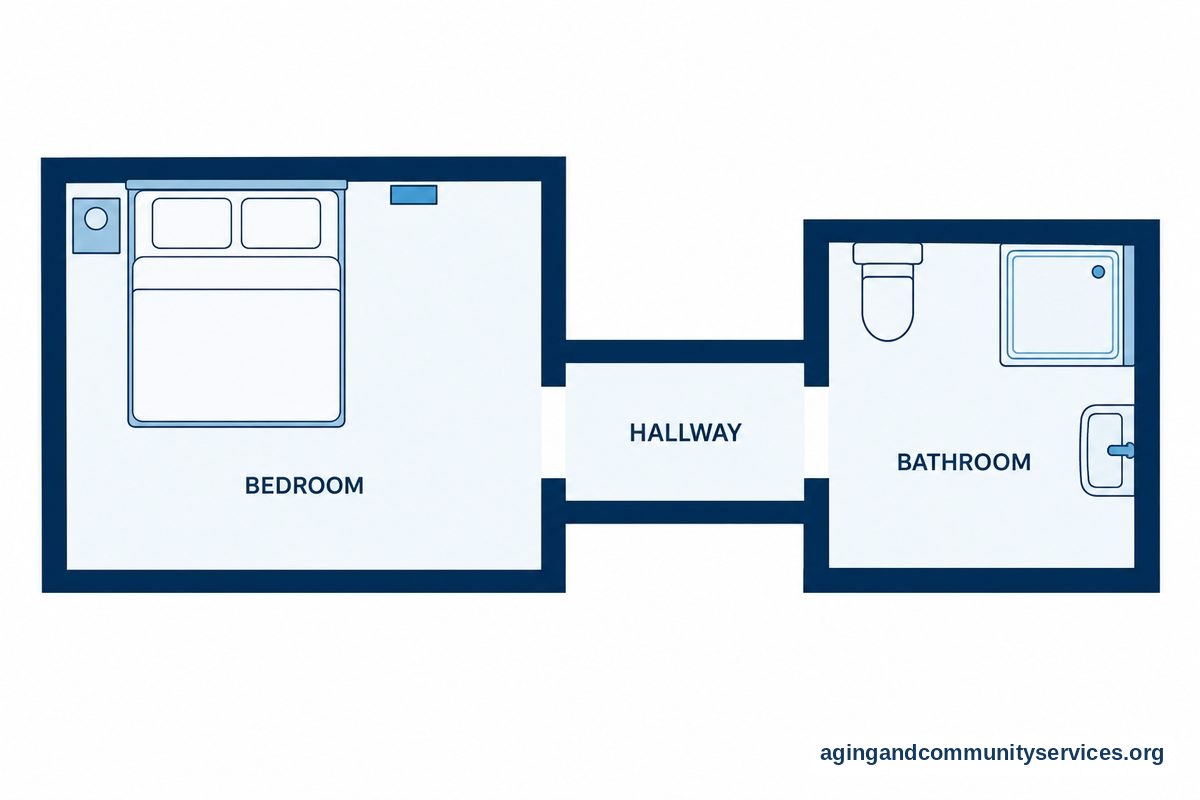
Bathrooms, bedrooms, hallways, and stairs often deserve careful attention. If a wearable device is used, ask whether it can be worn during bathing or while getting dressed. If a room sensor is used, make sure it covers the right part of the room.
Nighttime needs can be different from daytime needs. Some people get up often during the night, move slowly, or feel less steady in low light. In that case, lighting, clear paths, and a sensor plan may work together.
A bed sensor alarm may be considered when a family wants to know when someone gets out of bed. This kind of device should be chosen with care, especially if memory changes, sleep habits, or wandering are part of the concern.
The home itself matters too. The National Institute on Aging says simple home steps, such as removing clutter and improving lighting, can lower the risk of falls. Their page on falls and falls prevention gives plain guidance that can be discussed with a clinician or therapist.
Limits and Privacy Questions to Ask
No fall sensor is perfect. A device may not notice every fall, and it may alert when the person only sat down quickly, dropped the device, or moved in an unusual way. That does not mean the device has no value, but it does mean expectations should be realistic.
Ask clear questions before choosing a system. If the answers feel hard to understand, write them down and compare them later. A trusted family member, friend, or care manager may help review the details.
- What kind of falls can the sensor notice?
- What kinds of events may cause false alerts?
- Who gets the alert first?
- Can the alert contacts be changed easily?
- Does the device record sound, images, or movement data?
- How long is data stored, and who can see it?
Privacy is especially important for room sensors. Some devices are camera-free, while others may use images or other data. Ask for a plain explanation of what is collected and how it is protected.
It is also wise to ask how alerts are canceled. A simple cancel option can reduce worry if there is a false alert. At the same time, the cancel step should not be so easy that a real alert is often stopped by mistake.
What You Can Do Next
Start with a calm review of the person’s daily routine. Notice when they are alone, where they walk, how often they leave home, and whether they are willing to wear a device. This helps narrow the choices before you compare products.
- List the rooms and activities where a sensor would be most useful.
- Decide who should receive alerts and in what order.
- Ask whether the person prefers a pendant, watch, room sensor, or bed sensor.
- Check charging, battery, and signal needs.
- Review privacy settings and data use in plain language.
- Plan a simple response routine for family or caregivers.
If there have been recent falls, balance changes, dizziness, medication changes, or trouble getting up, speak with a doctor, physical therapist, or occupational therapist. They can help look at health factors, movement, footwear, home setup, and daily tasks.
You can also ask about a home safety review. The National Council on Aging shares practical fall safety information through its falls prevention facts. Local aging services may also help families find home and community support.
Once you choose a device, practice using it. Have the person press the help button if the system allows a test mode, review what the alert sounds like, and make sure everyone knows what to do. Keep the plan simple enough to follow on an ordinary day.
Frequently Asked Questions
Do elderly fall sensors really work?
They can be helpful, but they are not perfect. A sensor may notice some possible falls and send an alert, but it may miss certain events or send a false alert. The value depends on the device type, setup, signal, and whether the person uses it as intended.
Is a fall sensor better than a medical alert button?
They do different things. A fall sensor may send an alert when it notices a possible fall, while a button depends on the person pressing it. Many systems include both because a person may want to call for help even when there was no fall.
What is the easiest fall sensor for an elderly parent?
The easiest choice is often the one that fits the person’s habits. If they already wear a watch, a wrist device may feel natural. If they dislike wearing devices, a room sensor may be easier, though it may only cover certain areas.
Can a fall sensor be used without a smartphone?
Some systems can work without the user having a smartphone. They may use a home base station, a caregiver app on someone else’s phone, or a monitoring center. Always ask what equipment is needed and who must manage it.
Where should a fall sensor be placed?
Placement depends on the type. Wearable sensors should be worn as directed, often on the wrist, neck, or belt area. Room sensors should cover the areas where the person spends time, such as the bedroom, bathroom area, hallway, or living room.
What should I ask before buying a fall sensor?
Ask who receives alerts, how false alerts are handled, how the battery works, whether the device works outside the home, and what data is collected. Also ask how easy it is to test the system and update emergency contacts.