

Food safety for seniors starts with a few steady habits: keep foods at safe temperatures, wash hands and surfaces, separate raw foods, and check dates and leftovers. These steps can make daily meals easier to manage and can lower the risk of foodborne illness when followed as recommended by public health agencies.
As people age, small changes in energy, grip strength, vision, smell, or memory can make kitchen routines harder. A clear system helps you or a family helper handle food with less guesswork and more confidence.
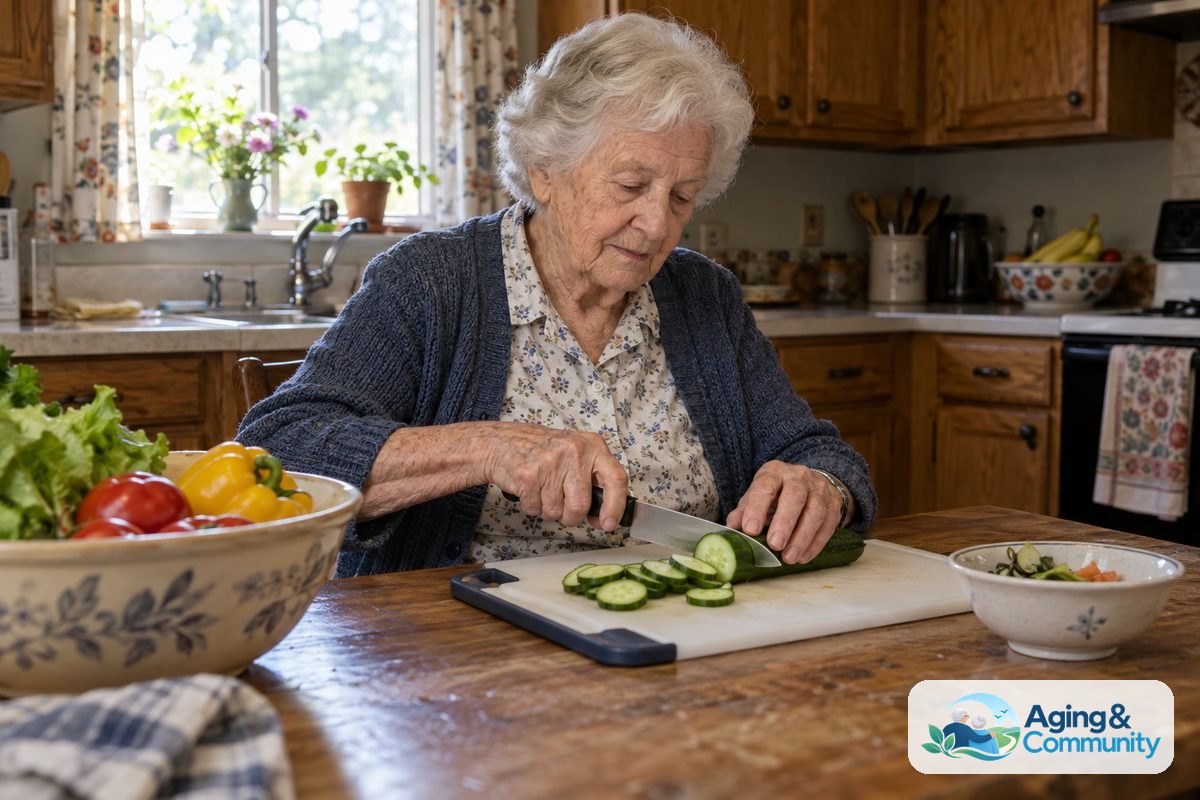
Why Food Safety Matters More With Age
Food safety matters at every age, but it can take extra planning later in life. Some people have less sense of smell or taste, so spoiled food may be harder to notice. Others may take medicines or have health concerns that make it wise to be more careful with meals.
The goal is not to make cooking stressful. The goal is to set up habits that are easy to repeat. A clean counter, a working refrigerator, and simple labels can do a lot.
Family members can help by making the kitchen easier to use without taking over. Ask what would be helpful, then make one change at a time. Respect and routine matter as much as supplies.
Keep Hands, Counters, and Tools Clean
Clean hands and clean surfaces are the base of safe food handling. Wash hands with soap and water before cooking, after handling raw meat, after using the bathroom, and after touching pets, trash, or dirty dishes.
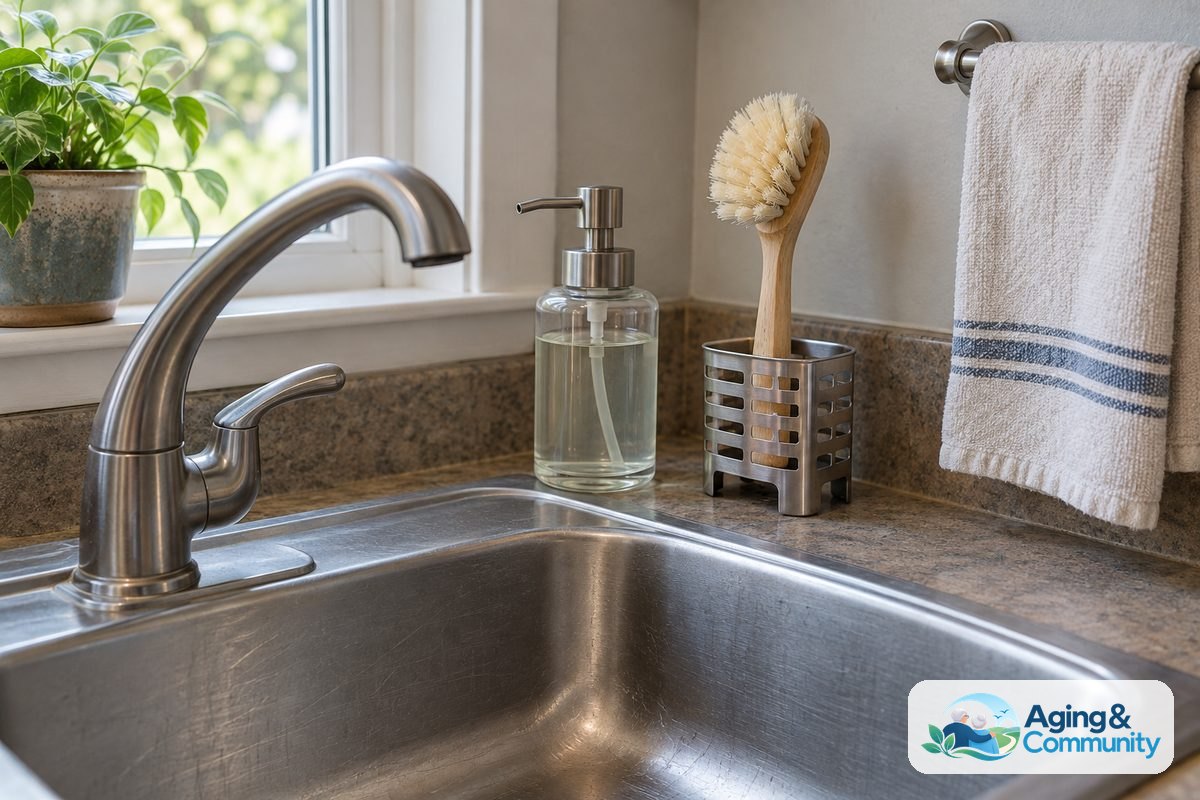
Keep a fresh hand towel near the sink, or use paper towels if laundry is hard to keep up with. Replace sponges often, since they stay damp. A dish brush that dries upright can be easier to keep clean.
- Wash cutting boards, knives, and counters after each use.
- Use hot, soapy water for dishes and utensils.
- Clean refrigerator handles, faucet handles, and microwave buttons often.
- Wipe spills right away, especially raw meat juice, eggs, or dairy.
- Keep pets away from food prep areas during cooking.
If bending, reaching, or standing is difficult, place cleaning supplies where they are easy to reach. For wider home setup ideas, a guide to kitchen safety for seniors can help you think through storage, lighting, and common trouble spots.
Store Food at the Right Temperature
Cold foods need to stay cold, and hot foods need to stay hot until they are served. Use a refrigerator thermometer if the built in display is hard to read or not available. Place it where it can be checked without moving heavy items.
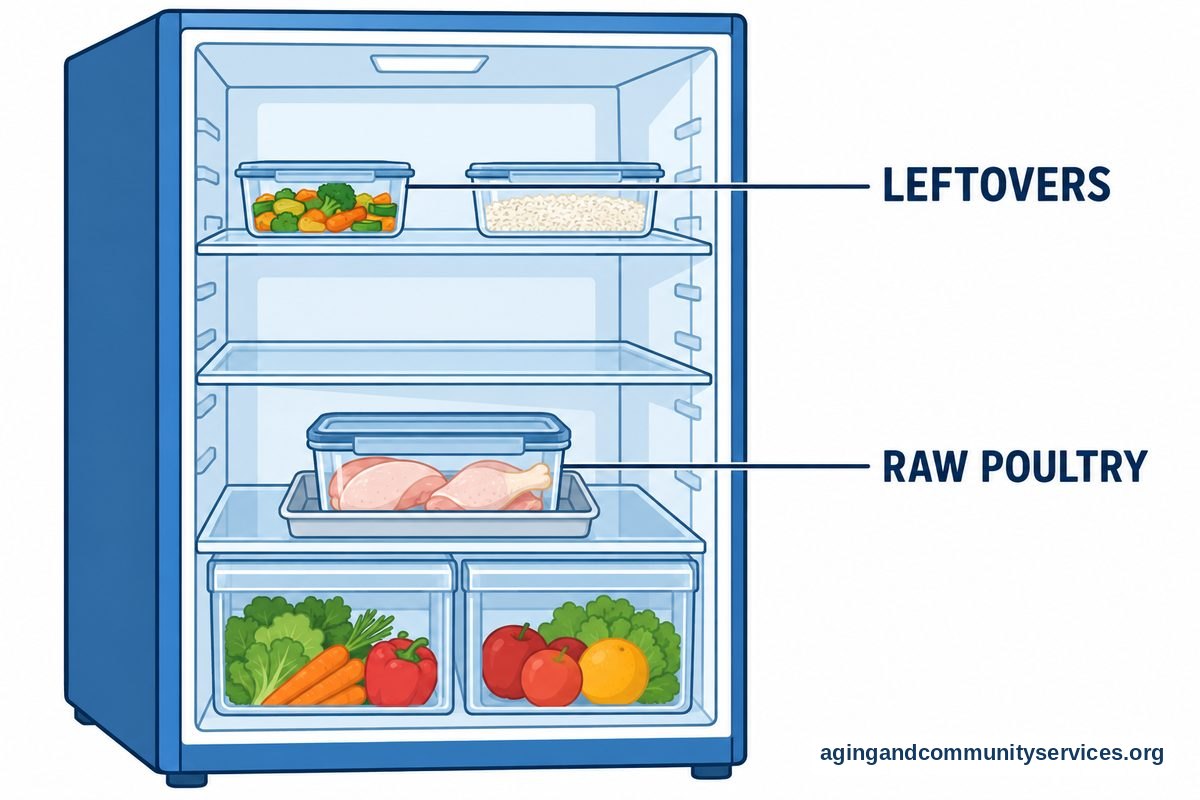
Put groceries away soon after shopping. If the trip home takes longer, bring an insulated bag for cold items. At home, store meat, poultry, and seafood on the lowest shelf in a pan or sealed container so drips do not touch other foods.
Leftovers are easier to manage when they are packed in small, shallow containers. They cool faster and are easier to lift. Label the container with the food name and the day it was cooked.
| Food Task | Simple Habit |
|---|---|
| Putting away groceries | Refrigerate cold foods soon and keep raw meat below ready to eat foods. |
| Saving leftovers | Use shallow containers and label the day made. |
| Checking the fridge | Look for leaks, odors, and foods past their safe use time. |
| Freezing food | Wrap well, label clearly, and use a first in, first out system. |
A first in, first out system means newer items go behind older ones. This reduces waste and makes it easier to see what needs to be used soon.
Cook Foods Thoroughly and Reheat With Care
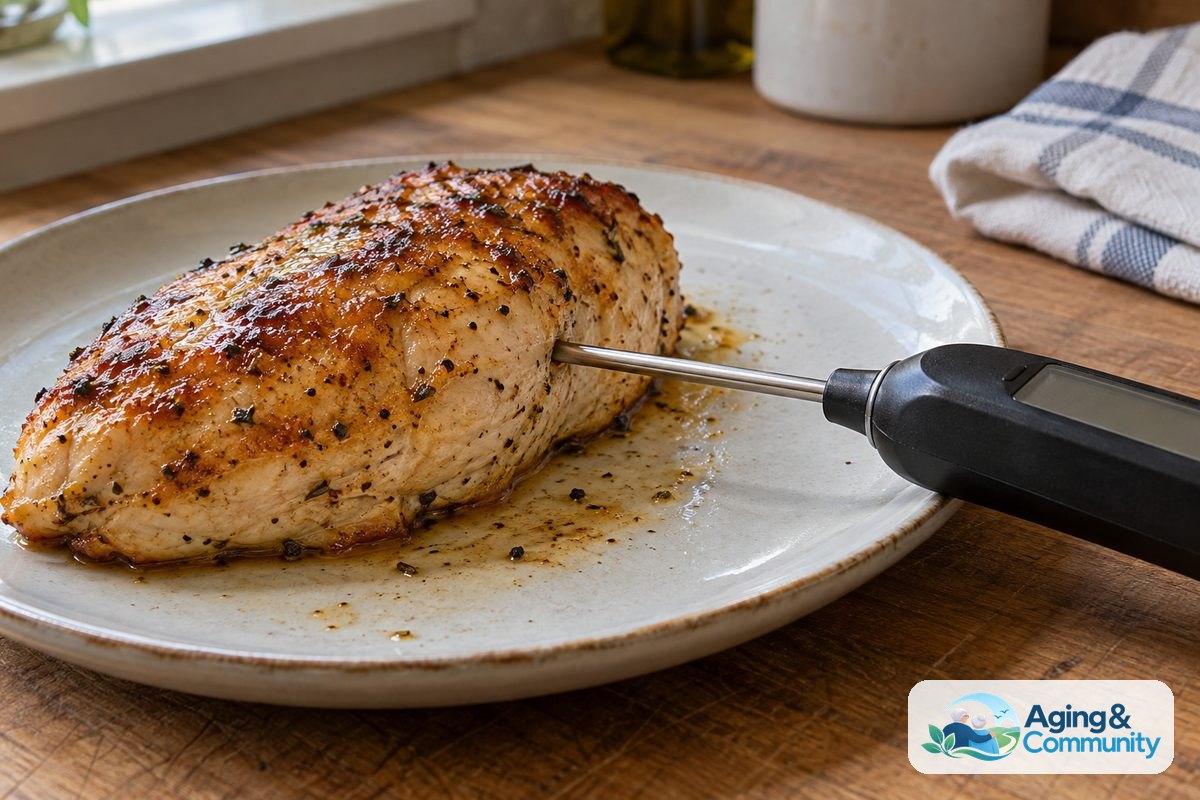
Color and texture are not always enough to tell whether food is cooked. A food thermometer is a helpful tool, especially for meat, poultry, casseroles, and reheated leftovers. Choose one with large numbers if vision is a concern.
Microwaves can heat unevenly. Stir food halfway through heating when possible, cover it loosely, and let it stand for a short time after heating. This helps heat spread through the food.
- Use a clean plate for cooked food, not the plate that held raw food.
- Keep raw meat, poultry, seafood, and eggs away from ready to eat foods.
- Reheat leftovers until steaming hot throughout.
- Throw away food if you are unsure how long it has been sitting out.
- Do not taste food to decide whether it is safe.
If gripping pots or opening jars is hard, consider small tools that reduce strain. A sturdy opener can help with sealed foods, and a guide to jar openers for elderly readers may be useful when choosing one.
Watch Higher Risk Foods and Food Labels
Some foods need extra care because they spoil more easily or may carry more germs when not handled well. This includes raw or undercooked eggs, unpasteurized milk or juice, raw sprouts, deli meats, soft cheeses made with unpasteurized milk, and undercooked meat, poultry, or seafood.
If a doctor has given special food advice because of a medical condition, follow that guidance. If you are not sure whether a food is a good choice, ask a doctor, registered dietitian, or pharmacist, especially if medicines affect appetite, digestion, or fluid needs.
Food labels can be confusing. A sell by date is mainly for the store. A use by date is more important for home use. When in doubt, use the date label along with storage time, smell, appearance, and whether the package has been kept cold.
- Do not use cans that are bulging, leaking, or badly dented.
- Do not buy jars with broken seals or loose lids.
- Keep dry goods in sealed containers to protect them from pests.
- Check meal delivery items as soon as they arrive.
- Ask for help reading small print if labels are hard to see.
For people who use nutrition drinks or easy meal options, safe storage still matters. The page on meal replacement drinks can help families think through practical choices, while the product label should guide storage after opening.
Make the Kitchen Easier and Safer to Use
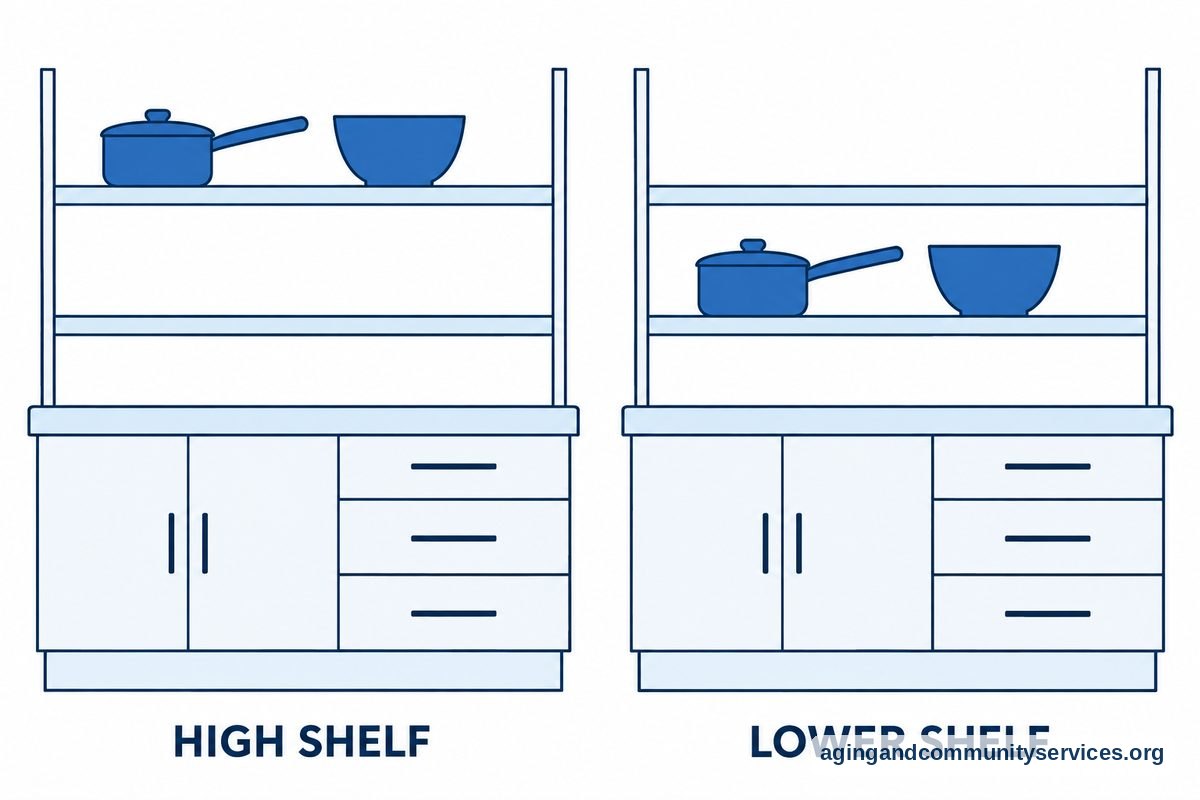
A safer kitchen is not only about germs. It is also about comfort, reach, balance, and clear routines. Keep everyday items between shoulder and waist height so there is less bending and climbing.
Good lighting helps with labels, dates, and spills. Large print labels on leftovers can also help. Some families use a marker and tape, while others use reusable labels.
If standing for long periods is tiring, prepare food while seated at a stable table. Keep a trash bowl nearby for scraps so there is less walking back and forth. Use lightweight pans when possible.
Adaptive tools may make meals easier for people with arthritis, tremor, weakness, or limited hand motion. A guide to adaptive eating utensils can help compare options for grip and control. If there are concerns about swallowing, hand strength, or daily tasks, ask a doctor, occupational therapist, or physical therapist for personal guidance.
Falls can happen in kitchens when floors are wet, cords cross walkways, or items are stored too high. The National Institute on Aging shares practical advice on falls and falls prevention, including home changes that may lower risk.
What You Can Do Next
You do not need to change everything at once. Pick one small task today, then build from there. A calm, steady system is more useful than a perfect kitchen that is hard to maintain.
- Check the refrigerator temperature and clear out old leftovers.
- Place raw meat, poultry, and seafood on the lowest shelf in a sealed container.
- Put a marker and labels near the refrigerator for leftovers.
- Set up one cutting board for raw meat and one for ready to eat foods.
- Move heavy pots, mixing bowls, and daily dishes to easy reach.
- Choose one tool that makes cooking easier, such as a large print thermometer or easier grip opener.
If a loved one wants to stay at home but needs help with meals, start with a respectful conversation. Ask what feels difficult and what they want to keep doing on their own. The National Institute on Aging has helpful information about aging in place that can support planning around meals, home setup, and daily help.
If food shopping, cooking, or cleaning has become too much, local community programs may offer support. The Eldercare Locator can help connect families with services in their area.
Frequently Asked Questions
How Long Can Leftovers Stay in the Refrigerator?
Many leftovers are best used within a few days, but the safe time depends on the food and how it was stored. Labeling the day cooked helps avoid guessing. If you are not sure how long something has been in the refrigerator, it is safer to throw it away.
Is It Safe to Smell Food to Check If It Is Good?
Smell can help you notice obvious spoilage, but it should not be the only test. Some unsafe food may not smell bad. Use date labels, storage time, temperature, and appearance together.
What Kitchen Tools Help With Food Safety?
A food thermometer, refrigerator thermometer, easy to read labels, separate cutting boards, and shallow storage containers are useful basics. For people with limited grip, easier openers and lightweight cookware can make safe meal prep more manageable.
How Can Family Members Help Without Taking Over?
Ask first, then offer specific help. You might label leftovers, move heavy items to lower shelves, check refrigerator temperature, or set up a simple grocery routine. Try to support independence whenever possible.
When Should Someone Ask a Professional for Help?
Talk with a doctor if appetite, weight, swallowing, confusion, or stomach symptoms are changing. An occupational therapist can suggest kitchen tools and setup ideas. A physical therapist can help if balance, standing, or walking in the kitchen is becoming difficult.