

Health and safety using stairs starts with making each step easy to see, easy to reach, and easy to use at a steady pace. For older adults and the family members who help them, small changes at home can make stair use feel more secure and less tiring.
Stairs are part of daily life in many homes. They may lead to a bedroom, laundry area, porch, garage, or basement. A safer stair area is not about rushing into major changes. It is about looking at the space with fresh eyes and removing the small problems that make stairs harder than they need to be.
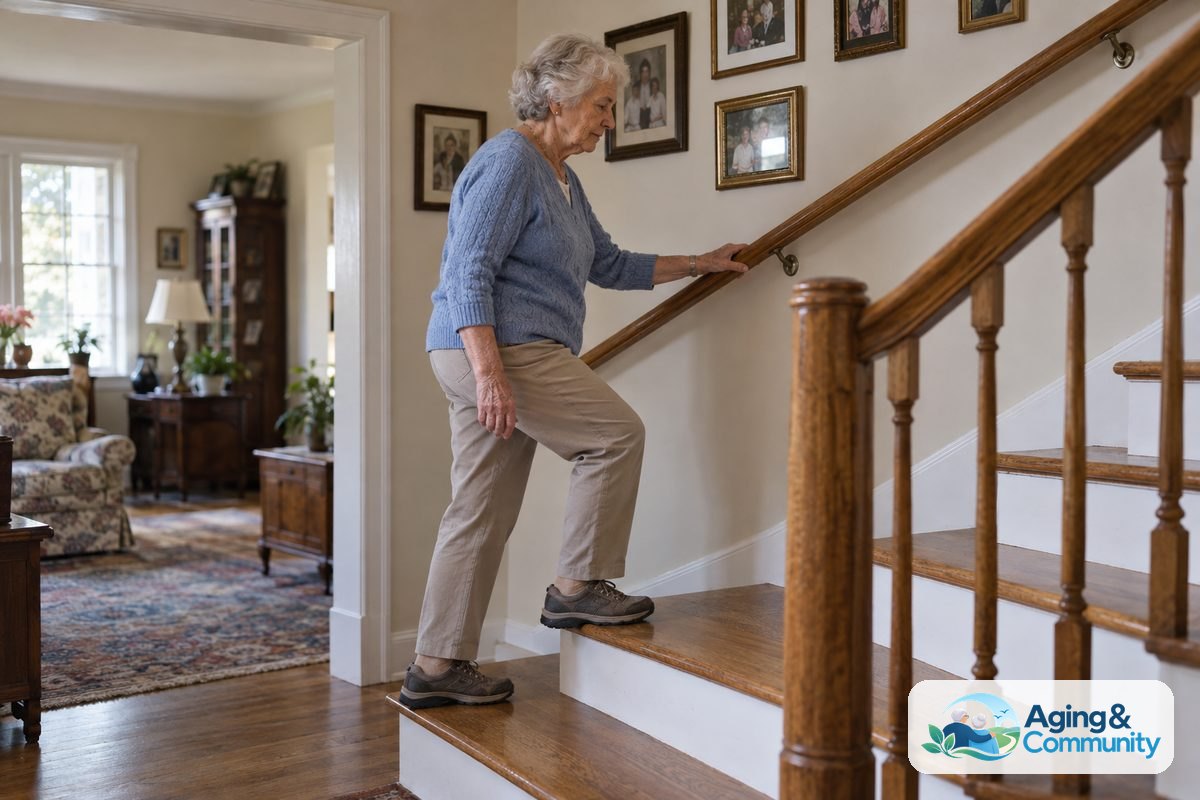
Start With A Simple Stair Safety Check
Begin by walking to the stairs during the day, then again in the evening. Notice what your feet, eyes, and hands need to do. If a stairway feels dim, crowded, loose, slippery, or hard to judge, it is worth changing.
A short checklist can help you see the stair area clearly. You may want to use this list with a family member, friend, landlord, or home repair professional.
- Look for loose carpet, curled rugs, uneven boards, or broken tile.
- Check whether every step is clear of shoes, laundry, cords, mail, and pet items.
- Make sure the top and bottom landings have enough open space to turn safely.
- Test whether handrails feel firm and easy to grip.
- Notice whether shadows make the edge of each step hard to see.
- Check whether outdoor steps become slick after rain, snow, or leaves.
If you are not sure where to start, the National Institute on Aging says home changes and careful habits can help lower the risk of falls. Their guide to falls prevention offers a helpful overview for families.
For a more focused look at stair areas, a guide to stair safety can help you compare common home changes and daily habits.
Make Stairs Easier To See
Good lighting is one of the simplest stair safety steps. The goal is to see the first step, the last step, the edge of each step, and anything sitting on the stairs. A stairway that looks fine at noon may be hard to read at dusk or during the night.
Place light switches where they are easy to reach at both the top and bottom of the stairs. If wiring changes are not simple, a qualified electrician can suggest safe options. Battery lights, plug-in lights, or motion lights may help in some homes, but they should be placed where they do not create glare or block movement.
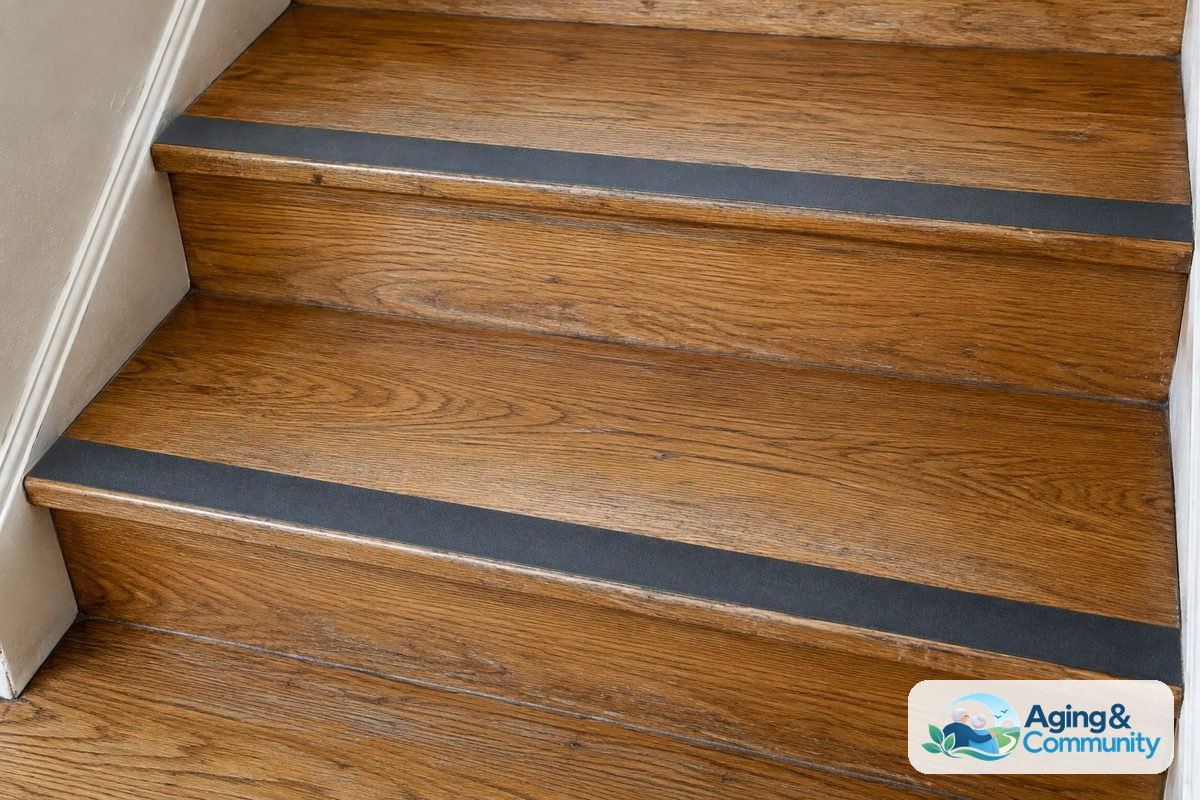
Contrast also matters. If the stair tread and the floor are the same color, it may be harder to judge where one step ends. Some households add a clear strip of contrasting color along the front edge of each step. The strip should lie flat and stay firmly attached.
Keep windows, curtains, and bulbs in mind too. Bright sunlight through a window can create glare. A weak bulb can leave the middle of the stairway in shadow. Aim for even light from top to bottom.
Keep Steps Clear, Dry, And Steady
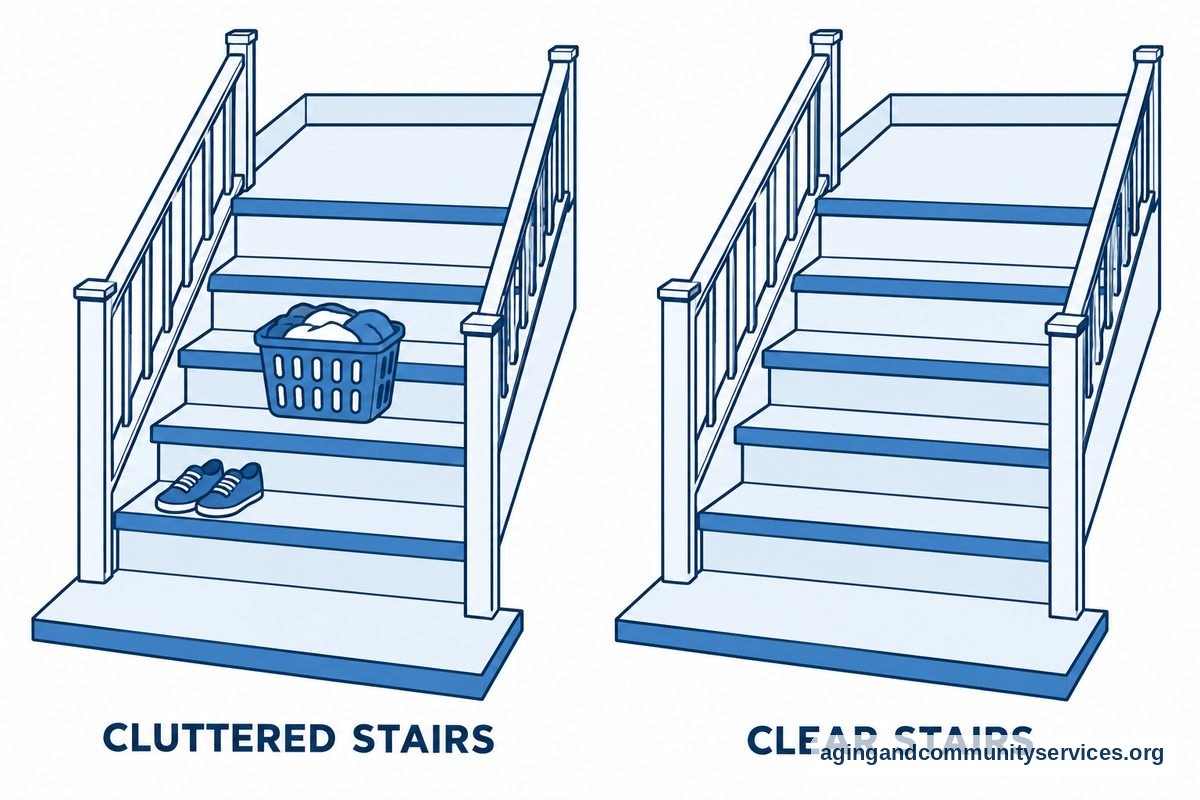
Stairs should not be used as storage. Even one small item can change how a person places a foot. Make it a household habit to keep steps clear every day.
A basket near the stairs may seem useful, but it can also become a place where items pile up. If the family uses a basket, place it away from the walking path and carry it only when it is light enough to manage while still keeping attention on the stairs.
Indoor stairs should have surfaces that feel even and secure. Loose carpet, worn runners, raised nails, or smooth polished steps can make footing less steady. A repair person can help fix loose materials, and an occupational therapist may suggest changes that fit the person and the home.
Outdoor steps need regular care. Sweep away leaves, dirt, and small stones. In cold weather, use a plan for snow or ice that does not depend on someone taking a risk to clear the steps. If outdoor stairs are used often, strong lighting and a firm rail are especially important.
| Stair Area | What To Check | Helpful Change |
|---|---|---|
| Top landing | Clutter, poor light, loose rugs | Clear the floor and improve lighting |
| Steps | Slippery or uneven surface | Repair loose areas and add contrast if useful |
| Handrails | Wobble, gaps, hard grip | Secure rails and consider rails on both sides |
| Bottom landing | Low light or blocked space | Keep space open and add a reachable switch |
| Outdoor stairs | Water, leaves, snow, poor rail support | Use routine upkeep and firm weather-safe rails |
Use Handrails And Support Wisely
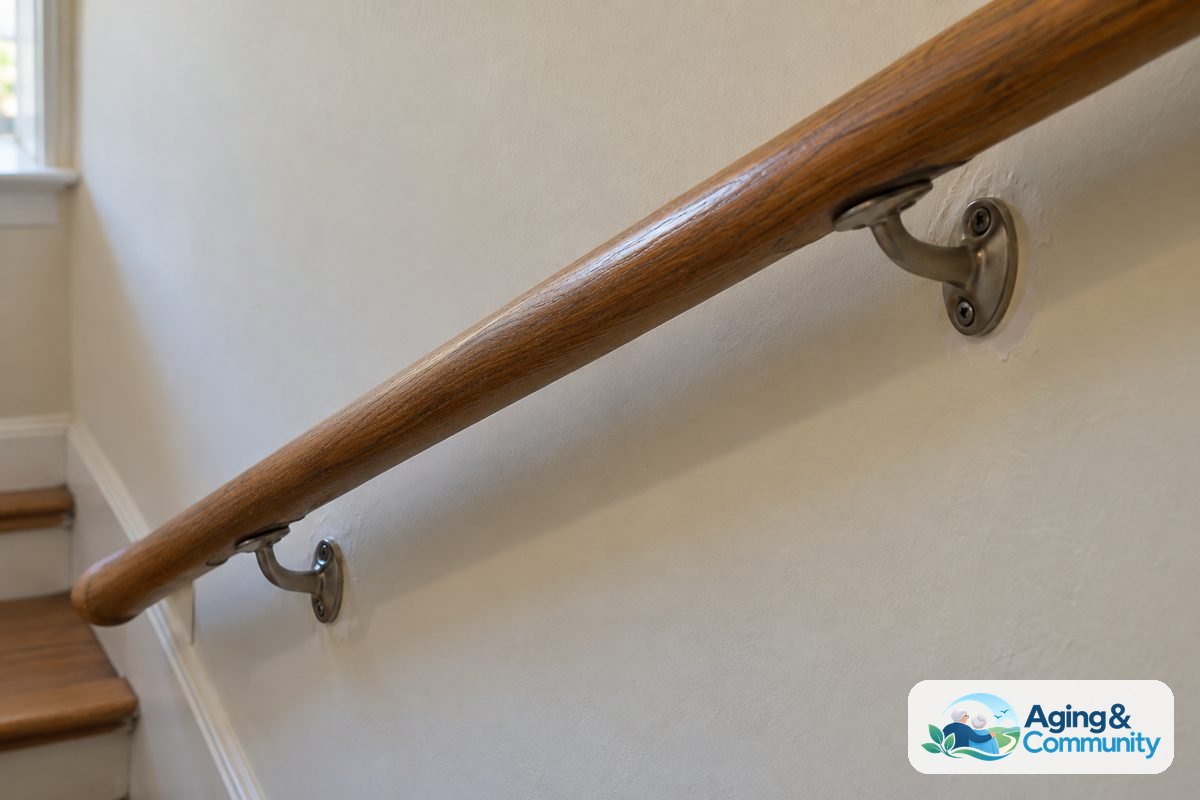
A handrail should support a steady, balanced climb. It should not wobble, twist, or stop too early. Many homes have a rail on only one side, but some people feel safer when there is a firm rail on both sides.
The shape of the rail matters. A rail that is easy to wrap fingers around can be easier to use than a wide flat board. The rail should continue far enough to help with the first and last step, because those are the spots where people often change direction.
If a person has trouble with balance, strength, pain, vision, or fatigue, it can help to speak with a doctor, physical therapist, or occupational therapist. They can look at the person’s needs and suggest safe ways to move at home. They may also advise whether more support is needed on stairs.
Some homes need more than a handrail. A practical guide to stair assistance can help families understand common support options. For some households, stair assist devices may be part of a larger plan after a professional review.
Build Safer Stair Habits
Home changes help, but daily habits matter too. A steady routine can make stair use calmer and more predictable. The aim is to move with attention, not hurry.
Try to keep one hand free when using stairs. Avoid carrying large baskets, heavy boxes, or items that block the view of your feet. If something needs to go up or down, split it into smaller trips or ask for help.
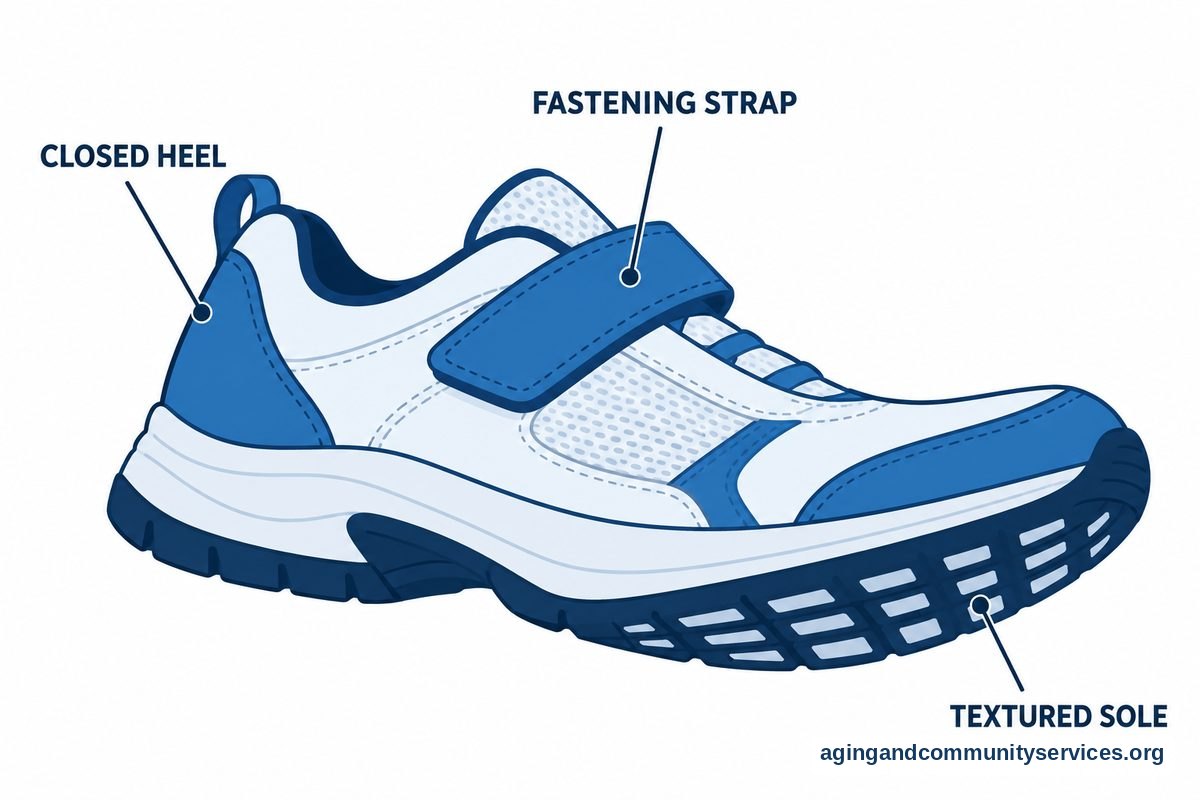
Footwear can make a difference in how stairs feel. Shoes or slippers should fit well and have soles that do not slide easily. Long robes, loose pants, or trailing blankets can get in the way, so clothing should allow clear steps.
Pets can be a loving part of the home, but they can also move quickly near feet. If a pet tends to run on the stairs, consider using a gate, training routine, or another plan during stair use. The goal is not to blame the pet. It is to reduce surprises.
If someone feels rushed, tired, dizzy, short of breath, or unsure, it is reasonable to pause before using the stairs. If these feelings are new, changing, or getting in the way of daily life, speak with a doctor. A physical therapist or occupational therapist can also help with movement and home setup questions.
Plan For When Stairs Become Too Hard
Sometimes safer habits and small home changes are enough. Other times, stairs still feel too hard for daily use. That does not mean someone has failed. It means the home may need a new plan.
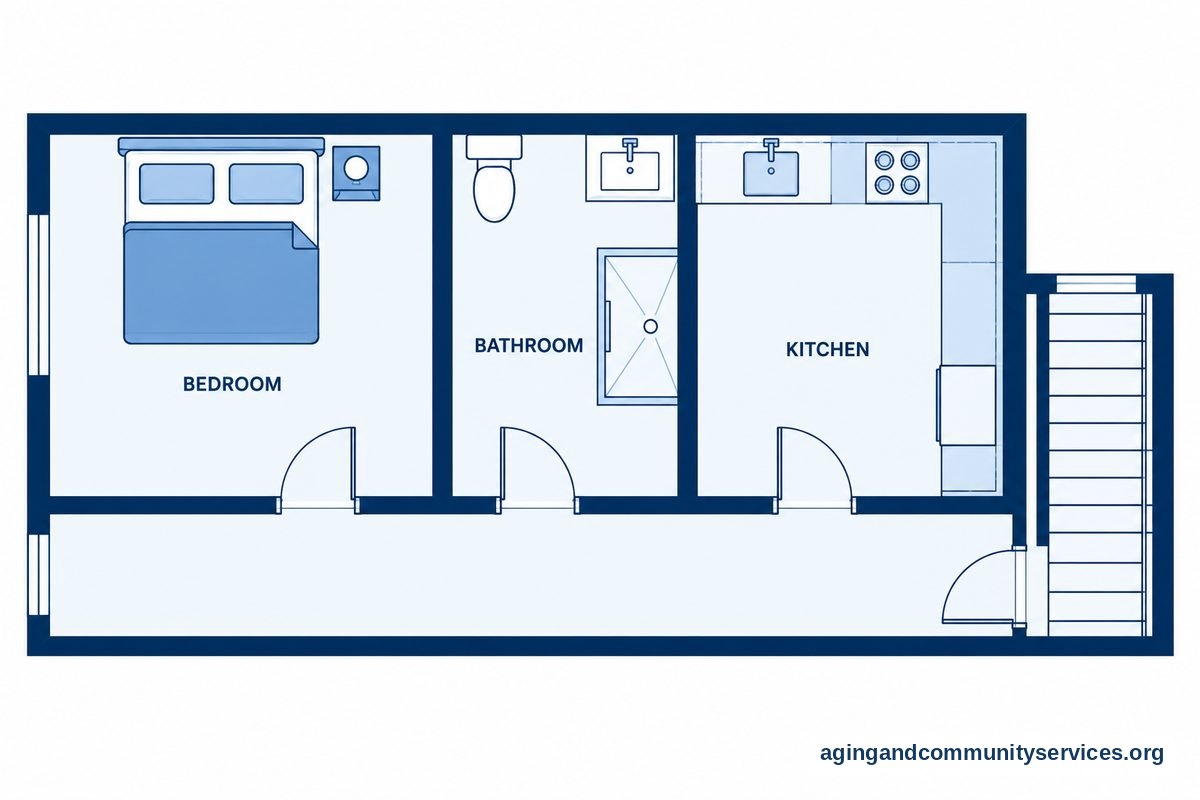
Start by thinking about the main reason stairs are needed. If the bedroom, bathroom, laundry, or main entrance requires stairs, there may be ways to rearrange daily routines. Moving frequently used items to one level can reduce extra trips.
Some families set up a main-floor sleeping space for short periods or longer use. Others move laundry supplies, create a place for mail and shoes near the entrance, or arrange grocery storage to limit stair trips. These changes should respect privacy, comfort, and the person’s wishes.
Home changes can range from simple repairs to larger updates. The National Institute on Aging has information about aging in place that may help families think through home layout, support, and planning. If the stairs are a major barrier, an occupational therapist may be able to assess the home and suggest practical options.
In some homes, a stair lift may be considered after careful review of the staircase, the person’s needs, and safe use instructions. A resource on stair lifts can help families learn common terms before speaking with a professional.
What You Can Do Next
You do not have to fix everything at once. Start with the changes that are simple, low effort, and most likely to make the stair area easier to use. Then decide whether you need professional help for repairs, rails, lighting, or a home safety review.
- Clear all items from the stairs and landings today.
- Check stair lighting in the daytime and at night.
- Test handrails for movement and plan repairs if they are loose.
- Remove or secure rugs near the top and bottom of the stairs.
- Place often-used items on the main level when possible.
- Ask a doctor, physical therapist, or occupational therapist about stair concerns that involve balance, strength, pain, vision, or fatigue.
If your family needs help finding local services, the Eldercare Locator is a public resource for connecting with aging services. You can also review a broader guide to fall prevention for more home safety ideas.
When you talk with a professional, be specific. Describe where the stairs are, how often they are used, what feels difficult, and whether the problem happens more at certain times of day. Clear details can make the visit more useful.
Frequently Asked Questions
What is the safest way to use stairs at home?
Use the handrail, take one step at a time if needed, keep your eyes on the stairs, and avoid rushing. Keep one hand free when possible. If you need to carry something, choose a small load that does not block your view.
How can I make stairs safer without a remodel?
Start with lighting, clutter, loose rugs, and handrail checks. Add contrast to step edges if the stairs are hard to see. Repair loose carpet or boards as soon as you can, and keep landings open.
When should we ask a professional about stair safety?
Ask for help if the stairs feel unsteady, if a rail is loose, if lighting needs wiring, or if using the stairs causes concern. A doctor, physical therapist, or occupational therapist can help when the concern relates to movement, balance, strength, vision, pain, or fatigue.
Are stair lifts the right choice for every home?
No. A stair lift depends on the staircase, the person’s needs, and whether it can be used safely. It is best to speak with qualified professionals and review the home carefully before choosing this type of equipment.
What should be kept off the stairs?
Keep stairs free of shoes, laundry, cords, pet toys, bags, boxes, papers, and loose rugs. Anything that changes where a foot lands can make the stairs harder to use.
How often should stair safety be checked?
Check the stairs whenever something changes in the home or in the person’s daily routine. It also helps to look again after repairs, new lighting, new flooring, or a change in mobility. A quick monthly look can keep small issues from being missed.