

Learning how to choose a recliner comes down to matching your body size, your physical comfort needs, and the layout of your room. A good chair should support your back, keep your feet flat when sitting upright, and let you stand up without straining. Taking time to measure your space and test different styles helps you find a seat that stays comfortable for years to come.

Measure for the Right Fit and Room Size
Getting the right dimensions is the most important step in this process. A chair that is too deep can leave your feet dangling, while a chair that is too narrow can press against your hips. Measuring both your body and your living area will ensure a safe, comfortable fit.
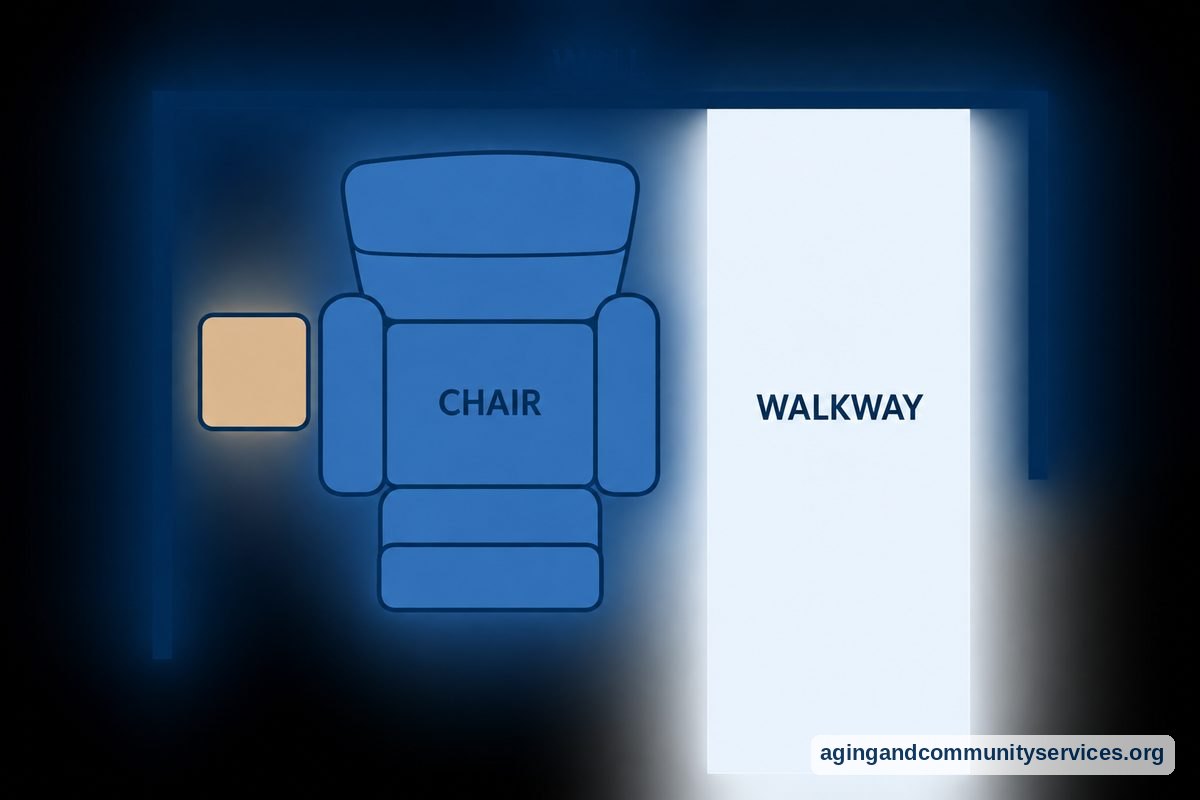
When planning your space, remember to measure the chair when it is fully opened. Many traditional designs need up to three feet of empty space behind them to tilt back all the way. If your room is smaller, wall-hugger models slide forward as they recline, needing only a few inches of clearance from the wall. You can read more about planning a safe home environment through the National Institute on Aging guide to aging in place.
- Seat Depth: When you sit all the way back, there should be about two fingers of space between the back of your knees and the edge of the seat cushion.
- Seat Height: Your feet should rest completely flat on the floor with your knees bent at a ninety-degree angle.
- Seat Width: You should have an inch or two of space on either side of your hips so you do not feel squeezed.
- Backrest Height: The headrest should cradle your neck and head comfortably without pushing your chin toward your chest.
Compare Manual and Power Reclining Styles
Recliners come with different ways to operate the footrest and back support. Understanding these mechanisms helps you pick one that matches your hand strength and daily habits.
Manual chairs use a side handle or body weight to push the backrest down. These models are simple and do not need to be plugged into a wall outlet. However, closing the footrest often takes solid leg strength, which can be tiring if your knees or hips are tender. Power recliners use quiet electric motors operated by a hand remote or side buttons. They let you stop the tilt at any angle you like with zero physical effort.
For people who need help standing up safely, power lift chairs gently tilt upward to guide you onto your feet. Many households consider lift chairs for elderly family members who want to keep their daily independence. If a medical doctor prescribes this type of equipment for mobility needs, you may also want to research does medicare cover lift chair recliners to see what help is available.

Features to Help Manage Back Pain
Sitting for long periods can place extra strain on your spine if the chair does not offer solid support. Finding proper lower back support helps keep your body in natural alignment throughout the day.
Look for models that include dedicated lumbar padding that fills the small of your back without pushing you forward. Some modern power chairs offer adjustable lumbar support, which lets you increase or decrease firmness at the push of a button. A chair that tilts into an ergonomic position can also distribute your weight evenly, taking pressure off your tailbone and hips. If you deal with ongoing spine or joint discomfort, it is always wise to consult a physical therapist or occupational therapist for personalized seating recommendations.
You can browse specialized recliners for seniors to see which models include built-in heat, targeted support, and firm armrests that aid in sitting down smoothly.
Select the Best Fabric and Cushioning
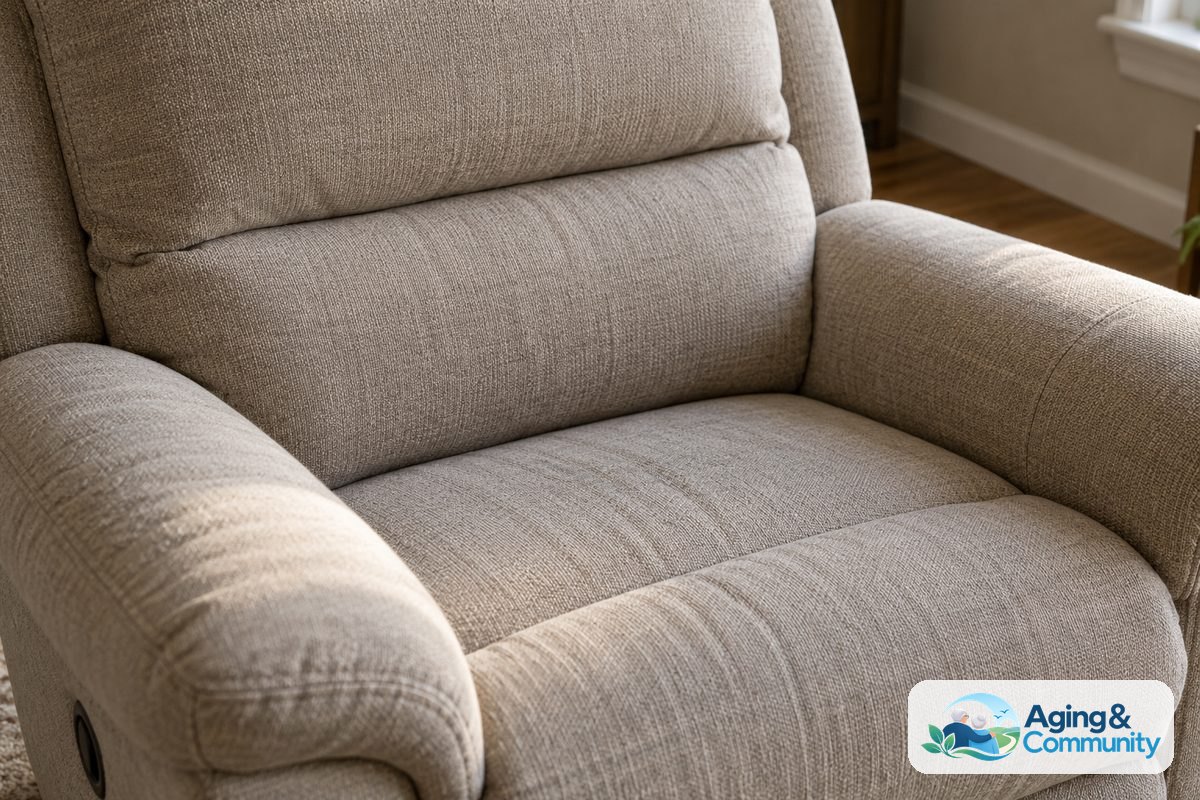
The upholstery you choose impacts comfort, skin health, and how easy the chair is to keep clean. Soft fabrics feel cozy, but they can be harder to wipe down if spills happen.
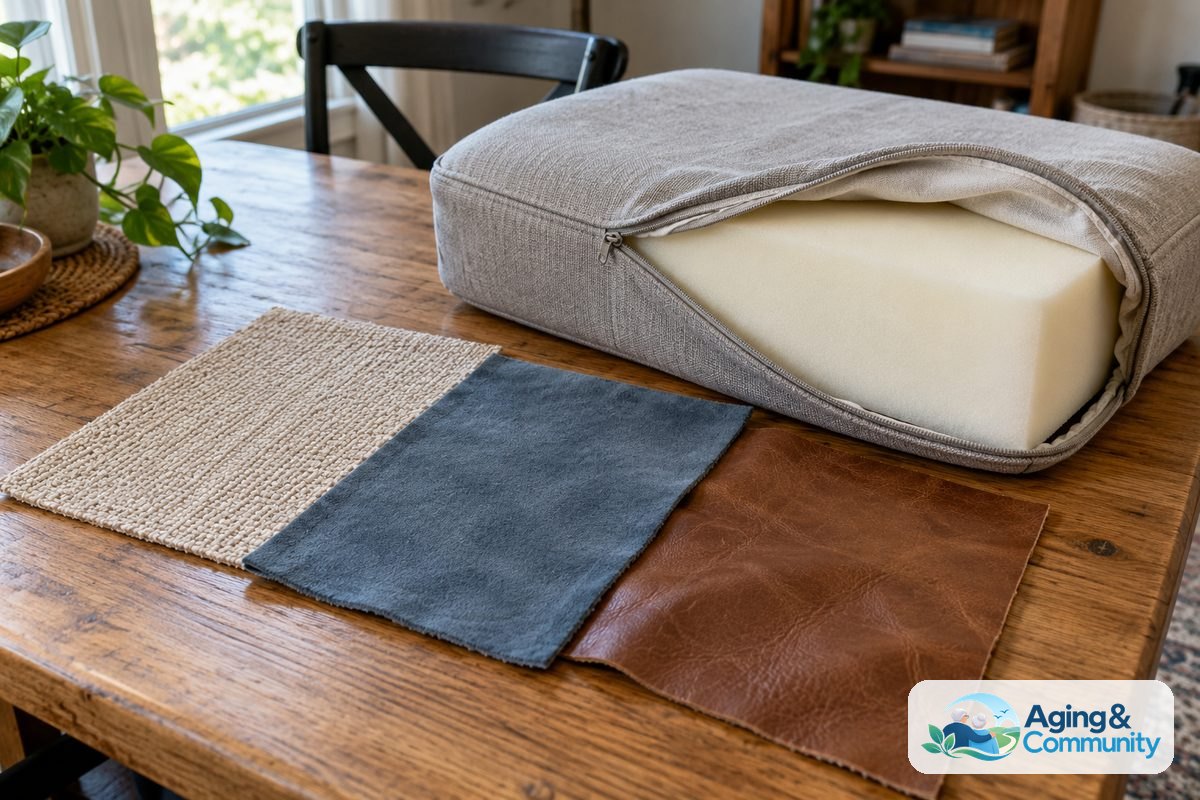
Performance fabrics and microfiber are very popular because they resist stains, feel soft to the touch, and breathe well in warm weather. Genuine leather is long-lasting and wipes clean easily, though it can feel cool in winter and warm in summer. Faux leather provides a similar look and easy cleaning at a lower weight, but you will want to ensure it is breathable to protect delicate skin.
Cushion density is just as important as the fabric covering it. Cushions that are too soft make it hard to push yourself up and out of the seat. High-density foam provides firm support that holds its shape over time, giving your arms and hips stable leverage whenever you stand. Exploring dedicated recliner chairs for elderly adults can help you identify models with easy-clean fabrics and supportive foam.
Support for Daytime Napping and Sleeping
Many people find that resting in a semi-upright posture helps them sleep more comfortably than lying flat in a traditional bed. If you plan to sleep in your chair, look for a model designed to recline fully.
Chairs that recline into a completely flat position or an infinite position allow your legs to rest level with or slightly above your heart. This position can help reduce puffiness in the ankles after a long day. If you spend nighttime hours in your chair, look at sleeping recliners for elderly users that feature continuous padding between the seat and footrest, avoiding cold drafts or uncomfortable gaps.
Safe movement around the chair during the night is essential. The National Institute on Aging offers excellent guidance on falls and falls prevention, reminding us to keep pathways clear of cords and clutter, especially near furniture where people sleep.
What to Do Next
Now that you know what features to look for, here are practical next steps to find the right chair for your home:
- Take your body measurements: Use a standard tape measure to record your hip width, the distance from your knee crease to the floor, and the length from your lower back to your knee.
- Measure your room: Pick the spot where the chair will sit. Measure the distance to the wall and check that nearby tables, lamps, or walkers will not block the footrest when open.
- Locate power outlets: If you prefer an electric model, confirm there is an outlet nearby so extension cords do not cross open walkways.
- Test chairs in person: Visit a local showroom with a loved one. Sit in each chair for at least ten minutes, practicing opening the footrest and pushing yourself up to stand.
- Consult your care team: If you have severe joint stiffness, chronic swelling, or balance concerns, ask an occupational therapist to review your chosen chair dimensions.
Frequently Asked Questions
How to choose recliner chair models for a compact living room?
To choose a chair for a smaller room, look specifically for a wall-saver or wall-hugger design. These chairs sit on a track system that shifts the seat forward as the back tilts down. That means you only need about four to six inches of empty space between the back of the chair and your wall, leaving plenty of room for walking safely.
How to choose recliner mechanisms that are easy to use?
When selecting a mechanism, consider your everyday hand and arm strength. Manual chairs with a small flush lever or push-back design require good grip and leg power to lock the footrest down. If you want simple operation with gentle movements, a power recliner with a wired hand remote is usually the easiest option to control.
How to choose a recliner chair with proper stability?
Stability starts with a broad, solid base. Look for frames built from kiln-dried hardwood or reinforced steel. When you sit on the front edge to stand up, the chair should not tip forward or rock side to side. Non-skid feet or a sturdy stationary base offer better balance than swivel bases for people who want firm support.
How to choose a recliner size that matches your body?
Match the seat width to your hips and the seat depth to your thighs. Your lower back should rest flat against the rear cushion while your feet remain flat on the floor. If your heels hang off the floor, the seat is too tall. If your knees point upward toward your chest, the seat is too low.
How to choose a recliner for back pain relief?
Focus on firm lumbar support and smooth positioning that lets you elevate your legs. Avoid plush, pillow-top seats that let your pelvis sink downward, as this curves your lower spine unnaturally. A chair that keeps your hips and knees level, paired with an adjustable headrest, helps reduce tension along your neck and back muscles.