

Learning how to choose a transport chair comes down to matching the seat size to the rider, checking the total weight of the frame, and ensuring the caregiver can push and lift it with ease. Because a companion always pushes this type of chair, you want a model that keeps both people comfortable and secure during outings. Taking a few simple measurements before you shop will help you select the right transport chair for everyday travel.

Understanding Transport Chairs and How They Work
A transport chair is a lightweight mobility seat designed to be pushed by a helper. Unlike standard manual chairs, it has four small wheels rather than two large rear wheels. This means the person seated cannot roll the chair on their own.
These chairs are built for short trips, medical visits, shopping centers, and family gatherings. When comparing a wheelchair vs transport chair, you will notice that transport models fold down into a smaller footprint. They slide into car trunks or backseats much more easily than traditional frames.
Because they are meant for travel, they usually feature narrow frames that navigate tight hallways and doorways well. If you find that the user needs to propel themselves independently, you might look into how to choose a wheelchair instead. For assisted outings, however, a transport model is often the easiest tool for the job.
Key Features to Evaluate Before You Buy
Not every chair works the same way, so reviewing specific components will help you narrow down your choices. Here are the core features you should inspect:
- Total Chair Weight: Most frames weigh between 15 and 30 pounds. If the caregiver has back stiffness or limited lifting strength, an aluminum or ultralight frame makes a significant difference when loading the car.
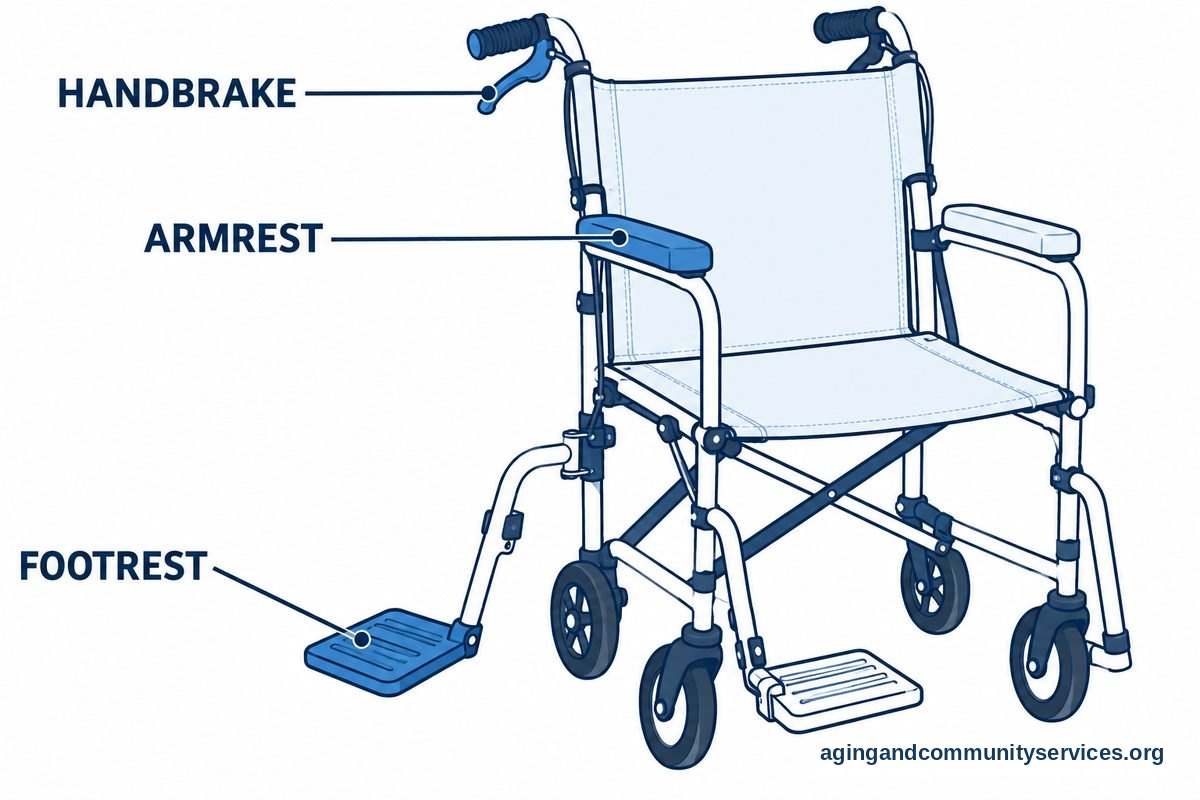
- Braking Systems: Basic models feature push-to-lock brakes on the rear wheels that the caregiver sets with a foot or hand. Deluxe models add companion handbrakes on the push handles, which give the caregiver much better control on slopes.
- Armrest Styles: Full-length armrests offer great support for resting forearms. Desk-length armrests are shorter in the front, which allows the rider to pull up closer to dining tables and desks.
- Footrest Options: Look for footrests that swing away to the side or detach completely. Swing-away footrests make it much easier for the rider to stand up without tripping over the footplates.
- Wheel Sizes: Standard models usually have 8-inch wheels all around. Models with larger 12-inch rear wheels roll much more smoothly over cracked sidewalks, grass, and thresholds.
Getting the Dimensions and Weight Capacity Right
Proper fit is essential for comfort and posture. If a chair is too narrow, it creates uncomfortable friction against the hips. If it is too wide, the user may slump to one side, and the chair will be harder to push through standard household doorways.
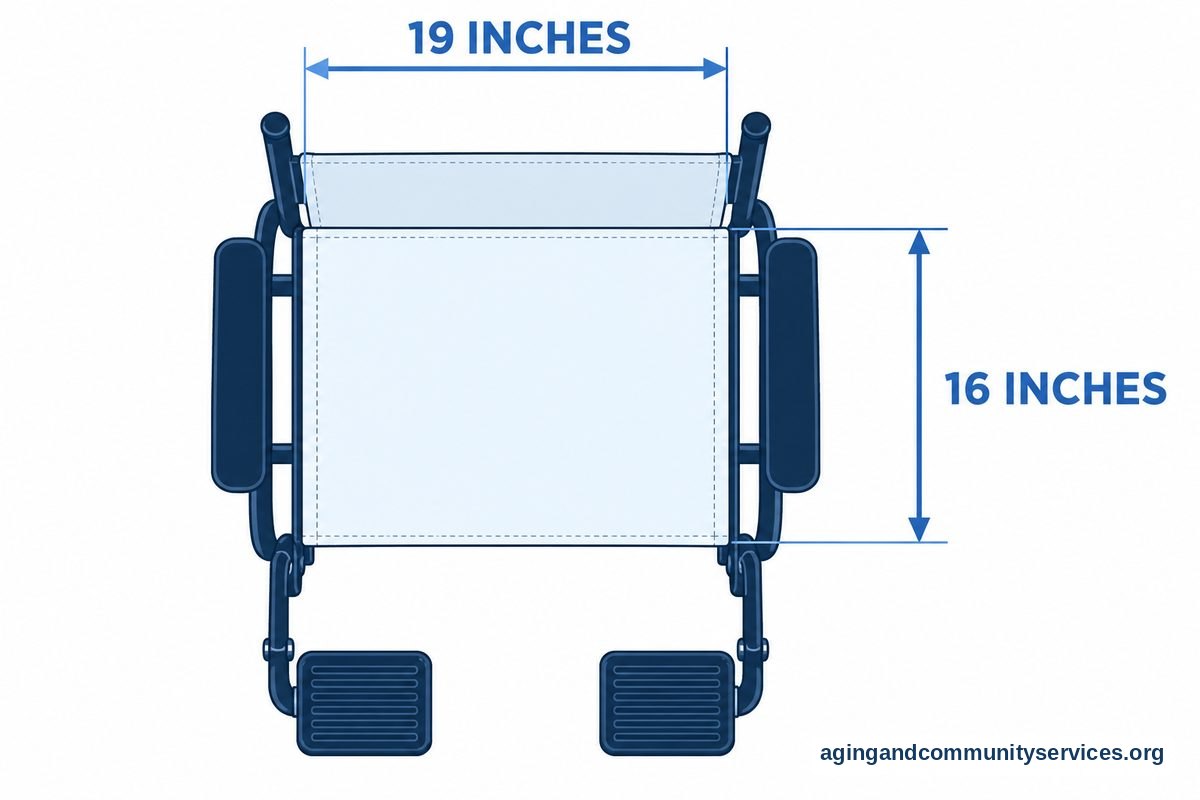
Start by measuring the user across the widest part of their hips and thighs while they are seated on a flat surface. Add one to two inches to that number to find the ideal seat width. Most transport chairs come in widths of 17 inches or 19 inches, though wider bariatric widths are also available.
Seat depth matters just as much. Measure from the back of the hips to the back of the knee, then subtract two inches. This gap keeps the edge of the seat canvas from rubbing the sensitive tendons behind the knees.
Finally, check the weight capacity listed by the maker. Standard frames usually hold up to 250 or 300 pounds, while heavy-duty models can accommodate 400 pounds or more. Always ensure the user sits safely below the maximum rating.
Frame Materials and Portability
Transport chairs are generally made from steel or aluminum. Steel is sturdy and budget-friendly, but it adds noticeable weight when lifting the folded frame into a trunk. Aluminum costs a bit more, but it cuts down the carry weight substantially.
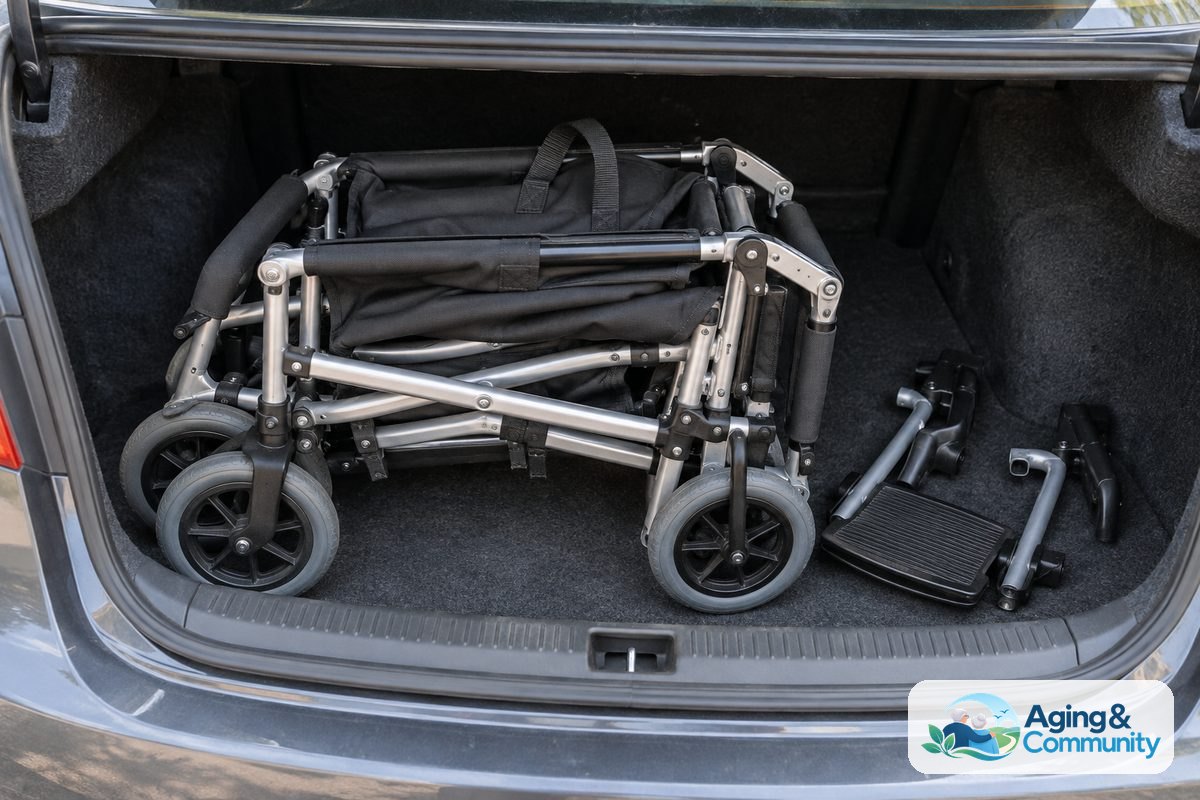
When reviewing portable frames like those found among lightweight wheelchairs for elderly users, check how the backrest folds. Many models have fold-down back canes. Pressing a small lever drops the top half of the backrest down, making the folded unit compact enough to fit into compact car trunks.
Take a look at the carry handles sewn into the seat fabric as well. When the seat is pulled upward, the frame collapses inward, and these sturdy handles let you lift the entire unit with one hand.
Comfort, Padding, and Posture Accessories
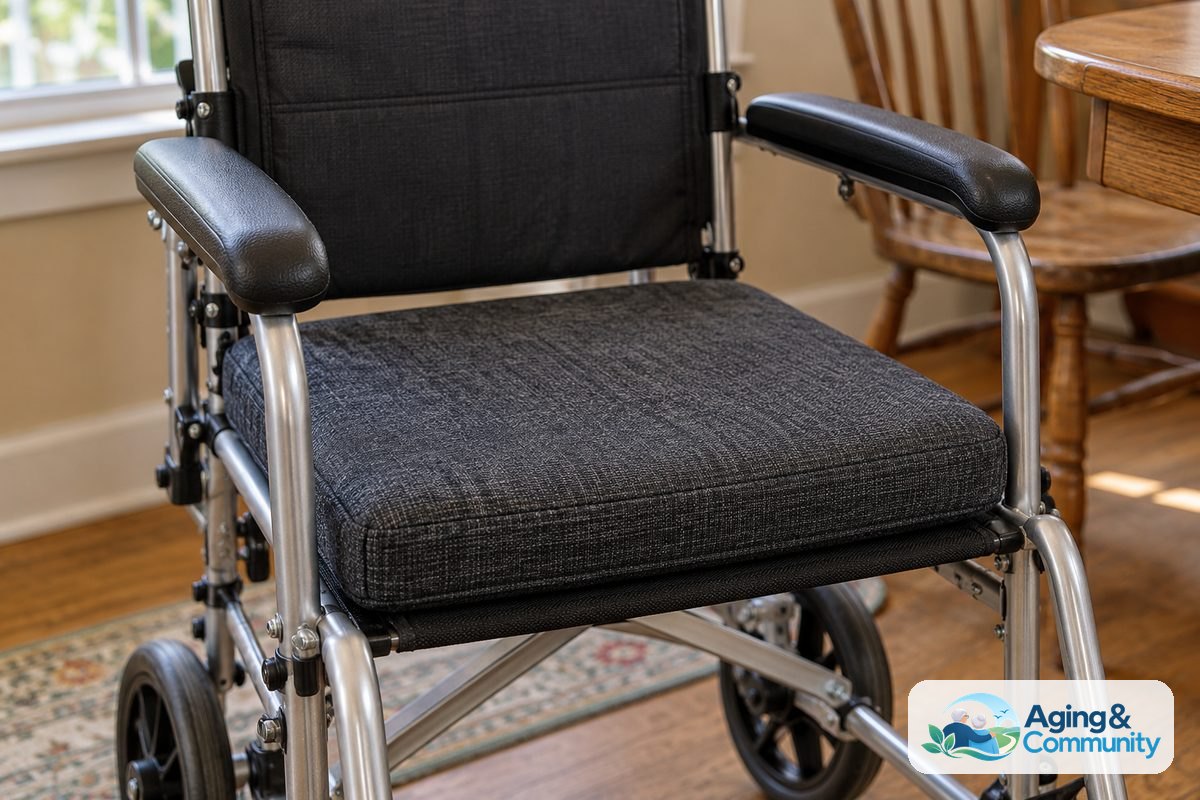
Transport chairs use simple nylon or vinyl sling upholstery so they can fold flat. While sling seats work well for short rides, they do not provide firm postural support over long stretches of time.
Adding dedicated pressure relief seat cushions can improve comfort and support during extended outings. A good cushion also helps distribute body weight evenly. Just remember to measure the cushion so it matches the chair seat width and depth accurately.
You can also consider padded arm covers, cup holders, and small storage bags that hang from the push handles. These small additions keep personal items, keys, and water bottles within easy reach for the helper.
Steps You Can Take Next
Choosing a mobility aid becomes much simpler when you break the process down into practical steps. Here is how you can move forward today:
- Take seated measurements: Grab a flexible tape measure and record the hip width, seat depth, and lower leg length of the person who will use the chair.
- Measure your vehicle: Measure your car trunk or cargo space to confirm how much room you have for a folded frame.
- Consult a professional: Talk with a physical therapist or occupational therapist. They can check posture needs and suggest specific seat heights or support styles.
- Explore community resources: If you need guidance on local programs that assist older adults with mobility equipment, contact the Eldercare Locator for helpful regional support.
- Check home access: Walk the paths the chair will travel, checking doorway widths and outdoor steps to ensure smooth rolling from house to car. Helpful guidance on home setups is available through the National Institute on Aging: Aging in Place materials.
Frequently Asked Questions
Can a transport chair be used as a permanent daily wheelchair?
Transport chairs are designed for short-term use and travel rather than full-day seating. The sling upholstery does not offer the advanced postural support required for sitting all day. For full-time mobility, an occupational therapist can help you evaluate standard wheelchairs for elderly users that accommodate custom seating systems.
Can the rider push themselves in a transport chair?
No, the person sitting in the chair cannot move it independently. The four small wheels are out of arm reach and do not have hand rims. If independent movement is your goal, a standard manual chair with large rear wheels is necessary.
What is the difference between 8-inch and 12-inch rear wheels?
An 8-inch wheel setup keeps the chair very light and maneuvers easily on flat, smooth indoor floors. Larger 12-inch rear wheels roll much better outdoors. They handle uneven sidewalks, gravel paths, and door thresholds with far less pushing effort from the caregiver.
Are transport chairs covered by Medicare?
Medicare Part B sometimes covers transport chairs as durable medical equipment when a doctor certifies that the chair is medically necessary for use inside the home. Specific criteria must be met, so speak with your physician and an approved equipment supplier to review your coverage options.
How do companion handbrakes work?
Companion handbrakes are mounted on the push handles, much like bicycle brakes. Squeezing the levers slows the chair down when walking down ramps or hills. Most models also include a locking feature on the levers to keep the chair stationary while the rider stands up or sits down.