

Learning how to choose a walker comes down to matching your balance needs, your body size, and the spaces where you walk each day. The right mobility aid offers steady balance without feeling heavy or awkward to push. Taking a little time to compare basic designs helps you pick a model that feels natural from your very first step.

The Main Types of Walkers
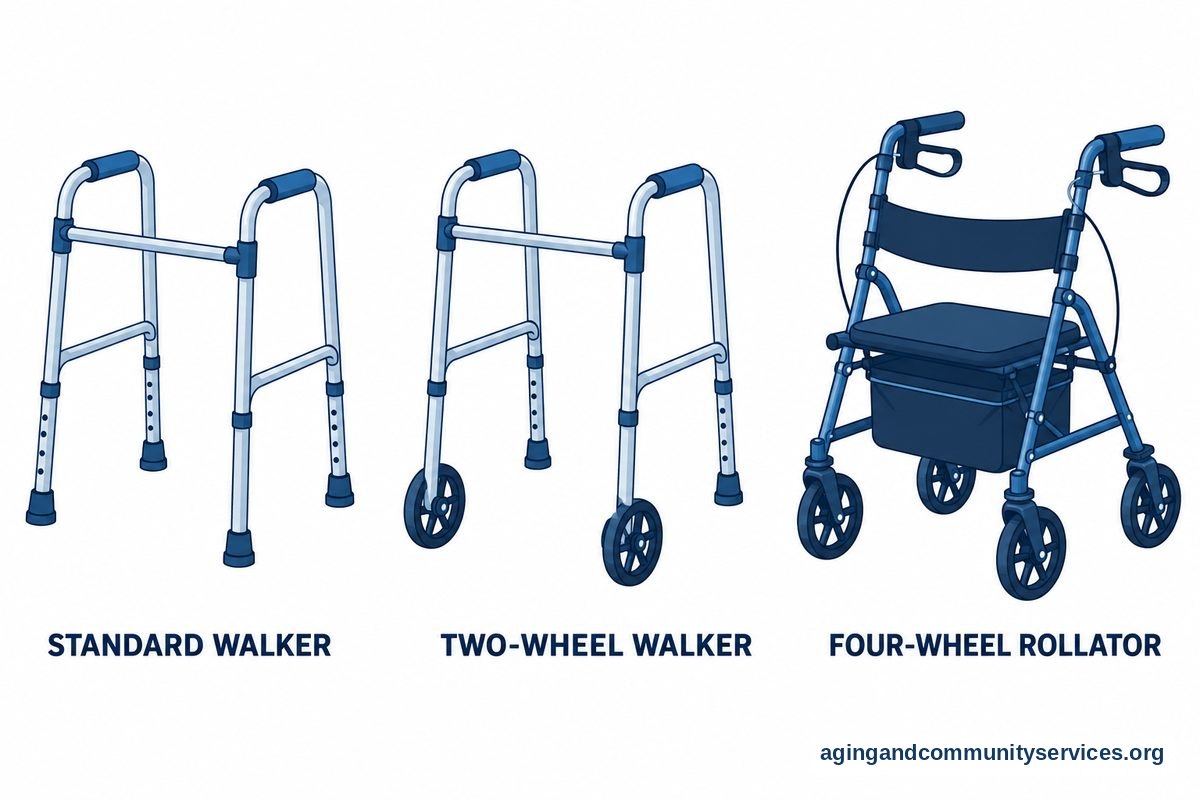
Walkers come in three primary styles. Each style serves different physical needs and walking habits. Thinking about how much weight you place on your hands will help guide your choice.
- Standard walkers: These frames have four sturdy aluminum legs with rubber tips and no wheels. You lift the frame slightly forward with each step. They provide the firmest base of support for people who need substantial balance help or must avoid placing weight on an injured leg.
- Two-wheel rolling walkers: These units feature two front wheels and two rear rubber tips or glide caps. You push the frame forward without lifting it off the ground. When you place your weight down, the rear tips grip the floor to steady your stride.
- Four-wheel rollators: These devices have four wheels, hand brakes, and a built-in bench. They move freely and do not require lifting. When weighing a rollator vs rolling walker, remember that rollators work best for individuals who can steer easily and control hand brakes.
If you are deciding between a cane and a four-legged frame, comparing a walker vs cane can clarify how much support your lower body requires each day.
How to Measure for a Proper Fit
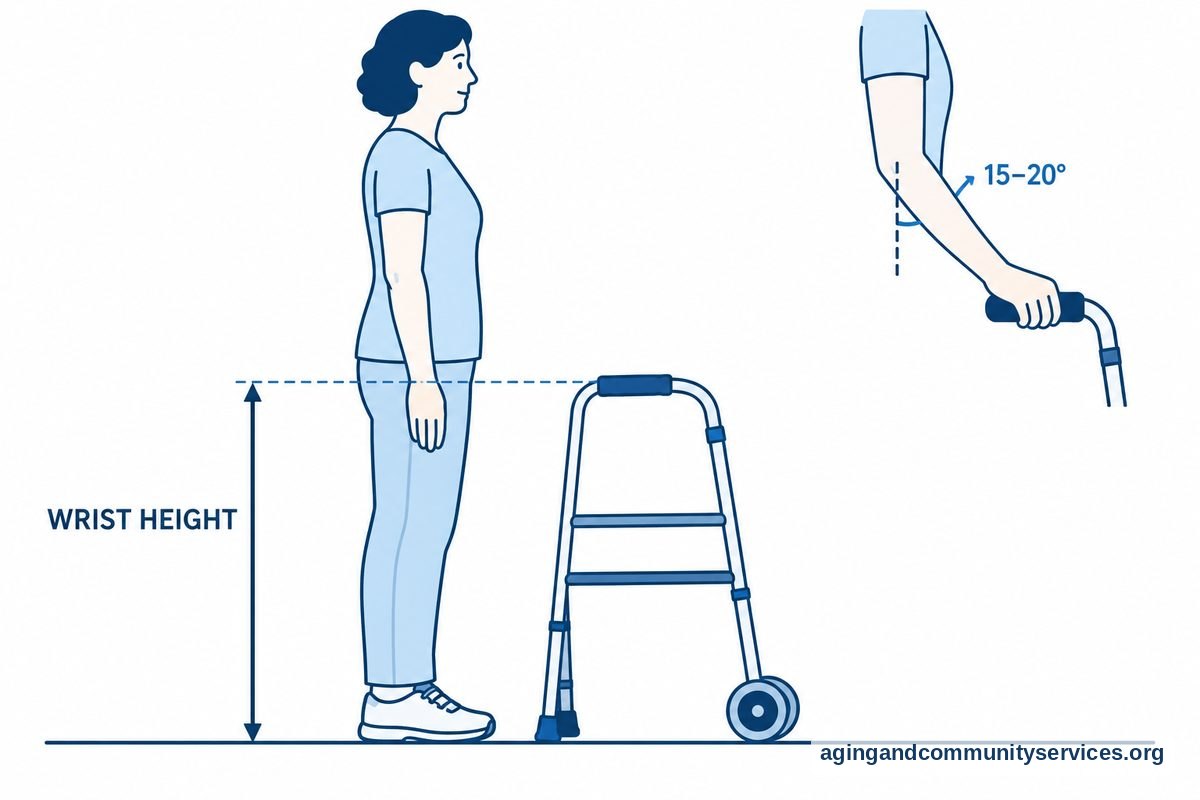
A mobility frame must match your physical height to keep your posture upright. A frame that stands too high forces your shoulders toward your ears. A frame that rests too low causes you to hunch forward, which strains your lower back.
To measure yourself or a family member, follow these simple steps:
- Put on the shoes normally worn for daily walks.
- Stand tall with arms hanging relaxed at your sides.
- Have a helper measure the distance from the inside crease of your wrist down to the floor.
- Set the top of the hand grips to match that exact wrist measurement.
When your hands rest on the grips, your elbows should bend at a gentle angle of about fifteen to twenty degrees. Checking this bend ensures you can push down with comfortable leverage whenever you need extra stability.
Frame Weight and Weight Capacity
Mobility frames must carry your body weight securely while remaining light enough to lift into a car trunk or across a doorstep. Most standard models use hollow aluminum tubing that weighs between six and ten pounds.
Check the user weight capacity printed on the product label. Standard frames typically hold up to three hundred pounds. Bariatric frames feature reinforced crossbars and wider stances to support higher body weights safely. Selecting the proper rating ensures the metal joints stay rigid over years of daily use.
Wheel Types and Indoor Versus Outdoor Use
Where you plan to walk plays a huge role in choosing the best wheel style. Indoor rooms with smooth floors need different features than rough outdoor sidewalks.
| Wheel Style | Best Environment | Key Advantages |
|---|---|---|
| No wheels (rubber tips) | Smooth indoor surfaces | Maximum stability, cannot roll away |
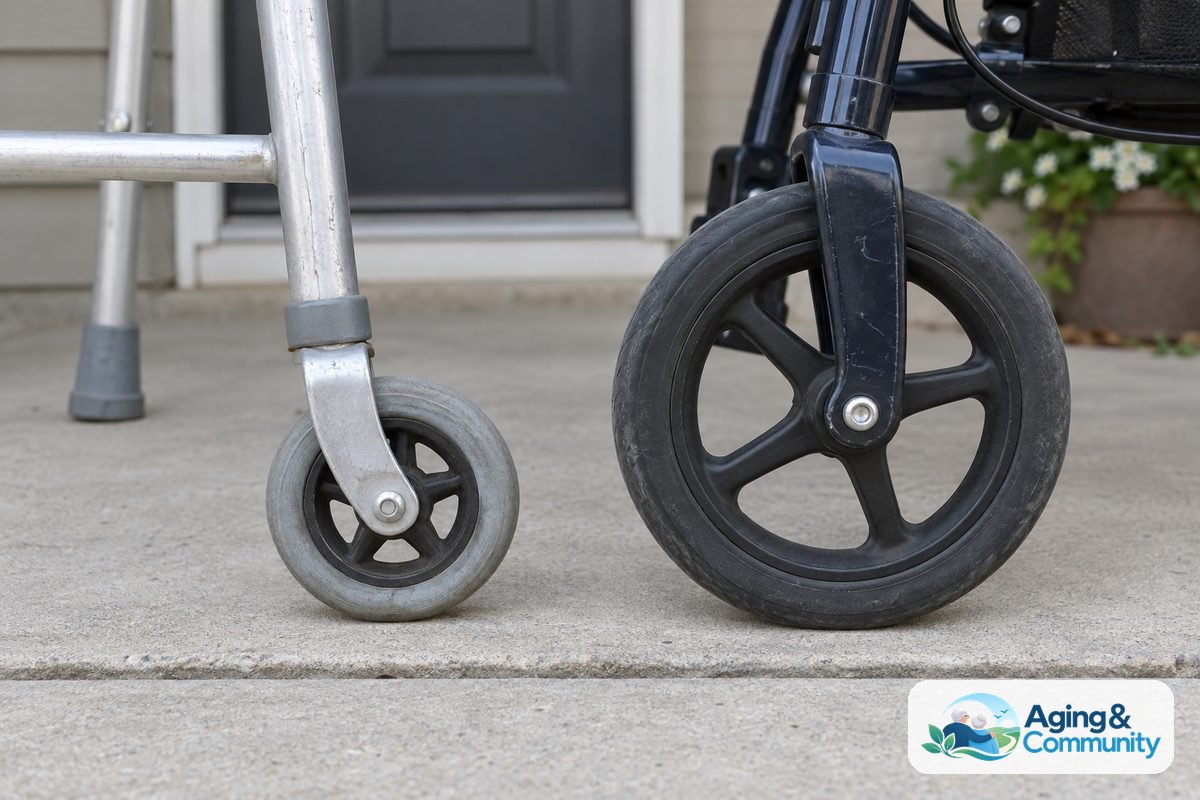
| Small wheels (3 to 5 inches) | Indoor floors and thin carpets | Easy turning in tight bathrooms and halls |
| Large wheels (6 to 8 inches) | Sidewalks, parks, gravel paths | Rolls over cracks, grass, and uneven curbs |
Hard rubber tips hold well on flat linoleum and wood, but they can catch on thick rugs. Skis or smooth glide caps attached to rear legs help frames slide across carpets with very little effort. If you spend time outdoors, larger wheels roll smoothly over sidewalk seams without jarring your wrists.
Handles, Brakes, and Useful Accessories
The parts you touch every day determine how pleasant a frame feels to use. Small adjustments in grip style and attachments make a significant difference in daily comfort.
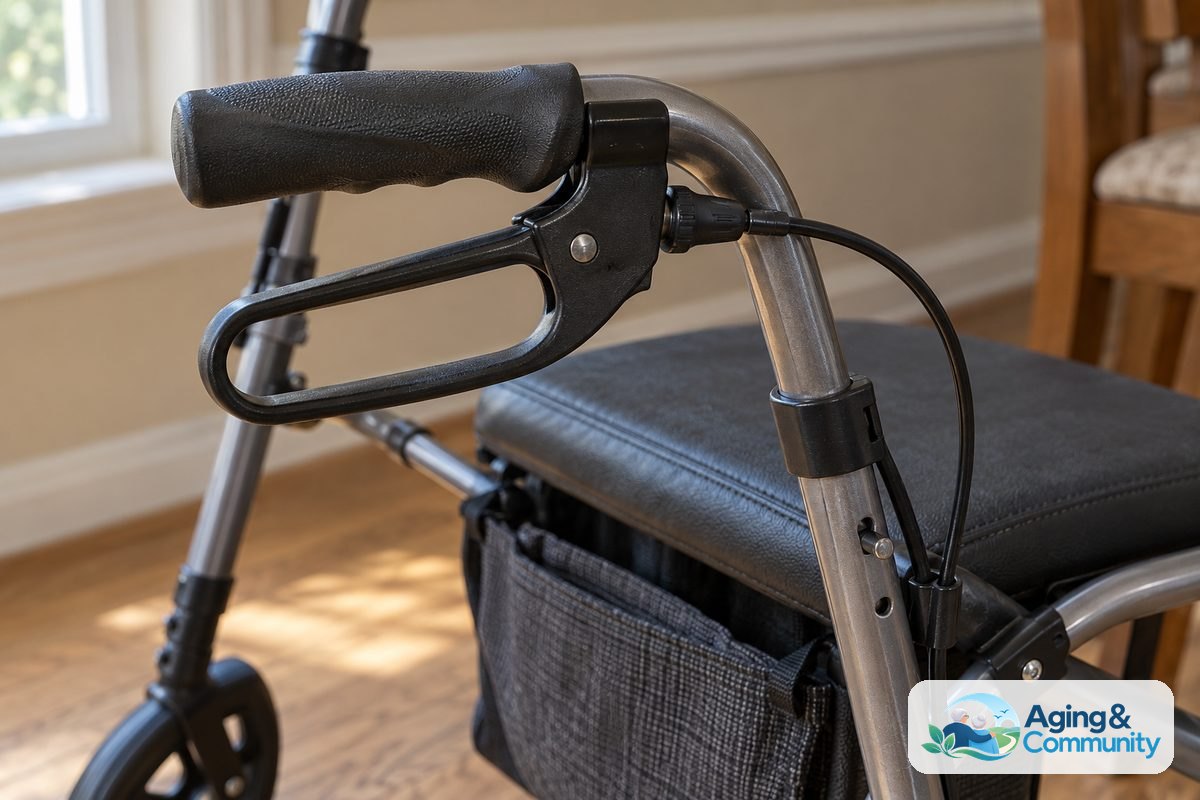
Standard hard plastic grips can irritate tender skin or aching joints. Softer foam or ergonomic contoured grips distribute pressure across your whole palm. If arthritis makes gripping difficult, upright forearm supports allow you to guide the frame using your arms rather than your wrists.
Loop brakes on four-wheel units work like bicycle brakes. You pull up to slow down while walking and push down to lock the wheels before sitting. Test the squeeze tension to confirm your hands have enough strength to pull the levers comfortably.
Helpful accessories include:
- Baskets or cloth pouches to carry mail, books, and glasses safely.
- Cane clips that hold a walking stick within quick reach.
- Fold-down seats for brief rest breaks during longer outings.
- Tray attachments that carry meals from the kitchen counter to the table.
Steps You Can Take Next
Selecting your equipment is a clear, manageable process when you take it one step at a time. Here is how to move forward with confidence:
- Measure your home pathways: Take a tape measure to your narrowest interior doors and hallway corners. Standard bathroom doors can be narrow, so confirm your chosen frame width clears the door jambs with room for your hands.
- Speak with a physical therapist: A physical therapist or occupational therapist can evaluate your gait and recommend the exact style for your balance needs. They can also teach you how to use walker equipment on stairs, curbs, and bathroom thresholds.
- Look into local community resources: Contact the Eldercare Locator to find nearby loan closets or community programs that offer assistive devices.
- Browse established designs: Review curated options for standard walkers for seniors or look into four-wheel rollators for seniors to see which features align with your routine.
- Review safety advice: Read the practical mobility guides provided by the National Institute on Aging to gather sound habits for staying steady on your feet.
Frequently Asked Questions
How to choose walker width for small spaces?
Measure the clear opening of your narrowest doorways, especially the bathroom. Subtract two to three inches from that number to leave space for your knuckles. Many compact folding models measure twenty-two inches wide or less, which helps them fit through tight residential spaces without scraping the door trim.
How to choose a walker for seniors with weak grip strength?
Look for models with soft, contoured hand grips that spread pressure evenly across your palms. Avoid small, hard plastic grips that require tight pinching. If squeezing hand brakes is uncomfortable, consider a two-wheel model with rear glide tips rather than a rollator, since two-wheel models do not require active hand braking.
What is the difference between a two-wheel walker and a rollator?
A two-wheel walker has wheels on the front legs and stationary rubber tips or glides on the back. It moves only when you push it forward, providing steady resistance. A rollator has wheels on all three or four legs, hand brakes, and usually a padded seat. Rollators roll freely and suit people who need minimal weight-bearing assistance.
Can I adjust the walker height by myself?
Most modern aluminum frames feature push-button pins on all four legs that allow you to change the height without tools. While adjusting the pins is simple, it is helpful to have a family member verify your wrist height and elbow bend while you stand upright in your normal walking shoes.
Should I choose three wheels or four wheels on a rollator?
Three-wheel models have a triangular shape that turns quickly in narrow hallways, but they can tip more easily if you lean heavily to one side. Four-wheel models provide a broader, squarer base and include a built-in seat, making them the more stable choice for most people.