

Learning how to use a gait belt with clear pictures in your mind starts with placing the sturdy strap snugly around a person’s waist over their clothing. This simple tool gives you a secure place to hold onto while helping someone stand, pivot, or walk safely. Practicing the right grip and body mechanics ensures both you and your loved one stay steady and confident during everyday movements.
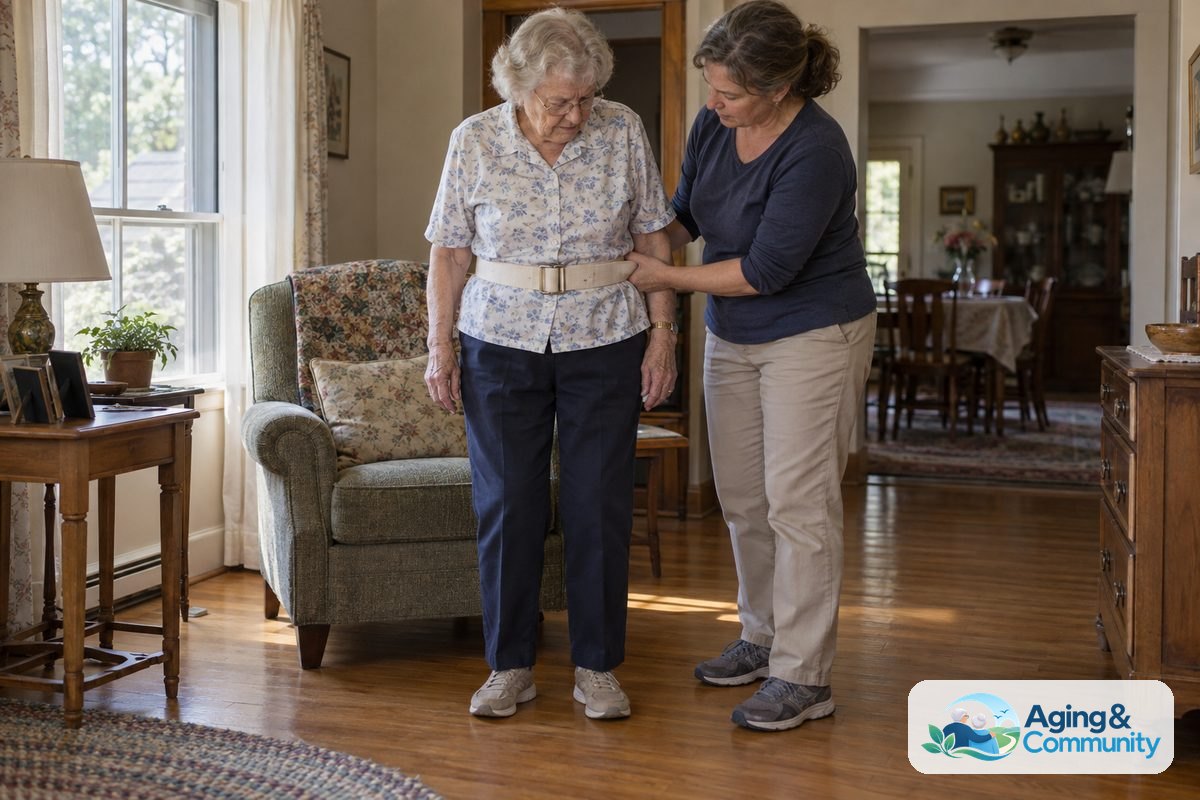
Step-by-Step Instructions for Using a Gait Belt
Following a consistent sequence makes each move predictable and calm. If you are learning how to use gait belt techniques for the first time, take a moment to review each step before assisting your family member.
- Explain the plan: Tell the person what you are about to do so they know what to expect and can help as much as possible.
- Wrap the belt around the waist: Place the belt around the person’s natural waistline over their clothing, keeping the fabric smooth against their back.
- Thread through the buckle teeth: Push the metal or plastic tip through the side of the buckle with teeth first, pulling it tight so the ridged teeth grip the webbing securely.
- Pass through the outer loop: Loop the remaining strap through the smooth side of the buckle to lock it firmly in place.
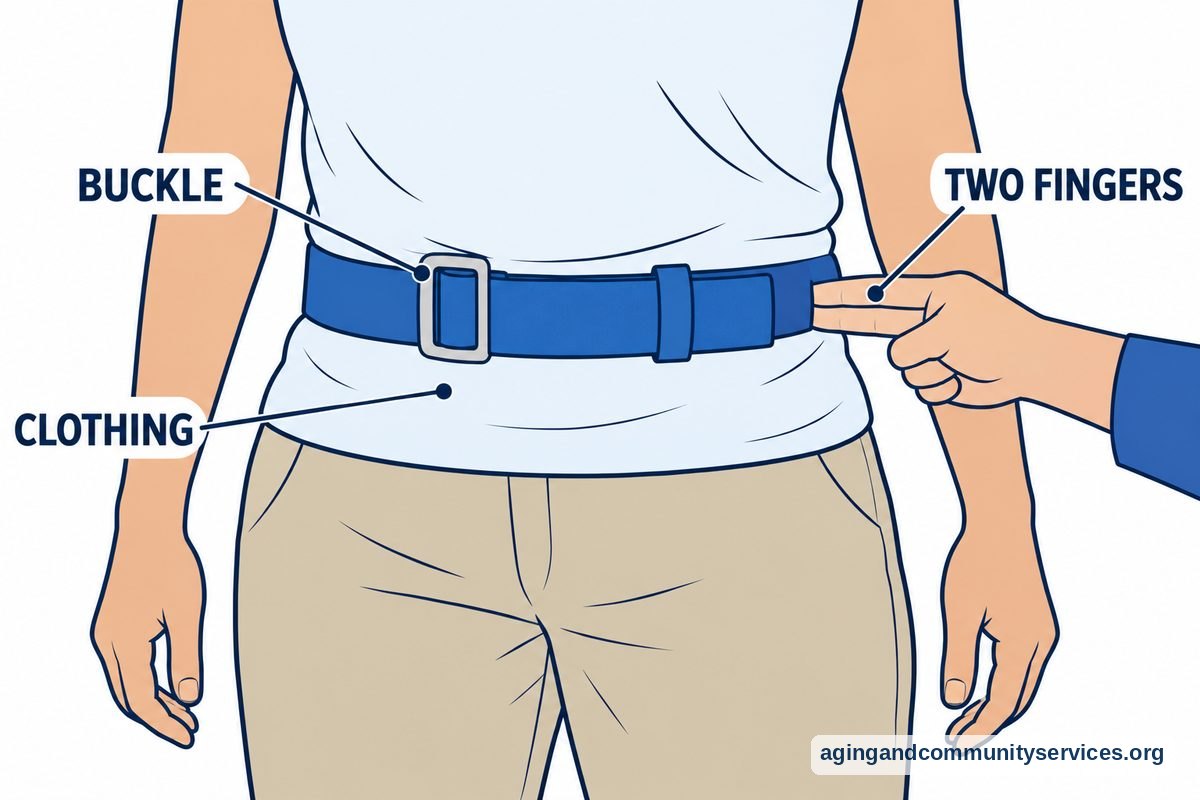
- Check the two-finger fit: Slip two flat fingers between the belt and the person’s body to ensure it is snug without restricting normal breathing.
- Position the buckle slightly off-center: Move the metal or plastic buckle slightly toward the side so it does not press directly against the person’s spine or belly button.
- Use an underhand grip: Grasp the belt firmly with your palms facing up toward the ceiling to maintain a strong, natural hold on the strap.
- Lift with your legs: Bend your knees, keep your back flat, and rock gently forward together to stand up smoothly on the count of three.
Common Mistakes to Avoid
Using improper technique can cause discomfort or lead to a slip. Keep these common missteps in mind every time you help someone transfer or walk.
- Placing the belt on bare skin: Never buckle the belt directly over bare skin, as friction can pinch or tear delicate skin during movement.
- Leaving the strap too loose: A loose strap can slide up under the armpits or shift unexpectedly, reducing your control when you need to steady someone.
- Pulling with an overhand grip: Grabbing the belt with knuckles facing up weakens your fingers and puts unnecessary strain on your wrists and elbows.
- Lifting with your lower back: Bending at your waist to hoist the person puts your spine at risk of injury; always bend at your knees and hips.
- Using the belt to lift dead weight: A gait belt is a guide for balance and support, not a handle for lifting someone who cannot bear any weight on their legs.
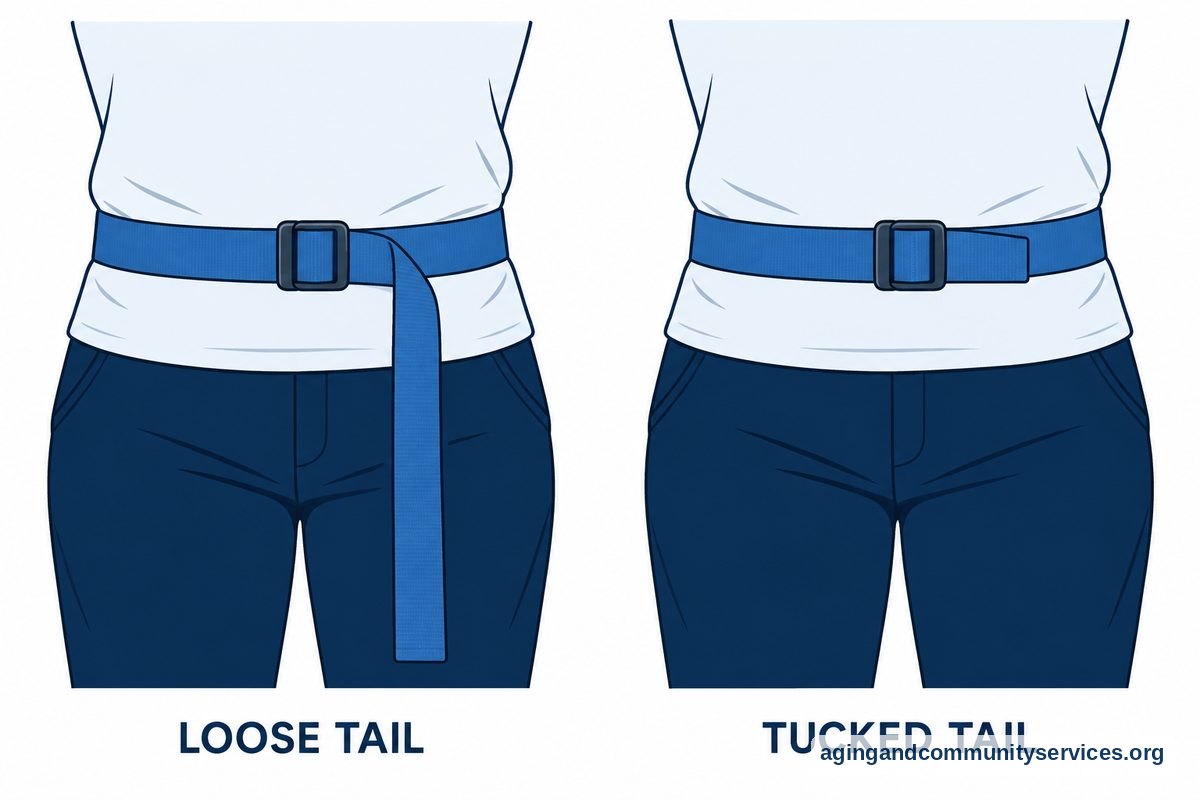
- Leaving excess webbing loose: Tucking the loose tail of the strap into the belt prevents anyone from tripping over dangling fabric.
When to Ask for Professional Guidance
Certain physical conditions require personalized advice before you attempt to move someone at home. If your family member has recently had abdominal surgery, a severe hernia, an ostomy bag, or a feeding tube, talk with their doctor before using any belt around the midsection.
A physical therapist or occupational therapist can show you custom transfer setups designed for your home environment. When you speak with the therapist, describe the person’s current balance, their height and weight compared to yours, and any rooms with tight spaces. You can also explore the Eldercare Locator to find community services, local respite care, and caregiver training classes in your area.
Choosing the Right Fit and Style
Selecting the right equipment makes a major difference in daily comfort for older adults. You can explore different models of gait belts for elderly relatives to match their specific body shape and mobility needs.
Standard belts are made from heavy cotton webbing and feature metal friction buckles. These are durable, easy to wash, and stay firmly in place once secured. Plastic quick-release buckles are also popular because they snap shut and release with a simple pinch, which can be easier for caregivers with stiff hands. If you are uncertain which style best fits your living situation, check our guide on how to choose a gait belt to compare materials, widths, and handle options.
| Belt Type | Primary Material | Best Suited For |
|---|---|---|
| Standard Cotton Webbing | Woven cotton | Daily home walking and chair transfers |
| Padded with Handles | Nylon with foam core | Sensitive skin and caregivers who prefer horizontal grips |
| Wipeable Vinyl | Coated synthetic | Bathroom use and easy sanitizing between transfers |

Safe Transfers from Beds, Chairs, and Wheelchairs
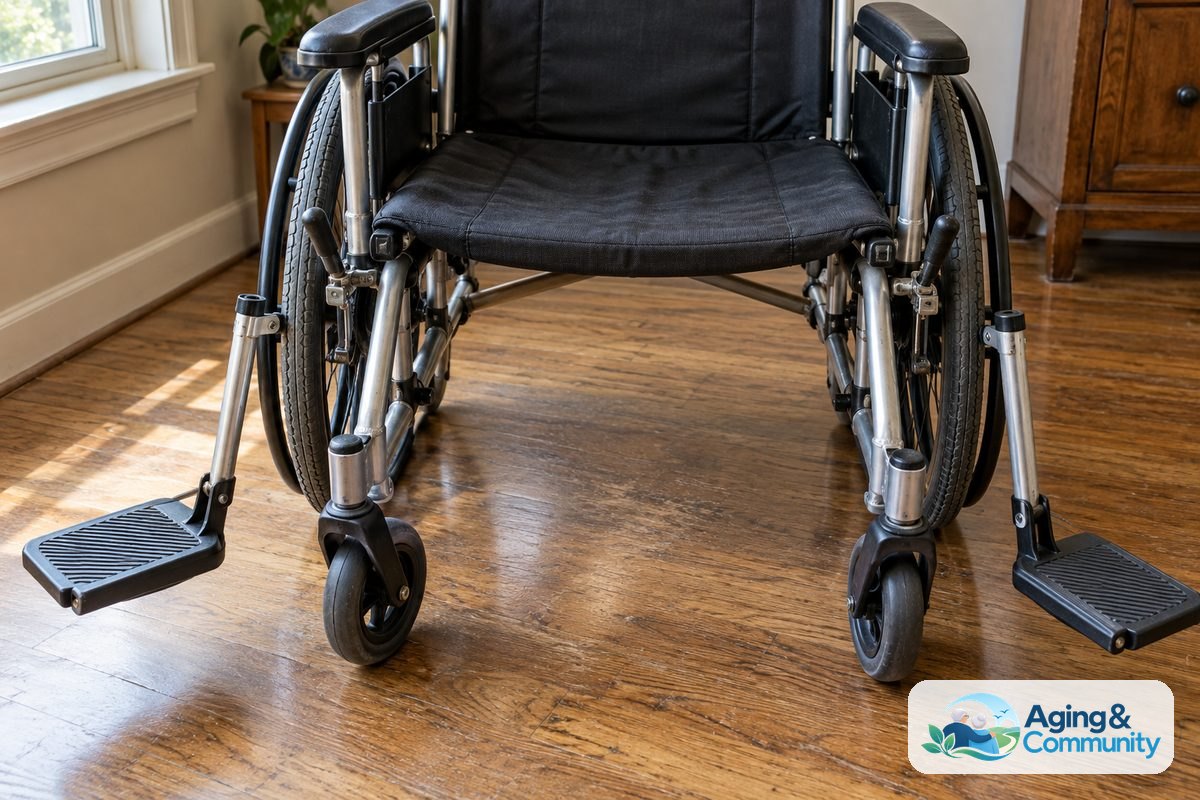
Moving from a seated surface to a standing position is one of the most common daily routines. Before you begin, ensure the person is wearing shoes with non-skid rubber soles. If you are moving someone from a wheelchair, always lock the wheel brakes and swing the footrests out of the way so their feet rest flat on the floor.
Stand close to the person with your feet shoulder-width apart to create a wide, stable base. Lean forward slightly and place one hand on the belt at their side and the other hand on the belt near their lower spine. Count out loud together: “One, two, three, stand.” As you both move, gently guide them upward while they push off from the chair armrests. In cases where standing is too difficult, you can combine a belt with a slide board by reading how to use a transfer board for seated moves.
Learning practical mobility techniques supports safe daily routines. Practical guidelines from the National Institute on Aging: Falls and Falls Prevention note that regular balance exercises and home safety adjustments can lower the risk of balance-related injuries. These steady habits also help with long-term goals outlined in the National Institute on Aging: Aging in Place resources.
Frequently Asked Questions
Where should the belt sit on a person’s body?
The belt belongs around the natural waistline, just above the hip bones. If the person has a rounder belly, the belt often rests comfortably slightly lower on the hips or higher across the ribcage, as long as it does not press on the chest or cause pain.
How tight should a gait belt be?
It needs to be snug enough that it does not slide when you apply gentle upward pressure. The standard check is the two-finger rule: you should be able to slide two flat fingers between the belt and the person’s clothing with slight resistance.
What should I do if the person starts to fall while walking?
Do not try to yank the person upright by the belt, which can pull you down with them. Instead, keep a firm underhand grip on the belt, step close behind them, and allow them to slide gently down your leg to the floor in a seated position. Once they are safely resting on the ground, assess how they feel before attempting to get up.
Can I leave the gait belt on all day?
No, a gait belt is only meant for active transfers and walking assistance. Leaving it on while resting in a chair or bed can cause skin chafing, restrict digestion, or create pressure points against the skin.