

Learning how to use a knee scooter after foot surgery is one of the easiest ways to move around without putting weight on your healing foot. You rest your injured leg on a padded cushion, hold the handlebars, and push forward gently with your good foot. With a few simple adjustments and careful practice, you can get around your home with confidence.
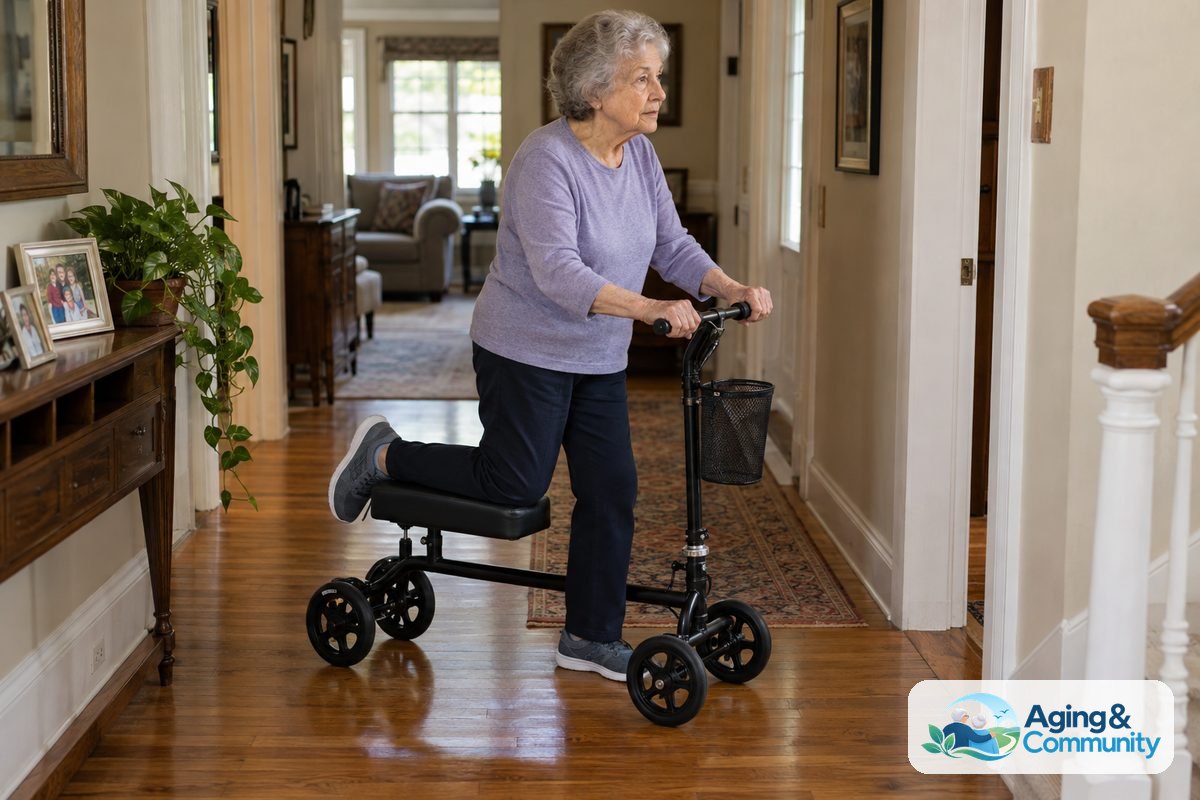
Steps for Using Your Knee Walker
- Adjust the knee pad height. Set the cushion so your injured leg rests at a comfortable ninety degree angle while your good foot sits flat on the floor.
- Set the handlebar height. Raise or lower the steering column until the hand grips meet your waist level so you do not have to slouch while riding.
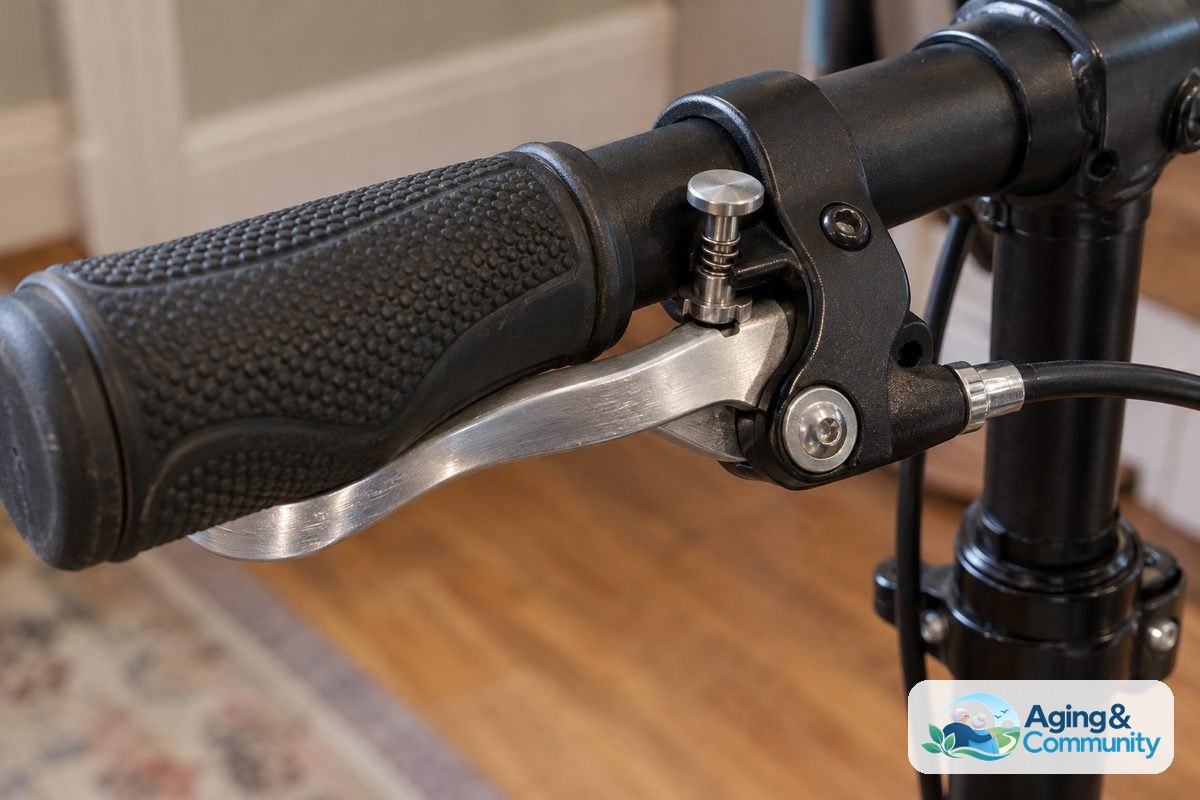
- Lock the parking brake before mounting. Squeeze the brake lever and set the lock button to keep the wheels completely still while you get into position.
- Place your injured shin on the pad. Rest your shin and knee firmly in the center groove of the cushion, keeping your surgical bandages clear of hard metal edges.
- Place both palms securely on the handlebars. Keep a relaxed, balanced grip with your fingers hovering near the hand brakes at all times.
- Release the brake and push gently. Use the sole of your good foot to take small, steady steps forward just like you would on a regular kick scooter.
- Brake gently to slow down. Squeeze both hand brakes slowly and smoothly whenever you want to stop, especially before you begin any turn.
Common Mistakes to Avoid
- Rushing down ramps or hallways without keeping your fingers on the hand brakes.
- Carrying items in your arms instead of using an attached basket or a backpack.
- Taking sharp, fast turns that can cause the scooter frame to tip sideways.
- Leaning too far forward over the front wheels, which shifts your balance away from your center.
- Walking with your pushing foot too far away from the frame, which twists your hips.
When to Call for Help or Professional Guidance
Always reach out to your surgeon or physical therapist if you feel unsteady or if your posture causes back or hip discomfort. Tell them where you feel strain, and ask if your device is adjusted properly for your body height. A physical therapist can watch you ride down a hallway and show you small changes that make moving much easier.
If you experience unexpected pain, swelling, or numbness in either leg, contact your doctor right away. Describe exactly what you were doing when the discomfort began. You can also consult an occupational therapist to help set up your home spaces safely during your recovery period.
Preparing Your Home for Safe Scooter Travel
Setting up your living space makes riding your mobility aid much smoother. Pick up throw rugs, clear away power cords, and move low coffee tables out of walkways to make wide pathways. The National Institute on Aging provides guidance on falls prevention to help older adults keep living areas safe and clear of common tripping hazards.
Check the doorways between your bedroom, bathroom, and kitchen to make sure the scooter can roll through easily. If your home has raised thresholds between rooms, take them very slowly. You can place a sturdy chair near transition points so you can pause, lock your brakes, and stand comfortably whenever you need a rest. Resources from the Eldercare Locator can also connect you with community services that assist with home accessibility equipment.
Comparing Your Mobility Options During Recovery
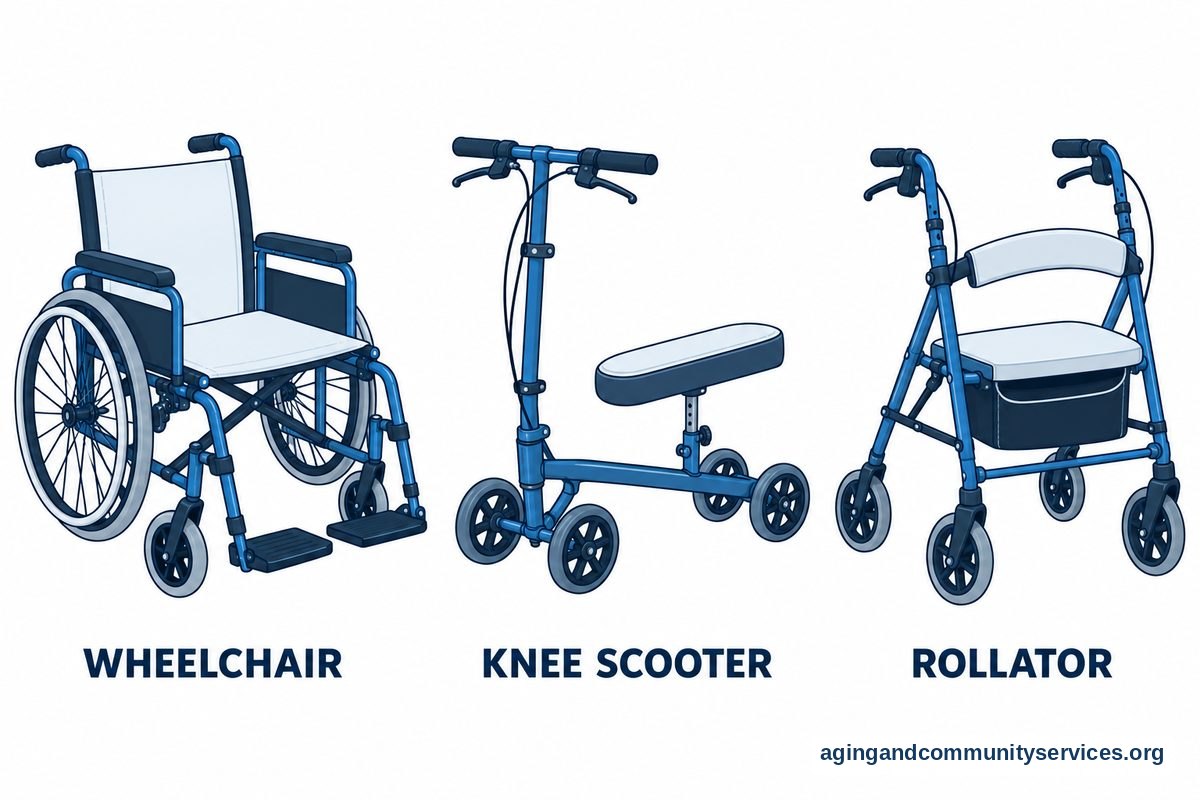
Many people wonder which device fits their daily routine as they heal from an operation. Looking at a wheelchair vs knee scooter comparison helps you see how sitting down compares to rolling while semi-upright. Wheelchairs work well for people who tire quickly, but knee walkers fit into narrower hallways and allow you to stay active without using your injured foot.
Other patients consider a walking frame with wheels. Exploring the differences in a rollator vs knee walker guide shows how each tool supports body weight. A rollator requires both feet on the floor, while a knee walker keeps your foot completely off the ground as your surgeon instructed. If you are still shopping, learning how to choose a knee scooter ensures you pick the right wheel size and pad comfort for your specific floor surfaces.
Finding a quality knee scooter for elderly family members often means looking for wider wheel bases, thicker gel knee pads, and easy-to-use dual hand brakes. These features add extra stability on hard tile, thin carpets, and outdoor pavement.
Frequently Asked Questions
How fast should I roll on a knee scooter?
You should always travel at a normal walking speed. Rolling too fast makes it hard to stop quickly and increases the risk of tipping over when you steer around furniture or tight corners.
Can I use a knee scooter on carpeted floors?
Yes, knee scooters roll on most low-pile carpets, but they require a bit more effort to push than on smooth hardwood or tile. Avoid thick shag rugs, as deep carpet fibers can catch the small wheels and bring you to an abrupt halt.
How do I go up or down curbs?
Never ride your scooter off a curb. Stop before the edge, lock the hand brakes, step down onto the lower surface with your strong foot, and then lift or roll the scooter down after you are safely positioned.
Can I take a knee scooter outside?
Yes, you can use your scooter on smooth concrete sidewalks and paved driveways. Stay alert for cracks, pebbles, and wet leaves, and avoid loose gravel or soft grass where wheels can sink.
How long do people usually use a knee scooter?
Most people use a scooter for four to eight weeks, depending on their doctor recommendations and the type of surgery they had. Your surgeon will tell you when your bone or soft tissue has healed enough to begin partial weight bearing.