

Learning how to use a recliner after shoulder surgery helps you rest comfortably while protecting your healing arm. The goal is to keep your upper body slightly upright and support your operative arm so it cannot twist, pull, or roll backward. With the right setup, a supportive chair makes your first few weeks of recovery much easier.

Steps for Using a Recliner After Shoulder Surgery
- Position the chair before sitting down: Set your chair in a semi-upright angle with the footrest slightly elevated, keeping extra pillows nearby on your non-surgical side so you can reach them without straining.
- Back in slowly using your strong arm: Walk backward until the back of your legs touch the cushion, then use your uninjured arm and your legs to lower yourself gently into the seat.
- Keep your sling on: Wear your sling or immobilizer exactly as directed by your surgeon, making sure your elbow stays tucked close to your torso.
- Support the operative arm with pillows: Place a small pillow or folded towel under your forearm and elbow on the surgical side to keep your arm slightly forward and level with your stomach.
- Adjust the recline angle for sleep: Keep your torso at roughly a forty-five-degree angle so gravity does not pull backward on your joint.
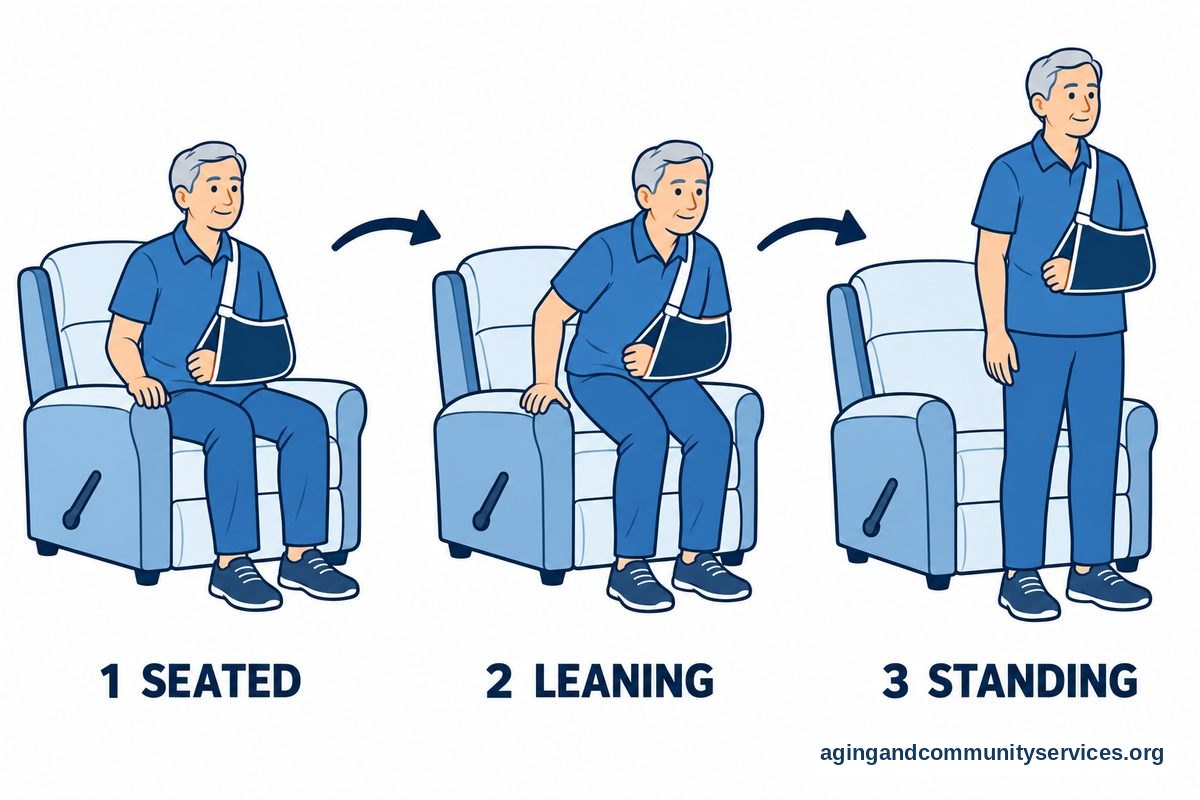
- Exit the chair using your legs and good arm: Return the chair to the full upright position, scoot your hips to the edge, and push up to a standing position using only your strong arm and your thigh muscles.

Common Mistakes to Avoid
- Pushing down with both arms to stand: Pressing your injured arm into the armrest puts immense pressure on your repair and can damage healing tissue.
- Reclining completely flat: Lying flat pulls the shoulder backward, which often increases tension and discomfort during the night.
- Letting the elbow drop behind the body: If your elbow slips down between cushions, your shoulder rolls outward and stretches the surgical repair.
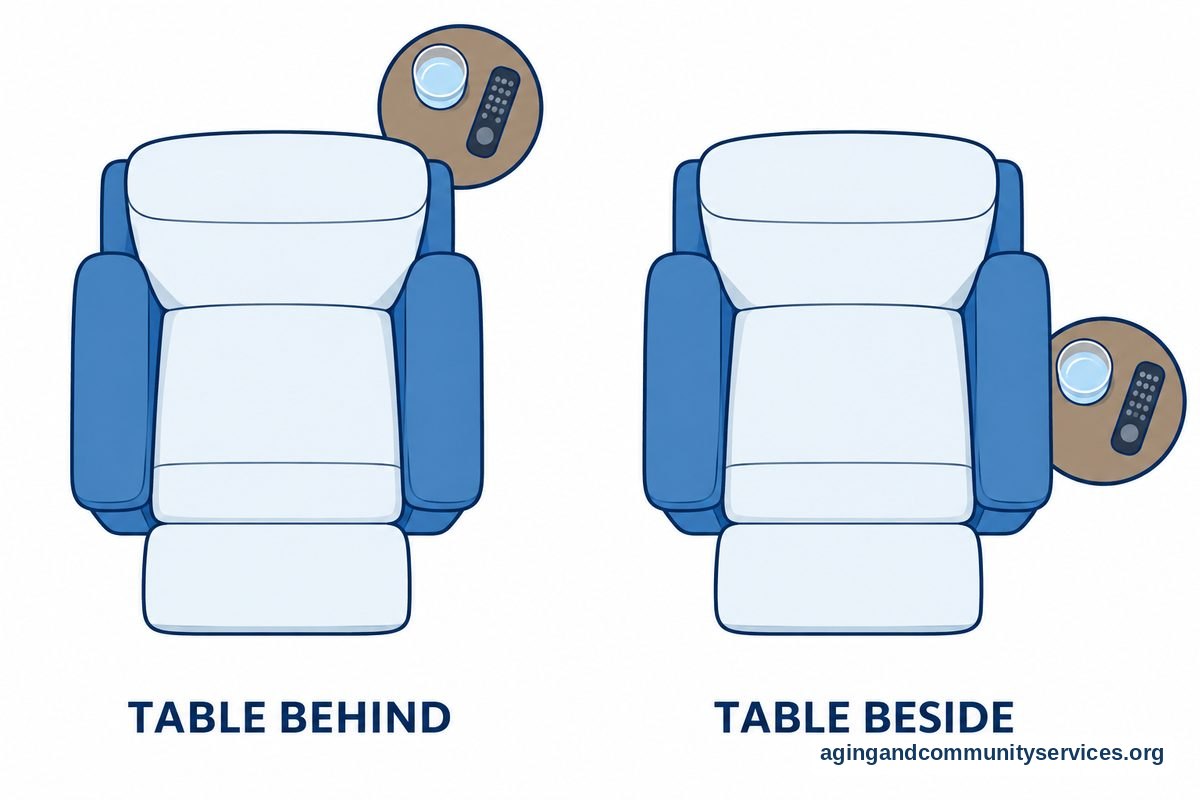
- Stretching for remotes or water cups: Reaching across your body or behind you can jar the joint, so keep all essentials on a small side table next to your strong side.
- Operating manual levers with the healing arm: Pulling hard on a side handle uses forceful shoulder muscles, so ask a helper or use your uninjured hand.
When to Call for Help or Professional Advice
Always stay in contact with your surgical team during your recovery at home. Call your doctor or orthopedic nurse if you notice unusual changes in your arm, hand, or surgical dressing. You should also call your physical therapist if you feel unsure about your resting posture or have trouble getting in and out of your seat safely.
When you place the call, have a pencil and paper ready. Tell the nurse or therapist about your specific concern. Mention if your fingers feel cold, numb, or tingling, or if you notice swelling that does not ease with rest. You should also tell them if your pain suddenly spikes despite taking your prescribed medications. For community support and local recovery services, the Eldercare Locator connects older adults with local assistance programs.
Setting Up Your Recliner for Rest and Sleep
Many people find that sleeping in bed feels awkward right after surgery. A supportive seat helps you maintain the upright posture that orthopedic surgeons recommend. When choosing supportive recliners for elderly family members, look for firm cushions that do not let your hips sink too deep, which makes standing much easier.
To build a safe nest for nighttime, place a firm pillow behind your lower back to maintain your natural spine curve. Next, tuck a small bed pillow under your surgical arm. This prop keeps your hand higher than your elbow and your elbow slightly in front of your ribs. If you tend to tilt sideways in your sleep, place an extra rolled blanket along your operative side to block your body from shifting.
Some people also benefit from using specialized sleeping recliners for elderly adults that offer power lift controls. A power lift mechanism moves the seat up and down with the press of a button, removing the need to push off the armrests. If you are exploring this option, you might research does medicare cover lift chair recliners to see if your plan assists with durable medical equipment costs.

Transitioning Between the Recliner and Standing
Moving between sitting and standing requires steady balance, especially when you are wearing a sling that shifts your center of gravity. Just like learning how to use a walker safely, taking your time reduces trip hazards and keeps your healing joint safe from sudden jerks or slips.
Before you stand up, make sure the footrest is fully folded down and your feet are planted firmly on the floor. Take a breath and slide your hips toward the front edge of the cushion. Keep your healing arm resting quietly against your torso inside its sling. Lean forward from your hips, nose over your toes, and push down firmly using your strong hand on the armrest while your legs do the lifting work.
Keeping your walkway clear of throw rugs and power cords is an important part of home safety. According to the National Institute on Aging guide on falls and falls prevention, removing home clutter and keeping areas well lit supports safe mobility while recovering from joint procedures.
Frequently Asked Questions
How long will I need to sleep in a recliner after shoulder surgery?
Most people sleep in a recliner or elevated position for four to six weeks following surgery. Your orthopedic surgeon will tell you when your joint has healed enough to move back to a flat mattress. Always check with your doctor before trying to sleep flat on your back or side.
Can I sleep on my uninjured side instead of the recliner?
Some people try sleeping on their good side, but it is easy to roll onto your operative shoulder during the night. A recliner keeps your body centered and upright, which stops you from rolling over. If you do move to a bed later, an occupational therapist can show you how to use pillows to stay securely in place.
What is the best way to arrange pillows on the surgical side?
Place one pillow under your forearm so your wrist rests slightly higher than your heart, which helps keep fluid moving. Add a small rolled towel or cushion behind your elbow so it does not fall backward into the chair crevice. Your arm should look relaxed and supported, resting comfortably across your lower chest or abdomen.
What if my recliner has a stiff manual handle on the surgical side?
Do not reach down with your surgical arm to yank the handle. Instead, lean forward slightly and reach across your body using your good arm, or ask a caregiver to operate the lever for you. You can also leave the footrest in a slightly raised position if you have someone nearby to assist when you need to stand.
What should I keep beside my recliner during the day?
Keep a sturdy side table on your non-surgical side with water, your phone, medications, and the chair remote. Having items within easy arm reach ensures you never twist or stretch your healing shoulder to grab a drink or answer a call.