

Learning how to use a rollator walker with seat can give you confidence and steady support while moving around your home or neighborhood. To use this mobility device properly, you stand inside the frame with an upright posture, push the rollator smoothly forward at an easy pace, and always lock the handbrakes before sitting down. Taking small, measured steps helps you stay balanced and comfortable throughout the day.

How to Use a Rollator Walker with Seat Step by Step
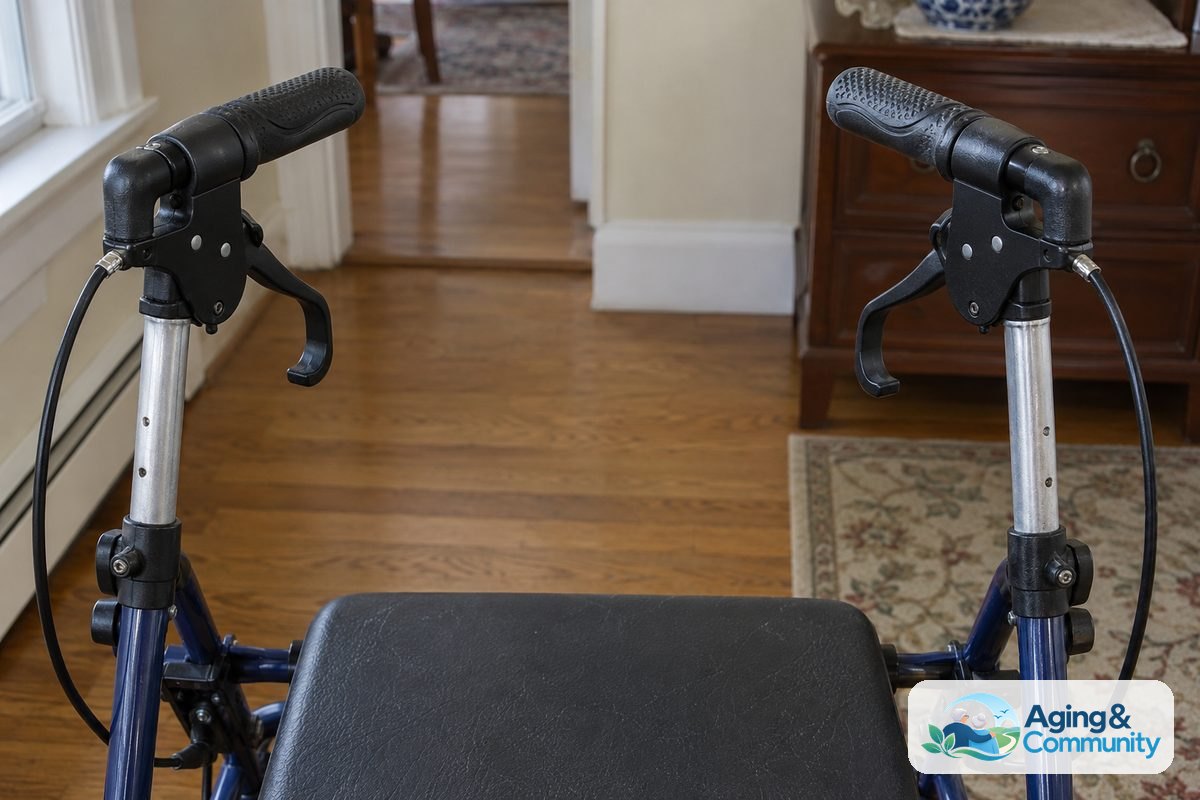
- Check your hand grips: Place both hands gently on the ergonomic grips while keeping your shoulders relaxed and your elbows slightly bent.
- Release the parking brakes: Squeeze the brake levers upward to unlock the wheels before you take your first step forward.
- Step inside the frame: Walk forward by placing one foot inside the rollator frame rather than trailing behind it, keeping your body centered between the rear wheels.
- Walk at a normal pace: Push the rolling walker gently ahead so it moves with your natural stride instead of running away from you.
- Turn with small steps: Make wide, gentle turns by taking several small steps in an arc instead of twisting your body quickly.
- Prepare to sit: Turn around completely until you feel the back of your legs touching the edge of the seat cushion.
- Lock both wheel brakes: Push both brake levers downward firmly until you hear or feel them click into the locked parking position.
- Lower yourself safely: Reach your hands back to hold the armrests or frame, bend your knees, and sit down gently onto the padded seat.
- Rise with control: Keep the brakes fully locked, slide your hips forward, place your feet flat on the floor, and push up using your leg muscles and armrests.
Common Mistakes to Avoid
- Walking too far behind the frame: Pushing the device far out in front causes you to hunch forward, which strains your back and makes the frame harder to control.
- Sitting down without locking the brakes: Forgetting to set the parking brakes can cause the wheels to roll away while you sit, leading to a sudden loss of balance.
- Using the seat as a wheelchair: Never let someone push you while you sit on the seat, as rollators lack footrests and directional control for passenger transport.
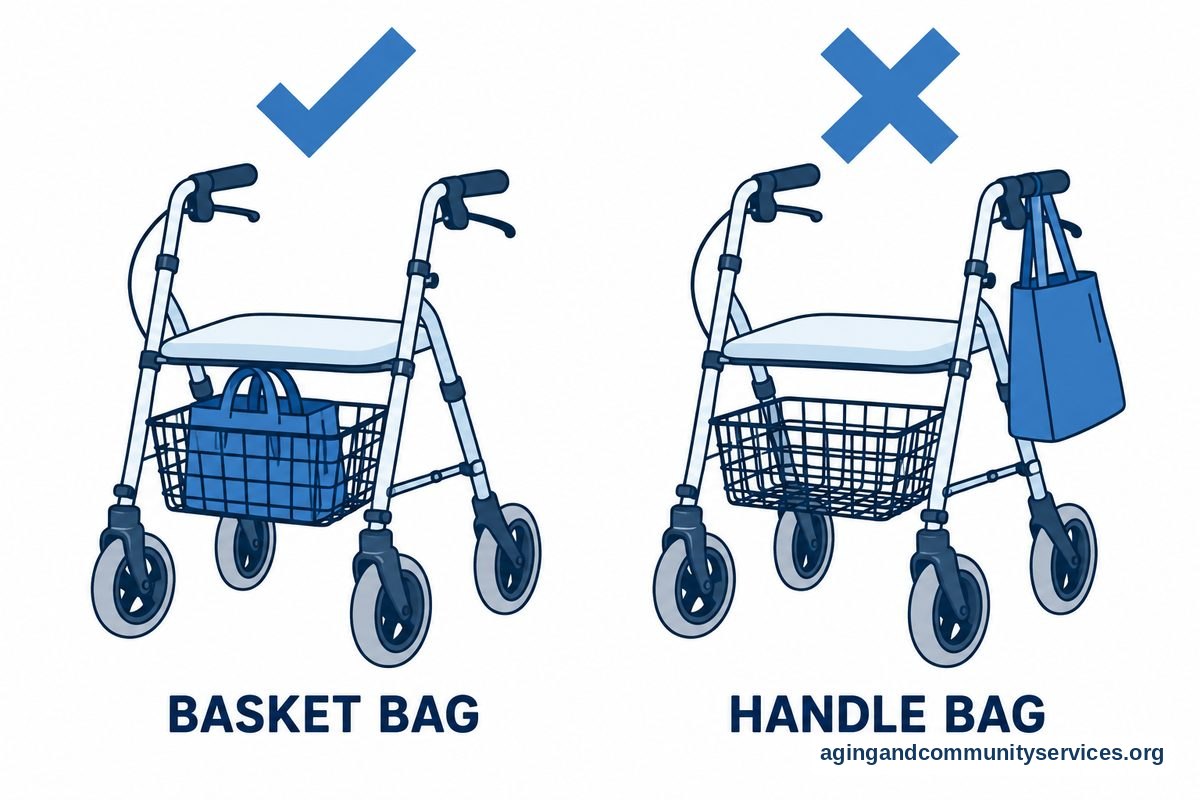
- Carrying heavy loads on the handlebars: Hanging grocery bags on the grips can tip the walker over; always place personal items inside the built-in storage basket under the seat.
- Looking down at your feet: Keeping your eyes glued to the floor makes it difficult to see upcoming trip hazards and disrupts your natural balance.
- Setting the handles at the wrong height: Handles adjusted too high or too low force your arms and neck into awkward positions that tire your muscles quickly.
When to Call for Help or Get Professional Advice
Adjusting to a new mobility tool takes some time, but you do not have to figure it out on your own. If you feel unsteady, experience joint pain while walking, or find that the device pulls to one side, consider scheduling an appointment with a physical therapist or occupational therapist. You can tell the therapist that you want a personalized fitting and training session to ensure your device matches your height, walking speed, and daily routine.
A physical therapist can also check your gait and verify whether your device offers the right balance between mobility and stability. According to the National Institute on Aging, participating in balance training and discussing mobility aids with a healthcare team can lower the risk of falls for older adults. You can explore helpful guidance through the falls and falls prevention resources from the National Institute on Aging to learn more about home safety. If you need assistance finding local mobility specialists or support programs in your area, contact the Eldercare Locator to connect with community services near you.
Setting Up the Right Handle Height
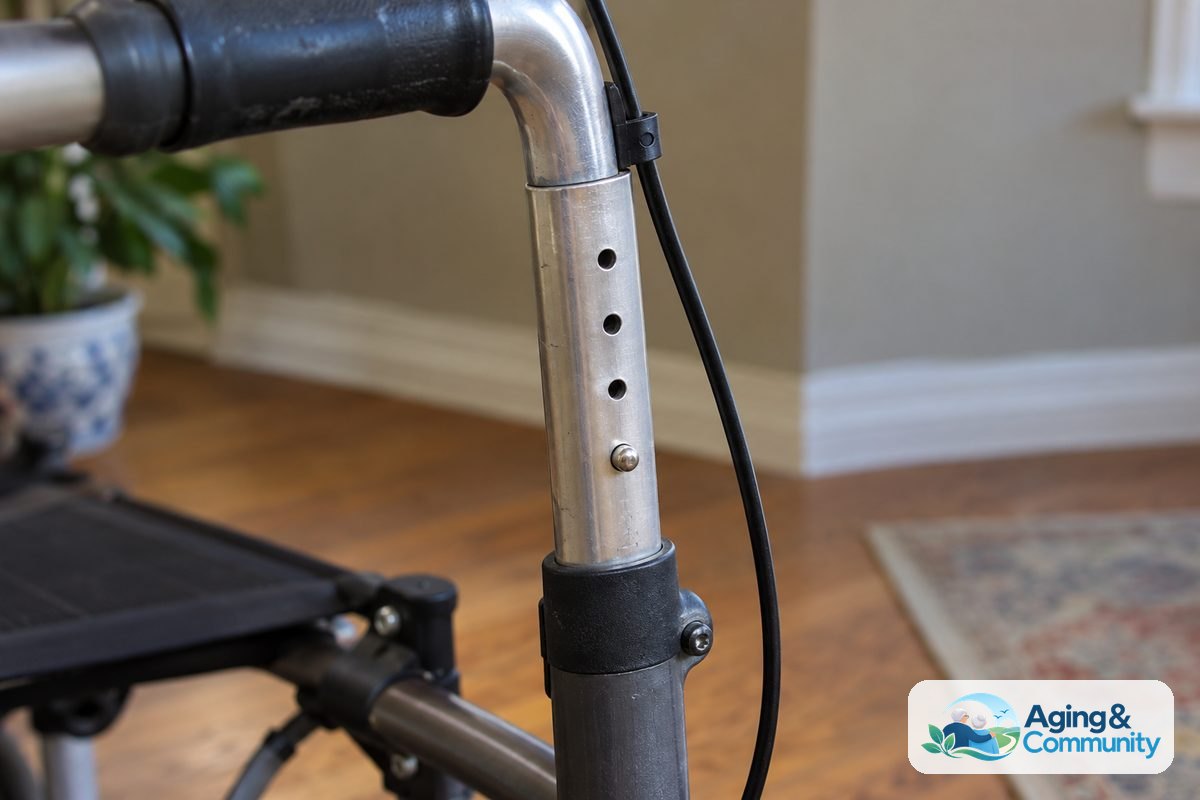
Getting the correct handle height is one of the most important parts of learning how to use rollator equipment comfortably. When the handles sit at the proper level, your arms can support your balance without straining your neck, shoulders, or wrists. Setting up the height correctly also helps you stand tall instead of stooping forward while you walk.
To measure the proper height, put on your everyday walking shoes and stand tall with your arms hanging naturally at your sides. Have a family member or friend measure the distance from the floor up to the crease on the inside of your wrist. Adjust the rollator handles so the top of each grip lines up directly with that wrist crease. When you grip the handles during a walk, your elbows should bend at a gentle angle of about fifteen to twenty degrees.
Navigating Curbs, Thresholds, and Uneven Ground
Outdoor walkways often feature small bumps, doorway thresholds, and sidewalk cracks that require extra attention. When approaching a raised threshold inside the home, slow your pace, keep the rollator straight, and lift the front wheels slightly by gently tilting the handlebars back toward your chest. Never try to force the wheels over an obstacle by shoving the frame, as this can cause the wheels to stop abruptly while your body keeps moving.
If you need to step up onto a sidewalk curb, bring the rollator close to the curb edge and squeeze the brakes lightly to steady the frame. Lift the front wheels onto the higher surface first, roll the rear wheels forward until they meet the curb, and then lift the rear frame up onto the sidewalk. Once all four wheels rest flat on the sidewalk, lock the brakes, step up with your stronger leg, and unlock the brakes to resume walking.
Choosing Between Different Types of Walkers
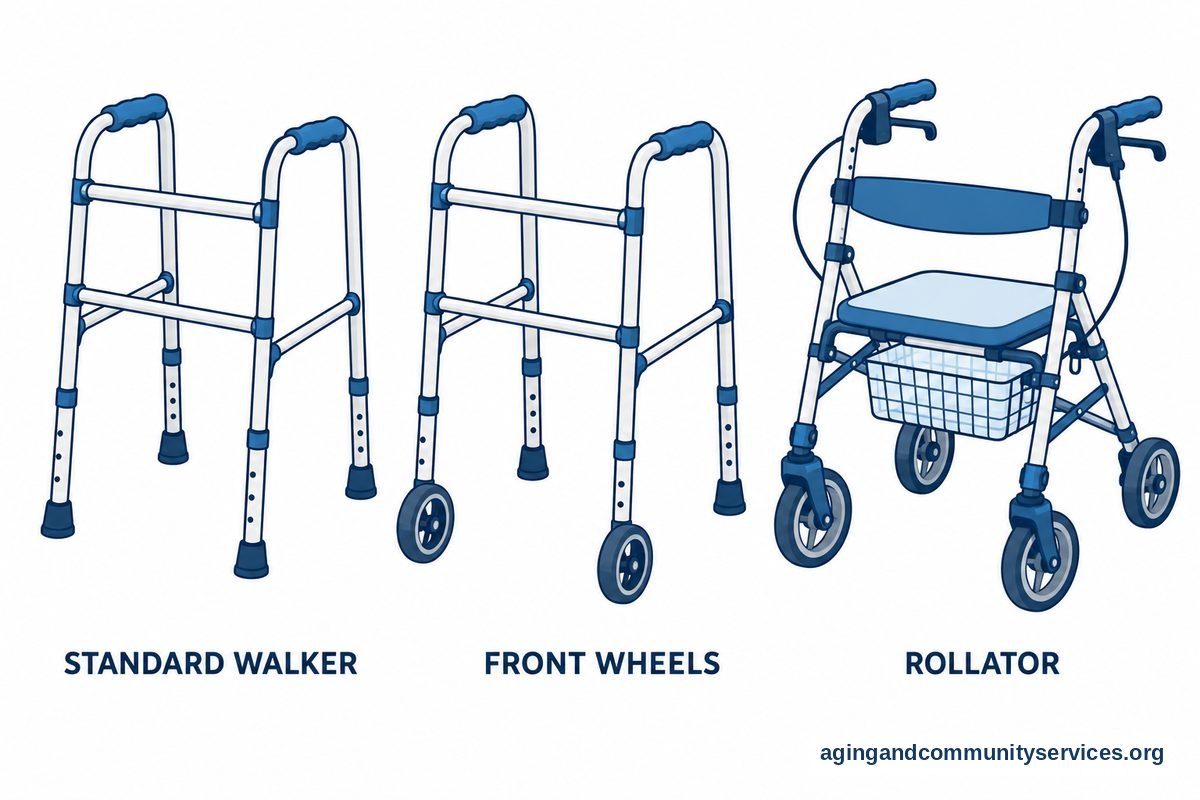
Rollators are ideal for people who have enough balance to steer a rolling device but need a place to rest when fatigue sets in. However, people who need significant weight-bearing support may prefer a standard or two-wheeled walker. Comparing a rollator vs rolling walker can help you decide which tool offers the exact level of stability you need for daily errands.
If you are exploring new equipment options, reading about how to choose a rollator can narrow down features like wheel size, frame weight, and foldability. Some models feature large eight-inch wheels designed specifically for gravel paths and grass, while others feature compact frames tailored for tight indoor spaces. Reviewing popular designs for rollators for seniors can give you a clearer picture of seat styles, brake designs, and storage options that fit your lifestyle.
Frequently Asked Questions
How do you lock the brakes on a rollator walker with seat?
Most models use push-down parking brakes located beneath the handle grips. To lock the wheels, push both brake levers downward away from the handles until you feel a firm click. Always test that the wheels cannot roll before you turn around and sit down on the seat.
Can someone push me while I sit on my rollator?
No, standard rollators are designed only for stationary resting, not for transporting passengers. Pushing someone seated on a rollator is unsafe because the small front swivel wheels can catch on cracks and tip the frame forward. If you require transport assistance from a caregiver, a dedicated transport chair or wheelchair is the appropriate choice.
How do I know if the rollator seat height is right for me?
When you sit down on the rollator seat with your back against the support strap, both of your feet should rest completely flat on the floor. Your knees should form a comfortable right angle without dangling or riding up toward your chest. If your feet do not reach the ground, look for a rollator model with an adjustable seat height.
Can I use my rollator walker on grass or gravel?
You can use a rollator on outdoor surfaces like grass and gravel if the model features larger wheels, typically eight inches or wider. Smaller wheels tend to sink into soft soil or catch on loose stones, which can bring the walker to an abrupt stop. Always slow your pace and scan the ground ahead for dips, roots, and hidden holes when walking outdoors.
How do I fold my rollator walker to put it in a car trunk?
To fold most models, lift the padded seat cushion to reveal the storage basket and crossbar mechanism underneath. Pull straight up on the strap or metal bar in the center of the frame, which brings the two sides together. Ensure the folded frame is securely latched before lifting it into a vehicle to prevent it from swinging open.