

Finding out how to use a sock aid video YouTube demonstration can help you put your socks on without bending over or straining your back. These helpful tools allow older adults to slide footwear onto their feet while sitting down comfortably. Once you know the basic steps shown in online videos, the entire process takes just a few moments each morning.
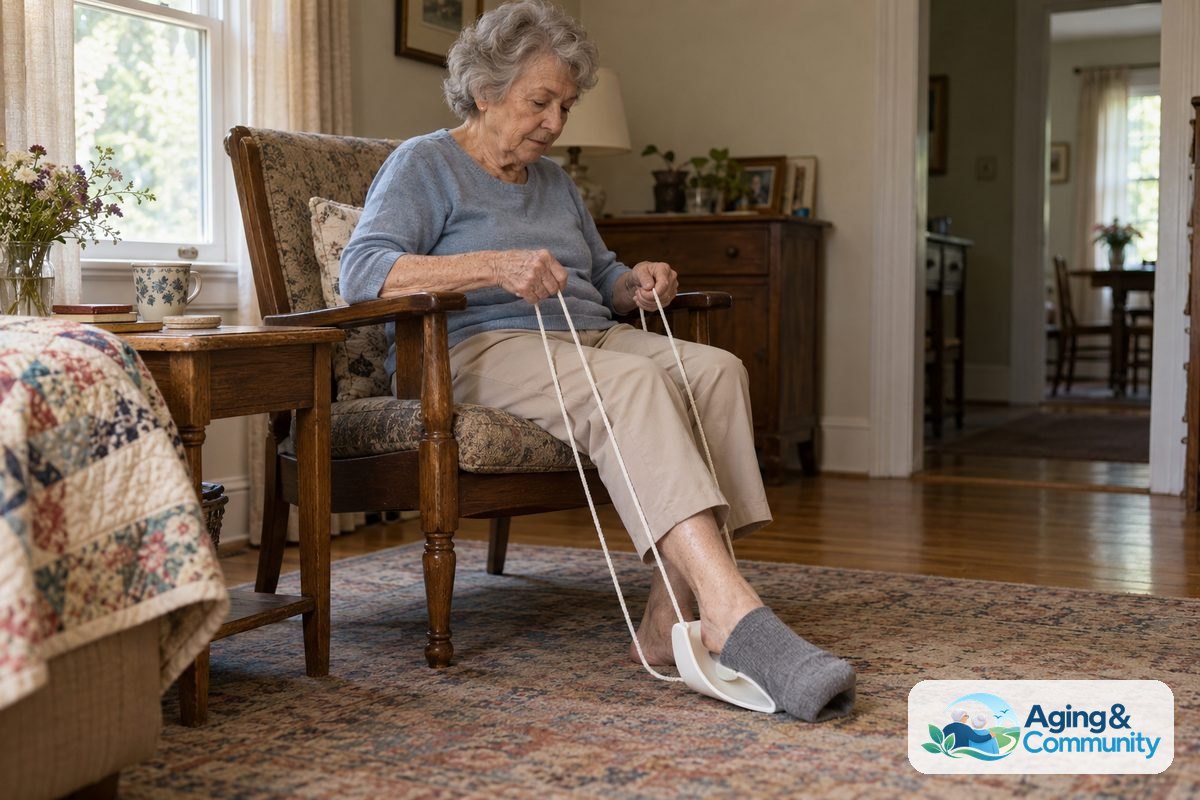
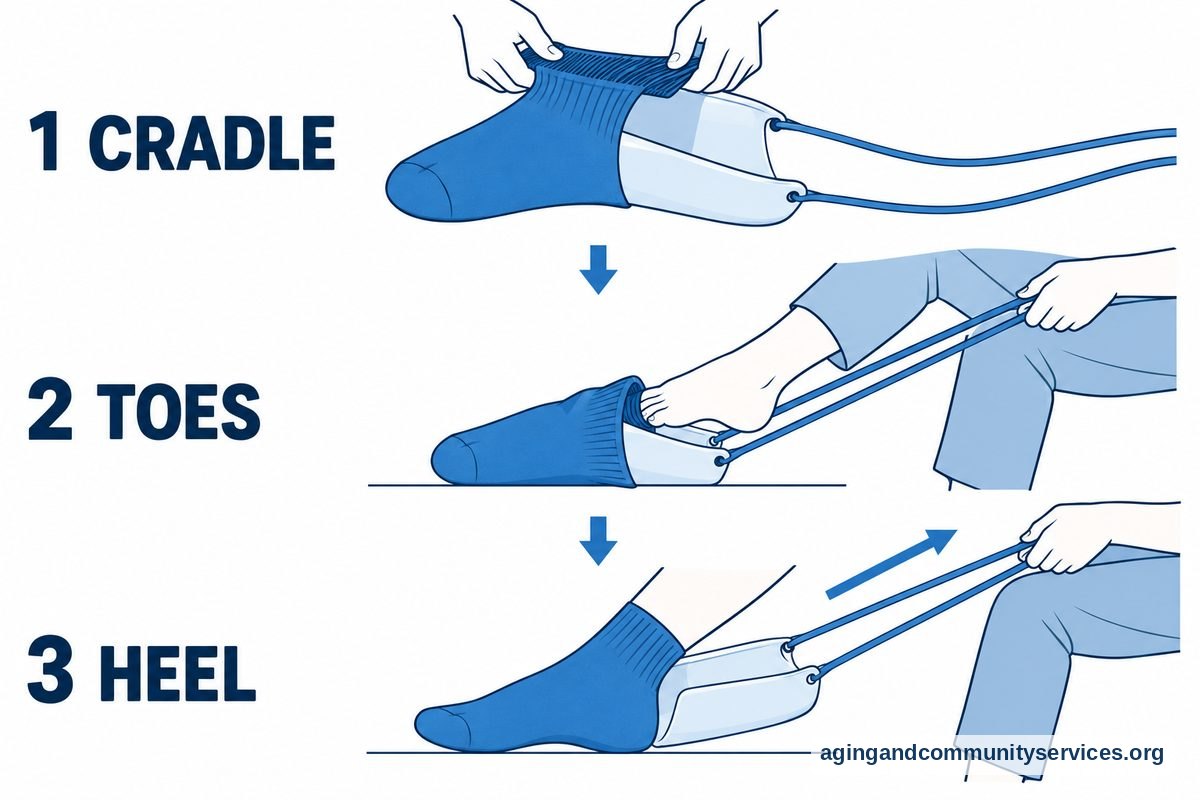
How to Use a Sock Aid Step by Step
- Sit in a stable chair with back support. Make sure your feet can touch the floor flat so that you remain balanced throughout the entire task.
- Slide the sock onto the plastic cradle. Gather your sock and stretch the top opening over the curved shell until the toe touches the end of the frame.
- Hold the long ropes firmly in both hands. Make sure the open end of the sock faces you while the straps rest comfortably in your grip.
- Drop the cradle down to the floor in front of your foot. Keep holding onto the cords as the plastic base rests gently against the carpet or floor mat.
- Slip your toes into the sock opening. Guide your foot forward into the hollow space until your toes are snug against the fabric.
- Pull the straps back toward your body. Draw the cords smoothly upward so the device glides past your heel and pulls the sock completely onto your foot.
Learning how to use sock aid devices takes a few practice rounds. With patience, you will find the motion feels natural and smooth.
Common Mistakes to Avoid
- Pulling the cords straight up instead of toward you: Pulling straight up toward the ceiling can bend the cradle or snap the cords. Always draw the straps back toward your lap at an angle.
- Not pushing the sock all the way onto the shell: If the toe of your garment is not flush against the front of the tool, your toes may get trapped or bunched up halfway through.
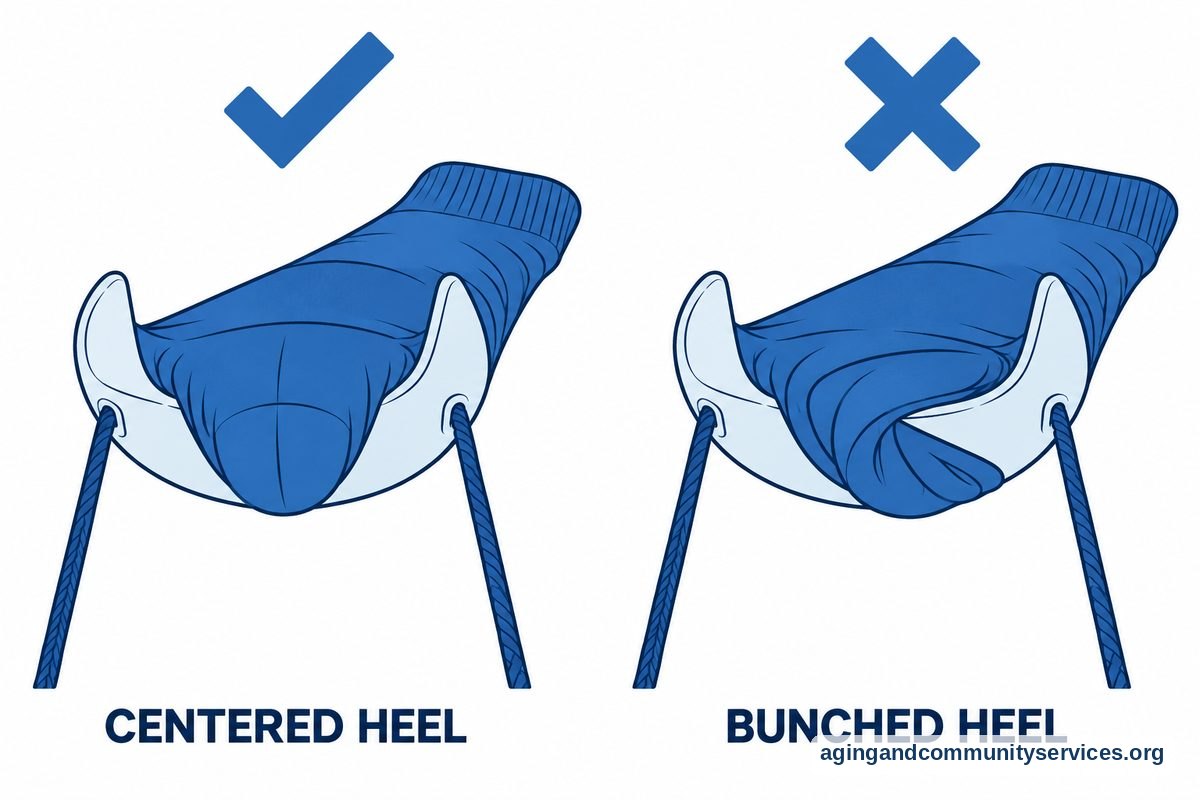
- Leaving the heel bunched up: Ensure the heel pocket of the sock sits centered on the underside of the plastic piece before lowering it down.
- Trying to stand while dressing: Standing up increases the chance of slipping or losing your balance. Maintaining proper seating supports safe daily routines like those described in the falls and falls prevention guidelines from health specialists.
- Using a standard plastic aid for tight support garments: Traditional tools often crack or bind if you try to use them on heavy elastic wear. A specialized sock aid for compression socks is usually needed for medical stockings.
When to Call for Help or Get Professional Advice
If you experience sharp pain in your hips, knees, or lower back while dressing, pause right away. You may want to speak with an occupational therapist or a physical therapist. These professionals specialize in daily activities and can show you personalized movements that protect your joints.
When you contact a therapist or doctor, tell them which movements feel difficult. Let them know if you recently had hip surgery, as specific movement precautions may apply. If you need assistance finding local mobility specialists or support programs, the Eldercare Locator can connect you with trusted services in your community.
Choosing the Right Dressing Tools for Daily Independence
Maintaining your morning routine is an essential part of Aging in place safely. Having the right tools makes getting dressed simpler and less tiring. Many people pair their dressing routines with long handled shoe horns, reachers, and button hooks.
Different styles of tools fit different bodies. A wide, flexible frame works well for thicker socks, while a firm contoured shell helps keep thin dress socks open. Reviewing helpful options for a sock aid for elderly users can help you pick the model that best matches your personal strength and flexibility.
| Device Style | Best Suited For | Main Benefit |
|---|---|---|
| Flexible Plastic Shell | Everyday crew socks and casual wear | Bends easily to match the shape of the foot |
| Rigid Wire Frame | Heavy compression or tight elastic hosiery | Holds firm tension without collapsing inward |
| Single Handle Model | Those using one dominant hand | Allows one pull cord to slide the sock smoothly |
| Foam Padded Base | Delicate skin or swollen feet | Reduces friction and protects sensitive ankles |
Exploring other dressing aids for seniors can also make managing shirts, slacks, and footwear much easier every day.

Adapting Your Technique for Limited Mobility
If you have had a stroke or live with joint stiffness that affects one arm, you can still manage your daily dressing. Practicing how to use sock aid with one hand allows you to keep your independence without overreaching. Using a device with tied handles or a continuous strap makes it possible to pull with a single grip.
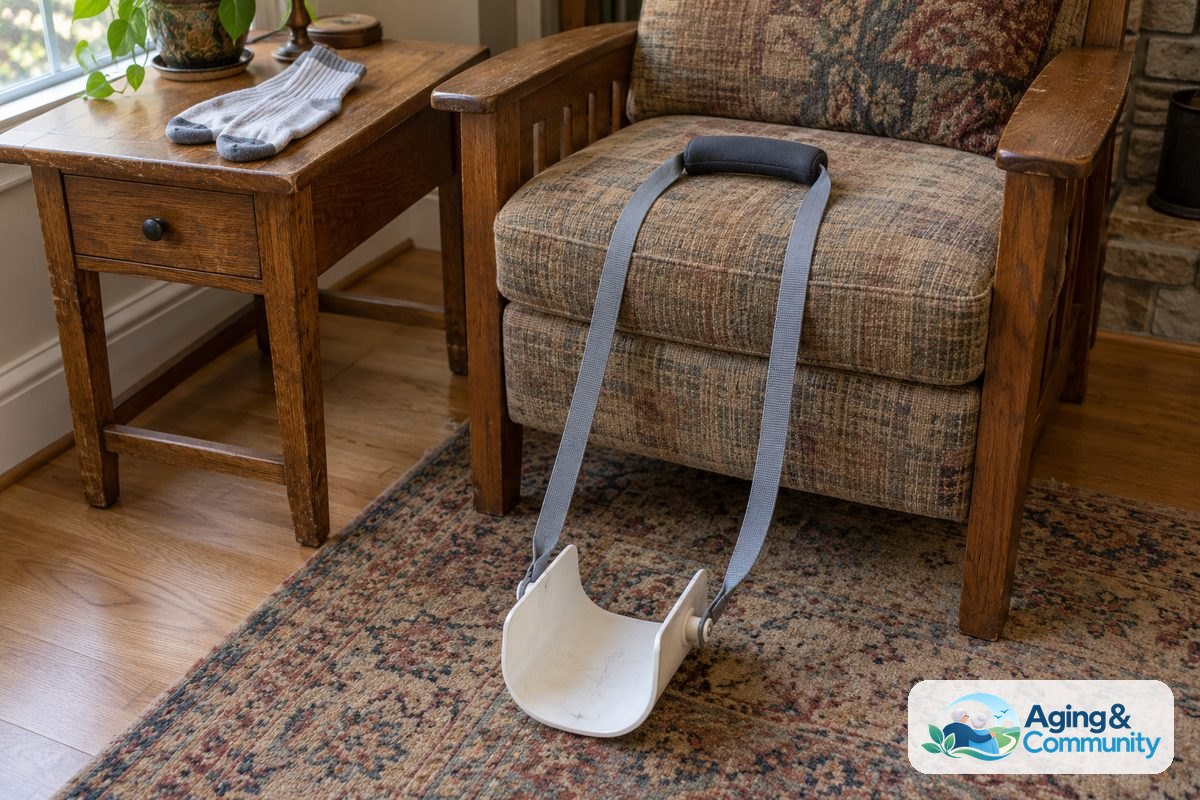
Take your time and set everything up before you begin. Place your socks on a nearby table at waist height so you do not have to lean over to pick them up. Small adjustments to your environment make everyday tasks feel calm and manageable.
Frequently Asked Questions
What should I search for when looking for video demonstrations?
When searching online video platforms, type clear phrases into the search bar. Phrases like flexible sock helper tutorial or how to put on socks without bending will bring up clear visual walkthroughs from therapists and helpful product guides.
Why does my sock aid keep flipping over on the floor?
The plastic cradle may flip over if the cords are pulled unevenly or if the tool is dropped too quickly. Lower the cradle slowly using both hands, and keep gentle tension on the ropes so the flat bottom sits squarely on the floor.
Can I use this device to take my socks off?
Sock aids are designed only to put socks on, not to remove them. To take your socks off without bending down, you can use a dressing stick, a reacher tool, or a long handled shoe horn with a notch designed to push the fabric down past your heel.
Do these tools work on ankle socks?
Very short ankle socks or no-show socks can be tricky because they do not have enough fabric to wrap fully around the plastic shell. Mid-calf, crew, and knee-high socks work best because their longer tops stay securely in place until your foot is all the way in.
How do I clean my dressing equipment?
Most plastic dressing aids can be wiped clean using a damp cloth with mild dish soap and warm water. Allow the plastic base and the fabric ropes to air dry completely before using them again.