

Learning how to use bath lift chairs can make your daily routine far more comfortable and secure. To use a bath lift properly, you raise the seat level with the tub edge, sit down sideways, swing your legs into the water, and use the waterproof remote to gently lower yourself into the tub. Reversing these simple motions lets you rise back up smoothly when you finish your soak.
A powered bath chair offers independence to older adults who want to enjoy a full soak without struggling to stand up from the tub floor. The seat runs on a rechargeable battery, so there are no dangerous cords near the water. With just a few simple habits, you can bathe with peace of mind and complete comfort.

How to Use a Bath Lift in Simple Steps
- Check the battery and set the lift: Make sure the hand control is fully charged, place the unit firmly on the clean tub bottom so the suction cups hold, and press the up button until the seat reaches the rim.
- Fill the tub with warm water: Add water at your preferred temperature before you get in, making sure the water level leaves room for your body so the tub does not overflow.
- Sit down on the seat flap: Stand with your back to the tub, reach for stable support, and gently sit down on the side flap of the raised bath chair.
- Swing your legs into the tub: Turn your body slowly toward the front of the tub while lifting one leg at a time over the edge until you sit squarely in the center of the seat.
- Lower the seat into the water: Hold the hand control, press the down button, and let the motor smoothly lower you into the warm bath until you reach a comfortable depth.
- Enjoy your bath comfortably: Keep the waterproof controller within reach while you wash, taking your time to relax without rushing.
- Raise the seat back to the top: When you finish, press the up button on the remote to lift the seat all the way to the rim so the side flaps rest flat on the edge.
- Swing your legs out to exit: Turn your torso sideways, lift each leg carefully over the tub wall, plant your feet flat on a dry floor, and stand up steadily.

Common Mistakes to Avoid
- Entering while the seat is down: Never try to step down into a tub lift that is already at the bottom of the basin, as this requires deep bending and invites slips.
- Forgetting to charge the hand control: Always check the battery light before starting your bath so the motor has plenty of power to lift you back up.
- Skipping proper suction cup placement: Placing the lift over textured tub strips or peeling surfaces keeps the suction feet from sealing securely to the tub floor.
- Standing up before reaching the top: Wait until the seat has completely finished its upward travel and the side flaps rest on the tub edge before trying to stand.
- Rushing the transfer: Moving too fast while swinging your legs can throw off your balance, so take each movement one calm step at a time.
- Using bath oils that create slick surfaces: Heavy oils coat the plastic seat and tub floor, which makes sliding off or standing up far more difficult.
When to Seek Professional Guidance
If you feel nervous during any part of the transfer, consider asking an expert for personalized advice. An occupational therapist can visit your home to observe how you move in your bathroom. They can show you proper body mechanics, recommend helpful adjustments, and guide you on whether a powered chair fits your physical strength.
Physical therapists are also great resources for building leg strength and balance. If you need help finding qualified specialists in your neighborhood, contact the Eldercare Locator to connect with local support agencies. Tell the specialist that you want to evaluate your bathroom setup and learn safe ways to transfer into the tub. Never hesitate to ask a family member or caregiver to stand nearby while you practice your first few lifts.
Preparing Your Bathroom for Safe Transfers
Getting your bathroom ready makes using a lift much easier. Clear away loose clutter, such as shampoo bottles on the ledge or wet towels on the floor. Make sure the floor outside the tub is completely dry and covered with a non-skid mat that stays firmly anchored when you step onto it.
Solid handholds provide essential stability as you sit down and stand up. Reviewing proper grab bar placement in bathtub areas can help you decide where wall-mounted bars offer the best leverage. Never grab onto towel racks, sliding shower doors, or soap dishes, as these fixtures cannot support your full body weight.
Taking practical home precautions supports long-term goals for independent living. As noted by the National Institute on Aging: Aging in Place resources, making small home modifications, such as learning the bidet vs washlet difference, allows people to stay in their beloved homes comfortably and securely.

Comparing Bath Lifts and Other Bathing Options
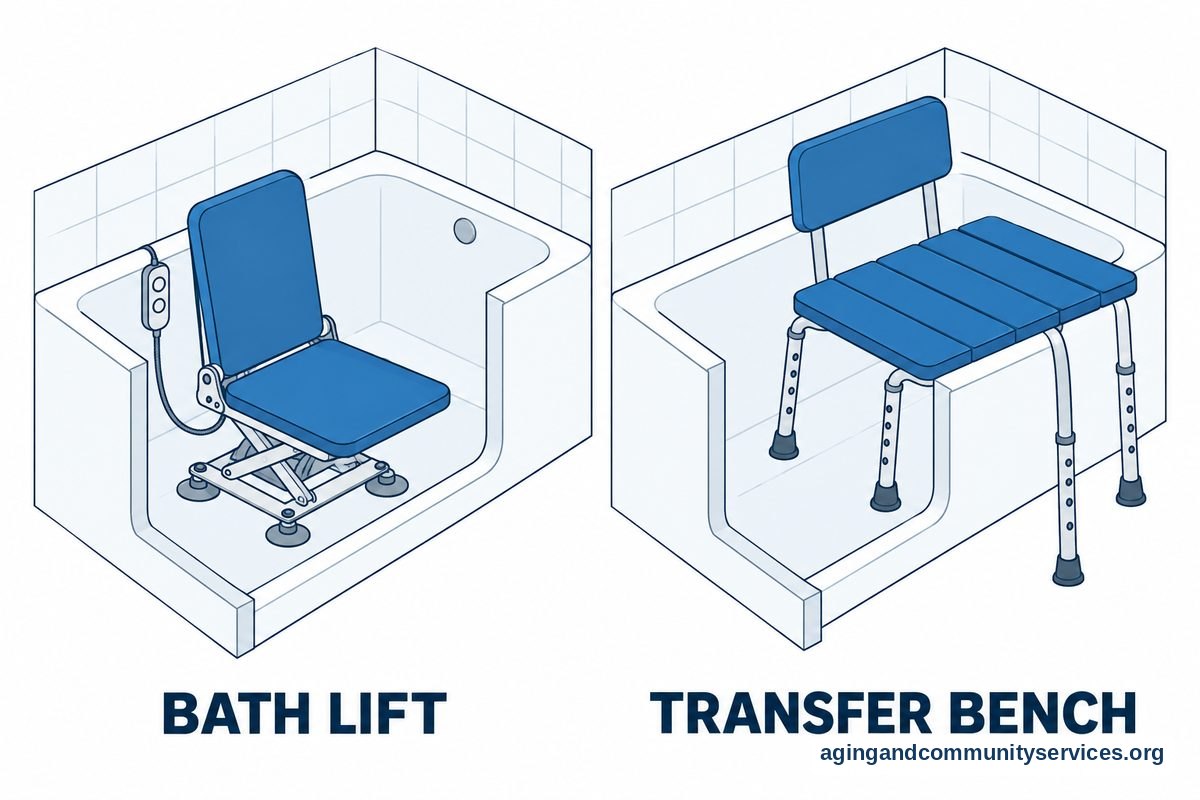
Every person has unique physical needs, and a powered lift is only one of several helpful options. If you do not require a motorized seat to lower you deep into the water, a standard transfer seat might be an alternative. You can learn how to use tub transfer bench equipment to slide across the tub wall while remaining in a seated position above the water line.
There are many styles of non-powered seating available today. Exploring different types of tub transfer benches can help you decide whether a manual sliding bench or a powered bath lift matches your daily routine better. In general, powered lifts suit people who want a submerged soak, while benches work best for seated showers.
Understanding all your choices can lower the risk of common bathroom mishaps, according to guidance from the National Institute on Aging: Falls and Falls Prevention project. If mobility needs change significantly over time, some families also explore walk-in bathtubs or curbless roll-in showers.
Caring for and Storing Your Bath Lift
Routine care keeps your bath lift working reliably for years. Rinse the seat with fresh water after each bath to remove soap residue. Wipe down the plastic surfaces with a mild household cleaner, avoiding abrasive pads that could scratch the smooth finish.
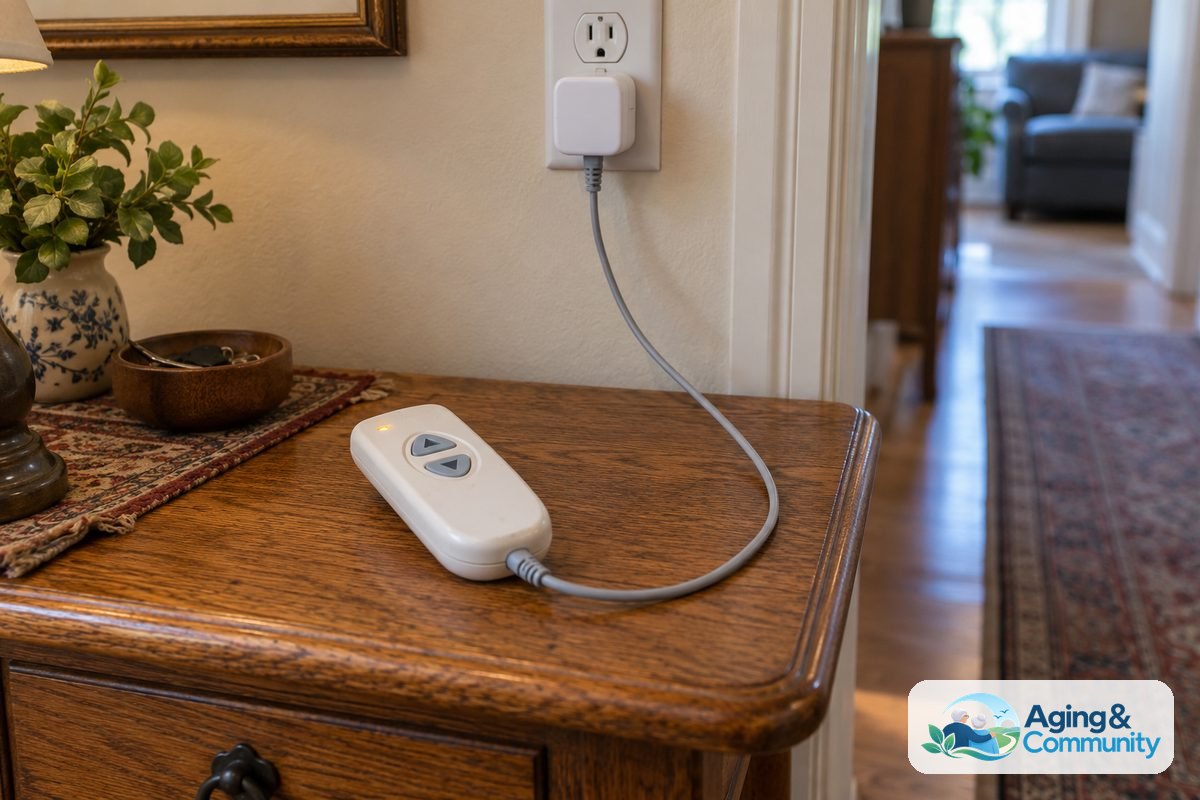
Most lift models come apart into two lightweight sections: the base plate and the seat back. If family members share the bathroom, you can quickly release the suction cups, lift out the backrest, and remove the base so others can use the shower. Store the hand control on its charger in a dry room away from excess moisture.
Frequently Asked Questions
What happens if the battery dies while I am down in the tub?
Modern powered bath chairs feature built-in safety systems that monitor battery reserves. If the battery lacks enough power to raise you back up, the controller will not allow the chair to lower in the first place. You will only be able to descend into the tub when there is ample charge to bring you back up to the top.
Can I leave the bath lift inside the bathtub all the time?
Yes, you can leave the unit in the tub if other household members do not mind bathing around it. However, removing it occasionally to clean beneath the suction cups is a good idea. Cleaning the tub bottom keeps soap scum from interfering with the grip of the suction pads.
Do I need an electrician to install a bath lift?
No electrical work is required. Bath lifts run on self-contained, sealed rechargeable batteries located inside the waterproof hand control. You simply unplug the hand remote from the chair, bring it to an ordinary wall outlet in another room, and plug it in to recharge between uses.
Can a bath lift recline back for washing hair?
Many modern bath lifts include a reclining backrest that tilts backward once the chair reaches the bottom of the tub. Holding down the down button after reaching the bottom smoothly tilts the backrest. Pressing the up button brings the backrest upright again before the lift starts moving upward toward the rim.
Will a bath lift work in any bathtub?
Most standard rectangular tubs accommodate a lift easily. However, tubs with deep corners, unusual curves, or heavily textured floor tiles may not allow the suction cups to seal properly. Always measure the width and length of your tub floor to ensure the base sits completely flat without rocking.