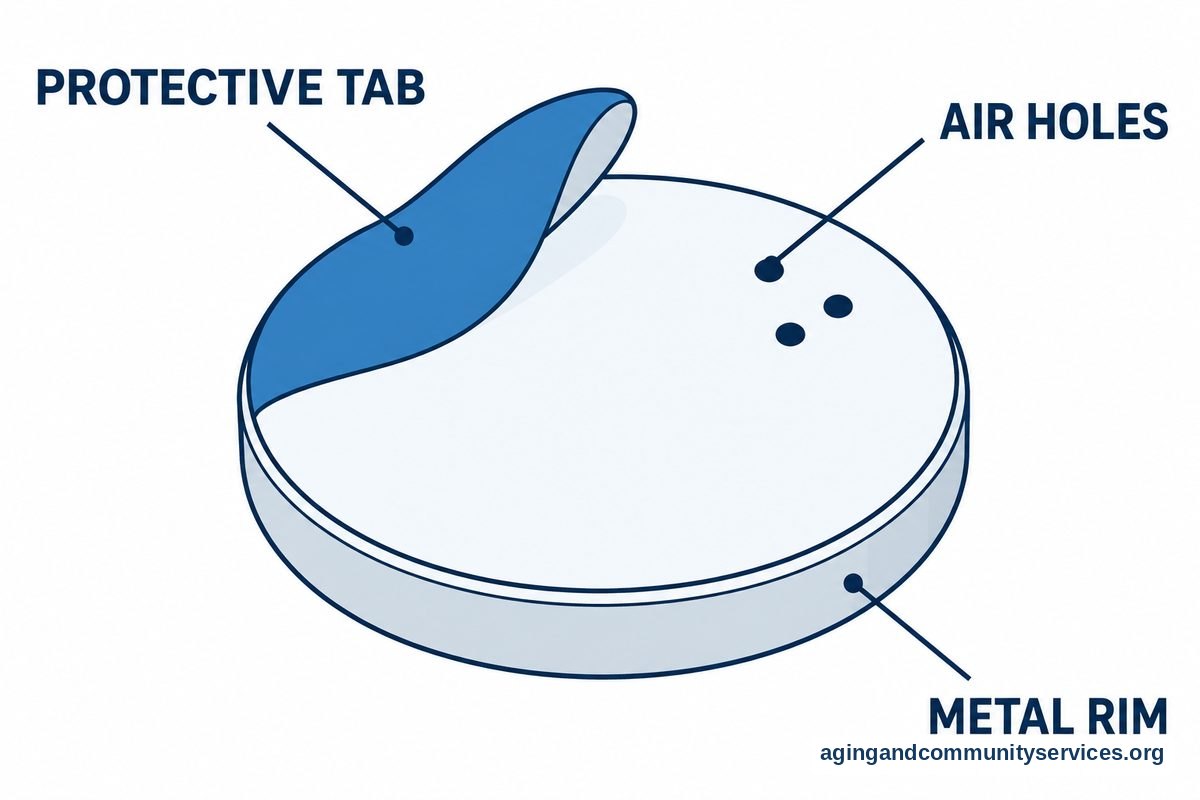
Learning how to use hearing aid batteries properly ensures your devices deliver clear, dependable sound throughout the day. To use them, you remove the protective colored sticker, let the battery rest for a full minute to activate, and place it gently into the battery drawer with the flat side facing up. Keeping your hands clean and dry makes this daily routine quick and trouble-free.
Most traditional hearing aids rely on zinc-air button cells. These tiny power sources are unique because they use the oxygen in the air around you to generate electricity. Taking a moment to understand how they work can help you get the most life out of every pack you open.

Steps for How to Use Hearing Aid Batteries
- Wash and dry your hands thoroughly. Clean hands keep natural skin oils, dirt, and moisture from coating the battery surface or getting inside the delicate compartment of your device.
- Prepare a flat, well-lit workspace. Sit at a clear table and spread out a soft towel or cloth so a dropped battery will not bounce or roll onto the floor.
- Peel off the colored adhesive tab. Pull the small sticker straight off the positive side of the fresh zinc-air battery to expose the tiny air holes underneath.
- Wait at least one full minute. Allow the battery to sit undisturbed on the table so air can enter the holes and bring the battery chemistry up to full operating power.
- Open the hearing aid battery door. Use your fingernail or a small plastic tool to swing the battery drawer fully open, taking care not to force the plastic hinge.
- Remove the spent battery. Lift out the old cell with your fingers or use the small magnet found on many basic cleaning tools to lift it cleanly out of the tray.
- Orient the new battery correctly. Look for the flat side marked with a positive plus symbol and line it up to match the positive marker on the hearing aid door.
- Set the battery in the drawer. Place the cell directly into the cup or slot of the door rather than pushing it deep into the body of the aid itself.
- Close the door gently. Swing the drawer shut until it snaps flush with the case, stopping immediately if you feel resistance so you can recheck the position.
If you also use daily maintenance accessories, remember that moisture management is just as important as fresh power. You can read our guide on how to use hearing aid drying capsules to keep your battery compartment clean and dry overnight.
Common Mistakes to Avoid
- Closing the door without waiting for activation: Inserting the battery immediately after peeling the tab can shorten its running life because oxygen has not fully filled the cell.
- Forcing a stubborn battery door shut: If the battery door will not close easily, the cell is likely upside down or misaligned, and pressing hard can snap the delicate plastic hinge.
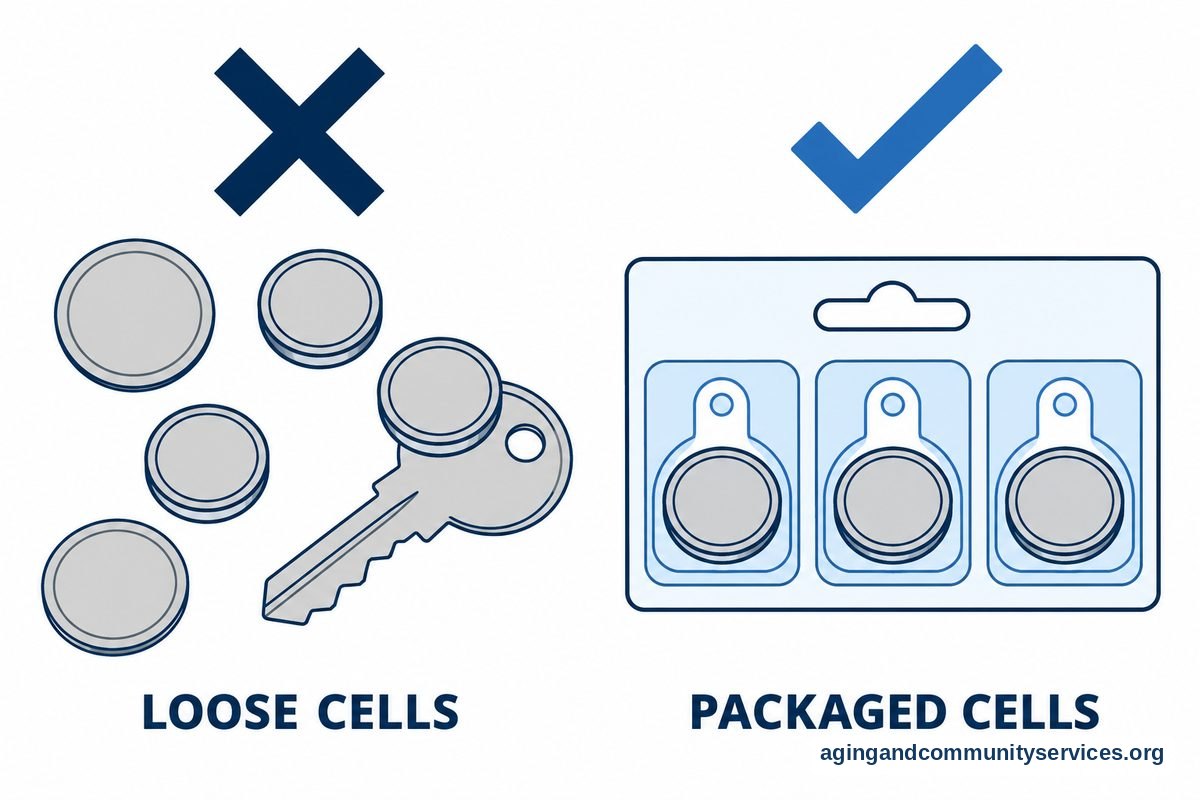
- Carrying loose batteries in pockets or purses: Metal items like keys, coins, or paperclips can touch the battery terminals and instantly drain the charge or cause heat buildup.
- Storing spare packs in the refrigerator: Cold temperatures cause condensation inside the packaging, which damages the zinc chemistry and ruins the seals.
- Removing the protective tabs early: Once you peel the sticker off a zinc-air cell, it stays active and slowly drains even if you do not place it inside a device.
- Leaving dead batteries inside the hearing aid: Depleted cells can swell, corrode, or leak chemicals over time, potentially damaging the internal electronics.
When to Call for Help or Get Professional Advice
While changing a battery is a regular part of owning a device, unexpected power troubles can happen. If a brand-new battery dies within a day or two, or if your hearing aid sounds weak right after a change, it is wise to reach out for assistance. Start by contacting your dispensing audiologist, hearing instrument specialist, or the customer service team for your device manufacturer. See the MedlinePlus overview of hearing aids for more background.
When you call, have a few practical details ready to share. Tell the specialist the exact battery size number and color code you are using, the brand of the battery, and how long the previous batch typically lasted. Mention whether the battery door feels loose, if you see any powdery buildup inside the contacts, or if the hearing aid beeps repeatedly right after you close the drawer.
For older adults who find handling tiny button cells difficult due to vision changes or hand stiffness, community programs can offer practical help. You can connect with local support and transportation services through the Eldercare Locator to find nearby clinics that check devices. An audiologist can also explain options such as magnetic insertion wands, larger battery doors, or rechargeable hearing aids that do not require changing small cells at home.
Understanding Battery Sizes and Color Codes
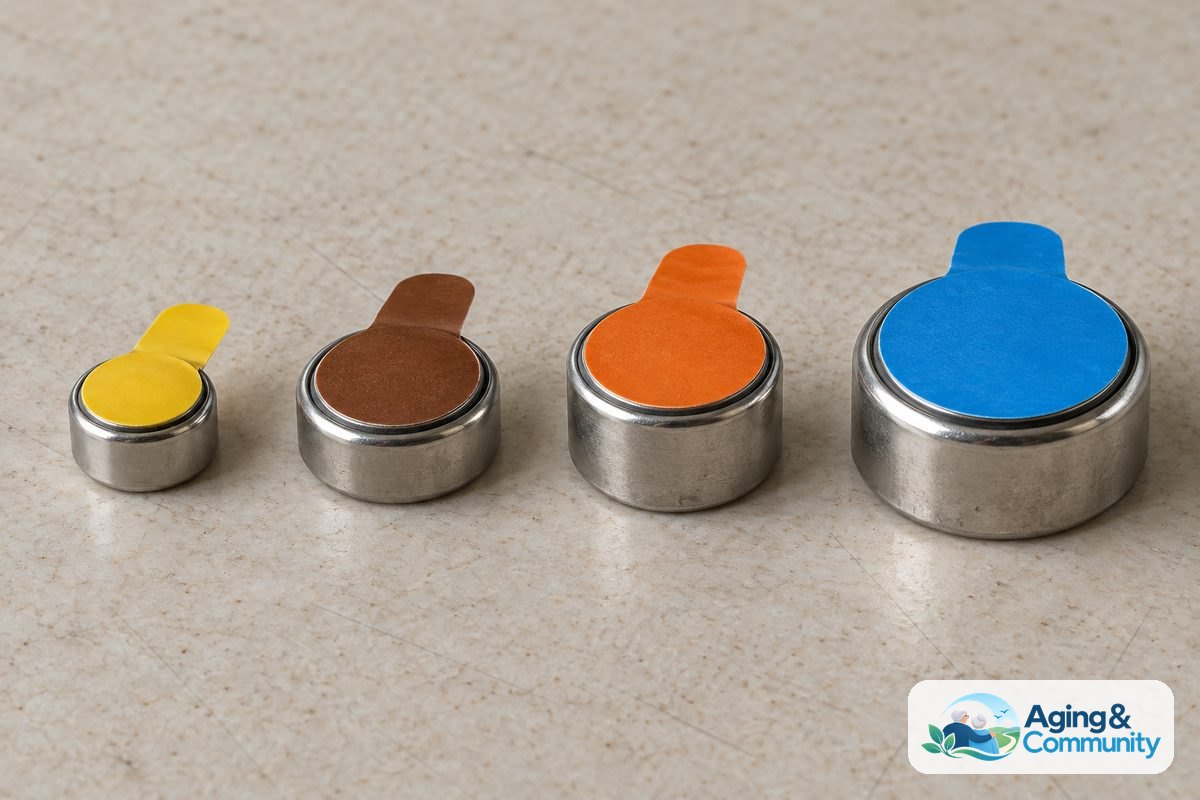
Hearing aid batteries come in four main sizes, and the industry uses a universal color-coding system across all brands. This makes finding the right replacement simple, even if you switch manufacturers or buy supplies while traveling. The four standard sizes include:
| Size Number | Color Code | Typical Device Style |
|---|---|---|
| 10 | Yellow | Completely-in-canal (CIC) and small invisible models |
| 312 | Brown | Mini behind-the-ear (BTE) and receiver-in-canal (RIC) |
| 13 | Orange | Standard behind-the-ear and larger in-the-ear styles |
| 675 | Blue | High-power behind-the-ear devices |
Checking the color on your current package is the fastest way to confirm you are buying the correct power source. If you are ever unsure about your model, you can review how to choose a hearing aid to learn more about the physical styles and their matching requirements.
Proper Storage and Daily Care Tips
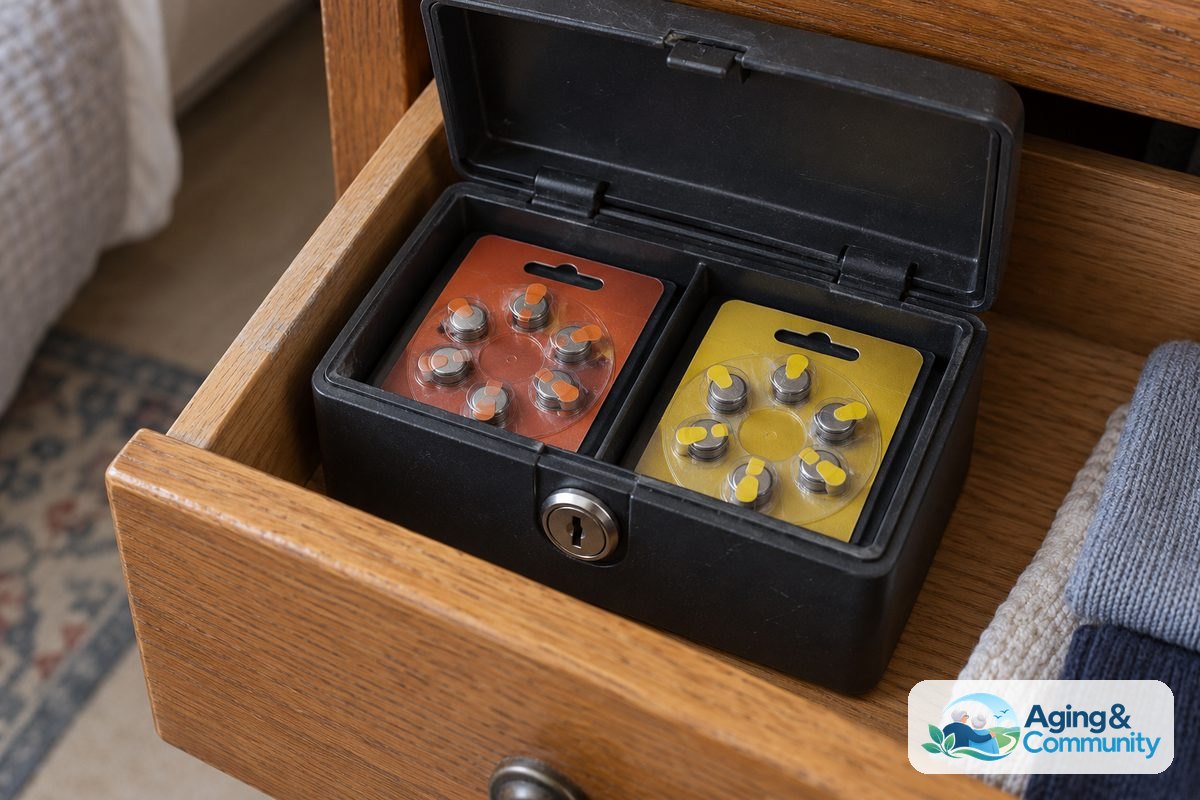
To keep your power cells fresh, keep unopened packs at standard room temperature in a dry drawer or medicine cabinet. Keep them away from sunny windowsills, steam from the bathroom shower, and the reach of curious pets or young grandchildren. Button batteries pose a serious swallowing risk, so keeping them secure is essential for household safety.
At the end of each day, open the battery door completely before you go to bed. Opening the drawer turns the device off, which preserves power and lets fresh air circulate through the casing. This step allows trapped sweat and ear moisture to evaporate before it can corrode the delicate metal springs inside.
Routine care goes hand in hand with good power habits, including knowing how to change wax guards. Using simple tools to sweep away earwax keeps the sound ports clear so your battery does not have to work as hard to push audio into your ear canal. You can learn more by checking our guide on how to use hearing aid cleaning tools safely.
Frequently Asked Questions
How long do hearing aid batteries usually last?
Depending on the size of the cell and how many hours a day you wear your devices, standard batteries generally last between three and ten days. Smaller size 10 batteries may last three to five days, while larger size 13 or 675 batteries often provide power for a week or longer. Advanced features like wireless streaming and high amplification settings draw more current and will reduce this timeline.
Why do hearing aid batteries need to sit for a minute after peeling the tab?
Zinc-air batteries require atmospheric oxygen to generate an electrical current. The adhesive tab seals the air holes to keep the zinc inactive while the package sits on the store shelf. Once you peel the sticker, letting the cell sit for sixty seconds allows air to circulate fully through the internal filter so the cell reaches its full operating voltage before taking on an electronic load.
Can I recycle used hearing aid batteries?
Because modern zinc-air cells contain virtually no mercury, many local trash authorities permit them to be discarded in household trash. However, participating in local battery recycling drop-offs is the preferred choice to keep metals out of municipal landfills. Many local community centers offering a senior technology class, senior centers, and electronics retailers maintain free drop boxes for button cell recycling.
How do hearing aids differ from basic personal sound amplifiers in battery usage?
Medical hearing aids adjust volume across specific frequencies to match your hearing profile, which requires steady digital processing power from a calibrated cell. In contrast, simpler amplifiers boost all incoming sounds equally without complex tuning. You can read our detailed comparison of a hearing aid vs hearing amplifier to see how internal processing demands affect overall battery draw.
What should I do if my hearing aid beeps soon after putting in a new battery?
A quick warning chime right after closing the door usually means the battery is weak, seated backward, or not making firm contact with the internal prongs. First, open the door, take the battery out, and verify that the flat positive side is facing up. If the orientation is correct, wipe the cell with a dry tissue to remove any residue and try again, or test a fresh cell from a different package.