

Learning how to use knee scooter in bathroom spaces requires taking your time, clearing a wide path, and locking your brakes before every move. Small rooms and wet tile can make moving around feel tricky when you cannot bear weight on one leg. With simple habits and careful setups, you can navigate your daily washroom routines with comfort and ease.
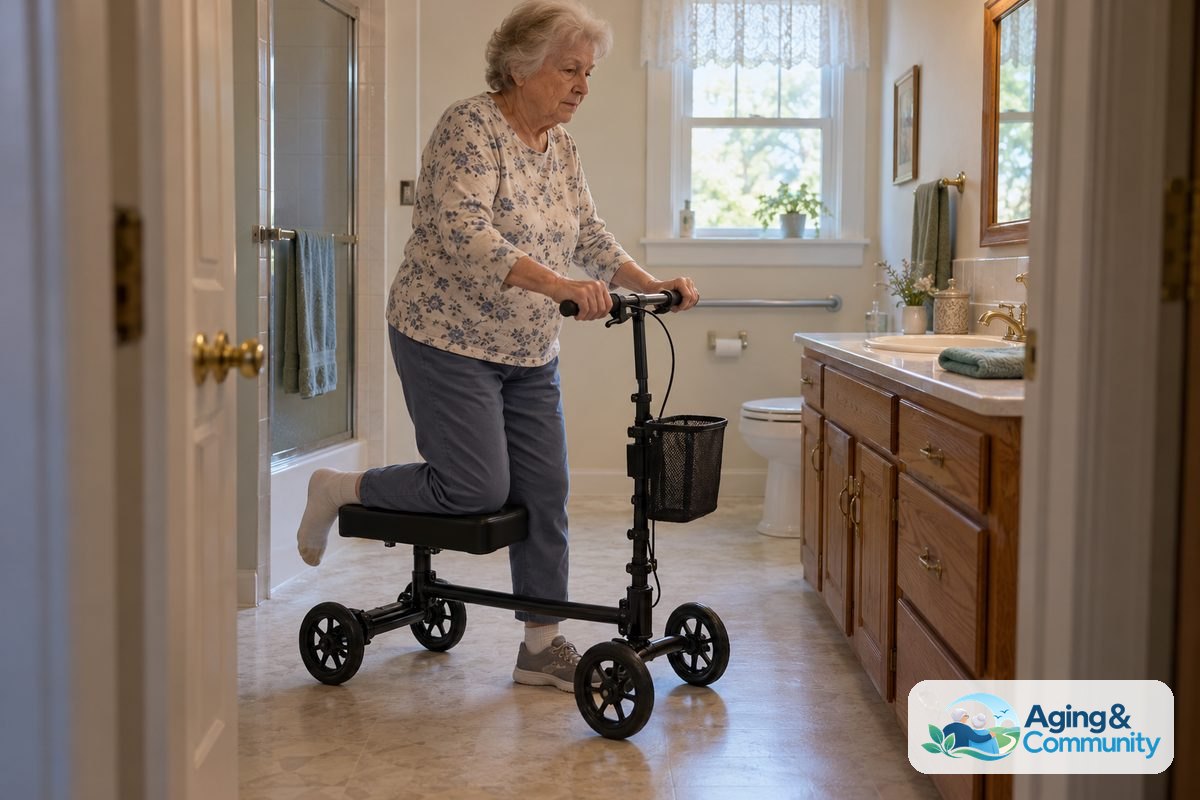
Steps for Using a Knee Scooter in the Bathroom
- Clear a wide path through the doorway. Pick up bath mats, throw rugs, wastebaskets, and laundry hampers so your wheels roll across a flat floor without catching on loose fabric.
- Approach the counter or fixture slowly. Steer straight toward your target rather than coming in at an awkward angle, keeping both grips firmly held with your upright posture steady.
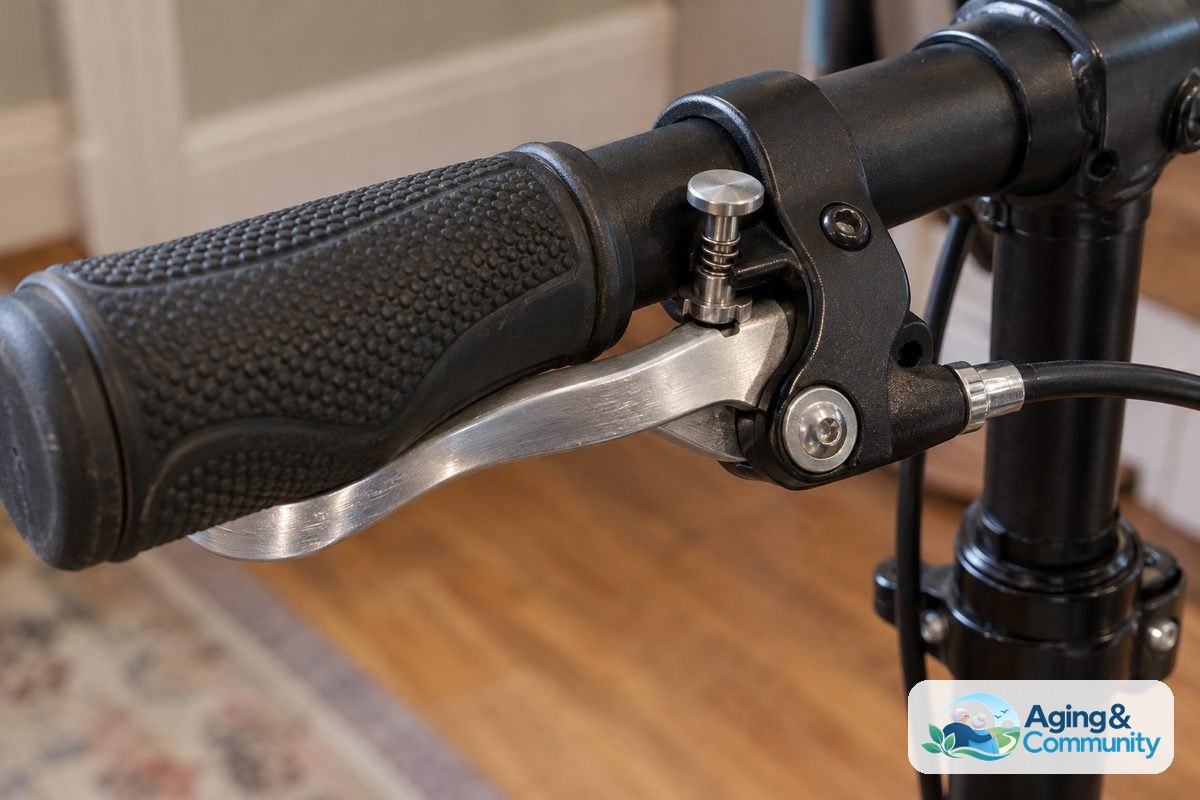
- Lock the parking brakes firmly in place. Squeeze the hand brakes and push down the locking pins on both handles to make sure the unit cannot roll while you shift your weight.
- Lower your non-injured foot to the floor. Keep your weight centered over your standing foot while your injured leg rests resting quietly on the soft pad.
- Reach for stable home surfaces before moving. Hold onto an anchored wall grab bar or heavy counter rather than towel racks, ensuring your balance remains solid before stepping down.
- Transfer your weight using tiny, careful steps. Lift your resting knee off the platform only after your balance feels steady, pivoting slowly toward the toilet or vanity.
Common Mistakes to Avoid
- Forgetting to engage the parking locks: Stepping down from a rolling platform can cause the scooter to slide out from under you. Always test the lock with a gentle push before you begin moving your leg.
- Holding onto loose fixtures: Towel bars, toilet paper holders, and glass shower doors cannot hold human body weight. Grabbing them for balance can cause them to pull free from the drywall.
- Turning the handlebars too sharply: Turning in a tight circle inside a narrow room can cause the wheels to tip sideways. Make wide, gradual turns by backing up and moving forward slowly.
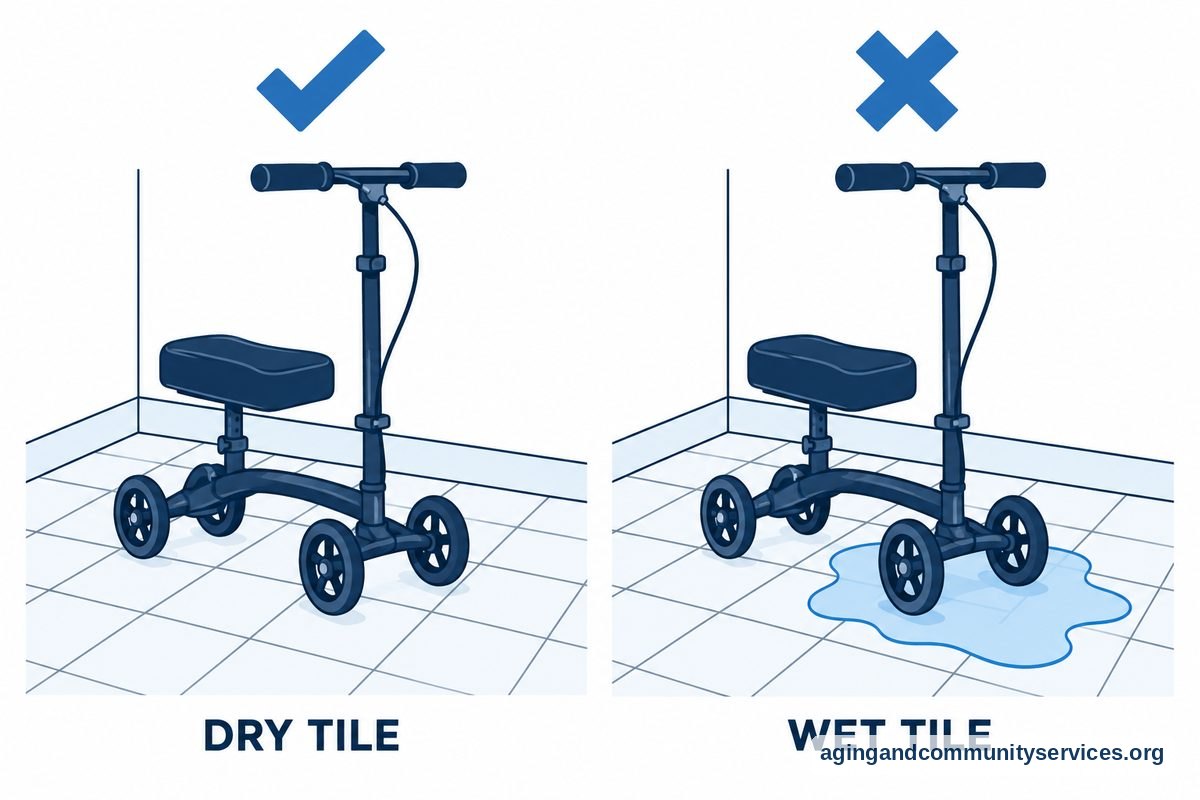
- Riding over wet bathroom tiles: Water on smooth ceramic tile reduces wheel traction and makes braking less reliable. Wipe up any puddles or moisture on the floor before you roll forward.
- Carrying items while steering: Trying to hold toiletries, towels, or cups while steering reduces your control over the brakes. Place your personal items in a scooter basket or wear a small shoulder bag instead.
When to Call for Help or Professional Advice
Sometimes bathroom spaces are simply too small for four wheels to turn around without bumping into walls. If your doorway is too narrow, or if you feel unsteady while shifting your weight off the pad, contact a physical therapist or an occupational therapist. You can also consult resources on falls and falls prevention from the National Institute on Aging to find safe home adjustment ideas.
When you speak with your therapist or doctor, tell them the exact width of your bathroom door and how much open floor space you have between fixtures. Let them know if your hands feel tired while squeezing the brakes, or if your standing leg gets shaky when you pivot. A therapist can review your routine, check your posture, and recommend personal modifications that fit your living space.
If you need extra community support or home safety resources for older adults, the Eldercare Locator can connect you with local services and mobility specialists in your area. Reaching out early ensures you have the right equipment in place during your healing process.
Preparing Your Bathroom Layout for Better Mobility
Setting up your room beforehand makes every visit much less stressful. Many people practice basic steering by reviewing how to use knee scooter guides before bringing the device into small quarters. Remove any thresholds that rise up from the floor between rooms, or place a low rubber transition ramp over the lip so your front wheels roll across without jarring your leg.
Keep extra lighting on at all times, especially along baseboards and near the doorway. Nightlights or battery-operated motion lights under the counter help you see floor hazards without fumbling for wall switches in the dark. Rearrange your personal hygiene items so everything you need rests right at counter height, eliminating any reason to bend down or stretch up high while on your scooter.
Planning for long-term comfort at home is an important part of independent living. Exploring advice on aging in place can help you make wise choices about home layouts, lighting, and grab bar placements that keep your home practical through every stage of recovery.
Transferring to the Toilet and Shower Safely
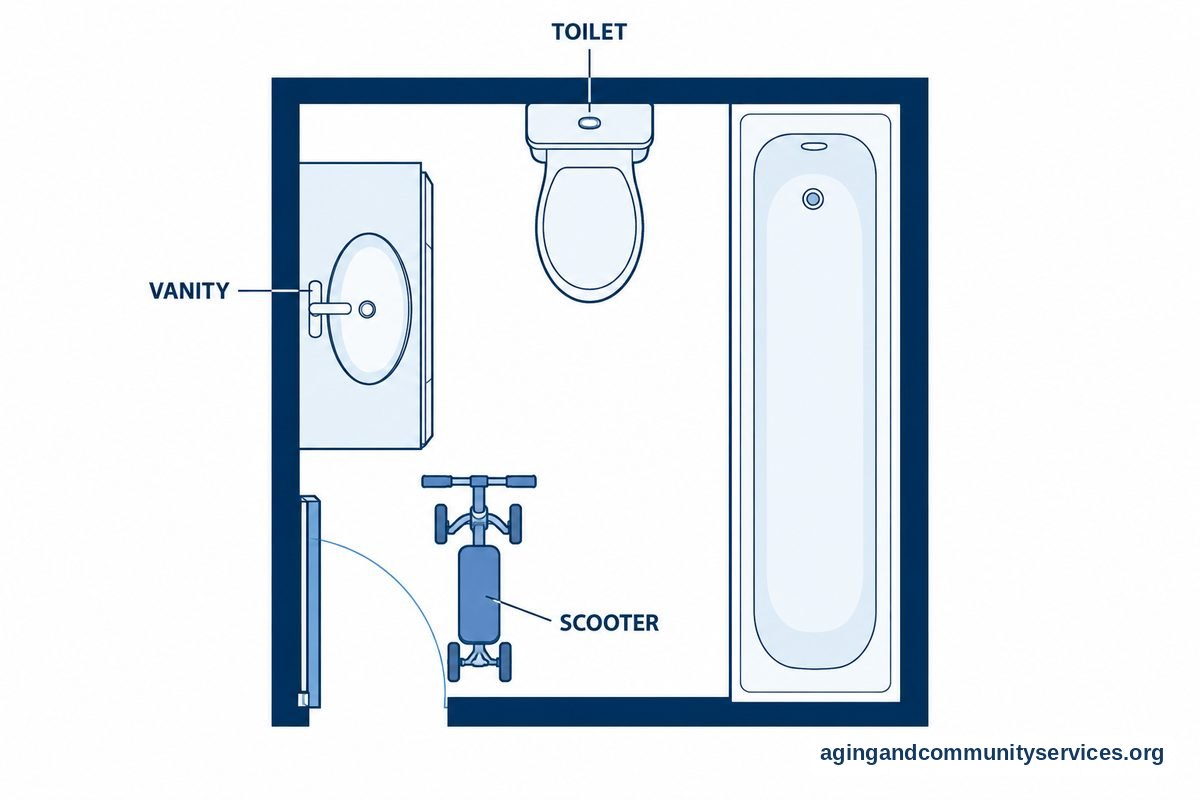
Sitting down on the toilet requires steady control and a stable base. If you are learning how to use a knee scooter after foot surgery, you must keep your healing foot elevated and completely off the floor during the transfer. Roll alongside the commode, lock the brakes, grab a secure support, and slowly lower yourself down without twisting your ankle.
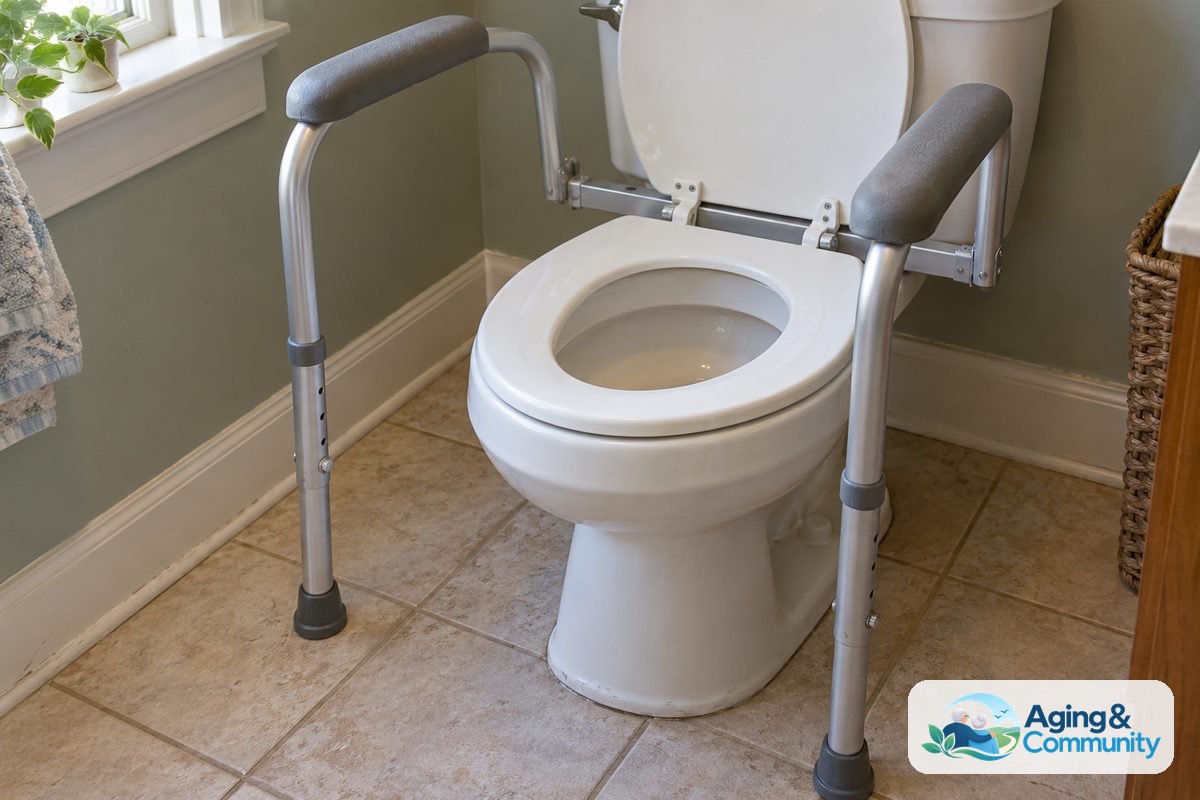
Many people find that pairing their mobility device with bathroom aids creates a much safer daily routine, much like learning how transport chairs compare to rollators. For example, learning how to use a toilet safety frame gives you two sturdy armrests to push up from when standing, which takes pressure off your healing leg. These frames bolt directly to your commode, offering dependable support that will not shift or slide across the floor.
Bathing also requires thoughtful preparation, because you cannot roll a standard mobility scooter directly into a tub or shower stall. Park your scooter just outside the dry shower entrance, lock the brakes, and transfer over to a sturdy bench. Learning how to use shower chair setups allows you to wash comfortably while seated, keeping your injured foot dry and resting outside the spray zone.
Frequently Asked Questions
Can a knee scooter fit through a standard bathroom door?
Most standard interior doors measure between twenty-eight and thirty-two inches wide, which is usually wide enough for a standard mobility scooter measuring eighteen to twenty inches across. However, narrow doors in older homes can measure twenty-four inches or less, which is what transport wheelchairs often require. Measure your doorway opening from the door face to the stop molding before bringing your scooter home to ensure it has enough clearance.
How do I back out of a small bathroom?
If your bathroom is too narrow to turn around, you will need to back out slowly in reverse. Keep both hands steady on the handlebar grips and your injured leg resting centered on the padded cushion. Use your good foot to take small, steady steps backward, checking over your shoulder after every step and keeping your wheels pointed in a straight line.
What should I do if my bathroom floor is wet?
Never ride your scooter across wet or soapy bathroom tiles. The small wheels can lose their grip, causing the unit to skid sideways when you pull the brakes. Keep an absorbent towel handy near the shower exit, dry the floor thoroughly from a seated position, or ask a family member to dry the floor before you roll out.
Can I lean on my scooter while brushing my teeth?
You can rest your knee on the pad at the bathroom sink only after both parking brake locks are fully engaged. Even with brakes locked, keep both hands in contact with the counter or handlebars for balance. Avoid leaning far forward over the sink basin, as shifting your center of gravity too far over the front wheels can make the frame unstable.
Where do I put my crutches if I use both devices?
If you switch between crutches and a scooter for tight washroom corners, place your crutches in a wall-mounted holder or lean them securely in a dry corner where they cannot slide to the floor. Make sure they do not block your scooter wheels or sit where your good foot needs to step.