

When deciding between a standard wheelchair versus transport wheelchair, the main difference comes down to who moves the chair and how easily it folds. A standard wheelchair has large back wheels that let a person push themselves independently, while a transport wheelchair has four small wheels and requires a helper to push it. Both styles offer steady support, but each serves very different daily mobility needs.

The Main Differences Between the Two Chairs
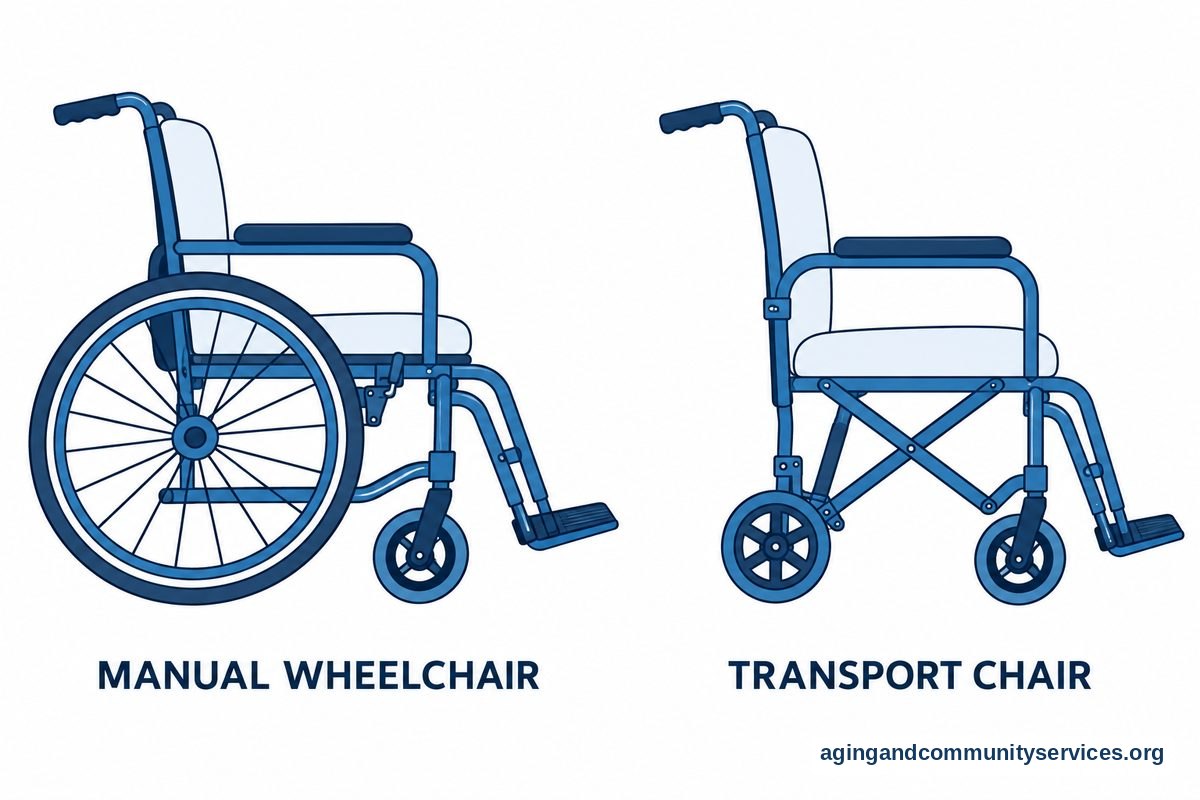
The easiest way to tell these two chairs apart is by looking at the wheels. A traditional manual wheelchair features two large rear wheels, usually 24 inches across, fitted with outer hand rims. These rims allow the rider to grip and propel the chair forward on their own.
A transport wheelchair features four small wheels, often between 8 and 12 inches across. Because these rear wheels are small, the rider cannot reach them to push the chair. A family member or caregiver must stand behind the chair and push it using the handles.
Weight is another major difference. Standard models are built with heavier steel or aluminum frames to support independent rolling. Transport chairs use lighter materials, making them much simpler to lift into a car trunk or carry up an entryway step.
Comparing Portability and Daily Travel
Getting out to community events, family dinners, and clinic visits requires equipment that fits your vehicle. If you travel often by car, the weight and folded shape of your mobility aid matter a great deal.
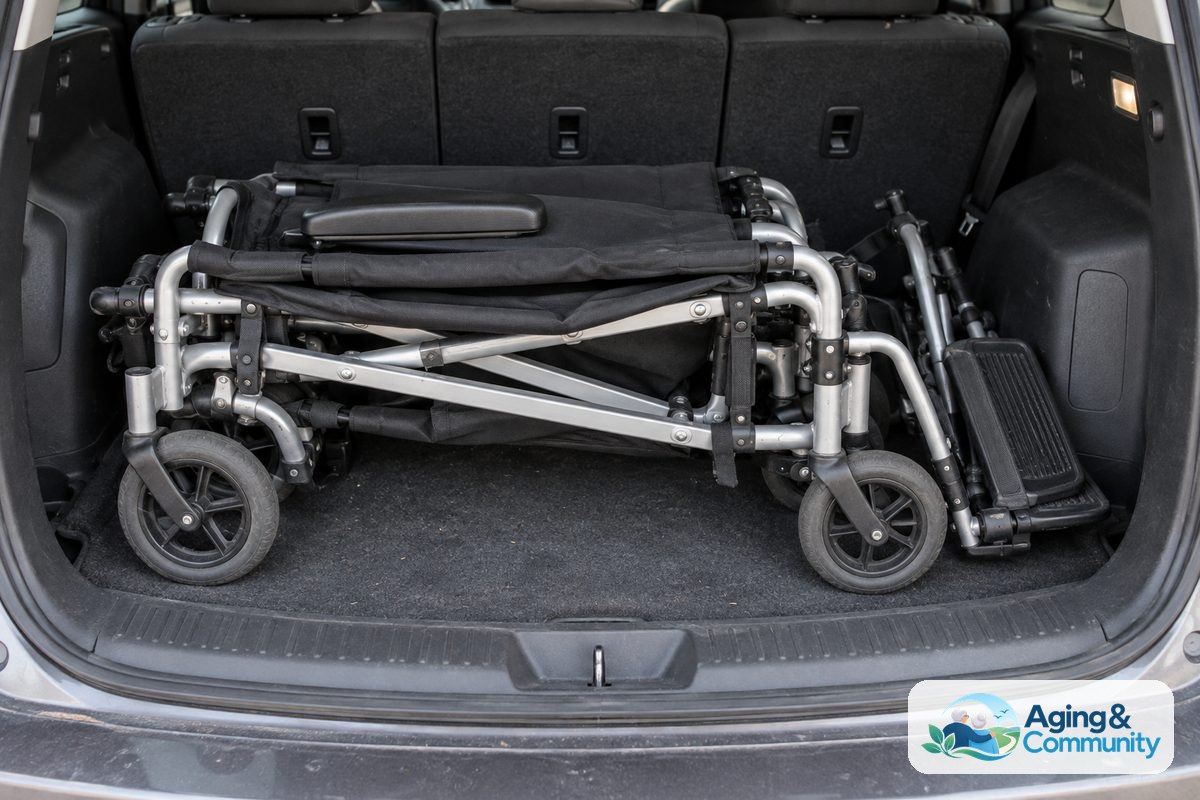
Transport chairs shine when it comes to quick trips. Most transport models fold down flat like a stroller. Many weigh under 25 pounds, which allows a spouse or adult child to lift the frame without straining their back. For extra ease during outings, families often review lightweight wheelchairs for elderly relatives to keep lifting manageable.
Standard wheelchairs are wider and noticeably heavier, often weighing 35 pounds or more. While the seat folds side to side, the large wheels take up significant trunk space. Lifting a standard chair into an SUV or back seat can be tiring if done multiple times a day.
Comfort and Time Spent Sitting
How long you plan to sit in the chair should guide your decision. Some chairs work wonderfully for quick errands, while others provide the posture support needed for an entire afternoon, much like deciding what compression garments to wear for sitting.
- Transport wheelchairs: These chairs are built for short journeys, such as moving from a parking garage into a doctor office. The seats use simple nylon fabric with minimal padding to keep the unit light. Sitting in one for several hours can lead to stiffness or aches.
- Standard wheelchairs: These chairs accommodate thicker cushions, contoured backs, and specialized headrests. They are designed for daily, prolonged sitting. You can adjust the footrests, armrests, and seat angles to support healthy posture throughout the day.
If you need advice on measuring seat widths and selecting proper back support, reviewing how to choose a wheelchair can help you match dimensions to your body.
Independence and Home Navigation
Your living space and desire for self-reliance play a huge role in this choice. Moving safely around your own house helps with aging in place comfortably and securely.
A standard wheelchair gives you the freedom to move from the bedroom to the kitchen without waiting for help. If you have good upper body strength, you can steer yourself, pause when you want, and maintain your personal routine. However, standard chairs have a wider footprint, which can make turning in narrow hallways or older doorways a bit tight.
A transport chair is much narrower, allowing it to glide through slim interior doors and compact bathrooms with ease. The trade-off is a total loss of independent movement. Once seated in a transport chair, you must wait for another person to move you. If you need a compact frame for supervised outings, learning how to choose a transport chair will point you toward the right features.

Safety and Transfers
Getting in and out of any mobility device requires steady balance and reliable brakes. Both styles feature parking brakes, but their locations differ based on who operates the chair.
Standard wheelchairs place push-to-lock brake levers on the side of the seat frame. The rider can lock and unlock these brakes independently before standing up. Transport chairs often place hand brakes on the pushing handles for the caregiver, along with foot brakes down by the rear wheels.
Safe movement between surfaces is critical for older adults. Using steady techniques and home tools can reduce balance troubles. The National Institute on Aging: Falls and Falls Prevention resource offers helpful guidance on reducing trip hazards and maintaining household balance. For vehicle travel, learning how to use transfer board from wheelchair to car can make sliding across seats smoother and safer for everyone involved.

Quick Comparison Table
Here is an easy reference to help you weigh both options side by side:
| Feature | Standard Wheelchair | Transport Wheelchair |
|---|---|---|
| Rear Wheel Size | Large (usually 24 inches) | Small (usually 8 to 12 inches) |
| Who Pushes | Rider or caregiver | Caregiver only |
| Average Frame Weight | 35 to 45 pounds | 15 to 25 pounds |
| Seating Comfort | High, suited for all-day use | Basic, suited for brief trips |
| Doorway Clearance | Requires wider doorways | Fits through narrow openings |
| Car Trunk Storage | Bulkier, takes significant space | Compact, folds down quickly |
What You Can Do Next
Choosing the right mobility equipment becomes much easier when you break the process into simple, practical steps. Here is how you can move forward with confidence:
- Track your daily routine: Write down where you plan to use the chair most. Note whether it will serve primarily for car trips to appointments or for daily movement inside the house.
- Measure your doorways: Take a tape measure to the narrowest doors in your home, especially the bathroom and bedroom. Compare these numbers against chair widths.
- Talk with a professional: Schedule a consultation with a physical therapist or occupational therapist. They can evaluate your sitting balance, arm strength, and posture needs to recommend the right seat size.
- Test both styles in person: Visit a local medical supply showroom. Have your family caregiver try folding and lifting each model into the car trunk to see what feels comfortable.
- Find community resources: If you need local assistance locating low-cost equipment or loan closets, reach out to the Eldercare Locator to connect with support services in your county.
Frequently Asked Questions
Can one person use both types of chairs?
Yes, many families find it practical to keep both types on hand. They may use a standard wheelchair at home for independence and keep an ultralight transport chair in the car trunk for doctor visits and shopping trips.
Can an older adult push themselves in a transport chair?
No, the back wheels on a transport chair are too small and sit too far back for the rider to reach. While some people try to shuffle their feet on the floor to scoot forward, the chair is engineered to be propelled by a caregiver walking behind it.
Are transport chairs covered by insurance?
Coverage depends entirely on your specific insurance plan and medical necessity. Most basic policies only cover mobility devices intended for daily use inside the home. A doctor and physical therapist can help submit documentation regarding your physical needs.
How do I know what seat width to buy?
Measure across the widest part of your hips and thighs while seated on a firm chair. Add one to two inches to that measurement so the chair sides do not press against your skin. Common seat widths range from 16 to 20 inches.
Can I put a pressure-relief cushion on a transport chair?
Yes, you can add an ergonomic seat cushion to improve comfort during an outing. Keep in mind that a thick cushion raises your sitting height, which changes how your feet rest on the footplates.