

Learning how to use shower chair after hip replacement helps you stay clean and comfortable while protecting your healing joint. A stable seat keeps you safe on wet surfaces and allows you to follow your surgeon movement rules. With a few simple setup adjustments and careful movements, bathing can feel secure and manageable again.
Taking a shower is often one of the first daily routines older adults return to after surgery. Following the right process protects your new hip from unnecessary strain and keeps your balance steady. Here is how to prepare your bathroom and complete your shower step by step.

How to Use a Shower Chair After Hip Surgery: Step-by-Step
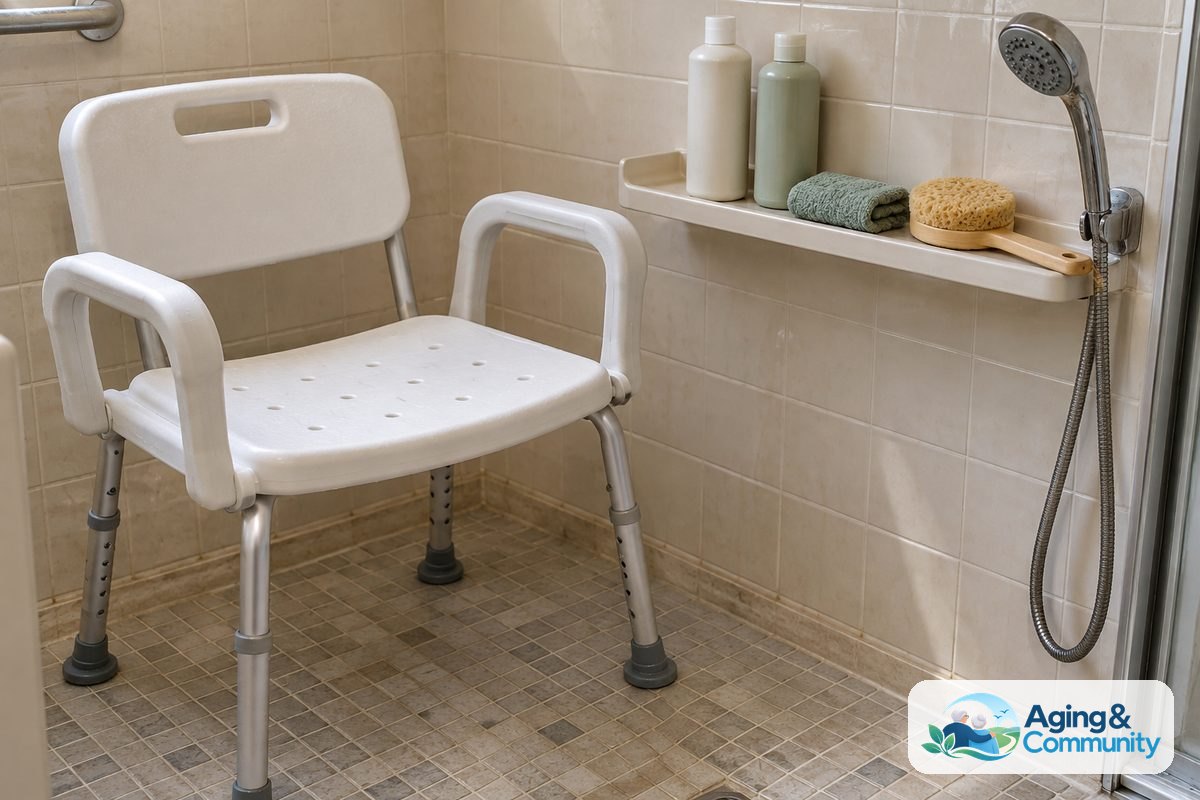
- Adjust the chair height: Set the seat height so that your knees stay lower than your hips when you sit, which protects the healing joint from bending past a ninety degree angle.
- Prepare all your bathing supplies: Place your soap, shampoo, washcloth, and a handheld shower head within arm reach before you step near the shower so you do not have to twist or bend.
- Back up using your walking aid: Walk backward toward the shower opening using your walker until you feel the edge of the shower base or stall against the backs of your legs, as described in guides on how to use walker after hip replacement.
- Reach back for the chair armrests: Extend your operated leg slightly forward, keep your weight on your stronger leg, and reach one hand back at a time to grip the sturdy armrests of your chair.
- Lower yourself slowly onto the seat: Gently ease your body down onto the center of the seat without plopping or leaning far forward at your waist.
- Pivot your legs into the stall: Slowly bring one leg at a time into the shower, keeping your surgical leg supported and avoiding any inward twisting of your toes.
- Wash with long-handled tools: Use a handheld shower wand and a long-handled sponge to wash your lower legs and feet so you do not bend your waist too far forward.
- Dry off while still seated: Use your towel to dry as much of your upper body and thighs as possible before standing to keep your hands and feet from slipping.
- Stand up leading with your strong leg: Slide toward the front edge of the seat, extend your operated leg slightly forward, push up using the armrests, and regain your balance before reaching for your walker.
Common Mistakes to Avoid
- Sitting on a chair that is too low: A seat that sits below knee level forces your hip to bend past ninety degrees, which goes against standard hip precautions given by your surgical team.
- Reaching for items out of reach: Twisting your torso or leaning down to grab a dropped bottle of soap can twist your hip joint and cause a sudden loss of balance.
- Grabbing towel bars or shower curtains for support: Standard towel racks and curtain rods are not built to hold body weight and can tear away from the wall during a slip.
- Crossing your legs while seated: Crossing your legs or bringing your ankles together can break hip movement restrictions during the early weeks of your recovery.
- Rushing to stand up on wet surfaces: Standing too fast without drying your hands or confirming your footing on a non-skid mat increases the chance of slipping.
When to Call for Help or Professional Guidance
Always speak with your surgeon, physical therapist, or occupational therapist if you are unsure whether your bathroom setup is safe. If you feel dizzy, unsteady, or notice new pain in your hip when sitting down or standing up, pause your routine and ask for guidance. You should also reach out to your care team if you notice swelling, redness, or drainage around your incision after bathing.
When you contact your therapist or doctor, describe the exact layout of your bathroom. Tell them whether you have a walk-in stall or a standard bathtub, the height of your shower chair, and whether you have grab bars secured into wall studs. If you need help finding local resources for bathroom safety evaluations, the Eldercare Locator connects families to support services in their area.
Choosing the Right Equipment for Your Bathroom
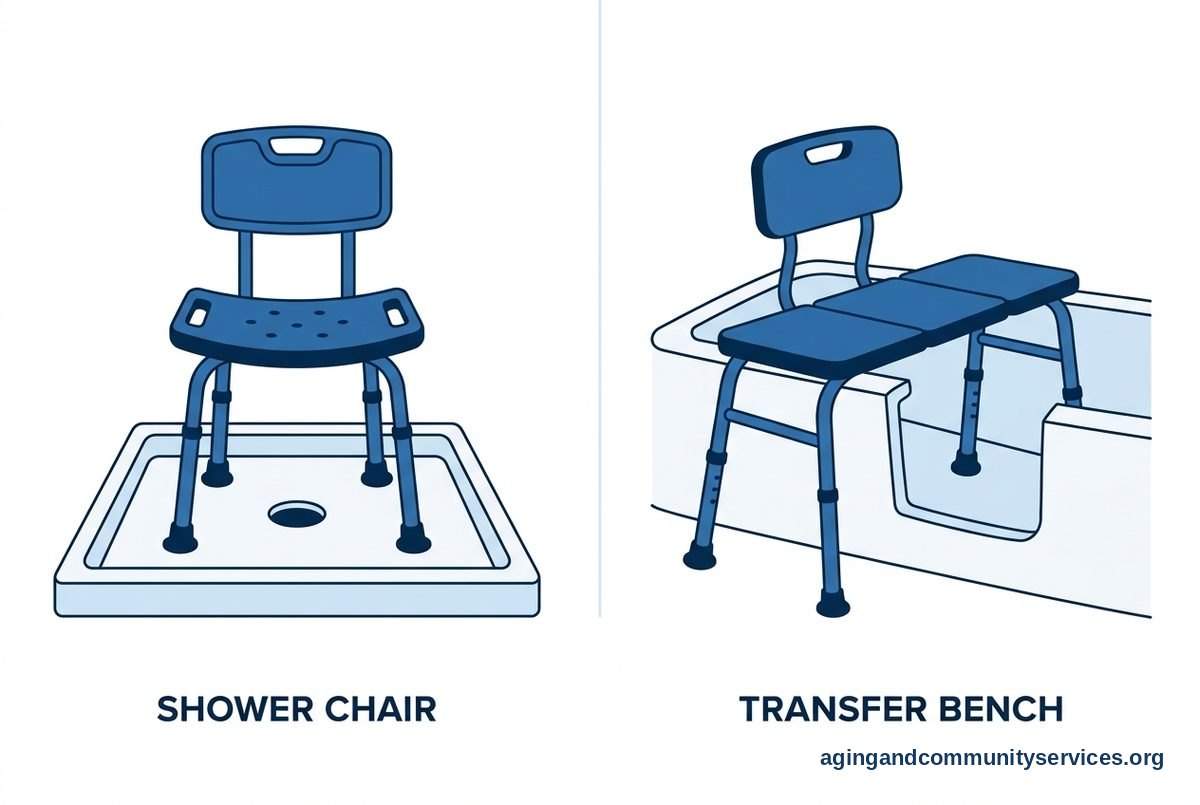
The layout of your bathroom plays a large role in how you enter and exit the shower safely. If you have a walk-in shower with a low threshold, a standard four-legged shower chair with rubber tips and armrests is often simple to use. Make sure all four legs rest flat on the floor so the seat does not wobble when you put your weight on it.
If your shower is inside a standard bathtub, stepping over the tall edge can be difficult and unsafe after joint surgery. In this situation, learning how to use tub transfer bench can make bathing much easier. Reviewing the differences between a shower chair vs shower bench helps you decide which equipment fits your space and physical needs.
Many families also wonder about coverage for these items. While bathing equipment can be a vital part of staying independent at home, looking into does medicare cover shower chair dme will give you clear answers on out of pocket costs and equipment classifications before you buy.
How to Use a Shower Chair After Knee Surgery
Many of the safety steps for hip recovery also apply if you are recovering from knee surgery. When learning how to use a shower chair after knee surgery, the main goal is to protect your healing joint while keeping swelling down and avoiding awkward twists. Your physical therapist will give you specific advice on how much you can bend your knee during the first several weeks.
To sit down safely after knee surgery, back up until the back of your uninjured leg touches the shower seat. Extend your operated leg out in front of you so your knee does not have to bend deeply as you lower yourself. Use the armrests to support your body weight as you sit down gently.
While seated, you can rest your foot flat on the floor if your knee allows, or keep it rested on a small non-slip footstool if bending causes tension. When your shower is finished, slide forward, extend your healing leg slightly forward again, and push up primarily through your stronger leg and the chair arms. Practical tips shared by the National Institute on Aging: Falls and Falls Prevention can lower the risk of slips during daily activities like bathing.
Setting Up Your Shower for Long-Term Independence
Making thoughtful changes to your home environment, like understanding the bidet vs washlet difference, can support steady healing and everyday peace of mind. Keeping the path to the bathroom clear of loose rugs, clutter, and cords is a fundamental step. The guidance on home modifications from the National Institute on Aging: Aging in Place outlines practical ways to keep your living space safe and accessible.
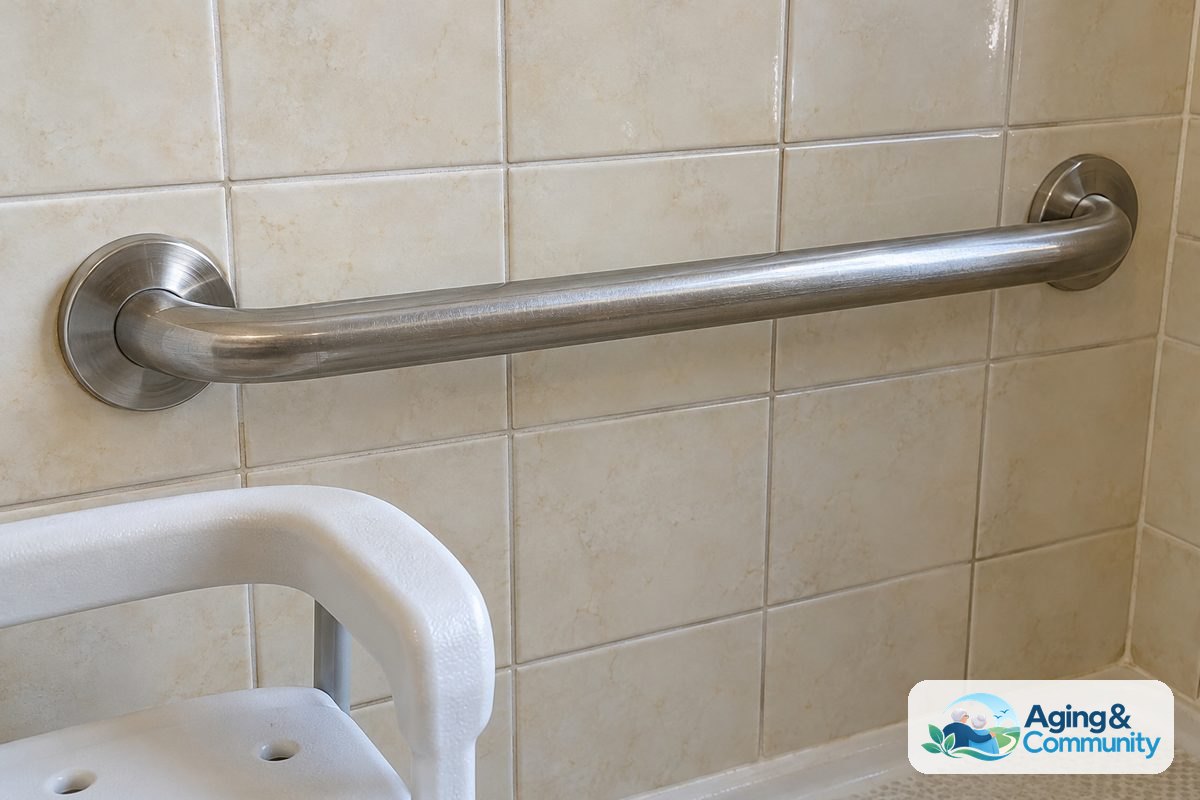
Consider installing professionally mounted grab bars next to the shower seat and along the shower entrance. These bars give your hands a solid, permanent point of contact when stepping over a sill or turning around. Always check that the water temperature is comfortable before sitting down so you do not have to make sudden movements while seated under the spray.
Frequently Asked Questions
How long do I need to use a shower chair after hip surgery?
Most people use a shower seat for six to twelve weeks following surgery, but the exact timeline depends on your balance, joint precautions, and strength. Your physical therapist or surgeon will assess your progress and let you know when it is safe to stand for a full shower.
How high should my shower chair be after hip replacement?
Your chair should be adjusted so your hips sit slightly higher than your knees when your feet are flat on the floor. This position helps you follow the standard ninety degree hip precaution and makes standing up much easier on your joints.
Can I get my hip incision wet while using a shower chair?
You must follow your surgeon specific discharge instructions regarding your incision. Many surgeons require you to keep the dressing completely dry until your first follow up visit, while others allow gentle showering with waterproof bandages. Never soak in a tub or rub the incision area until your doctor gives clear approval.
How do I wash my feet without bending my hip?
Use a long-handled bath sponge or brush to reach your lower legs and feet without bending your upper body past ninety degrees. You can also place a soapy washcloth on the shower floor and gently move your foot across it, provided you remain fully seated and stable.
What should I do if my shower chair feels wobbly?
Do not use the chair if it wobbles or rocks. Check that all four legs are set to the exact same notch and that the rubber feet are clean and sitting flat on the shower floor. If the shower floor slopes steeply toward the drain, you may need to adjust the legs unevenly to create a completely level sitting surface, or switch to a transfer bench.
