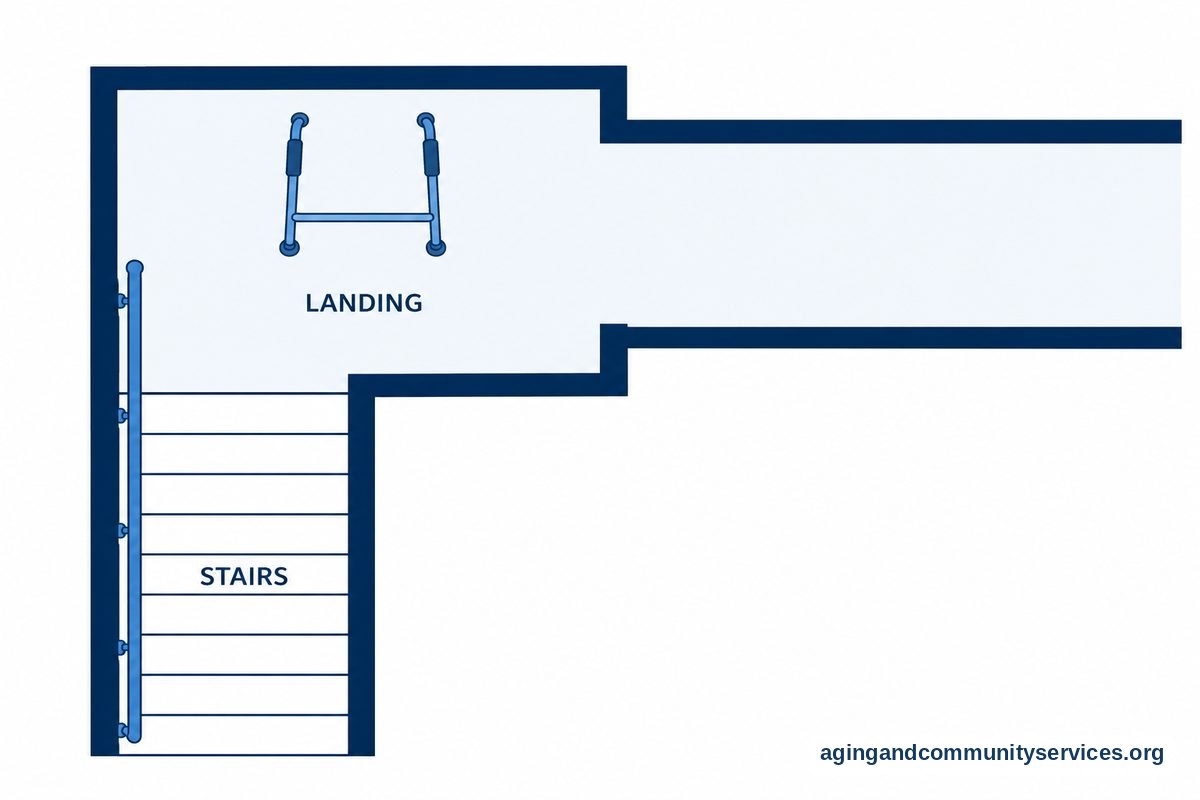
Learning how to use a walker on stairs safely is an important skill when you want to move between levels in your home. The safest method involves using a sturdy wall railing on one side while holding your folded or closed walker on the other side. Taking each step slowly allows you to keep your balance and feel steady throughout the climb.
Standard four-legged walkers and two-wheeled walkers are not designed to balance flat on individual steps in a standard open position. Because steps are narrower than the base of most walkers, trying to place all four points on a step can cause the frame to tip. Understanding proper technique helps older adults stay steady while moving between floors.

How to Use a Walker on Stairs with a Railing
Before you begin, make sure your footwear has non-skid soles. If you have someone nearby to assist you, ask them to stand below you on the staircase for stability.
- Fold or turn the walker sideways: Close your folding walker or turn a standard frame sideways so the side handle sits parallel to the railing.
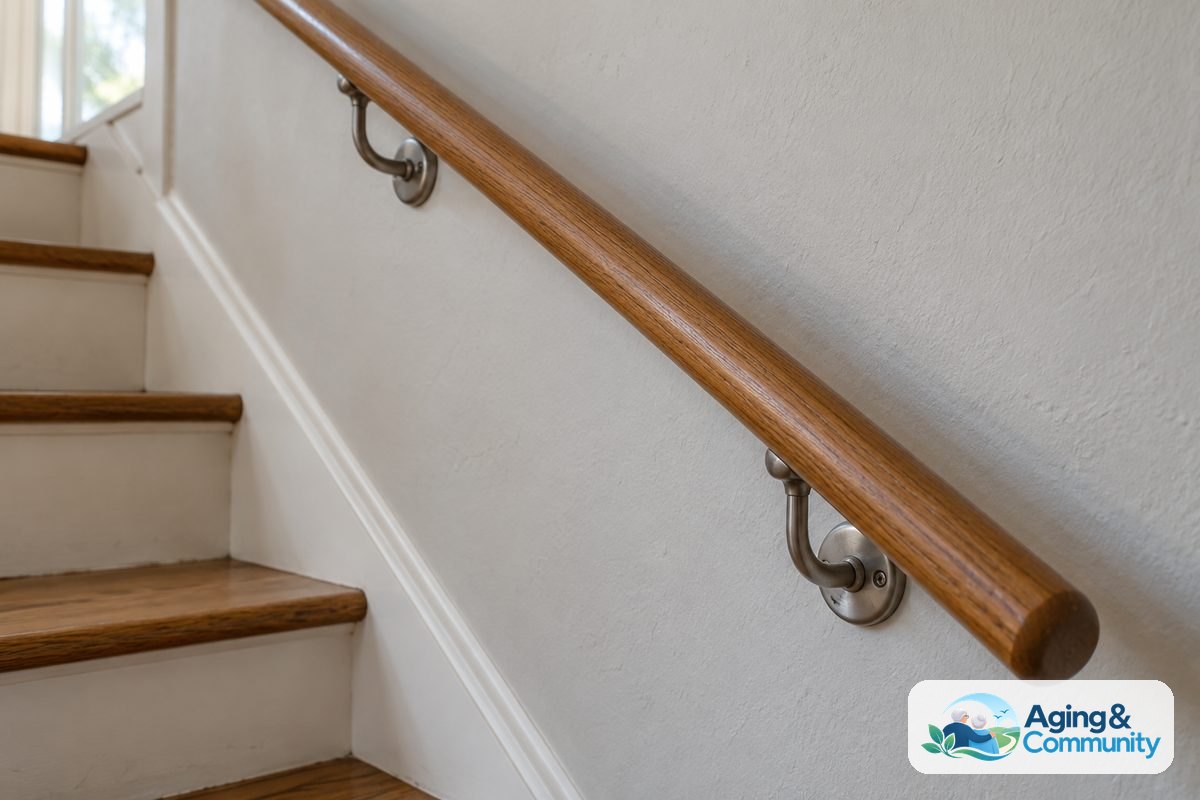
- Hold the railing with your dominant hand: Place your strong hand firmly on the wall handrail while holding the center of the walker with your other hand.
- Step up with your stronger leg first: When going up, lift your unaffected or stronger foot onto the step while bearing weight through your handrail hand.
- Bring your weaker leg up: Push through your strong leg to bring your other foot onto the same step.
- Move the walker up last: Lift the folded walker up onto the step so it rests flat beside you before taking the next step.
- Reverse the order when going down: When heading down, lower the walker first onto the step below.
- Step down with your weaker leg first: Lower your weaker leg onto the step beside the walker while gripping the handrail.
- Finish by stepping down with your strong leg: Bring your strong foot down onto the step so both feet are together again.
An easy phrase to remember is: up with the good, down with the bad. Your stronger leg leads the way up, and your weaker leg leads the way down.
Common Mistakes to Avoid
Navigating steps requires focus and deliberate movement. Avoiding these common habits will help you maintain stability:
- Placing an open walker across two steps: Never attempt to balance an open walker with two legs on one step and two legs on a higher step, as this creates an unstable angle.
- Looking away from the steps: Keep your eyes focused on your footing and the position of the railing rather than looking ahead into the next room.
- Rushing the process: Move one step at a time, bringing both feet together on the landing before starting the next step.
- Letting go of the handrail early: Maintain a firm grip on the sturdy wall railing until both feet and your walker are completely off the stairs.
- Carrying heavy items while climbing: Keep your hands entirely dedicated to the handrail and your frame, using a basket or a helper to move belongings.

When to Call for Help or Get Professional Advice
Using steps with a walking aid can feel challenging, especially after surgery or an illness. If you ever feel dizzy, unsteady, or short of breath, stop on the nearest flat surface and sit down if possible. It is always wise to ask for a spotter until you feel completely confident.
You should consult your doctor, physical therapist, or occupational therapist before attempting stairs on your own. A therapist can review your gait and ensure your walker height matches your body. When you contact their office, tell them about the specific layout of your home, including how many steps you have and whether you have handrails on both sides.
Resources from the National Institute on Aging on falls show that proper home modifications and guidance can lower the risk of accidents. If you need local support services, the Eldercare Locator can connect you with community programs and home assessment professionals in your area.
How to Use a Walker on Stairs Without Railing
Navigating a staircase without a railing is not recommended when using a mobility aid. A sturdy banister provides the necessary leverage to support your body weight while your other side manages the frame. If your home has steps without a railing, having a helper physically assist you is essential.
If you must cross a single low threshold or curb without a rail, you can turn your walker sideways, gripping the front and back upright bars. Plant the two rubber tips firmly on the step, place your weight through the walker frame, and step up with your stronger leg. However, for a full flight of stairs without rails, review helpful guidelines on stair safety for elderly living spaces to see how quickly a handrail can be installed.
In homes where installing a railing is not an immediate option, keeping an extra mobility aid on each floor may be the safest choice. That way, you can leave one walker at the bottom, navigate the stairs with a helper, and use a second walker at the top.
How to Use a Walker on Stairs with One Leg
Recovering from foot surgery or an injury may mean you cannot put any weight on one leg. Navigating stairs non-weight-bearing requires extra upper body strength and careful coordination.
To climb stairs non-weight-bearing, place the walker in its folded position under your arm or hold it sideways. Grip the handrail firmly. Push down through your arms on the railing and walker while hopping your strong foot up onto the step. Keep your injured leg bent slightly behind you or held gently forward so it does not strike the riser.
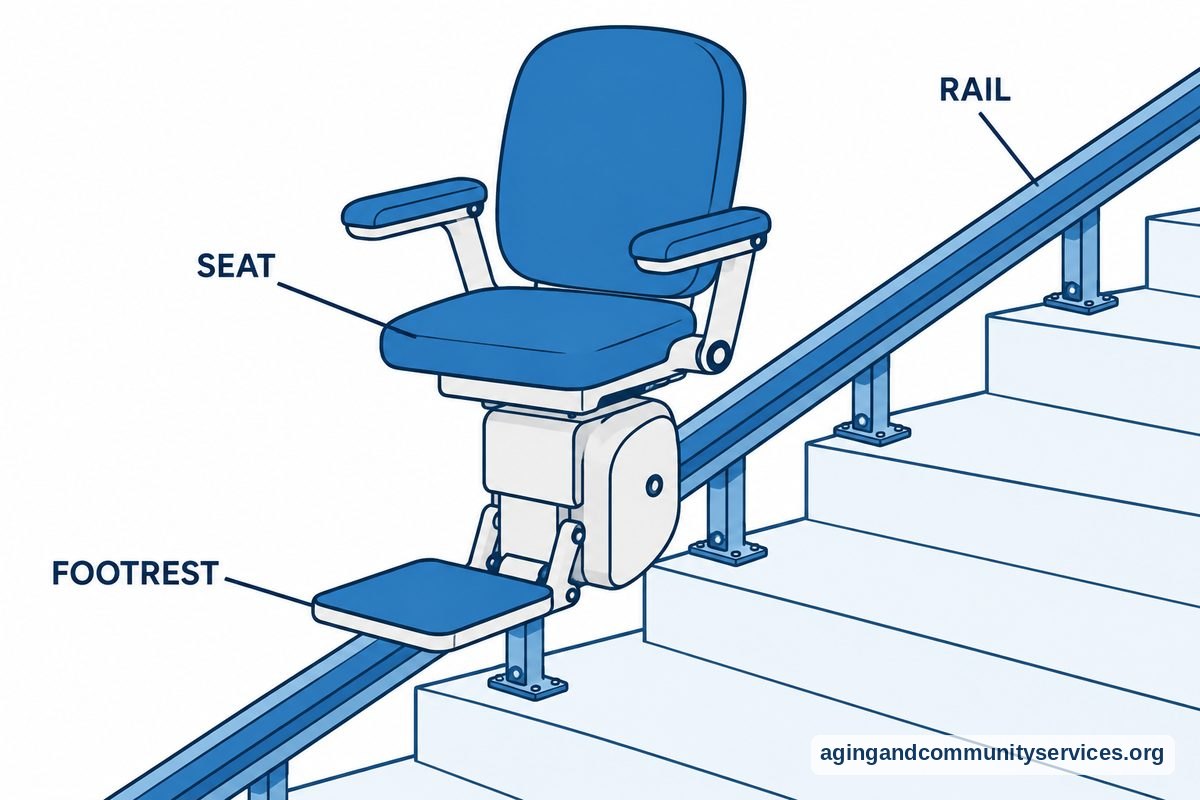
When going down, hold your injured leg slightly forward so it does not touch the step. Lower the walker down one step, lower yourself by bending your strong knee, and carefully hop your strong foot down to join the walker. If this movement feels too difficult, exploring dedicated stair assistance for elderly individuals can help you find safer alternatives like stair lifts.
Alternative Options for Multi-Story Homes
If managing your walker on steps feels tiring or stressful, you have other reliable choices. Many people decide to use a cane exclusively for the staircase. Learning how to use cane on stairs is often simpler because a single-point cane is lighter and easier to lift alongside a railing.
Another common solution is outfitting your home with specialized equipment. Looking into durable stair assist devices for elderly households can open up choices such as motorized stair glides, portable ramps for short steps, or vertical platform lifts. Practical guidance from the National Institute on Aging on aging in place highlights the value of updating your living space so you can move comfortably throughout your house.
Frequently Asked Questions
How to use walker on steps outside the home?
Outdoor steps often have deeper treads than indoor stairs. Follow the same pattern: hold the outdoor handrail, fold or turn your walker sideways, and step up with your strong leg first. Clear any leaves, water, or debris from outdoor steps before you start.
How to use a walker on steps that do not have a landing?
When steps lead straight into a narrow hallway without a wide landing, take an extra moment before opening your walker. Keep your grip on the handrail until you are fully positioned on the flat upper floor, then open your walker securely before walking forward.
Can I leave an open walker on the stairs?
No, an open walker should never be left resting on a staircase. Walkers can easily tip over on narrow treads and become a tripping hazard for anyone else using the stairs.
What is the difference between going up and going down steps?
The sequence changes depending on your direction. When going up, your strong foot leads the way, followed by your weaker foot and then the walker. When going down, the walker moves first, followed by your weaker leg, and finally your strong leg.