

Learning how to use wheelchair on stairs is an important skill when you need to move a loved one past outdoor steps or porch thresholds. The safest approach involves using two trained adults who keep the chair balanced on its large rear wheels while taking each step one at a time. Taking a slow, organized approach protects both the person in the chair and the helpers supporting them.

How to Use Wheelchair on Stairs Step-by-Step
Moving a manual wheelchair up or down steps requires clear communication, proper posture, and complete control of the chair. Always ensure the person in the seat feels secure before you begin moving. Follow these main steps to manage the movement safely:
- Check the surroundings and secure the rider. Fasten the seat belt if the chair has one, ensure the person keeps their hands in their lap, and check that the stairway is clean, dry, and free of clutter.
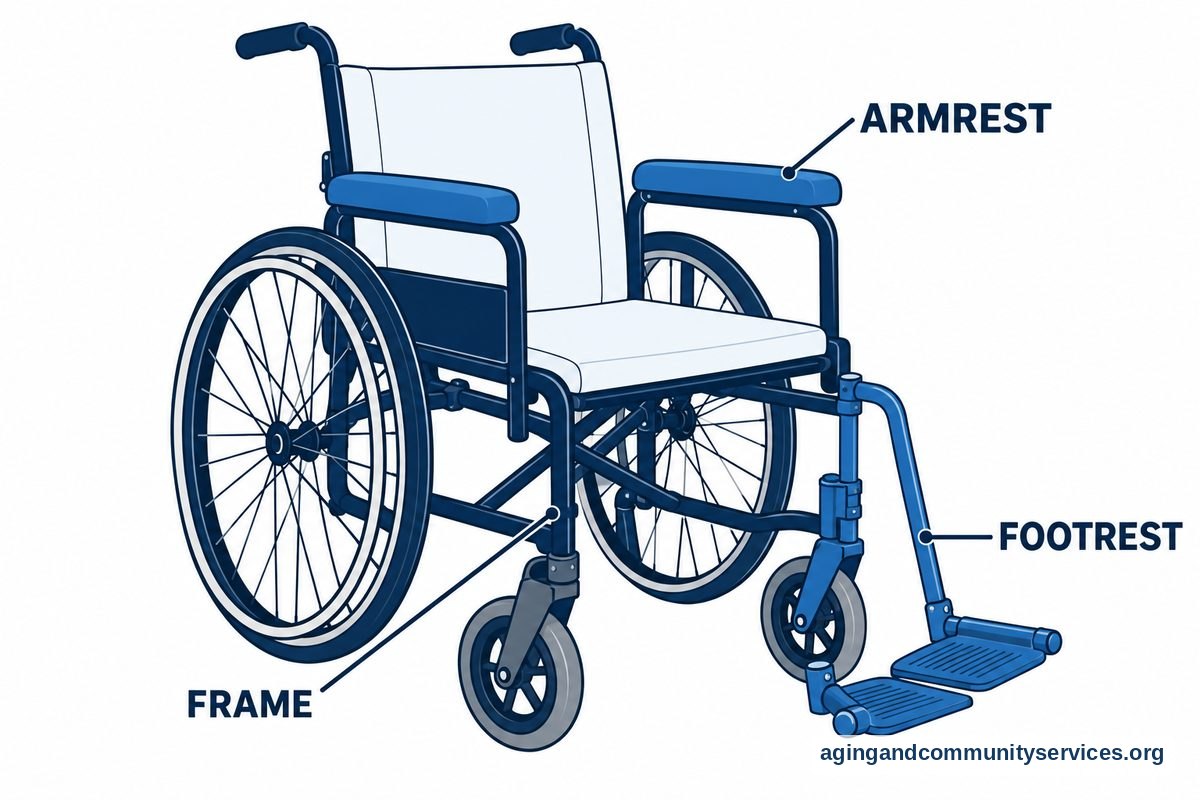
- Position two helpers for balance. Assign the stronger helper to stand behind the chair holding the push handles, while the second helper stands below the chair holding the solid metal frame near the front casters.
- Tilt the chair back onto the rear wheels. The helper at the top places a foot on the tipping lever at the bottom of the chair and gently pulls back on the handles until the front caster wheels rise off the ground.
- Ascend backward one step at a time. When going up, the helper at the top pulls the large rear wheels up over the edge of the step while the helper below lifts and guides the frame.
- Descend forward while tilted backward. When going down, the chair stays tilted back on its rear wheels while the top helper slowly rolls the wheels down the edge of each step and the lower helper braces the frame.
- Set all four wheels down on flat ground. Once you reach the bottom or top landing completely, gently lower the front casters back to the floor before engaging the wheel locks.
Common Mistakes to Avoid
Small errors during stair navigation can lead to sudden slips, strain, or loss of balance. Being aware of these frequent mistakes helps you keep every transition smooth and controlled:
- Attempting to move an occupied wheelchair on a full staircase with only one helper.
- Holding onto movable or removable parts like footrests, armrests, or plastic wheel covers instead of the welded metal frame.
- Letting the small front wheels touch the steps while the chair is in motion.
- Rushing through steps instead of pausing on each level surface to reset your footing and grip.
- Trying to move heavy power wheelchairs up steps manually instead of using specialized equipment or ramps.
When to Call for Help or Get Professional Advice
Certain situations are simply not safe for two helpers to manage alone. If the stairway has more than two or three steps, or if the turns are narrow, it is best to pause and look into other options. You can reach out to an occupational therapist or a physical therapist for practical guidance tailored to your home layout. These professionals can teach you proper body mechanics and evaluate whether your current chair setup is appropriate.
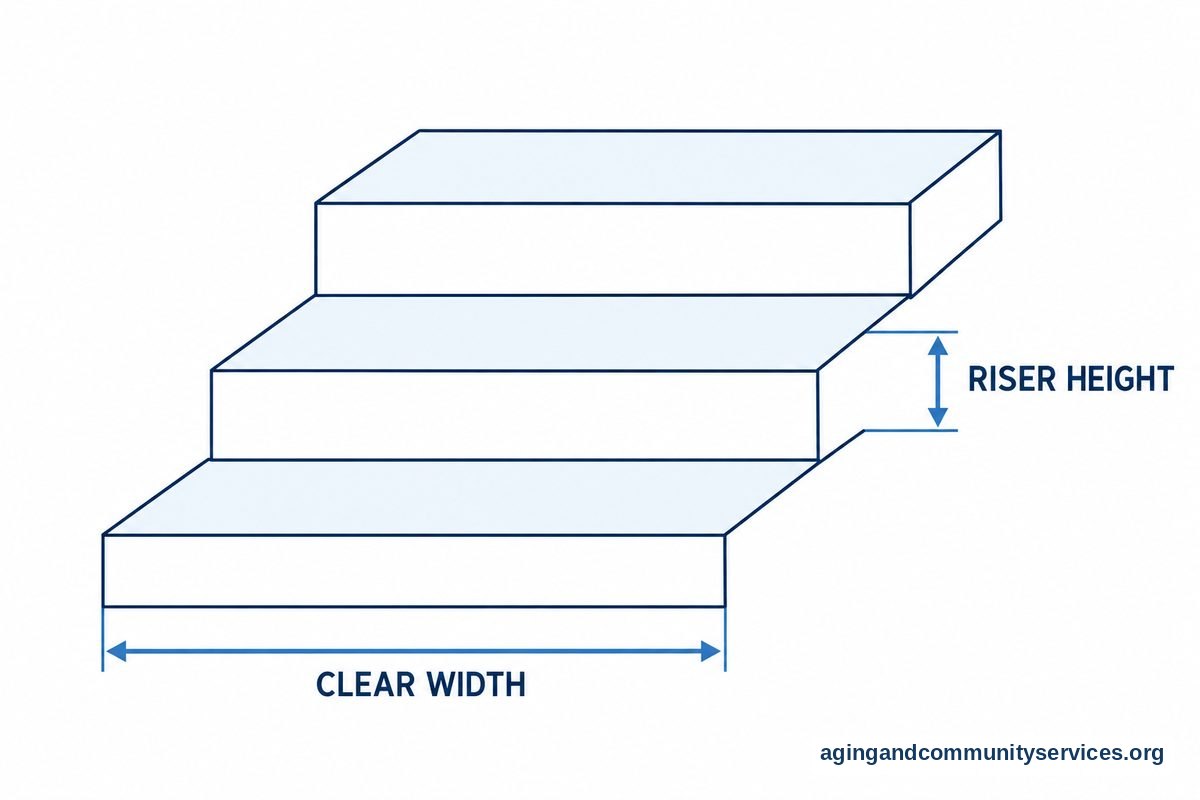
For broader home planning, the Eldercare Locator connects families to local support services, community programs, and home safety specialists. When you call a local agency or therapist, be ready to share the exact number of steps, the height of the risers, the width of the stairway, and the total weight of the person and their chair. If you ever feel unbalanced or unsupported midway through a transfer, stop immediately, rest the chair securely against a step, and call nearby neighbors or local emergency services for physical support.
How to Use Wheelchair on Steps at Home Entrances
Many homes have just one or two steps leading from the walkway to the front porch. Mastering how to use wheelchair on steps with low thresholds can make daily outings much simpler for older adults. For single steps, one strong caregiver can often manage the movement by using the tipping lever properly, though a second person always adds stability.
When going up a single step, roll the chair forward until the large wheels touch the curb or step edge. Push down on the tipping lever with your foot while pulling gently back on the hand grips. Roll the front wheels onto the upper landing, then lift slightly by the handles while rolling the large rear wheels up and forward. To go down a single step, turn the chair around and walk backward, allowing the large rear wheels to roll gently down first while keeping the small wheels raised until the landing is clear.
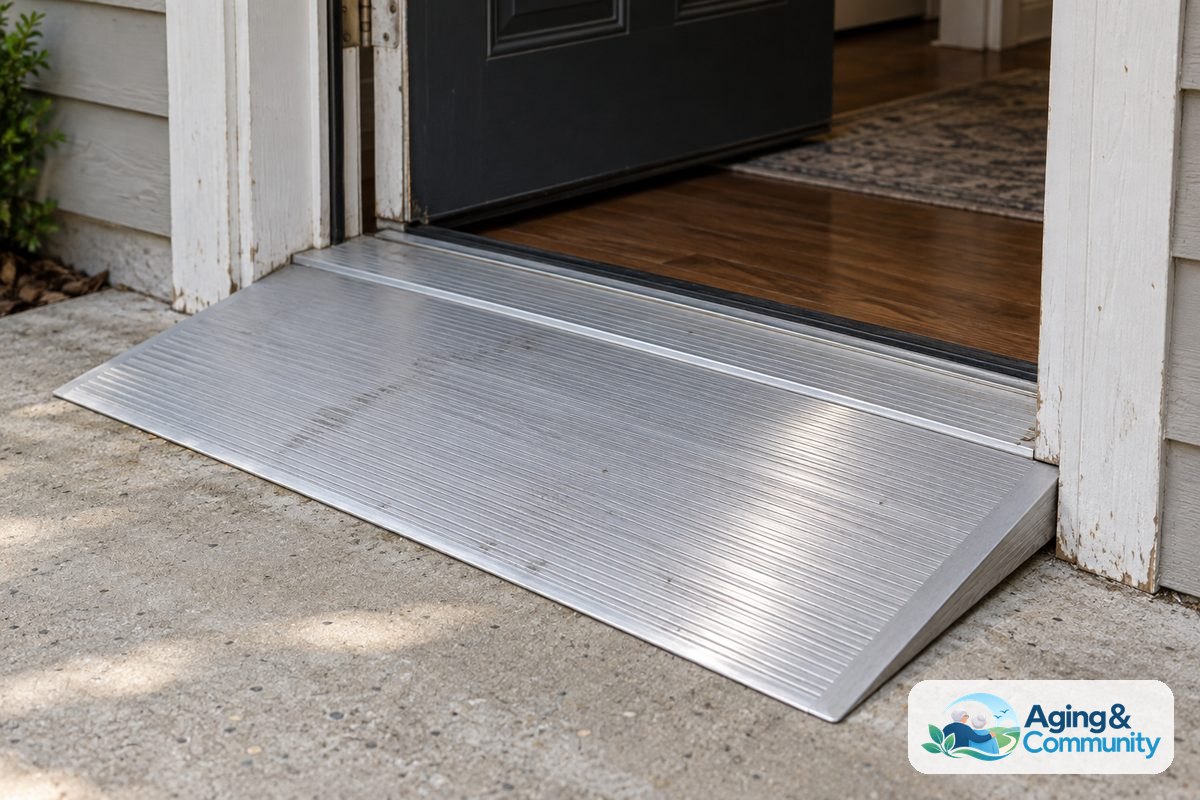
Planning home modifications can help families avoid navigating stairs entirely. Resources from the National Institute on Aging regarding aging in place provide practical ideas for creating accessible entrances. Many families choose to install outdoor pathways, and looking into does medicare cover wheelchair ramps can help you understand coverage rules and options for home accessibility projects.
Safer Alternatives for Full Staircases
Navigating an entire flight of stairs with an occupied manual wheelchair is physically demanding and presents unnecessary risks. In multi-story homes, caregivers should look toward assistive equipment rather than moving a chair up and down daily flights. Learning how to use gait belt techniques allows you to help an individual stand, transfer, and walk up steps with support if they still have some standing ability.
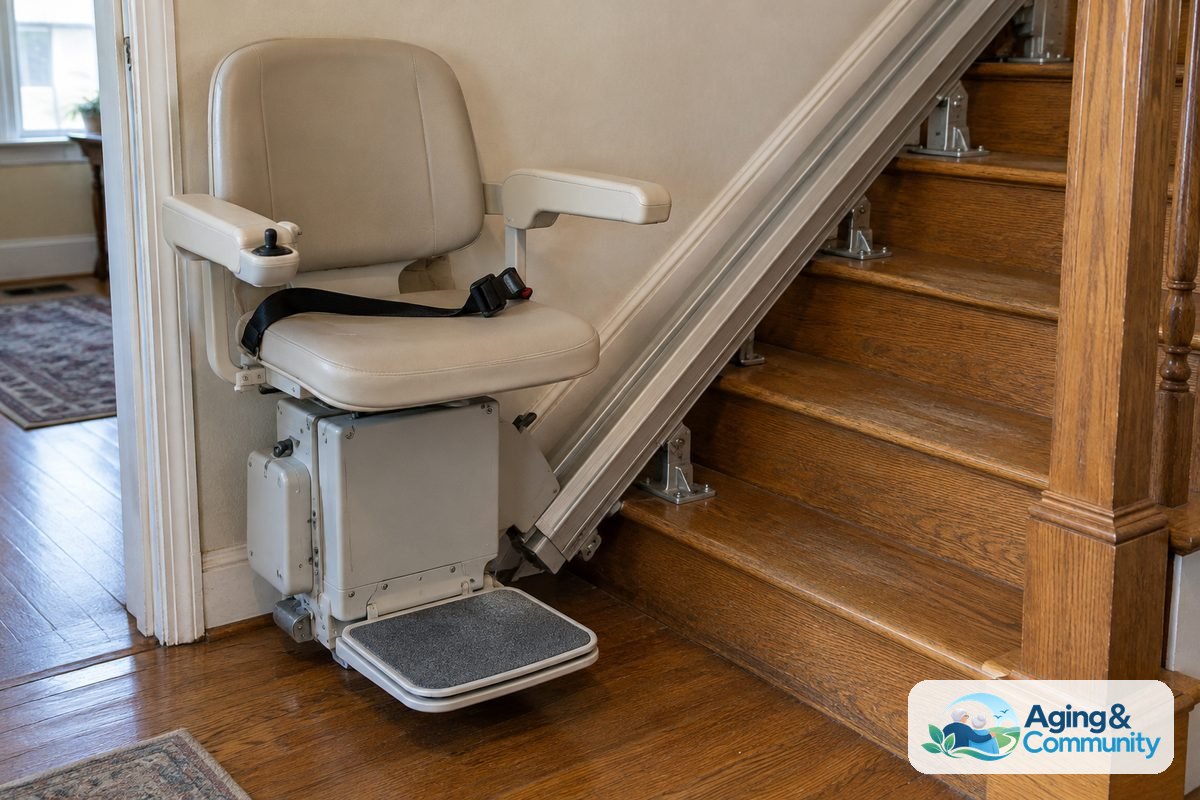
When walking the stairs is no longer comfortable, mechanical assistance provides a reliable path between floors. Installing dedicated stair lifts for seniors allows a person to sit comfortably in a motorized seat that glides along a mounted track. Keeping one wheelchair on the ground floor and another on the upper level eliminates the need to carry heavy equipment between levels entirely. Families can also compare various stair assist devices for elderly family members to find the exact setup that matches their budget and mobility needs.
Educational materials from the National Institute on Aging on falls and falls prevention point out that modifying high-traffic home zones can lower the risk of accidents. Taking time to evaluate permanent fixtures ensures that both the caregiver and the individual remain protected every day.
Frequently Asked Questions
How many people are needed to move a wheelchair on stairs?
At least two capable adults should work together to move an occupied wheelchair on stairs. One person manages the balance and weight from the top handles, while the other supports the lower frame to guide the wheels. Trying to manage multiple steps alone can cause back strain or a dropped chair.
Can you take an electric wheelchair on stairs?
No, standard electric wheelchairs should never be taken on stairs while occupied. Power chairs weigh several hundred pounds due to their motors and battery packs, making them far too heavy to balance manually. Homes with electric wheelchairs require modular ramps, vertical platform lifts, or stair climbers designed for heavy loads.
How do you use a wheelchair on stairs when going down?
To go down steps, the chair should face forward while tilted back on its rear wheels. The person at the top holds the handles firmly and eases the rear wheels down one step at a time. The person below holds the fixed frame near the front casters to steady the chair and slow the downward motion.
What part of the wheelchair should the front helper hold?
The front helper must hold a solid, non-detachable section of the main metal frame near the front casters. Never hold onto footplates, leg rests, or armrests, as these pieces are designed to detach or swing away and could separate under the weight of the chair.
Is it better to back up steps or go forward?
When going up steps, it is best to pull the chair backward up the stairs so the large rear wheels take the weight. Going forward up stairs places the small front wheels against the step risers, which stops the chair from rolling smoothly and creates a tipping hazard.