

Learning how to use wheelchair with commode setups safely begins with steady preparation, good alignment, and taking your time. Position the wheelchair close to the commode seat, lock every brake firmly, and move across with smooth, controlled motions. With the right technique, this daily routine becomes much easier and far more secure for everyone involved.

Steps for Moving from a Wheelchair to a Commode
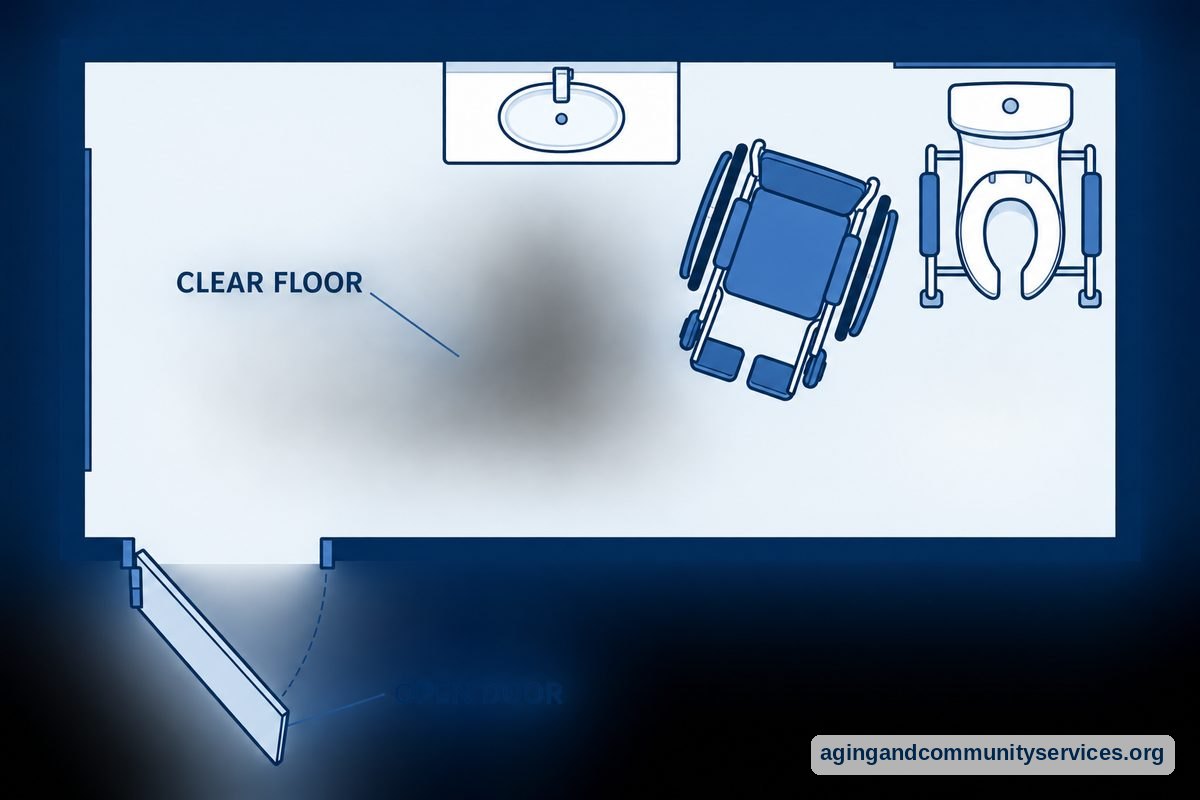
- Clear the path and align the seats: Roll the wheelchair directly next to the commode at a slight angle or side by side so the travel distance is as short as possible.
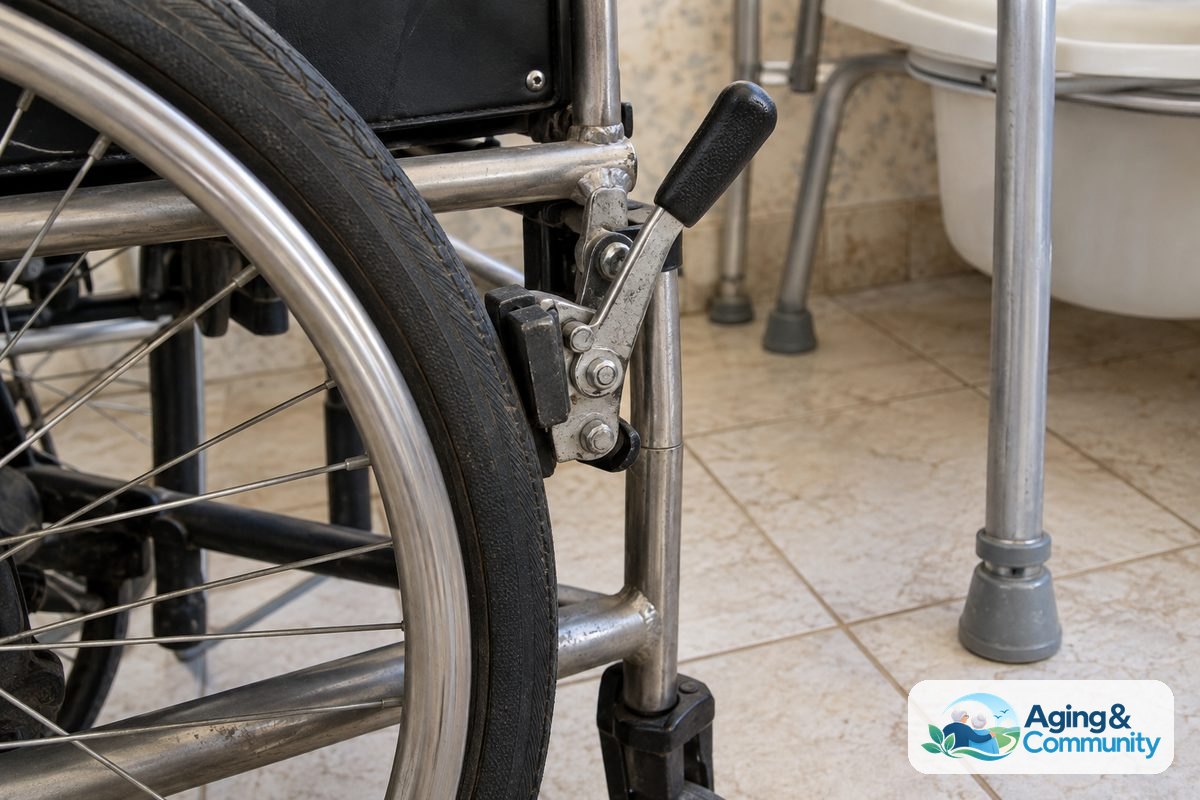
- Lock the wheel brakes securely: Engage the wheel locks on both sides of the wheelchair, and check that the commode frame sits level on a dry, non-skid floor.
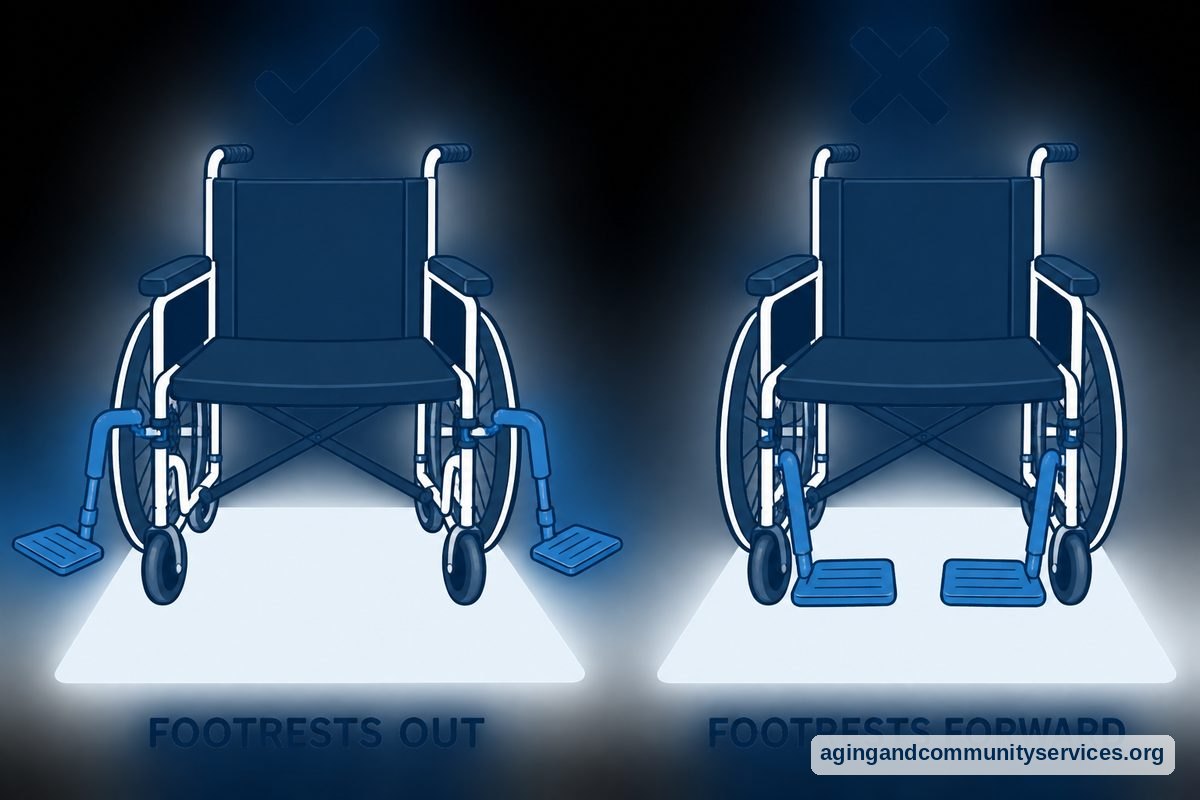
- Move the armrest and footrests away: Swing the wheelchair footrests out to the side or remove them completely, then lift or remove the armrest closest to the commode seat.
- Scoot forward to the front edge: Shift your hips forward toward the front rim of the wheelchair cushion while planting both feet flat on the floor beneath your knees.
- Push upward with both arms: Place your palms on the remaining wheelchair armrest or support bars, lean your torso forward slightly, and press down through your heels to stand or pivot.
- Pivot gently toward the commode: Turn your hips toward the commode seat in small, controlled steps or a gentle pivot until the backs of your legs touch the commode frame.
- Lower down smoothly: Reach back with your hands to grasp the arm supports of the commode, bending your knees slowly until you rest comfortably on the seat.
If you are also setting up a portable toilet next to a bed, reviewing how to use bedside commode equipment can provide helpful pointers on adjusting frame heights for stable transfers.
Common Mistakes to Avoid
- Leaving wheelchair brakes unlocked: Forgetting to set the wheel locks can cause the chair to roll backward during a transfer, creating an unstable shift in balance.
- Rushing the transfer: Moving too quickly increases fatigue and makes it harder to maintain a solid grip on the support rails.
- Pulling on unstable objects: Reaching for towel bars, lightweight paper holders, or sink edges for support can lead to sudden slips.
- Wearing slick socks or loose shoes: Bare feet, smooth socks, or loose slippers offer poor traction on tile floors and make pivoting difficult.
- Leaving footrests in the front position: Leaving the footplates down creates a tripping hazard and blocks your feet from resting flat on the ground.
- Twisting the spine while bearing weight: Rotating your back without moving your feet places unnecessary strain on your lower back and hips.
When to Call for Professional Advice
Safe bathroom transfers require a balance of strength, coordination, and the right equipment fit. If transfers feel shaky, painful, or exhausting, it is time to ask for a professional evaluation. An occupational therapist or physical therapist can visit your home to assess your specific layout, check equipment height, and show you personalized transfer methods.
You can ask your primary care doctor for a therapy referral. When you call, describe the challenges you face during bathroom visits, such as trouble standing from low seats, leg weakness, or fear of losing balance. You can also consult resources on falls and falls prevention from the National Institute on Aging to better understand how home changes lower risk.
For families who need help finding local resources, the Eldercare Locator connects callers with supportive community services and local aging agencies that can guide you toward home safety consultations.
Using Helpful Transfer Tools for Extra Support
Sometimes standing up to pivot requires more strength than a person has available on a given day. In those situations, assistive devices bridge the gap between surfaces and keep motion smooth. A sliding board allows someone to move from seat to seat in a seated position without bearing weight on tired knees.
Learning how to use a transfer board allows an individual to slide across a smooth wooden or plastic bridge while seated securely. Choosing among well-reviewed transfer boards for seniors ensures you get a board with the right length and weight capacity for your wheelchair setup.
When a family caregiver assists with the move, a safety belt worn around the waist provides steady holding points. Reviewing how to use gait belt straps gives caregivers firm control without pulling on arms or clothing, which protects both individuals from strain.

Setting Up the Bathroom for Safe Movement
The space around your commode should allow unhindered movement for both the user and any caregiver assisting them. Remove loose rugs, bathroom scales, and wastebaskets that crowd the transfer zone. Proper lighting is also essential, especially for nighttime trips, so install bright nightlights along the route between the bed and commode.
Adjusting the commode height is equally critical. The commode seat should be level with the wheelchair cushion or just one inch lower to make sliding or pivoting effortless. When seats match in height, your body does not have to fight gravity when rising or lowering. Planning these adjustments supports long-term independence, a central goal outlined in guidance on aging in place safely at home.
| Equipment Feature | Recommended Setup | Safety Purpose |
|---|---|---|
| Wheelchair Brakes | Engaged on both wheels | Keeps the chair completely still during weight shifts |
| Footrests | Swung away or detached | Clears the floor so feet plant firmly under the body |
| Commode Height | Level with wheelchair seat | Minimizes the effort needed to sit down or stand up |
| Commode Armrests | Locked in upright position | Provides sturdy push points for steady arm support |
| Footwear | Non-skid soles or grip socks | Maintains firm traction on smooth bathroom flooring |
Frequently Asked Questions
What angle works best when parking the wheelchair near the commode?
A 30 to 45 degree angle usually works best for stand-pivot transfers because it creates a short path between the seats. If you are using a transfer board, parking the wheelchair directly alongside the commode seat allows the board to bridge the gap evenly.
How do I adjust the commode height to match my wheelchair?
Most commodes feature push-button pins on each of the four legs. Adjust all four legs to the same number hole so the commode sits level and matches the height of your wheelchair seat cushion.
Can one person perform this transfer alone?
An individual can complete this transfer independently if they have sufficient upper body strength, solid sitting balance, and reliable leg control. If weakness, dizziness, or joint pain is present, an assistant should always stand nearby to ensure steady balance.
What should a caregiver do if someone begins to lose balance?
If balance falters, the caregiver should not try to lift the person by their arms. Instead, hold firmly to the transfer belt, pull the person close to your center of gravity, and gently guide them downward onto the nearest sturdy seat or the floor.
Should the commode have wheels or stationary rubber tips?
For transfers from a wheelchair, a commode with stationary rubber tips is generally the sturdiest choice. If you use a commode with wheels, ensure every caster wheel has a reliable lock that stays engaged throughout the transfer process.